Platinum-Cobalt Fuel Cell Reaches Record Durability
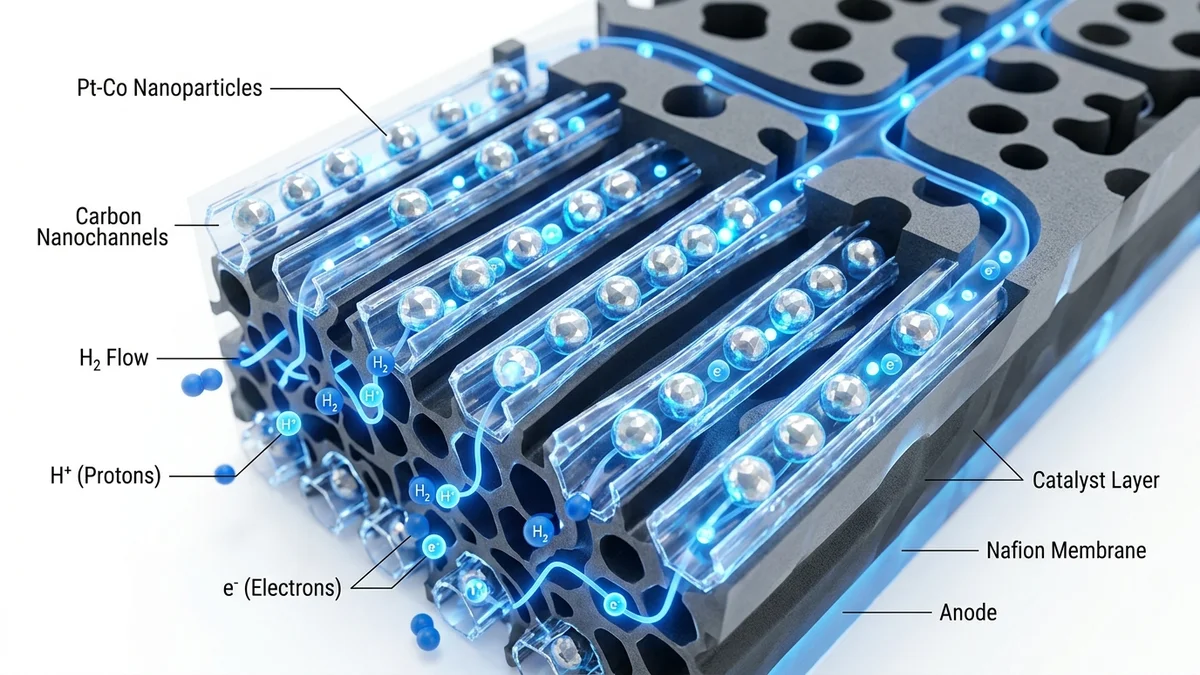
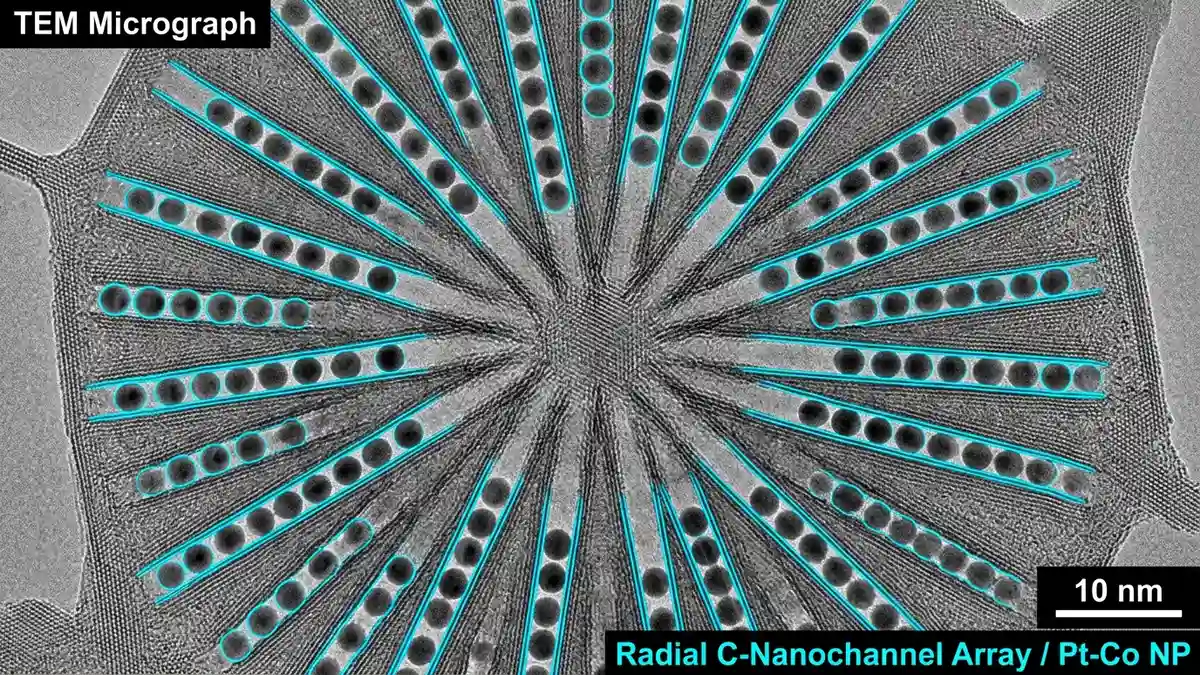
An extraordinary scientific breakthrough published in the prestigious journal Nature Nanotechnology promises to revolutionize the foundations of clean energy generation based on hydrogen. Researchers from international consortia demonstrated that a new geometric carbon architecture at the nanoscale solves the greatest historical problem of modern fuel cells. By using a radial carbon nanochannel-array support, the team succeeded in stabilizing platinum-cobalt catalysts against the premature degradation that limited the lifespan of clean engines.
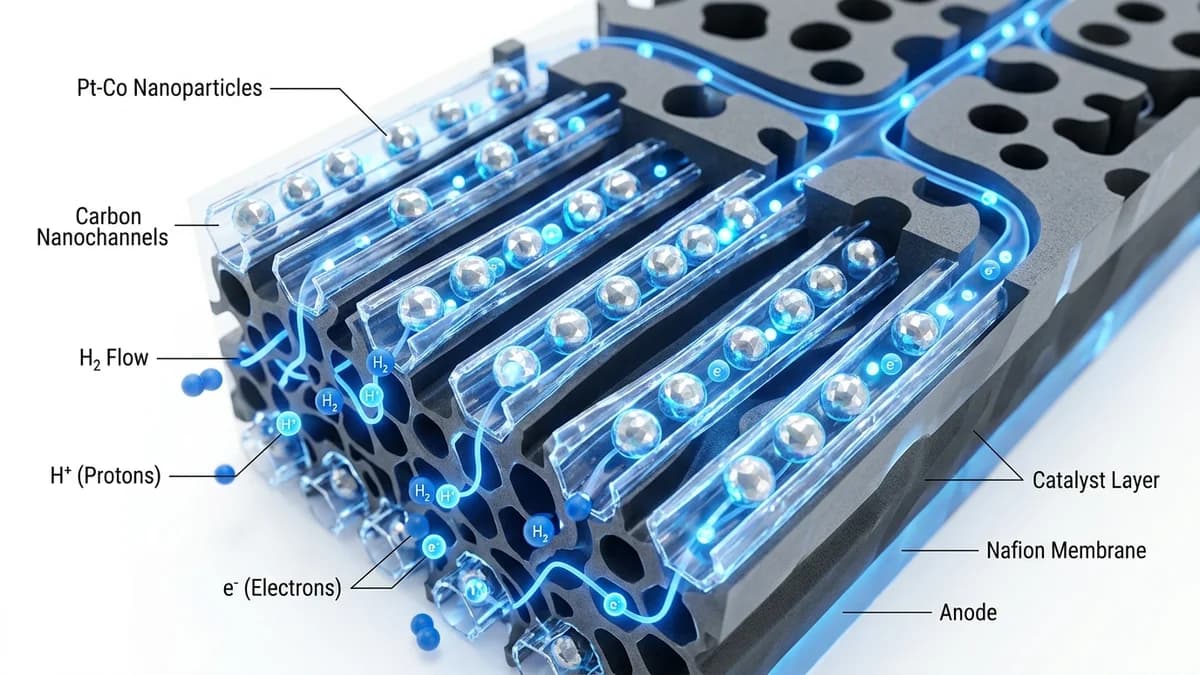
Until now, the progressive loss of catalytic efficiency resulting from continuous chemical stress prevented the large-scale adoption of hydrogen fuel cell vehicles. Active metal nanoparticles tended to agglomerate or dissolve in the acidic environment of the proton-conducting membrane after short cycles of real operation. This new molecular engineering design functions as a protective beehive that individually traps catalytic atoms in microscopic channels ordered radially in a perfect manner.
The development of this new material represents the joint effort of advanced chemistry laboratories funded by the United States Department of Energy and partner institutes. The technology is expected to be rapidly patented and licensed to global manufacturers of heavy vehicles and stationary energy cogeneration systems. The results mark the beginning of a concrete transition where hydrogen durability finally overcomes the physical limits of traditional chemical accumulators.