
Submarine Volcanoes: The Invisible Danger Beneath the Oceans — And Why They Could Change the World
Date: March 7, 2026
Reading time: 26 minutes
Emoji: 🌋
On January 15, 2022, the Hunga Tonga-Hunga Ha'apai volcano exploded with a force equivalent to 500 Hiroshima bombs. The eruption was the most powerful recorded in the 21st century — and it happened beneath the surface of the Pacific Ocean. The ash plume reached 58 km in altitude, penetrating the mesosphere — the highest atmospheric layer ever reached by any volcanic eruption. Shockwaves circled the planet Earth four times. Tsunamis struck coastlines across the entire Pacific. And most terrifyingly: no one even knew the volcano posed such a monumental threat. This is just one of more than 1 million volcanoes hiding beneath the planet's oceans — the vast majority of them completely unmapped and unmonitored. This article dives into the secret world of submarine volcanoes, the science behind them, their alien-like ecosystems teeming with bizarre life, and why they represent one of the planet's greatest hidden dangers.
The Hidden World Beneath the Oceans
A Geological Factory of Planetary Proportions
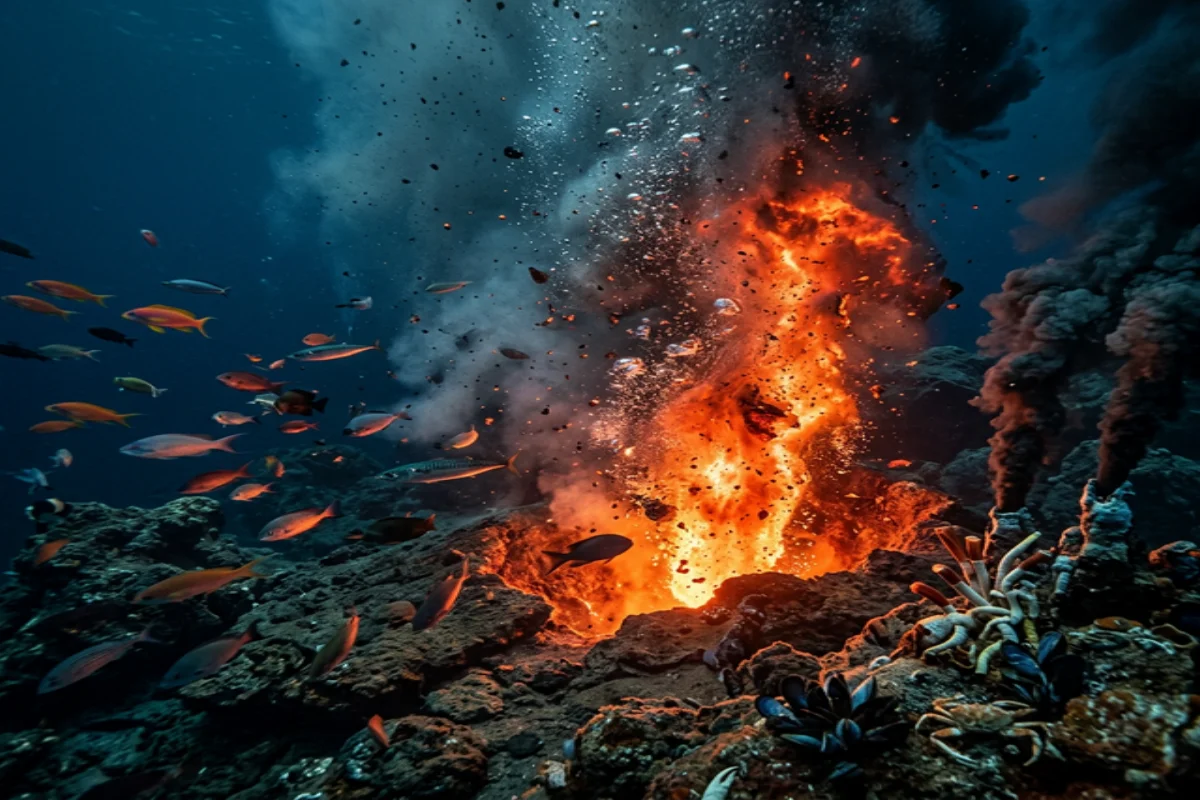
The terrestrial surface we know — with its Vesuviuses, Etnas, and Fujis — is merely the tip of the volcanic iceberg. The vast majority of the planet's volcanic activity takes place underwater, hidden beneath kilometers of ocean water in perpetual darkness and crushing pressure:
| Data Point | Value |
|---|---|
| Estimated submarine volcanoes | 1,000,000+ |
| Submarine volcanoes mapped | ~100,000 (only 10%) |
| Submarine volcanoes monitored | Fewer than 100 |
| % of Earth's lava produced in the ocean | ~75% |
| Length of Mid-Ocean Ridge | 65,000 km (Earth's largest mountain chain) |
The Mid-Ocean Ridge — the submarine mountain chain that snakes across the floor of every major ocean — is the largest geological structure on Earth. At 65,000 km in length, it surpasses all terrestrial mountain ranges combined. And it is in constant eruption, producing new ocean floor at a rate of approximately 3.4 km² per year — silently building and reshaping our planet beneath the waves.
How Submarine Volcanoes Form
Submarine volcanoes are born from the same geological processes as their terrestrial cousins, but under radically different conditions that fundamentally alter their behavior:
Mid-ocean ridges (divergent boundaries): Where tectonic plates pull apart, magma rises to fill the gap, creating new ocean floor through a process known as seafloor spreading. This is the most common type and is responsible for the Mid-Ocean Ridge system.
Subduction zones (convergent boundaries): Where an oceanic plate dives beneath another plate, the rock melts under extreme pressure and temperature, rising as magma. The Pacific Ring of Fire is the most dramatic and dangerous example of this process.
Hotspots: Plumes of magma that rise from the deep mantle, independent of tectonic plate boundaries. Hawaii is the classic example — an entire chain of volcanic islands formed as the Pacific Plate moves slowly over a stationary hotspot deep in the mantle.
Intraplate volcanism: Eruptions that occur in the middle of tectonic plates, at fracture zones or incipient rifts, far from any plate boundary.
The World's Most Impressive Submarine Volcanoes
Hunga Tonga-Hunga Ha'apai: The Eruption That Shook the Planet
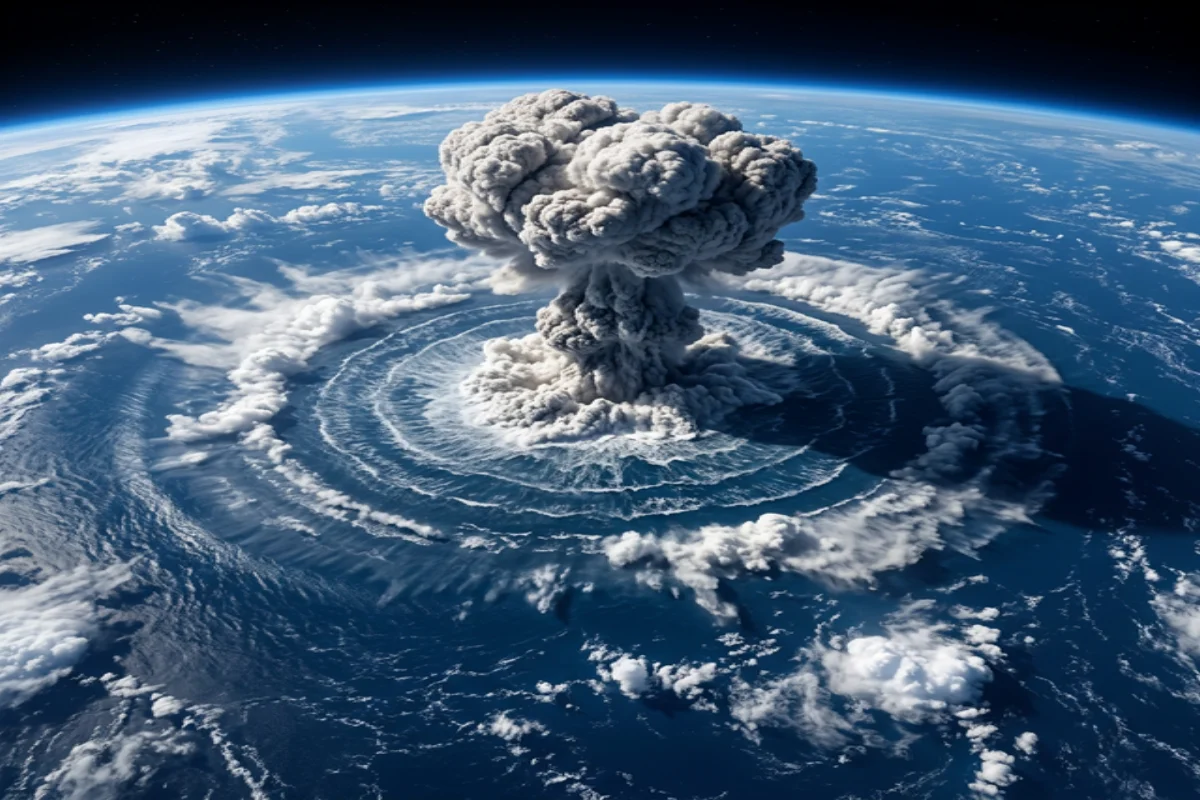
The January 15, 2022 eruption of Hunga Tonga-Hunga Ha'apai, located in the Kingdom of Tonga in the South Pacific, redefined what scientists believed was possible for a submarine eruption. The facts are nothing short of extraordinary:
- Power: Equivalent to 500 Hiroshima bombs — estimated at 4 to 18 megatons of TNT
- Ash plume: Reached 58 km in altitude, penetrating the mesosphere — the highest atmospheric layer ever reached by any eruption in recorded history
- Shockwaves: Circled the Earth four times, recorded by barometers on every continent
- Tsunamis: Hit every Pacific coastline, including Japan, the United States, Peru, and Chile
- Sound: The explosion was heard 10,000 km away, in Alaska
- Climate impact: Injected 146 teragrams of water vapor into the stratosphere — an unprecedented quantity that may have temporarily warmed the planet by 0.035°C
The eruption killed 6 people in Tonga and caused massive damage to the small island nation's infrastructure — submarine communication cables were severed, isolating Tonga from the world for weeks. The volcanic island that previously existed simply vanished, replaced by a submarine caldera over 700 meters deep. But what worried scientists most was what it revealed: that submarine volcanoes can be exponentially more powerful than previously imagined, and that the vast majority of them remain completely unmonitored. The eruption also demonstrated a phenomenon never before observed at such scale: the explosive interaction between magma and seawater (called a phreatomagmatic eruption) amplified the blast's power far beyond what the volume of magma alone would have produced.
Axial Seamount: The Most Studied Volcano on the Ocean Floor
Located 480 km off the coast of Oregon, USA, at 1,500 meters depth, Axial Seamount is the world's most monitored submarine volcano. It is equipped with sensors from the Ocean Observatories Initiative (OOI), providing real-time data on its activity. These sensors measure everything: seafloor temperature, pressure, water chemistry, seismicity, and even the deformation of the volcanic edifice in real time, transmitting data via fiber optic cable to laboratories on shore.
Axial Seamount erupts approximately every 10 years. Its most recent eruptions were in 1998, 2011, and 2015. Scientists successfully predicted the 2015 eruption months in advance — by observing the slow inflation of the volcano as magma accumulated in the magma chamber beneath it. When pressure reached a critical point, the eruption occurred exactly as predicted. It is a powerful proof of concept that monitoring submarine volcanoes works and can save lives — when such monitoring actually exists.
Kick-'em-Jenny: The Caribbean Danger
Kick-'em-Jenny is an active submarine volcano located 8 km north of Grenada in the Caribbean. Its summit sits just 185 meters below the surface, making it particularly dangerous for several interconnected reasons:
- Proximity to the surface: Eruptions can generate significant tsunamis in neighboring islands, including Grenada, St. Vincent and the Grenadines, and Barbados
- Gas emissions: It releases bubbles of carbon dioxide that can reduce water density, causing the sudden sinking of vessels passing over it — a phenomenon called a "buoyancy loss zone." Ships can literally lose buoyancy and sink within seconds, without any prior warning
- Frequency: It has erupted at least 12 times since 1939, with the most recent activity detected in 2017
- Growth: It is rising approximately 5 meters per year — it could eventually emerge as a new volcanic island in the Caribbean, altering navigation routes and tsunami patterns across the region
Surtsey: The Birth of an Island
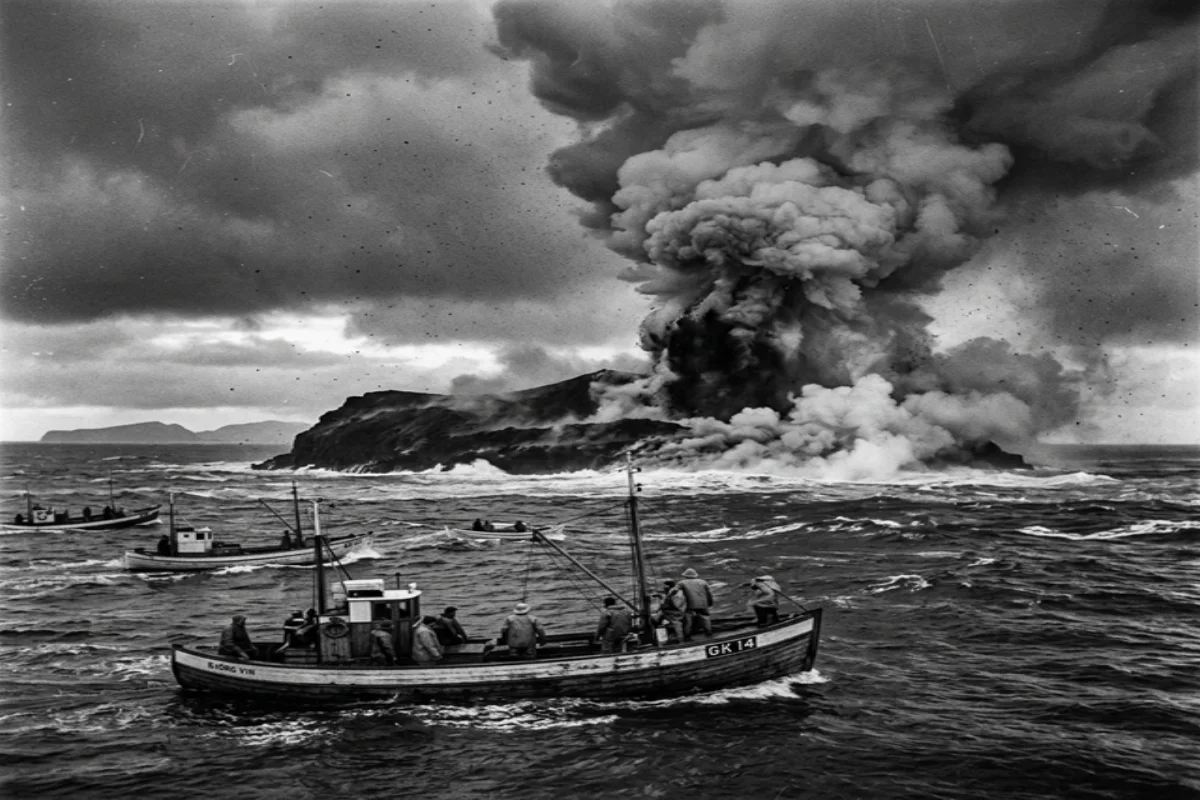
In November 1963, Icelandic fishermen witnessed something truly extraordinary: the birth of an island. Columns of smoke and ash emerged from the ocean south of Iceland, and within days, a new landmass appeared where none had existed before. The island was named Surtsey, after the fire giant of Norse mythology, Surtr.
Surtsey became one of the most important natural laboratories in modern science. Declared a UNESCO World Heritage Site, the island has rigidly controlled access — only authorized scientists are permitted to visit — to study how life colonizes virgin land from scratch. The results have been remarkable and continue to astonish researchers. In 60 years, more than 89 bird species have been observed visiting the island, 335 invertebrate species have colonized the terrain, and a surprising diversity of plants — including grasses, mosses, and even small shrubs — has established itself from seeds brought by birds, wind, and ocean currents. The first vascular plant appeared in 1965, just two years after the island emerged from the sea.
Alien Ecosystems: Life Without Sunlight
Hydrothermal Vents — The Cradle of Life?
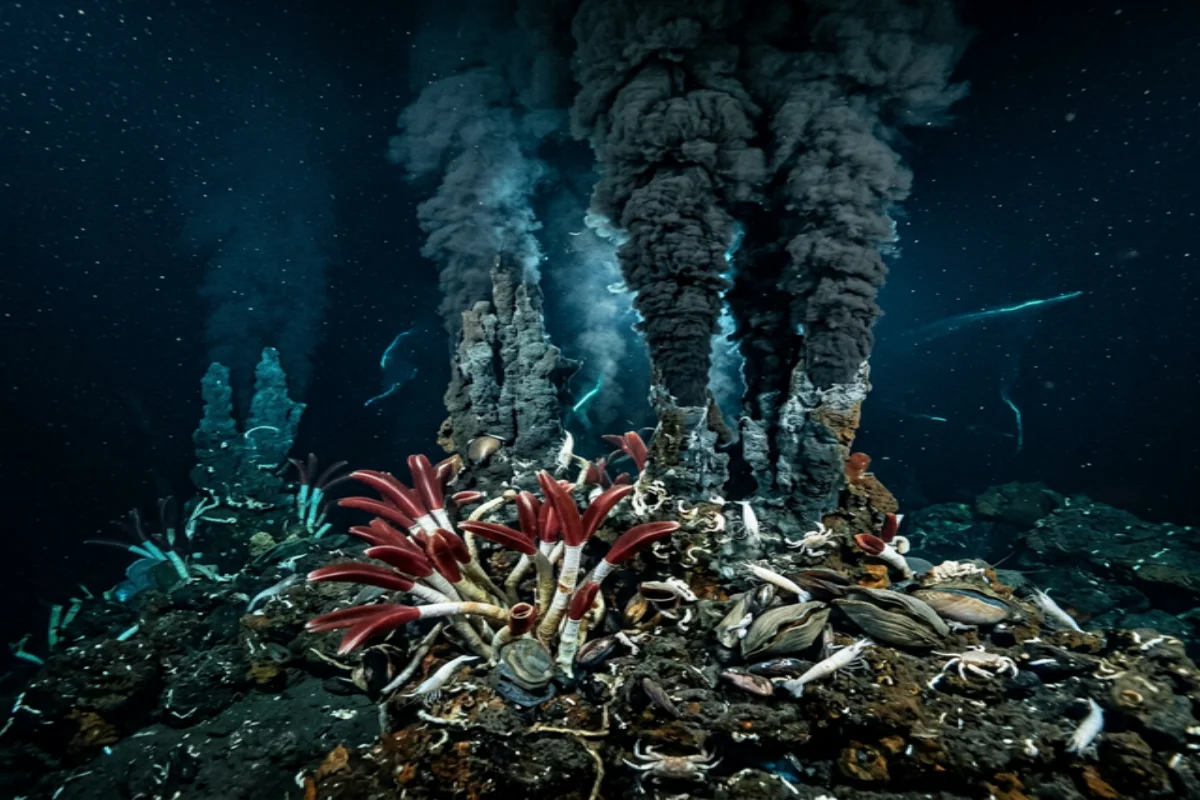
One of the most revolutionary discoveries in modern biology came from submarine volcanoes. In 1977, scientists aboard the submersible Alvin discovered hydrothermal vents on the East Pacific Rise, at 2,500 meters depth. What they found changed our understanding of life forever and rewrote biology textbooks.
Around these vents — where superheated water at up to 400°C gushes from the seafloor loaded with dissolved minerals — an entire ecosystem flourished, completely independent of sunlight. The foundation of the food chain was not photosynthesis, but chemosynthesis: bacteria that extract energy from chemical compounds dissolved in the volcanic water.
The Inhabitants of the Underwater Inferno
The organisms living around hydrothermal vents are true terrestrial aliens:
- Giant tube worms (Riftia pachyptila): Grow up to 2 meters long, have no mouth, no stomach, and no anus. They survive thanks to symbiotic bacteria living inside them that perform chemosynthesis
- Blind shrimp (Rimicaris exoculata): Lost their eyes over evolution, but developed organs that detect infrared radiation from the hot vents
- Hydrothermal mussels and barnacles: Colonize the volcanic chimneys, feeding on chemosynthetic bacteria
- Pompeii worm (Alvinella pompejana): Lives attached to the walls of hydrothermal chimneys at temperatures up to 80°C — it is the most heat-tolerant multicellular animal known to science
The discovery of these ecosystems revolutionized astrobiology. If life can thrive in such extreme conditions on Earth's ocean floors, could similar organisms inhabit the subsurface oceans of moons like Europa (Jupiter) and Enceladus (Saturn)?
The Real Dangers of Submarine Volcanoes
Volcanic Tsunamis
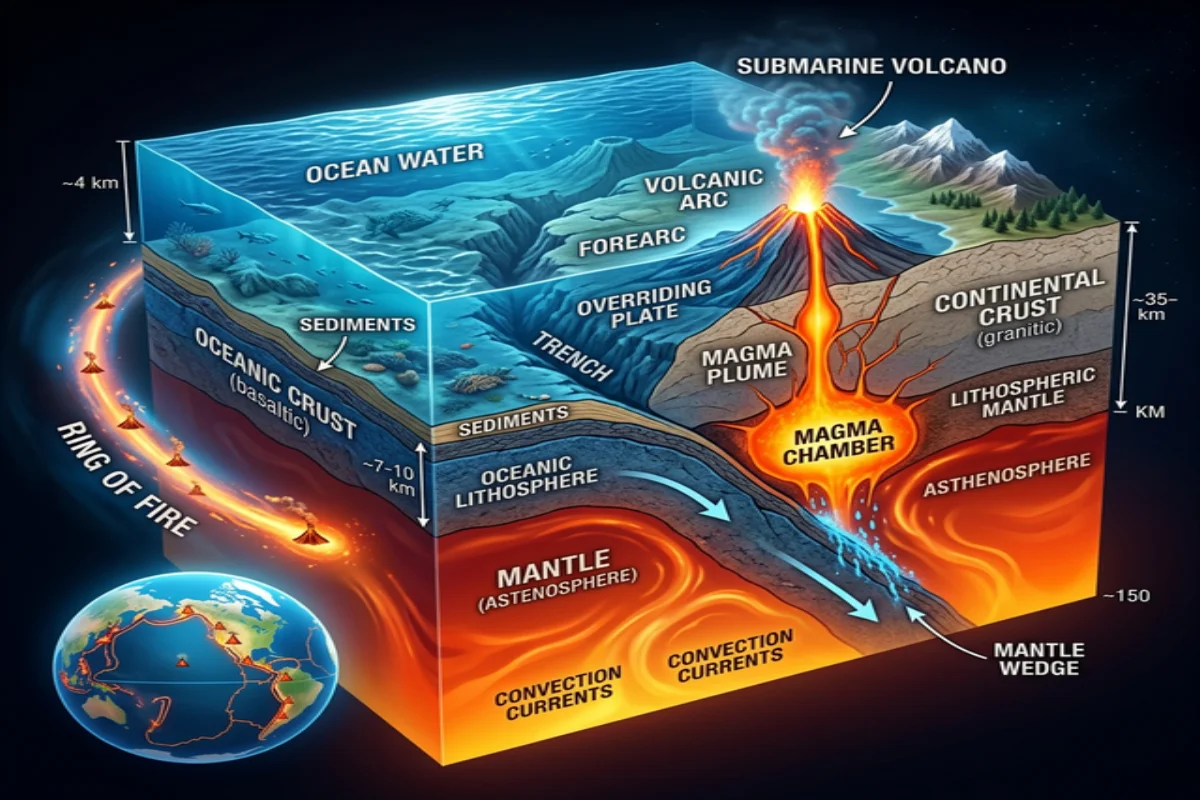
Submarine eruptions can generate devastating tsunamis through several different mechanisms:
- Direct water displacement: The volcanic explosion moves billions of tonnes of water instantaneously
- Caldera collapse: When the roof of a magma chamber collapses, creating a depression on the seafloor
- Flank collapse: Large portions of the volcano can collapse, displacing enormous volumes of water
- Subaqueous pyroclastic flows: Masses of hot rock and gas that move rapidly across the seafloor
The Krakatoa tsunami of 1883 (36,000 dead), the Mount Unzen tsunami of 1792 (15,000 dead in Japan), and the Hunga Tonga tsunami of 2022 are all examples of the destructive power of submarine volcanic eruptions.
Lethal Gas Emissions
Shallow submarine volcanoes can release enormous quantities of toxic gases:
- CO₂ (carbon dioxide): In high concentrations, it can create "dead zones" where vessels sink due to buoyancy loss and divers die from asphyxiation
- SO₂ (sulfur dioxide): Contributes to acid rain and can affect global climate
- H₂S (hydrogen sulfide): Highly toxic to most marine organisms
- Methane: A potent greenhouse gas contributor that can destabilize methane hydrates on the ocean floor
Climate Impact of Major Eruptions
Larger submarine eruptions can significantly affect global climate:
- Cooling effect (sulfur aerosols): Major eruptions that project SO₂ into the stratosphere can cool the planet for 1-3 years
- Warming effect (water vapor): As demonstrated by Hunga Tonga, large quantities of water vapor in the stratosphere can cause temporary warming
- Ocean acidification: Massive CO₂ emissions can locally acidify the oceans, threatening coral reefs and marine life
Monitoring and Technology: The Race to Map the Invisible
The "Unknown Unknown" Problem
Perhaps the most disturbing fact about submarine volcanoes is our collective ignorance about them. We know only about 10% of the volcanoes on the ocean floor. The other 90% remain completely unmapped, their activity and eruptive potential entirely unknown. To put this in perspective: if we applied the same negligence to terrestrial volcanoes, it would be equivalent to completely ignoring Vesuvius, Mount St. Helens, and Pinatubo — simply pretending they don't exist. The difference is that, with submarine volcanoes, we're not pretending: we genuinely don't know where many of them are, how active they are, or when they might erupt.
Monitoring Technologies in 2026
Science is advancing rapidly in this field with increasingly sophisticated tools:
- Multibeam sonar: High-resolution bathymetric mapping of the ocean floor, revealing previously unknown volcanic formations
- OOI (Ocean Observatories Initiative): Network of permanent sensors on the seafloor, like those installed at Axial Seamount, monitoring seismicity, deformation, and chemical composition in real time
- AUV (Autonomous Underwater Vehicles): Autonomous submarine vehicles that can independently explore and map volcanoes at great depths
- Ocean observation satellites: Can detect sea surface temperature anomalies caused by submarine volcanic activity
- Hydrophones: Networks of underwater microphones that detect eruption sounds thousands of kilometers away
- AI and Machine Learning: Algorithms being trained to identify eruption precursor patterns in seismic and chemical data
Success Stories
Monitoring has already proven its value several times:
- Axial Seamount (2015): Eruption predicted months in advance thanks to OOI sensors
- Nishinoshima, Japan: Continuous eruptions since 2013 monitored by satellites, enabling navigation alerts
- Kick-'em-Jenny, Caribbean: A 1.5 km exclusion zone maintained around the volcano, protecting vessels
The Future: New Dangers and New Opportunities
Deep-Sea Mining
Hydrothermal vents and submarine volcanoes deposit valuable minerals: gold, silver, copper, zinc, manganese, cobalt, and rare earths. These deposits, known as polymetallic massive sulfides, can contain metal concentrations 10 times greater than equivalent terrestrial mines. In 2026, deep-sea mining companies like The Metals Company are pressuring governments for commercial exploration permits, generating an intense debate between economic benefits — metals essential for electric vehicle batteries and renewable energy — and environmental protection of the unique and largely unknown ecosystems that inhabit these regions.
Oceanic Geothermal Energy
Iceland is already actively exploring the possibility of extracting geothermal energy directly from submarine volcanic sources, harnessing the extraordinary heat of these structures. The Iceland Deep Drilling Project (IDDP) demonstrated that superheated volcanic fluids can generate up to 10 times more energy than traditional geothermal wells, paving the way for a clean and sustainable energy revolution.
The Awakening of the Giants
Several massive submarine volcanoes are being monitored with concern in 2026:
- Marsili (Mediterranean): Europe's largest submarine volcano, just 150 km from the Italian coast, with the potential to generate tsunamis in the Mediterranean
- Brothers (New Zealand): Center of intense hydrothermal and seismic activity
- Monowai (South Pacific): One of the world's most active submarine volcanoes, with frequent eruptions detected by hydrophones
Conclusion: The Planet We Don't Know
Submarine volcanoes remind us of a humbling and powerful truth: we know more about the surface of the Moon and Mars than about the floor of our own oceans. Beneath kilometers of dark, frigid water, inaccessible to human vision, a continuous and monumental geological activity shapes our planet, creates ecosystems that defy the imagination and the limits of biology, and harbors devastating dangers that we are only just beginning to comprehend and catalog.
The 2022 Hunga Tonga eruption was a brutally clear wake-up call: the next large-scale submarine volcanic event may not be as "far away" as we think. With more than 1 billion people living in vulnerable coastal zones and less than 1% of submarine volcanoes being monitored, investing in ocean mapping and warning systems is not a luxury — it is an urgent survival necessity. The United Nations Decade of Ocean Science (2021-2030) set the goal of mapping at least 80% of the seafloor by 2030, but in 2026 we are still far from this objective.
As submarine volcanologist Dr. Bill Chadwick has said: "We are not monitoring most of the world's submarine volcanoes. And when one of them decides to wake up, we need to be ready."
Sources and References
- NOAA — Ocean Exploration — Submarine volcano discoveries
- Smithsonian Global Volcanism Program — Global volcano database
- Ocean Observatories Initiative — Axial Seamount monitoring
- USGS — Volcano Hazards Program — Volcanic hazards
- Nature — Hunga Tonga eruption analysis — Scientific analysis of the eruption
- British Geological Survey — European submarine volcano data


