After 1997, Viradouro lived through turbulent years — relegations, financial crises, and constant changes in artistic direction. The school even dropped to the Série A (now Série Ouro) and had to reinvent itself multiple times.
This period of hardship forged the school's resilient character. The Barreto community never abandoned their samba school, even in the darkest moments — and that loyalty would be spectacularly rewarded.
From 2019 onward, Viradouro entered what is now called the "Golden Era" — an unparalleled streak of results in contemporary carnival.
- 2020: Champion with "Viradouro de Alma Lavada" (honoring the Ganhadeiras of Itapuã)
- 2024: Champion with "Arroboboi, Dangbé" (celebrating West African vodun traditions)
- 2026: Champion with "Pra Cima, Ciça!" (tribute to Master Ciça)
Since 2019, the school has accumulated three championships, two runner-up finishes, a 3rd and a 4th place — placing them 1st in the LIESA cumulative ranking.
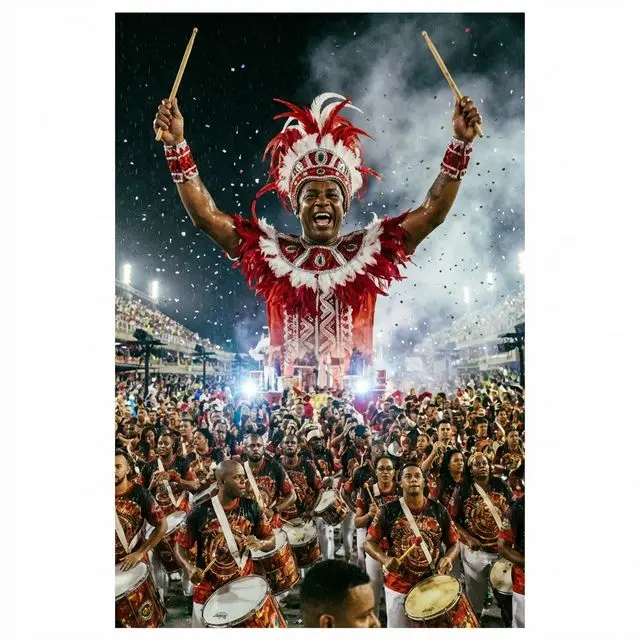
The theme pays a lifetime tribute to Master Ciça (Moacyr Silva Pinto), celebrating 70 years of life and 55 years of parades with Viradouro. Honoring a member during their lifetime — while still active — is unprecedented in the history of Rio's Carnival.
Master Ciça atop the float: In a recreation of an iconic 2007 moment, Ciça conducted the drum section from atop a float while hundreds of percussionists played in perfect sync. The entire Sambódromo rose to its feet in tears.
Juliana Paes' return: Actress Juliana Paes returned as Drum Queen after an 18-year absence — generating nationwide excitement.
Breathtaking front commission: Choreographed by Priscilla Mota and Rodrigo Negri, the front commission narrated Ciça's musical journey with cinematic choreography.
| Position |
School |
Theme |
| 🥇 |
Unidos do Viradouro |
"Pra Cima, Ciça!" |
| 🥈 |
Beija-Flor de Nilópolis |
"Bembé" |
| 🥉 |
Acadêmicos do Salgueiro |
Tribute to Rosa Magalhães |
| 4th |
Unidos de Vila Isabel |
"Macumbembê, Samborembá" |
| 5th |
Imperatriz Leopoldinense |
"Chameleon" (Ney Matogrosso) |
| 6th |
Estação Primeira de Mangueira |
"Master Sacaca" |
| 7th |
Mocidade Independente |
"Rita Lee — The Patron Saint of Freedom" |
| 8th |
Unidos da Tijuca |
"Carolina Maria de Jesus" |
| 9th |
Acadêmicos do Grande Rio |
"The Mangue Nation" |
| 10th |
Portela |
Tribute to Prince Custódio |
| 11th |
Paraíso do Tuiuti |
"Lonã Ifá Lukumí" |
| 12th |
⬇️ Acadêmicos de Niterói |
Relegated to Série Ouro |
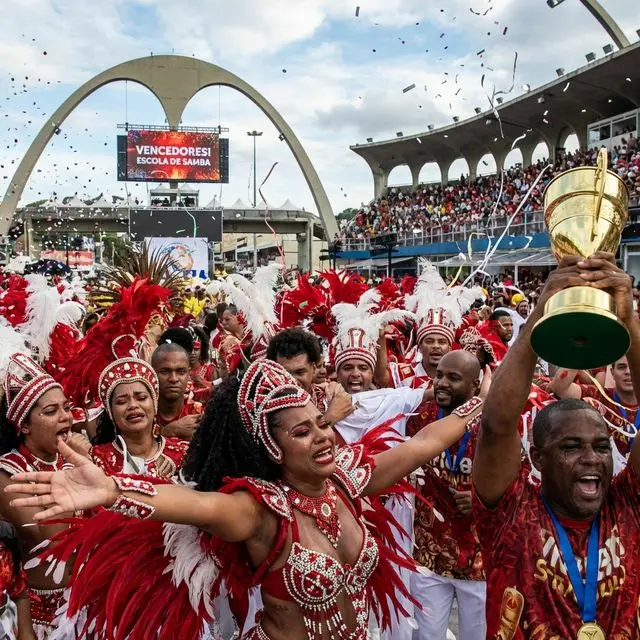
The top six schools will parade again at the Champions Parade on Saturday, February 21, 2026.
| Year |
Title |
Theme |
Designer |
| 1997 |
1st |
"Darkness! Light! The Explosion of the Universe" |
Joãosinho Trinta |
| 2020 |
2nd |
"Viradouro with a Washed Soul" |
Marcus Ferreira & Tarcísio Zanon |
| 2024 |
3rd |
"Arroboboi, Dangbé" |
Marcus Ferreira & Tarcísio Zanon |
| 2026 |
4th (Tetra) |
"Go, Ciça!" |
Marcus Ferreira & Tarcísio Zanon |
Founded on March 24, 1946, in the Niterói neighborhood of Barreto, Unidos do Viradouro has one of the most dramatic trajectories in Brazilian Carnival history. The school spent decades in the lower divisions, fighting for recognition in a city dominated by other samba schools. Their first major breakthrough came in 1997 when they won the Rio Carnival Special Group for the first time, shocking the establishment with a spectacular parade about the history of perfume.
The school's colors — red and white — became symbols of resilience. After their 1997 triumph, Viradouro faced years of inconsistency, bouncing between the Special Group and Series A. Financial difficulties, internal disputes, and the challenge of competing against Rio's wealthy traditional schools made every carnival a battle for survival.
The turning point came in the 2010s when new leadership invested in creative talent and community engagement. Viradouro began attracting top carnavalescos (carnival designers) and composers, building a reputation for innovative and visually stunning parades that pushed artistic boundaries.
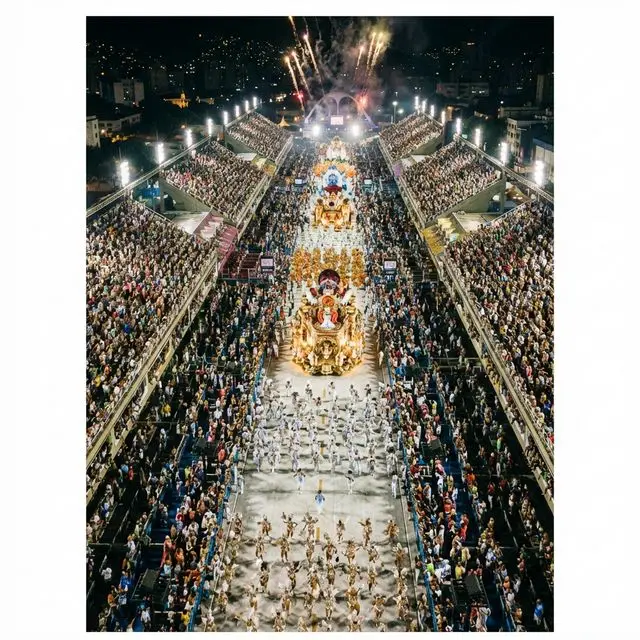
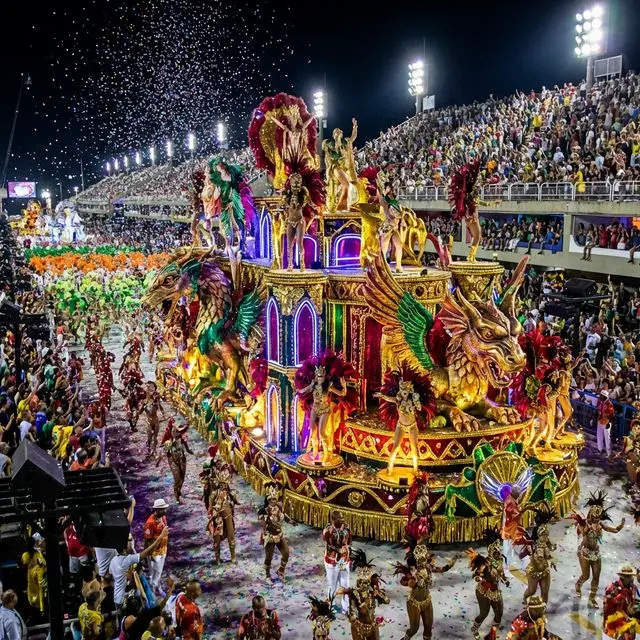
Viradouro's 2026 championship parade was a tour de force of creativity, emotion, and technical excellence. The theme explored the power of ancestral memories and how they shape Brazilian identity, weaving together African, Indigenous, and European cultural threads into a cohesive narrative that moved judges and spectators alike.
The opening float featured a massive kinetic sculpture representing the Tree of Memory, with branches that moved mechanically to reveal hidden figures from Brazilian folklore. Over 3,500 performers participated, each costume meticulously designed to reflect different aspects of the theme. The drumline (bateria) delivered a flawless performance, maintaining perfect rhythm throughout the 82-minute parade.
The school's samba-enredo (theme song) became an instant classic, with a melody that was both catchy and emotionally resonant. Composed by a team of six songwriters, the lyrics told the story of a grandmother passing down stories to her grandchildren, connecting past and present through the power of oral tradition.
Rio Carnival's Special Group is judged by 40 judges across 10 categories: bateria (drums), samba-enredo (theme song), harmonia (harmony between singing and dancing), evolução (flow and energy), enredo (theme development), alegorias e adereços (floats and props), fantasias (costumes), comissão de frente (front commission), mestre-sala e porta-bandeira (flag bearer pair), and conjunto (overall impression).
Viradouro received maximum scores (10.0) from multiple judges in alegorias, fantasias, and conjunto. Their front commission, which performed a contemporary dance piece about the awakening of ancestral spirits, received unanimous 10s — a rare achievement. The school's total score of 269.8 out of 270 was one of the highest in recent carnival history.
Winning the Rio Carnival championship brings enormous economic benefits. Viradouro's victory generated an estimated R$ 50 million in direct and indirect revenue for Niterói. The school received increased sponsorship deals, merchandise sales skyrocketed, and tourism to the Viradouro neighborhood surged.
The victory also boosted Niterói's cultural identity. As the only school from outside Rio de Janeiro city to regularly compete in the Special Group, Viradouro's success is a source of immense pride for Niterói's 500,000 residents. Local businesses reported a 30% increase in carnival-related revenue compared to the previous year.
The final standings of Rio Carnival 2026 Special Group saw intense competition among all 12 schools. Beyond Viradouro's championship, the parade featured memorable performances from several schools. The runner-up delivered a powerful tribute to Brazilian music history, while the third-place school explored environmental themes with innovative recycled-material costumes.
The bottom two schools faced relegation to Series A, continuing the high-stakes drama that makes Rio Carnival one of the world's most competitive cultural events. Each school invests between R$ 15-40 million in their parade, making the financial pressure as intense as the artistic competition.
Samba schools are far more than carnival organizations — they are the cultural heart of their communities. Throughout the year, Viradouro operates as a social institution, offering music classes, dance workshops, and educational programs for children in Niterói's underserved neighborhoods. The school employs hundreds of artisans, seamstresses, welders, and artists who spend months creating the elaborate floats and costumes.
The preparation for carnival begins immediately after the previous year's parade ends. The carnavalesco presents the theme concept, composers submit samba-enredo candidates, and the community votes on the winning song. This democratic process ensures that the entire community feels ownership of the parade. Rehearsals begin six months before carnival, with weekly sessions that draw thousands of participants and spectators to the school's quadra (rehearsal space).
The economic ecosystem around samba schools generates billions of reais annually. From fabric suppliers to float builders, from costume designers to food vendors, carnival sustains entire supply chains. Viradouro's 2026 parade alone employed over 800 professionals and 2,700 volunteer community members.
Modern carnival parades incorporate cutting-edge technology that would surprise most spectators. Viradouro's 2026 floats used LED mapping, hydraulic systems, and even drone-synchronized lighting effects. The largest float measured 14 meters tall and 12 meters wide, requiring specialized engineering to navigate the 700-meter Sambódromo runway.
Sound engineering serves as a decisive factor. The bateria's 300 percussionists must be heard clearly throughout the venue, requiring strategic microphone placement and real-time audio mixing. The school's sound team uses wireless monitoring systems to ensure the samba-enredo is perfectly synchronized across the entire parade formation.
Costume technology has also evolved dramatically. Lightweight materials like EVA foam and 3D-printed components replaced heavy traditional materials, allowing performers to dance more freely while wearing increasingly elaborate designs. Some costumes in Viradouro's 2026 parade incorporated fiber-optic lighting powered by small rechargeable batteries hidden within the fabric.
Rio Carnival's influence extends far beyond Brazil's borders. The event attracts over 2 million tourists annually, generating approximately R$ 4 billion in revenue for Rio de Janeiro's economy. Television broadcasts reach 180 countries, making it one of the most-watched cultural events on Earth. The Sambódromo parades have inspired carnival celebrations worldwide, from London's Notting Hill Carnival to Tokyo's Asakusa Samba Carnival.
For Viradouro specifically, the 2026 championship opened doors to international partnerships. The school received invitations to perform at cultural festivals in Portugal, Angola, and Japan. Their innovative use of technology in the parade attracted attention from entertainment companies interested in applying similar techniques to concerts and theatrical productions. The school's social media following tripled in the weeks following the victory, with their championship samba-enredo accumulating over 50 million streams on Spotify and YouTube combined.
The championship also reignited discussions about carnival's role in preserving Afro-Brazilian cultural heritage. Viradouro's theme about ancestral memories resonated deeply with audiences seeking authentic cultural expression within a progressively globalized world. Cultural critics praised the school for balancing spectacular entertainment with meaningful social commentary, setting a new standard for what carnival parades can achieve as an art form.
With the 2026 championship secured, Viradouro now faces the challenge of defending their title in 2027. History shows that back-to-back championships are extremely rare, achieved by only a handful of schools in carnival history. The school has already begun preparations, with the carnavalesco revealing that the 2027 theme will explore the relationship between humanity and water, from sacred rivers to rising sea levels. Community engagement remains strong, with record enrollment in the school's youth programs and cultural workshops, ensuring that Viradouro's legacy extends far beyond the Sambódromo.
At its core, carnival is about transformation and liberation. For the communities that make up samba schools like Viradouro, the parade represents months of collective effort, artistic expression, and cultural pride distilled into a single unforgettable night.
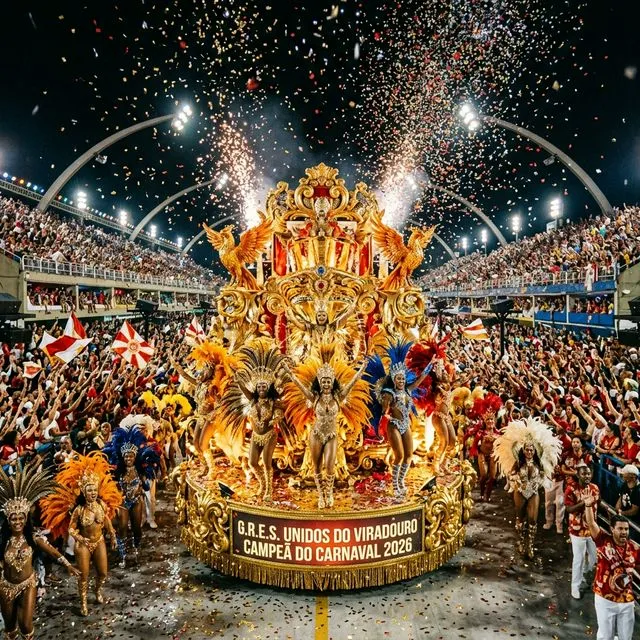
Unidos do Viradouro won the 2026 Rio Carnival with the theme "Pra Cima, Ciça!", a lifetime tribute to Master Ciça. The school claimed its 4th Special Group title (four-time champion).
Viradouro is a four-time champion of the Special Group, with titles in 1997, 2020, 2024, and 2026. They also won 18 titles in the Niterói Carnival between 1947 and 1985.
Beija-Flor de Nilópolis finished second with the theme "Bembé", followed by Acadêmicos do Salgueiro in third place.
The Champions Parade takes place on Saturday, February 21, 2026, at the Marquês de Sapucaí Sambódromo.
Moacyr Silva Pinto, known as Master Ciça, is Viradouro's drum master. With 70 years of age and 55 years of dedication to the school, he is considered one of the greatest drum masters in the history of Rio's Carnival.
Last updated: February 18, 2026
Hercules Gobbi is a cultural writer and researcher, passionate about the history of samba and the evolution of Brazilian Carnival as intangible heritage.