- "Baby" — The hit that launched a Canadian kid to global stardom in 2010
- "Never Say Never" — The collaboration with Jaden Smith that became an anthem of resilience
- "That Should Be Me" — The ballad that made millions of teenagers cry in 2011
Each song was met with a wave of emotion that spread through the crowd like an electric current. Videos of the moment flooded TikTok, Instagram, and X within minutes, with the hashtag #BieberCoachella reaching the top of global trending topics.
What made Bieber's performance so special was not just the music — it was the context. An entire generation that grew up with these hits was there, in the desert, now 25 or 30 years old, reliving memories of a simpler time. Coachella 2026 perfectly captured the spirit of millennial nostalgia that dominated pop culture throughout the year.
Bieber, visibly emotional, paused between songs to thank the audience: "You gave me everything. Every single one of you. This song changed my life, and seeing you sing it here, 16 years later... this is everything."
If Bieber delivered raw emotion, Sabrina Carpenter delivered art. Her Coachella 2026 performance was not a concert — it was an immersive experience in five acts that redefined what is possible on a festival stage.
The show began with the lights going completely dark. A short film was projected on the giant screens, narrated by the unmistakable voice of Sam Elliott — the iconic mustachioed actor known for films like The Big Lebowski and A Star Is Born. Elliott's deep, drawling voice guided the audience through a narrative that set the tone for the spectacle: a journey of transformation, power, and vulnerability.
Sabrina appeared on stage in the first of her elaborate costumes, each designed to represent a different phase of the narrative. The costume changes were executed with theatrical precision, happening in seconds while the set design transformed around her.
The moment nobody expected: Susan Sarandon appeared on stage for an interaction that blended humor and drama. Minutes later, Will Ferrell emerged in a comedic moment that drew laughter from the entire audience. The combination of an Oscar-winning actress with one of Hollywood's greatest comedians at a pop show in the desert was as absurd as it was brilliant.
With the narrative built across the previous acts, Sabrina delivered her most powerful songs with an intensity that silenced the desert. The visual production reached its peak, with holographic projections and lighting effects that transformed the stage into its own universe.
The show ended as it began — with cinema. A visual epilogue closed the narrative as Sabrina disappeared from the stage, leaving the audience in reverent silence before an explosion of applause.
Sabrina Carpenter's performance dominated online conversations for days. Music critics compared it to the conceptual shows of Beyoncé and Lady Gaga. The hashtag #SabrinaCoachella accumulated billions of views, and clips from the Sam Elliott-narrated short film became instant memes.
Coachella 2026 witnessed a historic moment when Karol G took the main stage and did what no Latin artist had done before. The Colombian star, who in recent years has established herself as one of the biggest names in global music, was not there just to perform — she was there to stake her claim.
Karol G's presence on the Coachella main stage represented far more than a musical performance. It was the culmination of decades of Latin music's fight for recognition on the world's biggest stages. From Selena to Shakira, from Daddy Yankee to Bad Bunny, every Latin artist who came before paved the way for this moment.
Karol G delivered a show that blended reggaeton, pop, and elements of traditional Colombian music, proving that Latin music does not need to adapt to the mainstream — the mainstream needs to adapt to it. The audience, composed of people from dozens of nationalities, sang every word in Spanish, demonstrating the global reach the genre has achieved.
Artists and producers from around the world celebrated the moment on social media. The performance was described as "a watershed moment" and "the moment Coachella finally reflected the reality of global music."
| Artist |
Performance Style |
Most Viral Moment |
Surprise Element |
Social Media Impact |
| Justin Bieber |
Nostalgic singalong, emotional connection |
"Baby" sung by 100K people |
Setlist focused on 2010s hits |
#BieberCoachella trending globally |
| Sabrina Carpenter |
Theatrical spectacle in 5 acts |
Short film narrated by Sam Elliott |
Susan Sarandon and Will Ferrell on stage |
Billions of views on show clips |
| Karol G |
High-energy Latin show with historic milestone |
First Latina to achieve main stage milestone |
Fusion of reggaeton with Colombian music |
Global celebration of Latin music |
| The Strokes |
Rock with powerful sound and attitude |
Magnetic stage presence |
Volume and energy that dominated the festival |
Rock revival in the mainstream |
| Anyma |
Immersive electronic and visual |
Surprise Do LaB set after cancellation |
Redemption arc that became legendary |
Surprise set videos went viral |
| David Guetta |
High-energy DJ set |
Transitions between classic and new hits |
Cutting-edge visual production |
Millions of livestream views |
| KATSEYE |
K-Pop with unique visual concept |
"Demon hunters" performance |
Themed choreography and costumes |
Global fandom amplified the moment |
| Addison Rae |
Contemporary pop with choreography |
Transition from influencer to artist |
Proved musical credibility live |
Debate about digital-era artists |
Anyma's story at Coachella 2026 deserves its own chapter. The electronic music artist, known for his immersive visual productions and sets that blend technology with emotion, was scheduled for a main stage performance on Friday.
Adverse weather conditions — the strong winds that marked the 2026 edition — forced the cancellation of his main stage performance. For an artist who had prepared an elaborate visual show, the news was devastating. Fans who had planned their entire festival day around Anyma's performance expressed frustration on social media.
But Anyma did not accept defeat. In a decision that would become legendary, he showed up for a surprise set at the Do LaB — Coachella's alternative stage known for hosting experimental and unexpected performances.
What happened there was magical. Without the grandiose visual production of the main stage, Anyma delivered a raw, intimate, and electrifying set that connected with the audience in a way that perhaps the original performance could not have. The energy of the Do LaB, smaller and more intimate, amplified every beat, every transition, every moment of collective ecstasy.
Videos of Anyma's surprise Do LaB set became some of the most shared content from the festival. The narrative arc — from devastating cancellation to triumphant redemption — transformed what could have been a footnote into one of the most memorable stories in Coachella history.
Amid epic performances and historic musical moments, one of the most talked-about topics at Coachella 2026 had nothing to do with music. North West, daughter of Kim Kardashian and Kanye West, appeared at the festival with one of the trendiest hairstyles of 2026.
The look was instantly photographed, shared, and replicated. Within hours, tutorials on how to reproduce the hairstyle began appearing on TikTok and YouTube. Hair salons in Los Angeles, New York, and London reported an increase in demand for the style in the following days.
North West, at just 12 years old, has already established herself as one of the most influential figures in youth fashion — and Coachella 2026 only reinforced that status.
The group KATSEYE brought to Coachella 2026 a visual concept that nobody expected: K-Pop demon hunters. The performance combined precise choreography, elaborate themed costumes, and a visual narrative that transformed the stage into a supernatural battlefield.
The concept resonated deeply with the festival audience, who embraced the aesthetic with enthusiasm. Fans appeared in the following days dressed in outfits inspired by the performance, and the hashtag #KATSEYECoachella trended in several Asian and Western countries simultaneously.
KATSEYE's performance represented the growing influence of K-Pop at Western festivals and demonstrated that the genre continues to evolve and surprise, even in territories traditionally dominated by rock and Anglo-Saxon pop.
In an edition dominated by pop, electronic, and reggaeton, The Strokes proved that rock still has plenty to say. The New York band took the stage and commanded the festival with a powerful sound that reverberated across the desert.
Julian Casablancas and company delivered a performance that reminded everyone why 2000s alternative rock was so important. The volume was deafening, the energy was contagious, and the audience — including many who were not necessarily rock fans — surrendered to the brute force of live music.
The Strokes' performance was described by critics as "a reminder that real instruments and genuine attitude are still the most powerful combination in music." In an era of backing tracks and autotune, hearing distorted guitars and live drums at maximum volume was an almost spiritual experience.
Coachella 2026 was also the stage for a fascinating generational contrast. On one side, David Guetta — the French DJ who has defined the sound of mainstream electronic music for two decades — delivered a set that mixed his classics with new productions, proving that longevity in electronic music is possible when you have genuine talent.
On the other side, Addison Rae — who started as a TikTok content creator and migrated to music — performed for an audience that knew her first as a digital influencer. Her Coachella performance was a credibility test, and opinions were divided: some celebrated her as a representative of a new era of multimedia artists, while others questioned whether digital fame translates to live musical talent.
This contrast between Guetta and Addison Rae perfectly encapsulated the creative tension that keeps Coachella relevant: the ability to put the past and future of music on the same stage and let the audience decide.
No retrospective of Coachella 2026 would be complete without mentioning the wind. Adverse weather conditions were a constant character throughout the festival, affecting performances, knocking down temporary structures, and creating moments of chaos that inevitably became viral content.
The cancellation of Anyma's main stage performance was the most visible consequence, but the wind affected virtually every aspect of the festival. Artists had to adapt their performances, technical crews worked in extreme conditions, and the audience faced sandstorms that transformed the desert into an almost apocalyptic landscape.
Paradoxically, the wind also contributed to the mystique of Coachella 2026. Images of artists performing against gusts of wind, of audiences resisting adverse conditions, and of improvised moments caused by the weather became part of the festival's narrative — a narrative of resilience and adaptation that resonated with the spirit of the 25th anniversary edition.
The 2026 edition consolidated a trend that had been developing since the pandemic: Coachella as a hybrid experience. Millions of people followed the festival via livestream, and the broadcast production reached a quality level that rivaled the in-person experience.
The in-person audience lived the complete experience: the desert heat, the crowd's energy, the surprise of unplanned moments, the human connection of singing along with strangers. Nothing replaces the feeling of being physically present when Bieber sings "Baby" and 100,000 people sing along.
Livestream viewers had access to exclusive camera angles, real-time commentary, instant replays, and the ability to switch between stages with a click. The digital experience of Coachella 2026 was so well produced that many argued it was, in some respects, superior to the in-person experience.
This duality points to the future of major music festivals: events that exist simultaneously in the physical and digital worlds, serving different audiences with complementary experiences. Coachella 2026 was not just a festival — it was a model for what cultural events can become.
If there is one theme that unified Coachella 2026, it was millennial nostalgia. From Bieber singing 2010s hits to The Strokes reviving 2000s rock, the festival was a celebration of a generation that now has purchasing power, cultural influence, and a deep longing for simpler times.
This nostalgia is not accidental. It is a powerful cultural force shaping music, fashion, entertainment, and even technology in 2026. Coachella captured that energy and channeled it into experiences that resonated with both those who lived through that era and younger generations discovering it now.
The presence of artists like KATSEYE and Addison Rae alongside Bieber and The Strokes created an intergenerational dialogue that is rare at music festivals. Coachella 2026 was not just about looking back — it was about understanding how the past informs the present and shapes the future.
The 25th anniversary of Coachella established a new standard for music festivals worldwide. The lessons are clear:
- Nostalgia is powerful — but it needs to be authentic, not calculated
- Genre diversity — modern audiences want rock, pop, electronic, reggaeton, and K-Pop at the same festival
- Hybrid experiences — the future is in-person AND digital
- Genuine surprises — the most memorable moments are the ones not in the script
- Resilience — adverse conditions can create the best stories
Coachella 2026 will be remembered not just for the shows, but for what it represented: a festival that, at 25 years old, proved it can still surprise, move, and define global pop culture.
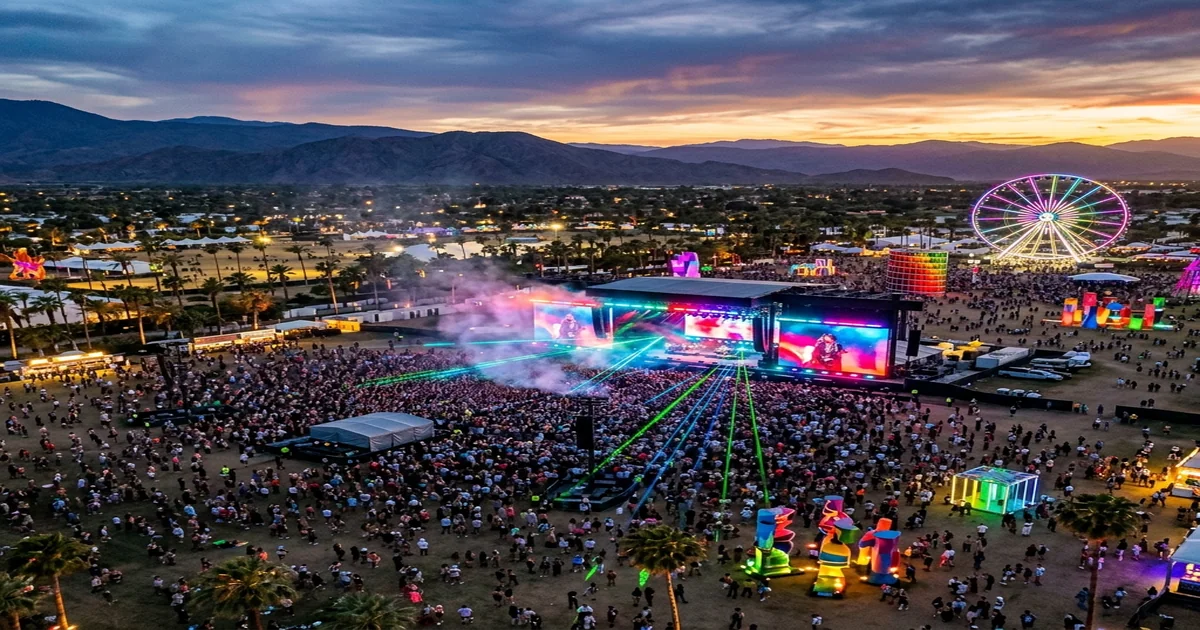
The Indio desert has seen a lot in 25 years of Coachella. But the 2026 edition will hold a special place in history — not just of the festival, but of pop culture as a whole. From Bieber making a stadium cry with "Baby" to Sabrina Carpenter reinventing the concept of a live show, from Karol G breaking barriers to Anyma turning a cancellation into legend, every moment contributed to a cultural mosaic that defined April 2026.
Coachella turned 25 doing what it has always done best: bringing people together, celebrating music, and creating memories that last forever. And if the next 25 years are as intense as this one, the California desert will continue to be the center of the musical universe — at least for two weekends in April.
Read also: