
Do you think you can tell a true fact from a well-told lie? Get ready to have that certainty destroyed. We've gathered 15 absolutely surprising claims about science, history, nature and technology — some are true, others are elaborate lies. Your mission? Guess which ones are real before reading the answer. Good luck — you'll need it.
Each fact comes with a detailed answer and the scientific explanation behind it. At the end, count how many you got right and discover your knowledge level!
FACT 1: There are more trees on Earth than stars in the Milky Way
Your answer: True or False?
TRUE! According to a study published in the journal Nature in 2015 by Yale University, Earth has approximately 3 trillion trees (3,000,000,000,000). The Milky Way, in turn, contains between 100 and 400 billion stars. Therefore, there are at least 7 times more trees on Earth than stars in our galaxy.
This data is frequently received with skepticism, but the explanation is simple: trees are relatively small compared to stars, but they exist in enormous densities in tropical, boreal, and temperate forests around the world. Each hectare of the Amazon rainforest, for example, can contain more than 400 trees. Multiply that by the extent of all forests on the planet and the number becomes astronomical — literally more than the stars.
FACT 2: The Pacific Ocean is so large it contains its own antipode
Your answer: True or False?
TRUE! The Pacific Ocean is so absurdly large that if you drill through the Earth from one side to the other starting from certain points in the Pacific, you'll come out on the other side... still in the Pacific. In technical terms, there are points in the Pacific whose antipode (the diametrically opposite point on the globe) is also in the Pacific.
The Pacific covers approximately 165.25 million km² — an area larger than all continents combined. From the coast of Japan to the coast of Colombia, there are more than 17,000 km of uninterrupted ocean without a single island along certain routes.
FACT 3: Humans share 60% of their DNA with bananas
Your answer: True or False?
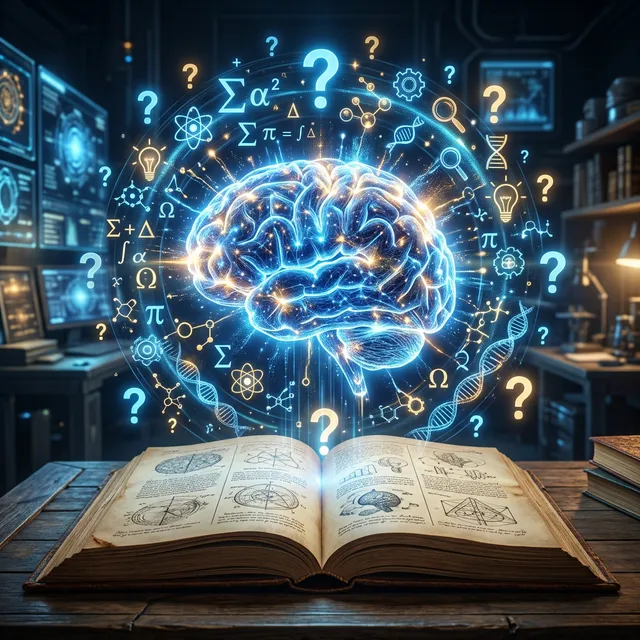
TRUE! It seems absurd, but it's pure molecular biology. Humans share approximately 60% of their genetic sequence with bananas (Musa acuminata). This happens because all living beings on Earth share a common ancestor, and therefore many fundamental genes for basic cellular function — such as those controlling cell division, energy production, and protein synthesis — are conserved through billions of years of evolution.
Putting it in perspective: we share 98.7% of DNA with chimpanzees, 85% with mice, 80% with cows, 61% with fruit flies, and 60% with bananas. The 60% represents essential genes for basic cellular life that all eukaryotic organisms need to function.
FACT 4: The Great Wall of China is visible to the naked eye from space
Your answer: True or False?
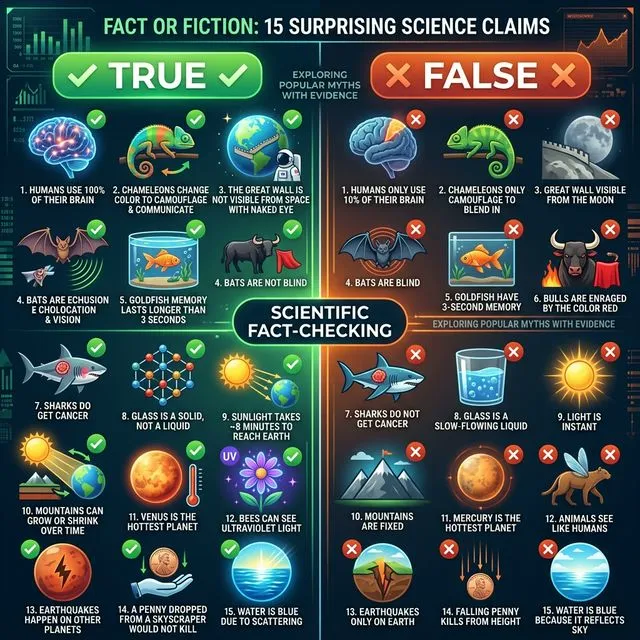
FALSE! This is one of the most persistent myths in popular culture. The Great Wall of China is not visible to the naked eye from low Earth orbit, let alone from the Moon. Several astronauts have confirmed this, including Yang Liwei, China's first astronaut, who stated in 2003 that he couldn't see it from space.
The wall is approximately 6-9 meters wide — making it narrower than many highways. Trying to see it from space would be like trying to see a hair from a distance of 3 kilometers. Astronauts can see cities, airports, and highways under ideal conditions, but narrow linear structures like the wall simply don't have enough visual contrast to be distinguished from the surrounding terrain.
FACT 5: Cleopatra lived closer in time to the invention of the iPhone than to the building of the pyramids
Your answer: True or False?
TRUE! This is one of history's most impressive time warps. Cleopatra VII lived from 69 BC to 30 BC. The Great Pyramid of Giza was built around 2560 BC — more than 2,500 years before Cleopatra was born. The iPhone was launched in 2007 AD — only 2,037 years after Cleopatra. Therefore, Cleopatra lived closer to the iPhone's launch (2,037 years) than to the construction of the Great Pyramid (2,491 years).
The data is impressive because we tend to mentally compress "Ancient Egypt" into a single period, when in fact Egyptian civilization lasted thousands of years. For Egyptians contemporary with Cleopatra, the pyramids were already ancient monuments — as distant from them in time as the Roman Empire is from us.
FACT 6: The human body emits a tiny amount of visible light
Your answer: True or False?
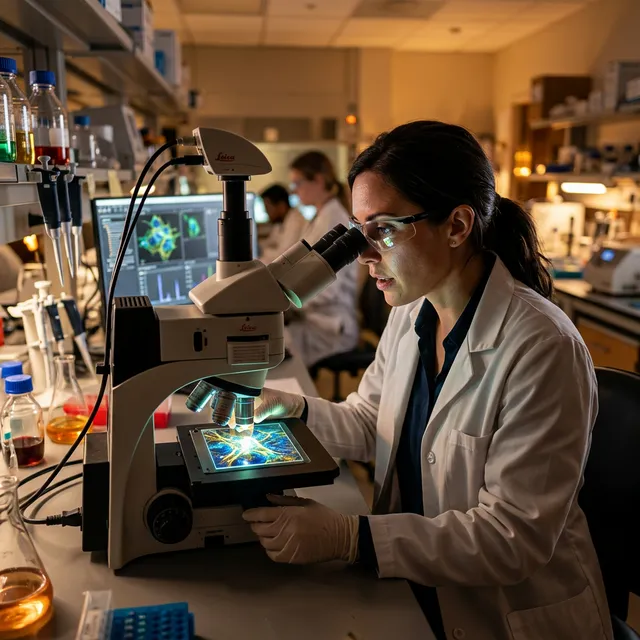
TRUE! Japanese researchers from Kyoto University demonstrated in 2009 that the human body emits an extremely small amount of bioluminescence — visible light produced by cellular chemical reactions. This light is about 1,000 times weaker than what the human eye can perceive, and can only be detected with ultra-sensitive cameras. The intensity varies throughout the day, being strongest in the late afternoon and weakest in the morning.
FACT 7: A teaspoon of a neutron star would weigh 6 billion tons
Your answer: True or False?
TRUE! Neutron stars are supernova remnants — the collapsed core of massive stars. Matter is compressed to such extreme densities that a simple teaspoon of the material would weigh approximately 6 billion tons. For reference, that's roughly the weight of an entire mountain like Mount Everest.
This happens because, in a neutron star, atoms are crushed so violently by gravity that protons and electrons merge into neutrons, and all matter is compacted into an incredibly dense space. A typical neutron star is only 20 km in diameter but contains more mass than the entire Sun. To put it in perspective, if Earth were compressed to the same density, it would fit inside a football field.
FACT 8: Dolphins sleep with one eye open
Your answer: True or False?
TRUE! Dolphins practice what scientists call unihemispheric sleep — only half the brain sleeps at a time, while the other half remains alert. This allows them to continue swimming, surface to breathe, and watch for predators while resting. During this process, one eye stays closed (connected to the sleeping hemisphere) and the other remains open (connected to the active hemisphere). Whales, seals, and some migratory birds also use this fascinating partial sleep strategy.
FACT 9: Honey never spoils — archaeologists found edible 3,000-year-old honey
Your answer: True or False?
TRUE! Archaeologists found pots of honey in Egyptian tombs dated at over 3,000 years — and the honey was still perfectly edible. Honey is one of the few foods that never spoils if stored correctly. This happens for three scientific reasons: first, honey has extremely low moisture content (less than 18%), creating an inhospitable environment for bacteria. Second, it's naturally acidic (pH between 3.2 and 4.5). Third, bees add the enzyme glucose oxidase, generating small amounts of hydrogen peroxide — a natural antimicrobial.
FACT 10: Lightning can strike the same place twice
Your answer: True or False?
TRUE! The popular saying "lightning never strikes the same place twice" is completely false. Lightning can and frequently does strike the same place multiple times. The Empire State Building in New York, for example, is struck by lightning approximately 25 times per year. The explanation is simple: lightning is attracted to tall, conductive points.
FACT 11: Using a cell phone at a gas station can cause an explosion
Your answer: True or False?
FALSE! Despite warnings at virtually every gas station in the world, there is no documented case of a cell phone causing an explosion at a gas station. Studies conducted by the University of Oklahoma and other institutions demonstrated that modern cell phones simply don't generate sufficient sparks to ignite gasoline vapors. The rare explosions at gas stations are generally caused by static electricity generated by the human body entering and exiting the car.
FACT 12: The human stomach produces a new mucous lining every two weeks
Your answer: True or False?
TRUE! The human stomach produces hydrochloric acid so strong (pH 1-2) it could dissolve metal. To protect itself from its own acidity, the stomach completely renews its mucous lining every 2 weeks — an impressive and continuous cellular regeneration process.
FACT 13: There are more bacteria in the human body than human cells
Your answer: True or False?
IT DEPENDS! For decades, it was claimed bacteria outnumbered human cells 10:1. However, a 2016 study from the Weizmann Institute revised these numbers. The current estimate is that the human body contains approximately 30 trillion human cells and 38 trillion bacteria — a ratio of approximately 1.3:1, not 10:1. So technically, yes, there are more bacteria than human cells, but the difference is much smaller than previously believed.
FACT 14: Sharks are older than trees
Your answer: True or False?
TRUE! The first sharks appeared in the oceans approximately 450 million years ago, while the first trees emerged "only" 350 million years ago. That means sharks swam in primordial oceans for 100 million years before the first tree appeared on land. Sharks are older than dinosaurs (230 million years), older than flowers (130 million years), and older than Saturn's rings. They survived five mass extinctions — including the one that eliminated the dinosaurs — and continue thriving in modern oceans.
FACT 15: The distance between Earth and the Moon is increasing every year
Your answer: True or False?
TRUE! The Moon is moving away from Earth at a rate of approximately 3.8 centimeters per year. This is measured precisely using laser reflectors placed on the lunar surface by the Apollo missions. The cause is angular energy transfer from tides. In practical terms, days on Earth are getting microscopically longer each century, and the Moon is slowly distancing itself. In a distant future, the Moon will be so far away that total solar eclipses will no longer be possible.
Final Score: How Did You Do?
Count how many you got right and compare:
| Correct | Level |
|---|---|
| 13-15 | Encyclopedic genius! You truly know how to distinguish fact from fiction |
| 10-12 | Very good! Your critical sense is sharp |
| 7-9 | Reasonable — some popular myths got you |
| 4-6 | Be careful — you believe more myths than you should |
| 0-3 | Are you sure memes aren't your primary source of information? |
Conclusion: Truth is Stranger than Fiction
If this list taught us anything, it's that the real world is infinitely stranger, more fascinating, and more surprising than any fiction. The ability to question claims, seek reliable sources, and admit when we were wrong is what separates critical thinking from credulity. In an era dominated by social media, recommendation algorithms, and artificial intelligence generating content at dizzying speeds, the ability to distinguish truth from lies has never been so important — and so difficult.
Share this article with friends and family and discover who is the true master of "True or False" in your social circle. And remember: never underestimate the power of a true fact to be more surprising than any lie. The universe doesn't need us to invent wonders — it's already wonderful enough. Just know where to look, question what you're told, and keep your curiosity always alive. After all, in a world where truth is frequently stranger than fiction, maintaining an open mind and active skepticism is the perfect combination for navigating the ocean of information that surrounds us every day.
Sources and References
- Nature — Global Tree Count (Yale, 2015)
- NASA — Visibility of the Great Wall of China
- Weizmann Institute — Bacteria/Human Cells Ratio
- National Geographic — Facts About Sharks
- Scientific American — Neutron Stars
Last updated: March 10, 2026
Bonus: 5 Additional Quick Facts
Before you go, here are 5 additional quick facts to test your newly sharpened critical thinking skills:
BONUS 1: Octopuses have three hearts and blue blood
TRUE! Octopuses have two branchial hearts that pump blood to the gills and one systemic heart that pumps blood throughout the body. Their blood is blue because it uses copper-based hemocyanin instead of iron-based hemoglobin for oxygen transport. This copper-based system is more efficient at transporting oxygen in cold, low-oxygen deep-sea environments, which is one reason octopuses thrive in diverse ocean conditions from shallow tropical reefs to the deepest ocean trenches. Interestingly, when an octopus swims, its systemic heart actually stops beating, which is why these creatures prefer crawling to swimming — it's less tiring because they don't have to deal with their main heart literally shutting down every time they need to move quickly through the water.
BONUS 2: You can hear the ocean in a seashell
FALSE! What you actually hear when holding a seashell to your ear is not the ocean — it's the ambient sound around you being resonated and amplified by the shell's cavity. The same effect can be achieved with any hollow object, such as a cup or even your cupped hand. The shell acts as a resonating chamber that amplifies certain frequencies of ambient noise, creating a sound similar to ocean waves. This phenomenon is known as Helmholtz resonance. The reason it sounds like the ocean is partly psychological — our brains interpret the white noise-like sound and associate it with crashing waves because that's what we expect to hear from a seashell. It's a beautiful example of how our expectations shape our perception of reality.
BONUS 3: The shortest war in history lasted 38-45 minutes
TRUE! The Anglo-Zanzibar War, fought between the United Kingdom and the Sultanate of Zanzibar on August 27, 1896, lasted between 38 and 45 minutes, making it the shortest recorded war in history. The conflict began when Sultan Khalid bin Barghash refused to step down after succeeding his father without British approval. The British delivered an ultimatum that expired at 9:00 AM, and when Khalid refused to yield, the Royal Navy began bombarding the palace. By 9:45 AM, the palace flag was shot down, and Khalid had fled to the German consulate for asylum. The war resulted in approximately 500 Zanzibari casualties and only one slightly wounded British sailor. The entire conflict was essentially over before most people had finished their morning tea — making it possibly the most efficient military operation in history, if somewhat one-sided.
BONUS 4: A day on Venus is longer than a year on Venus
TRUE! Venus takes about 243 Earth days to complete one rotation on its axis (a Venusian day), but only about 225 Earth days to orbit the Sun (a Venusian year). This means that on Venus, a single day lasts longer than a year. To make things even more confusing, Venus rotates in the opposite direction to most other planets in our solar system (retrograde rotation), so the Sun rises in the west and sets in the east. Scientists believe this unusual rotation may be the result of a massive collision with another celestial body early in Venus's history, or the result of tidal effects from its thick atmosphere interacting with the Sun's gravitational pull over billions of years.
BONUS 5: Humans and giraffes have the same number of neck vertebrae
TRUE! Despite the enormous difference in neck length, both humans and giraffes have exactly 7 cervical vertebrae in their necks. The difference is that each giraffe vertebra can be over 25 centimeters long, while human cervical vertebrae are only about 1-2 centimeters each. This pattern of 7 cervical vertebrae is remarkably consistent across almost all mammals, from mice to whales to giraffes. The few exceptions include manatees and two-toed sloths, which have only 6 cervical vertebrae, and three-toed sloths, which have 9. This consistency suggests that the number 7 was established very early in mammalian evolution and is controlled by deeply conserved developmental genes, specifically the Hox genes, that are so fundamental that mutations affecting them are almost always lethal or severely harmful.
Why Critical Thinking Matters More Than Ever
In 2026, we live in an era of unprecedented information abundance. Every day, billions of pieces of content are created, shared, and consumed across the internet. Among this flood of information, distinguishing fact from fiction has become not just an intellectual exercise but a survival skill.
The facts in this article demonstrate that reality is often far more surprising than fiction. Trees outnumber stars. Cleopatra lived closer to smartphones than to the pyramids. Honey from ancient Egypt is still edible. These truths remind us that the real world, when examined closely, contains more wonder than any fantasy.
But the false claims — the Great Wall visible from space, cell phones causing explosions at gas stations — show how easily plausible-sounding myths can become accepted truth. In an age where misinformation spreads faster than ever, the ability to question, verify, and think critically is our most valuable tool for navigating the world.
Whether you scored 15/15 or 3/15 on this quiz, what matters most is the willingness to be curious, to question assumptions, and to embrace the joy of learning something new. The world is full of surprises.


