
March 11, 2026 will go down in history as the day Iran crossed a line the world believed was red. Iranian drones struck near Dubai International Airport — the world's third busiest — injuring four people. Simultaneously, commercial ships were attacked in the Strait of Hormuz, the vital artery through which one-fifth of all oil consumed worldwide passes. Brent crude surged to $110. And Iran's joint military command announced it would begin targeting banks and financial institutions across the Middle East.
We are witnessing in real-time the most dangerous escalation in the Persian Gulf since the 1973 Yom Kippur War — and the consequences could be felt by every person on the planet.
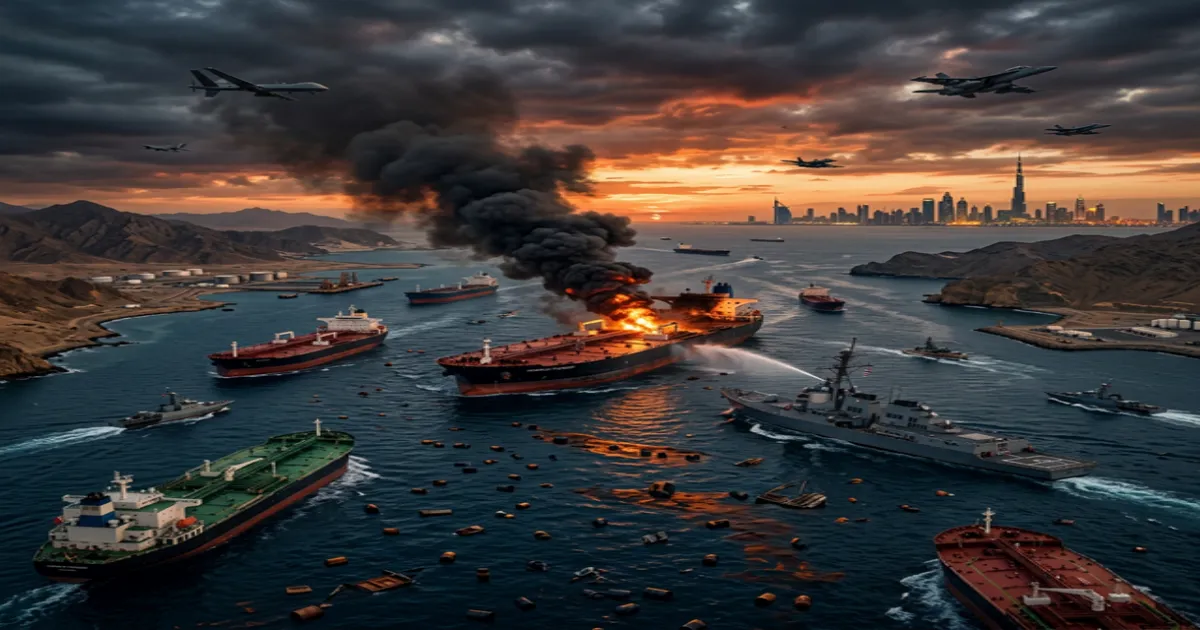
Complete Timeline: February 28 to March 11, 2026
February 28: The Beginning
The US and Israel launch joint airstrikes against Iran's military leadership and nuclear infrastructure — "Operation Roaring Lion."
March 1-5: Iranian Retaliation
Iran responds with ballistic missiles and drones against targets in Saudi Arabia and UAE. Oil refining facilities in Ras Tanura damaged. Brent jumps from $70 to $90 in 48 hours.
March 6-8: Hormuz Blockade
Iran's Revolutionary Guard announces any ship attempting to cross the Strait will be "treated as a military threat." Hundreds of tankers halt. The Thai cargo ship Mayuree Naree is hit, catches fire — 3 crew missing, 20 rescued. The Japanese container ship ONE Majesty and bulk carrier Star Gwyneth also struck.
March 9: IEA Intervenes
The International Energy Agency announces the largest-ever strategic oil reserve release: 400 million barrels.
March 10: US Destroys Mines
The US Navy destroys 16 Iranian mine-laying vessels in the Strait. The operation is rebranded as "Operation Epic Fury", with the White House using video game aesthetics to promote it.
March 11 (Today): Dubai Attacked
Two Iranian drones hit near Dubai International Airport, injuring 4. Iran announces it will begin attacking banks and financial institutions. Brent hits $110. Global markets crash.
The Strait of Hormuz: Why 25 Miles Can Cause Global Recession
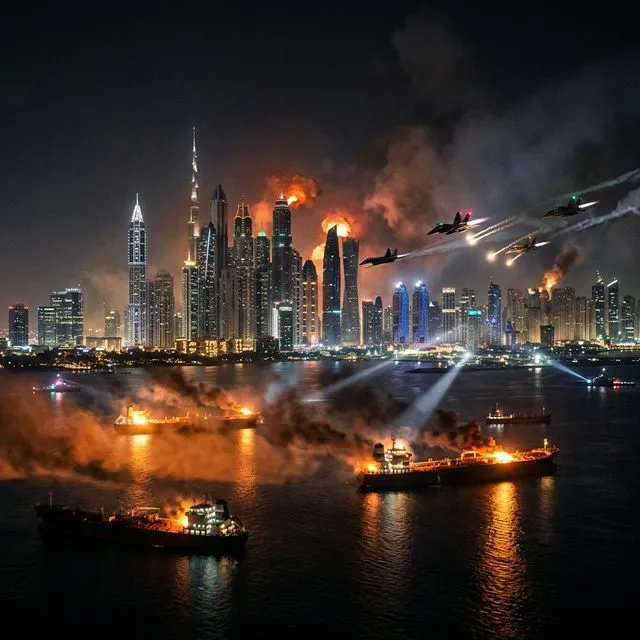
The Strait of Hormuz is a chokepoint of just 25 miles wide between Iran and Oman. Daily transit:
- 21 million barrels of oil — 21% of global consumption
- One quarter of all LNG worldwide
If blocked for more than 2 weeks, Goldman Sachs analysts project:
- Oil at $150-180/barrel
- Global inflation up 2-4 percentage points
- Technical recession in European and Asian economies
Three Possible Scenarios
Scenario 1: De-escalation (25% probability)
China-mediated ceasefire. Strait reopens. Oil returns to $85-90 in 60 days.
Scenario 2: Prolonged Conflict (50% probability)
Medium-intensity conflict stabilizes for 3-6 months. Oil oscillates $95-120. Inflation rises but recession avoided.
Scenario 3: Total Escalation (25% probability)
Iran attacks Saudi oil installations at scale or completely blocks Hormuz. US responds with limited ground operation. Oil exceeds $150. Global recession inevitable. Duration: 12+ months.
Conclusion: The World on a Razor's Edge
While you read this article, hundreds of tankers sit idle in the Persian Gulf, diplomats negotiate feverishly behind closed doors, and trading algorithms buy and sell billions in milliseconds based on every tweet, every shot, and every statement. The world isn't at war — but it's dangerously close.
Sources and References
- PBS News — Iran Attacks Dubai Airport March 2026
- The Guardian — Strait of Hormuz Crisis
- AP News — Iran Gulf Conflict
- Washington Post — Oil Crisis Analysis
- Reuters — IEA Strategic Reserves
- Wikipedia — 2026 Iran War
Last updated: March 11, 2026


