
In January 2026, an international team of oceanographers, atmospheric physicists, and marine geologists published what may be the most comprehensive study ever conducted on the Bermuda Triangle. After 7 years of research, data collection, and analysis of more than 200 documented cases, the scientists reached conclusions that completely change our understanding of this mysterious region.
The result? There is no single "mystery" of the Bermuda Triangle — there are multiple rare natural phenomena that, combined with human and statistical factors, created the legend we know.
What Is the Bermuda Triangle
The Region
The Bermuda Triangle is an area of approximately 580,000 square miles in the North Atlantic Ocean, bounded by three points:
- Miami, Florida (USA)
- San Juan, Puerto Rico
- Bermuda Islands
This region is one of the busiest in the world in terms of maritime and air traffic, with thousands of ships and planes crossing daily.
The Legend
Since the 1960s, the Bermuda Triangle gained fame as a place where ships and planes mysteriously disappear. Stories of compasses going haywire, sudden storms, and traceless disappearances fueled decades of speculation.
The most famous cases include:
- Flight 19 (1945): 5 US Navy bombers disappeared during a training exercise
- USS Cyclops (1918): Cargo ship with 309 people vanished without a trace
- Star Tiger and Star Ariel (1948-1949): Two British commercial planes disappeared in the region
The 2026 Study: Revolutionary Methodology
International Team
The study was conducted by researchers from:
- NOAA (National Oceanic and Atmospheric Administration — USA)
- University of Southampton (UK)
- Woods Hole Oceanographic Institution (USA)
- University of Bergen (Norway)
- JAMSTEC (Japan Agency for Marine-Earth Science and Technology)
Technology Used
Scientists employed cutting-edge technology never before used in combination:
1. Continuous Monitoring Satellites
- High-resolution images every 15 minutes
- Real-time atmospheric anomaly detection
- Ocean current tracking
2. Smart Oceanographic Buoys
- 47 buoys equipped with pressure, temperature, and chemical composition sensors
- 24/7 satellite data transmission
- Detection of gas releases from the ocean floor
3. Autonomous Underwater Drones
- 3D ocean floor mapping
- Sediment and geological structure analysis
- Methane crater identification
4. Artificial Intelligence
- Pattern analysis across 75 years of meteorological data
- Correlation between atmospheric conditions and incidents
- Predictive modeling of phenomena
The 5 Main Discoveries
1. Rogue Waves
The most impactful discovery of the study.
Researchers documented the formation of rogue waves — giant waves that appear seemingly out of nowhere — with much greater frequency than in other oceanic regions.
Data collected:
- 23 waves above 65 feet recorded in 7 years
- 3 waves above 100 feet (height of a 10-story building)
- Average formation time: less than 60 seconds
Why it happens in the Triangle:
The region is a convergence point of three ocean current systems:
- Gulf Stream (north)
- Antilles Current (south)
- North Equatorial Current (east)
When these currents collide under specific wind and atmospheric pressure conditions, they can generate monstrous waves capable of splitting ships in half.
"A 100-foot wave appearing in less than a minute gives no vessel time to prepare. It's like being hit by a building made of water." — Dr. Simon Boxall, University of Southampton
2. Methane Pockets
The ocean floor of the Bermuda Triangle contains vast deposits of methane hydrates — ice that traps methane gas in its molecular structure.
The phenomenon:
When these deposits destabilize (from earthquakes, temperature, or pressure changes), they release enormous amounts of methane gas that rise to the surface in giant bubbles.
Documented effects:
- Drastic reduction in water density: A ship can literally "sink" in water full of gas bubbles, as the water-gas mixture doesn't provide sufficient buoyancy
- Surface explosions: Methane is flammable — engine sparks can cause explosions
- Instrument interference: High methane concentrations affect electronic equipment
Evidence found:
Underwater drones mapped 47 methane craters on the ocean floor, some over half a mile in diameter. Sediment analyses confirmed massive gas releases over the past 100 years.
3. Hexagonal Storms
One of the most surprising discoveries came from satellite image analysis: the formation of hexagonal clouds over the region.
What they are:
Cloud formations with straight edges and angles of approximately 120°, creating unusual geometric patterns.
Why they're dangerous:
These formations are associated with microbursts — extremely localized downward wind gusts that can reach 105 mph.
Characteristics:
- Appear without warning
- Last only 5-15 minutes
- Impact area: 0.6-3 miles in diameter
- Invisible on conventional radar
A plane flying at 10,000 feet can be hit by a microburst and lose altitude so rapidly there's no time for recovery.
4. Magnetic Anomalies
The study confirmed what pilots and navigators have reported for decades: anomalous magnetic variations in the region.
Identified cause:
The Bermuda Triangle sits over one of the few regions on the planet where magnetic north and geographic north align (zero magnetic variation). This, combined with mineral deposits on the ocean floor, creates fluctuations in the local magnetic field.
Practical effects:
- Compasses can oscillate up to 15° in a matter of minutes
- GPS can show positioning errors of up to 1,600 feet
- Automatic navigation systems can recalculate routes incorrectly
Important: These anomalies are not "supernatural" — they are measurable and predictable geophysical phenomena with adequate equipment.
5. The Human Factor
Perhaps the study's most important discovery is statistical: the Bermuda Triangle is not more dangerous than other high-traffic regions.
Data analysis (1945-2025):
- Incidents per million crossings in the Triangle: 0.47
- Incidents per million crossings in the North Sea: 0.52
- Incidents per million crossings in the Strait of Malacca: 0.61
Why it seems more dangerous:
- Traffic volume: More ships and planes = more incidents in absolute numbers
- Confirmation bias: Incidents in the region receive more media attention
- Selective documentation: Many "mysterious disappearances" were later explained, but the explanations didn't get the same publicity
Famous Cases Reexamined
Flight 19 (1945)
The legend: 5 TBM Avenger bombers disappeared during a training exercise. A search plane also disappeared.
What the study revealed:
- Radio communication analysis shows the formation leader, Lieutenant Charles Taylor, was disoriented and believed he was over the Gulf of Mexico when he was actually over the Atlantic
- Weather conditions deteriorated rapidly (hexagonal storm documented in records from the era)
- The planes likely ran out of fuel and crashed into the sea
- The search plane (PBM Mariner) was known for fuel leaks — witnesses reported an explosion in the air
USS Cyclops (1918)
The legend: Cargo ship with 309 people disappeared without a trace or distress call.
What the study revealed:
- The ship was overloaded with manganese ore (extremely dense cargo)
- Records show one of the engines was defective
- A severe storm was documented on the probable route
- Current analysis suggests wreckage would have been dispersed across hundreds of miles
- Ships of that era didn't have mandatory radio — many sank without being able to call for help
Ellen Austin (1881)
The legend: A ship found an abandoned vessel, placed crew aboard, and the vessel disappeared twice with different crews.
What the study revealed:
- No official record of the incident exists in any naval archive
- The story first appeared in 1914, 33 years after the supposed event
- It's likely a maritime legend that was incorporated into Bermuda Triangle folklore
Practical Implications
For Navigation
The study resulted in new recommendations for navigation in the region:
For ships:
- Continuous monitoring of methane release bulletins
- Emergency buoyancy systems
- Alternative routes during current convergence conditions
For aircraft:
- Increased minimum altitude over certain areas
- Mandatory microburst detection systems
- Redundant communication protocols
For Science
The study opened new fields of research:
- Rogue wave prediction: AI models are being developed to predict rogue wave formation up to 30 minutes in advance
- Oceanic methane monitoring: Implications for climate change and global maritime safety
- Microscale meteorology: Better understanding of localized atmospheric phenomena
Has the Mystery Ended?
What We Know Now
The 2026 study demonstrated that the Bermuda Triangle is a region where multiple rare natural phenomena occur more frequently than in other parts of the ocean:
- ✅ Rogue waves formed by current convergence
- ✅ Methane release from the ocean floor
- ✅ Hexagonal storms with microbursts
- ✅ Localized magnetic anomalies
- ✅ High traffic volume amplifying statistics
What We Still Don't Know
Some aspects remain under study:
- Why is the current convergence so intense in this specific region?
- What is the exact frequency of methane releases, and is it increasing?
- How can hexagonal storms be predicted further in advance?
Does the Magic Remain?
For mystery lovers, a reflection: knowing how something works doesn't diminish its grandeur.
The Bermuda Triangle remains an extraordinary region — not because of supernatural forces, but because it's a natural laboratory where rare phenomena converge in ways we're still learning to understand.
Science didn't "kill" the Bermuda Triangle mystery. It revealed that reality is even more fascinating than fiction.
Other Mysterious "Triangles" Around the World
The Bermuda Triangle isn't the only stretch of ocean shrouded in mystery:
Dragon's Triangle (Japan): Located in the Pacific between Japan and the Mariana Islands. Fishing vessels disappear regularly. The Japanese government even declared it a "danger zone." The explanation lies in intense submarine volcanic activity and the Kuroshio Current, which can capsize small vessels.
Sargasso Sea: A region of the Atlantic covered by floating Sargassum algae. In the age of sail, ships would get stuck for weeks in nearly windless waters. There are no modern disappearances, but the region's unique ecosystem (it's the only "sea" without coasts, bounded only by currents) still surprises biologists.
Patagonian Coast: The southern coast of Argentina records an unusually high rate of shipwrecks. The combination of extreme winds, cold Antarctic currents, and dense fog makes the region treacherous for navigation.
The ocean as the last frontier: More than 80% of the ocean floor remains unexplored — we know the surface of Mars better. New-generation submersibles and autonomous aquatic drones are rapidly changing this, revealing mountains, valleys, and ecosystems never before seen.
Conclusion

The 2026 study represents a milestone in understanding the Bermuda Triangle. After decades of speculation, we finally have answers based on rigorous scientific data.
The disappearances were real. The danger was real. But the cause was not supernatural — it was a unique combination of natural phenomena that, together, created one of the most challenging regions on the planet for navigation.
For skeptics, the study offers satisfying explanations. For the curious, it opens new questions about how our planet works. And for all of us, it serves as a reminder that the ocean still holds secrets — not mystical, but scientific — waiting to be discovered.
Modern Theories and Investigations

The mysteries that fascinate humanity continue to be investigated with increasingly sophisticated tools. Modern forensic science, with its DNA analysis techniques, digital facial reconstruction, and advanced chemical analysis, is solving cases that remained unanswered for decades or even centuries. However, for every mystery solved, new enigmas emerge, keeping the flame of human curiosity alive.
Psychology also offers valuable insights into why we are so attracted to mysteries. The human brain is programmed to seek patterns and explanations, and when confronted with the unexplained, it enters a state of cognitive tension that is only relieved by resolution. This innate need to understand the unknown is what drives both science and popular fascination with mysteries.
Social media and the internet have created a new era of collaborative investigation. Online communities of amateur detectives have contributed to solving real cases, although they have also generated unfounded conspiracy theories. The challenge is separating legitimate investigation from irresponsible speculation while maintaining scientific rigor even when dealing with topics that defy conventional explanation.
The Human Fascination with the Unknown

Since the dawn of civilization, humanity has been drawn to the mysterious and the unexplained. Myths, legends, and supernatural stories exist in every culture around the world, suggesting that fascination with the unknown is a fundamental characteristic of human nature. This curiosity is the engine that drives both scientific exploration and artistic creation across all societies.
The boundary between the explained and the unexplained is constantly shifting. Phenomena that were considered supernatural in the past — such as lightning, eclipses, and diseases — now have clear scientific explanations. Similarly, mysteries that intrigue us today may find answers in future scientific discoveries. History teaches us to keep an open mind without abandoning healthy skepticism.
The entertainment industry capitalizes on our fascination with mysteries in increasingly creative ways. True crime podcasts, documentaries about unexplained phenomena, and science fiction series feed our appetite for the mysterious while making us question the limits of human knowledge. The mystery genre continues to be one of the most popular across all forms of media worldwide.
Mysterious Places Around the World
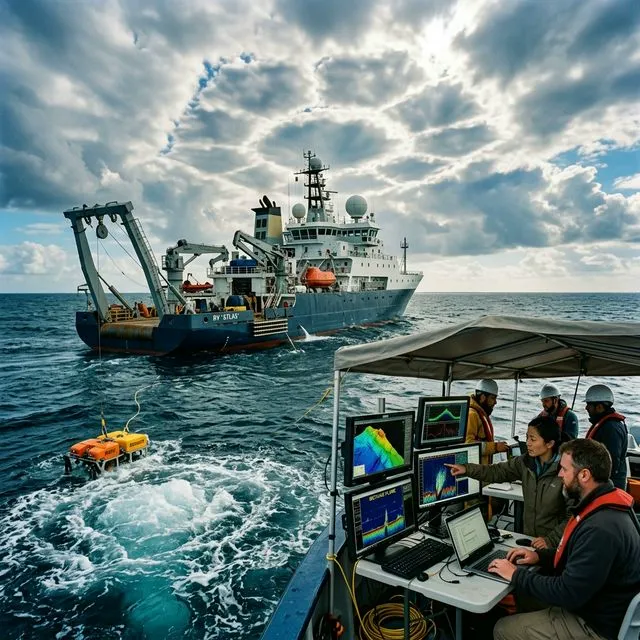
Planet Earth is home to countless places shrouded in mystery and fascination. From the Bermuda Triangle to the Nazca Lines, through Mexico's Zone of Silence and Romania's Hoia Baciu Forest, these locations continue to defy conventional scientific explanations and fuel popular imagination. Each of these places has a unique history of unexplained phenomena and disturbing accounts.
Abandoned cities and ancient ruins also exert a special fascination. Pripyat, the ghost city near Chernobyl, has become a haunting symbol of the destructive power of technology. The ruins of Angkor Wat in Cambodia and Machu Picchu in Peru raise questions about how ancient civilizations managed to build such impressive structures with the technology available at the time.
Cryptozoology, the study of creatures whose existence has not been scientifically proven, continues to attract enthusiasts worldwide. From the Loch Ness Monster to Bigfoot, through the Chupacabra and the Yeti, these legendary creatures occupy a fascinating space between science and folklore. Although most scientists are skeptical, new species continue to be discovered regularly, keeping alive the possibility that some legends may have a kernel of truth.
Frequently Asked Questions
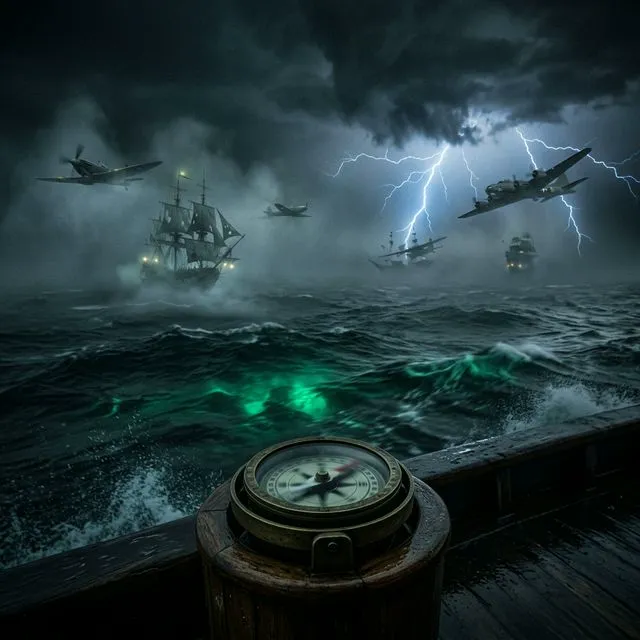
Is the Bermuda Triangle really dangerous?
Statistical analysis shows that the Bermuda Triangle does not have a significantly higher rate of disappearances than other comparable ocean regions. Lloyd's of London insurance data confirms that the area is not especially hazardous. The myth persists due to selective reporting and sensationalism.
What causes disappearances in the Bermuda Triangle?
Most disappearances have conventional explanations: sudden storms, human error, equipment failure, methane gas eruptions from the ocean floor, and the Gulf Stream's strong currents that can quickly disperse wreckage. The area has heavy air and sea traffic, so more incidents naturally occur there.
What is the most famous Bermuda Triangle disappearance?
Flight 19, a group of five US Navy torpedo bombers that vanished on December 5, 1945, is the most famous case. The 14 crew members were never found. Investigation revealed the flight leader became disoriented and led the formation over open ocean until they ran out of fuel. A rescue plane also disappeared during the search.
Has new research explained the Bermuda Triangle?
Recent studies have proposed several scientific explanations: hexagonal cloud formations creating air bombs with winds up to 170 mph, methane hydrate eruptions reducing water density and sinking ships, rogue waves up to 30 meters high, and magnetic anomalies affecting compasses. No single explanation accounts for all incidents.
Sources: NOAA Ocean Research, University of Southampton Marine Science, Woods Hole Oceanographic Institution, Nature Geoscience Journal. Full study published January 2026.
Read also:


