
More than 50 people have died and hundreds were injured following a series of devastating landslides that struck the southern highlands of Ethiopia in the early hours of March 11, 2026. The torrential rains that battered the region for three consecutive days saturated the soil on steep hillsides, triggering avalanches of mud and rock that buried entire villages while their residents slept. This is one of the deadliest natural disasters in the Horn of Africa in 2026, and search and rescue operations continue under perilous conditions.
The disaster occurred in the Gofa zone, in the Southern Nations, Nationalities, and Peoples' Region (SNNPR), an area characterized by steep slopes, unstable laterite soil, and scattered rural communities dependent on subsistence farming. Initial estimates indicate that at least 12 villages were affected, with some entirely buried under meters of mud and debris.
What Happened
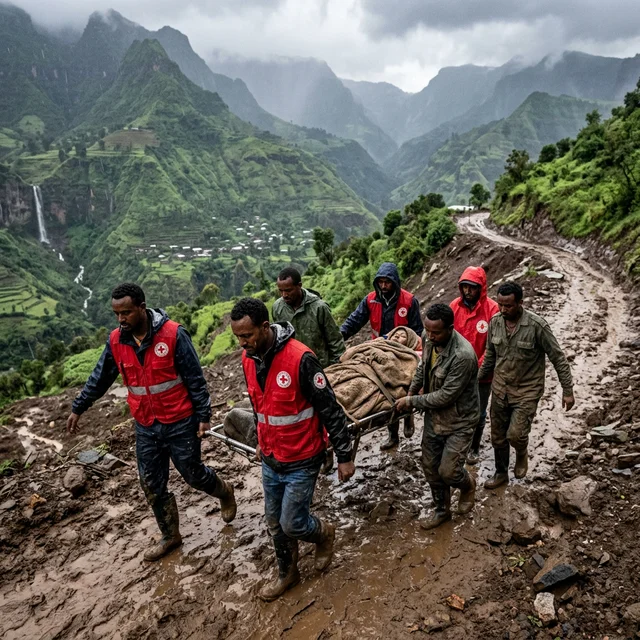
The landslides began in the early hours of March 11, when the rains that had been falling continuously since March 8 finally exceeded the soil's absorption capacity. Witnesses reported hearing a deafening roar before seeing the wall of mud descending the hillside, carrying trees, rocks, and structures in its path.
Disaster Timeline
| Time (local) | Event |
|---|---|
| March 8 | Heavy rains begin in the region |
| March 9 | Local authorities issue landslide risk alert |
| March 10, 11 PM | Rainfall intensifies significantly |
| March 11, 2:15 AM | First major landslide hits Kencho village |
| March 11, 2:40 AM | Second landslide hits neighboring villages |
| March 11, 3:30 AM | Third landslide — the largest — devastates wide area |
| March 11, 6:00 AM | First rescue teams arrive on scene |
| March 11, 12:00 PM | Government declares state of emergency |
The first landslide struck the village of Kencho around 2:15 AM, when virtually all residents were sleeping. The mud avalanche, estimated at over 200,000 cubic meters of material, traveled approximately 1.5 km downhill, sweeping away at least 40 traditional homes made of mud and wood.
In the following hours, two additional landslides hit neighboring villages, raising the death toll and enormously complicating rescue efforts. The third landslide, the most voluminous, occurred around 3:30 AM and was responsible for the majority of fatalities.
The Human Impact
The official figures, still preliminary, paint a devastating picture:
- Confirmed dead: 52 (number expected to rise)
- Injured: over 140
- Missing: at least 30
- Displaced: approximately 8,000 people
- Homes destroyed: over 300
- Communities affected: 12 villages
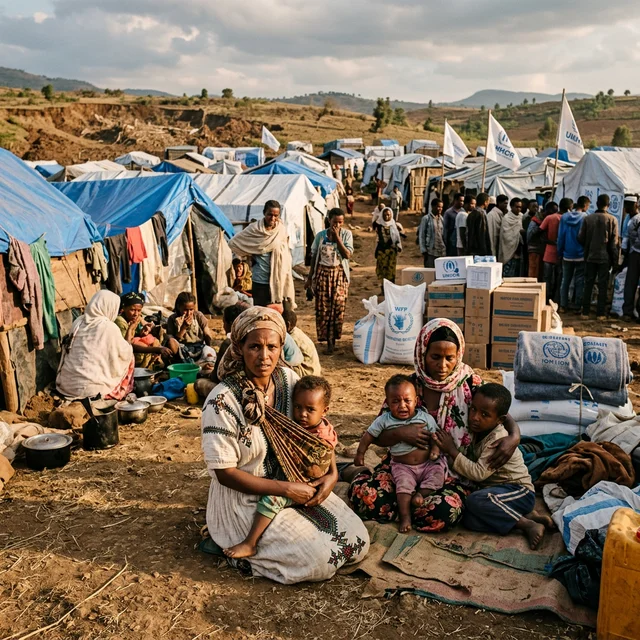
The victims are predominantly subsistence farmers and their families — people living in conditions of extreme vulnerability who had no resources to evacuate when alerts were issued. Many of the homes in the region are built with fragile materials like dried mud, wood, and straw, offering zero protection against a mud avalanche powerful enough to uproot century-old trees.
Survivor Stories
Bekele Tadesse, 34, a coffee farmer who lost five family members, described the moment of the disaster: "I woke up to a sound I had never heard in my life. It was as if the entire mountain was falling. When I managed to get out of my house, there was nothing around anymore — just mud. My neighbors' houses had disappeared."
Maria Gebremariam, 62, a retired teacher, was rescued after being trapped under the rubble of her home for nearly four hours. "I could hear screams around me, but I couldn't move. I thought I was going to die there. When the neighbors found me, I had to insist that they go look for the children first," she said with a choked voice.
Why Are Ethiopia's Highlands So Vulnerable?
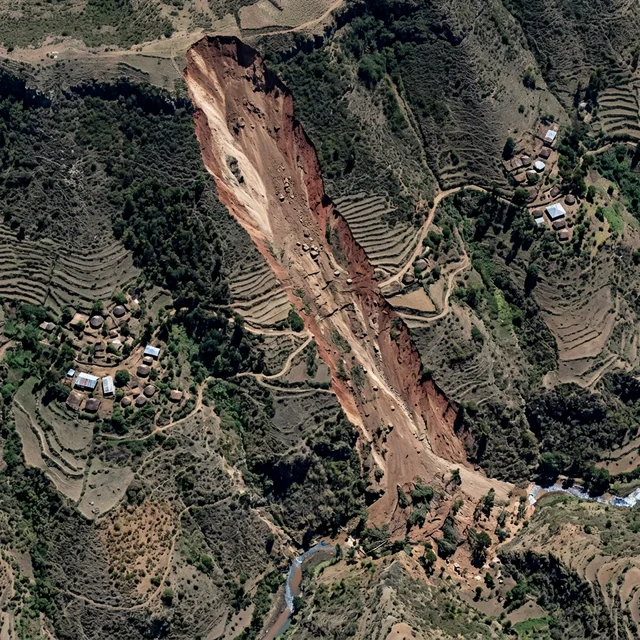
Ethiopia is one of the most landslide-prone countries in Africa, and the southern highlands are particularly susceptible. Several factors converge to create ideal conditions for disaster:
Topography
The Ethiopian highlands feature elevations ranging from 1,500 to 4,500 meters above sea level, with steep slopes that can exceed 45 degrees of incline. These slopes, when saturated with water, become extremely unstable. The local geology, dominated by laterite soils and altered volcanic rocks, aggravates the problem significantly. The combination of altitude, steep terrain, and deeply weathered volcanic substrata creates what geologists describe as one of the most landslide-prone geological environments on the African continent, comparable in risk profile to the Andes and the Himalayas.
Deforestation
Ethiopia has lost approximately 80% of its original forest cover over the last century. Forests played a crucial role in slope stabilization: their roots anchored the soil and their canopy intercepted rainfall, reducing direct impact on the terrain. Without this natural protection, exposed soil is vulnerable to rapid erosion and saturation — two precursor conditions for landslides. The loss of forest cover has been described by environmental scientists as one of the most significant ecological disasters in modern African history, fundamentally altering the hydrology of entire watersheds and creating conditions for catastrophic soil failure during heavy rainfall events.
Over the past two decades, reforestation programs like Prime Minister Abiy Ahmed's "Green Legacy Initiative" have planted billions of seedlings, but forest recovery is a process that takes decades, and many of the most vulnerable areas remain without adequate vegetation cover. Young trees with shallow root systems provide only a fraction of the slope stabilization that mature forests offer, meaning that even reforested areas remain at elevated risk for years after planting.
Hillside Agriculture
Population pressure forces communities to farm increasingly steeper slopes, removing natural vegetation and disturbing soil structure. Traditional agricultural techniques, such as burning to clear land and cultivation without terracing, exacerbate erosion and instability. Ethiopia's population has nearly tripled in the last four decades, from approximately 40 million in 1985 to over 130 million in 2026, putting enormous pressure on available arable land and pushing cultivation into marginal areas that were historically avoided precisely because of their instability.
Climate Change
Climate change is fundamentally altering precipitation patterns in the Horn of Africa. Recent scientific studies indicate that while the total annual rainfall in Ethiopia has not changed significantly, the intensity of precipitation has increased dramatically. In other words, the same amount of rain is falling in shorter, more concentrated periods, putting much greater pressure on vulnerable hillsides.
Data from Ethiopia's National Meteorological Agency shows that extreme precipitation events (defined as more than 50mm in 24 hours) have increased by 35% in the region since 2000. The rains preceding the March 2026 landslides were particularly intense, with recordings of up to 120mm in just 12 hours — nearly triple the average for the period.
The Humanitarian Response
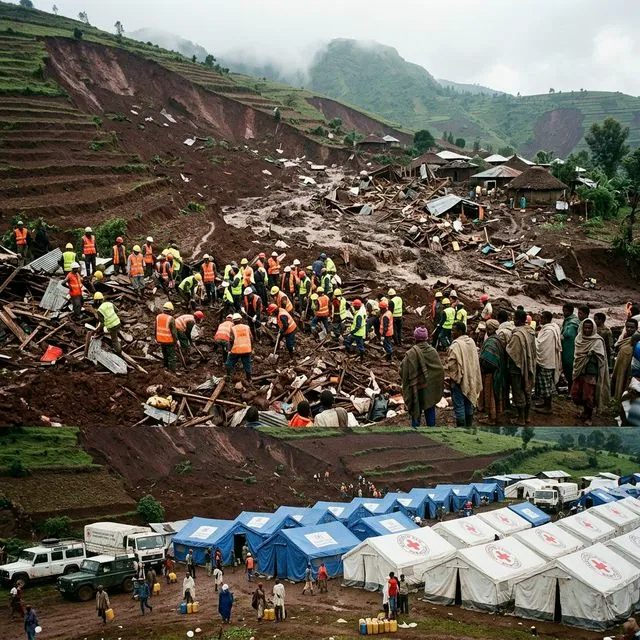
The Ethiopian government declared a state of emergency in the region and mobilized military forces and civilian rescue teams to the affected area. However, access to affected communities is extremely challenging: roads were destroyed by the landslides, bridges were swept away by floodwaters, and the mountainous terrain makes heavy vehicle use difficult. Military helicopters were deployed to transport medical teams and emergency supplies to the most isolated villages, but low cloud cover and persistent rain significantly limited aerial operations during the first 48 hours.
The Rescue Challenge
Search and rescue operations faced nearly insurmountable obstacles. The mud, in some places more than five meters deep, made it impossible to use heavy mechanical equipment. Much of the digging was done with shovels, hoes, and even bare hands by desperate residents searching for buried family members.
The composition of the mud — a dense mixture of red laterite soil, fragmented volcanic rock, and vegetation — partially solidified in the hours following the landslide, creating a compact mass that enormously complicates locating survivors. International search teams with tracking dogs were requested, but the distance and logistical conditions meant most arrived at the scene 36 to 48 hours after the disaster — often too late to find survivors alive.
Organizations in Action
- Ethiopian Red Cross: First to arrive, with search and rescue teams and first aid kits
- UNICEF: Distribution of clean water, tents, and supplies for children and pregnant women
- World Food Programme (WFP): Emergency food supply for 8,000 displaced people
- Doctors Without Borders (MSF): Emergency medical teams treating the injured
- UN-Habitat: Damage assessment and temporary shelter planning
- International Organization for Migration (IOM): Displacement and resettlement coordination
The international community responded quickly, with aid pledges totaling over $15 million in the first 24 hours. However, humanitarian organizations warn that actual needs likely exceed $50 million, considering infrastructure reconstruction, family relocation, and local agricultural recovery. The African Union issued a solidarity statement and called an emergency meeting to coordinate regional assistance.
Secondary Risks
Experts warn that the risks did not end with the initial landslides. Mud accumulated in valleys and riverbeds has created unstable natural dams that could rupture at any moment, causing catastrophic flooding in downstream communities. Engineering teams are monitoring these formations and planning controlled drainage to prevent sudden ruptures.
Additionally, water contamination is an immediate concern. The landslides dragged latrines, animal waste, and agricultural chemicals into local waterways, creating risk of cholera outbreaks and other waterborne diseases. UNICEF has installed emergency water purification stations, but many isolated communities still depend on untreated sources.
The Economic Impact
The economic cost of the disaster extends far beyond the immediate destruction. The affected region is one of the main producers of Arabica coffee in Ethiopia — a product that represents more than 30% of the country's exports. Entire plantations were buried or damaged by mud, with losses estimated at at least $10 million in the current harvest alone.
For subsistence farming families, the loss was total. Beyond their homes, the landslides destroyed granaries with grain stocks, agricultural tools, and livestock. Many families lost not only their homes but also their only means of livelihood, now facing the prospect of months or years of dependence on humanitarian aid.
The local economy, already fragile, may take years to recover. Destroyed roads isolate communities from markets, preventing the commercialization of surviving agricultural products. Schools and health clinics were damaged or destroyed, depriving the next generation of education and basic medical care.
Ethiopia's Landslide History
This is not the first disaster of its kind in Ethiopia. The country has a tragic history of deadly landslides that repeats with alarming frequency. The most catastrophic recent event was the 2024 Gofa landslide, which killed more than 257 people — one of the deadliest natural disasters in modern Ethiopian history. Tragically, the region affected in 2026 is essentially the same zone hit in 2024, raising serious questions about the adequacy of prevention and mitigation measures implemented after the previous disaster.
According to the UN, Ethiopia has recorded more than 60 significant landslides in the last ten years, with a total of over 800 deaths. The trend clearly points to worsening: both the frequency and severity of events are increasing, a direct result of the combination of environmental degradation and intensifying rainfall.
What Can Be Done?
Disaster management experts point to several measures that could significantly reduce the risk of deadly landslides:
Early Warning Systems
Although alerts were issued before the March 2026 landslides, they did not reach many of the most isolated communities. The installation of automated soil moisture and precipitation monitoring systems, combined with mobile phone alerts, could save significant lives. Countries like Japan, Switzerland, and Norway offer successful early warning models that could be adapted for the Ethiopian context. The Japanese model of "vigilance communities," where local residents are trained to identify signs of terrain instability — such as soil cracks, changes in spring water color, and abnormal tree tilting — has proven extraordinarily effective in saving lives, even in areas without technological infrastructure.
Support for the Displaced
The 8,000 people displaced by the March 2026 disaster now face an uncertain future. Many lost not only their homes but also identity documents, work tools, and the entire basis of their subsistence. Economic recovery programs that go beyond emergency assistance — including microcredit, seed and tool distribution, and training in sustainable agricultural techniques — are essential to enable these families to rebuild their lives with dignity and autonomy.
Strategic Reforestation
Tree planting must be specifically directed at high-risk slopes, prioritizing native species with deep root systems such as African juniper and Podocarpus falcatus. Incentive programs for local communities to protect and maintain reforested areas are essential for long-term sustainability.
Drainage Infrastructure and Terracing
The construction of drainage channels, containment barriers, and terraces on the most vulnerable slopes can drastically reduce landslide risk. Bioengineering techniques, which combine engineering structures with vegetation planting, are particularly effective and economically viable for rural contexts. The cost of protecting a hillside with bioengineering techniques is estimated at $5,000-15,000 per hectare — an insignificant fraction compared to the human and economic cost of a landslide.
Conclusion: A Silent Crisis Demanding Action
The tragedy in Ethiopia is more than a natural disaster — it is a reflection of the growing vulnerability of communities living at the intersection of poverty, environmental degradation, and climate change. While the world focuses on geopolitical crises and technological advances, millions of people in the planet's most vulnerable regions face silent existential threats that repeat season after season.
The March 2026 disaster in the Ethiopian highlands will not be the region's last. Unless significant investments are made in prevention, warning systems, and resilient infrastructure, the death toll in each event will continue to grow alongside the intensification of extreme weather patterns. International solidarity is crucial, but it must not be limited to emergency responses — we need long-term commitment to the planet's most vulnerable communities.
Every rainy season, entire families go to sleep afraid that their homes will be swallowed by the mountain during the night. This cycle of terror needs to end. From a global perspective, landslides kill an average of over 4,600 people per year, according to data from the Centre for Research on the Epidemiology of Disasters (CRED). The vast majority of these deaths occur in developing countries, where impoverished populations are forced to live on unstable slopes for lack of alternatives. Ethiopia needs more than condolences — it needs international partners willing to invest in long-term solutions that break the deadly cycle of recurring disasters.
While billions are invested in military technology and space exploration, a fraction of those resources could save thousands of lives every year through relatively simple programs of prevention, monitoring, and safe resettlement. The technology and knowledge to prevent many of these deaths already exist — what is lacking is the political will and financial resources to implement them. Fifty-two lives lost in the Ethiopian highlands in March 2026 are a painful reminder that the cost of inaction is always measured in human lives.
The 8,000 people displaced by the March 2026 disaster now face an uncertain future. Many lost not only their homes but also identity documents, work tools, and the entire basis of their subsistence. Economic recovery programs that go beyond emergency assistance — including microcredit, seed and tool distribution, and training in sustainable agricultural techniques — are essential to enable these families to rebuild their lives with dignity and autonomy.
The Japanese model of "vigilance communities," where local residents are trained to identify signs of terrain instability such as soil cracks, changes in spring water color, and abnormal tree tilting, has proven extraordinarily effective in saving lives even in areas without technological infrastructure. Implementing a similar program in the Ethiopian highlands could complement automated monitoring systems and create a community-based first line of defense that works even when technology fails. The world cannot continue watching passively while the same communities are devastated by the same disasters, year after year, generation after generation.
Sources: Ethiopian News Agency (ENA), International Red Cross (ICRC), UNICEF, Ethiopia National Meteorological Agency, ReliefWeb, Associated Press, Al Jazeera, World Food Programme (WFP)


