
Oil at $109 and Strait of Hormuz Blocked: The World Faces Its Worst Energy Crisis in 50 Years
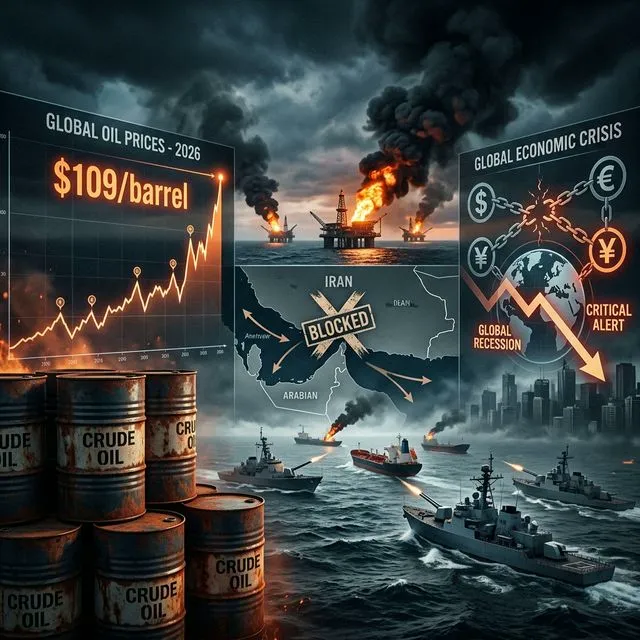
On March 18, 2026, Brent crude oil surpassed $109 — a 6% jump in a single day — after naval analysts confirmed what the market feared: navigation through the Strait of Hormuz has become "virtually impossible." The strait, through which 20% of all oil consumed worldwide passes, is surrounded by Iranian naval mines, threatened by Revolutionary Guard anti-ship missiles, and patrolled by American warships. Commercial oil tankers, without insurance or escort, have simply stopped trying to cross.
The result? The worst energy crisis since the 1973 Arab oil embargo. And unlike 1973, this time the world is far more dependent, far more interconnected, and far more vulnerable.
What's Happening: Crisis Timeline
February 2026: The Beginning
- February 24: US and Israel begin military operations against Iran's nuclear facilities
- February 27: Iran threatens to close the Strait of Hormuz in retaliation
- February 28: First Iranian attack on a cargo ship in the Persian Gulf
March 2026: The Escalation
- March 2: Revolutionary Guard begins sowing naval mines in the strait
- March 5: First oil tanker hit by Iranian anti-ship missile
- March 8: Maritime insurers cancel coverage for ships in the Persian Gulf
- March 11: IEA announces release of 400 million barrels of emergency reserves
- March 14: Oil surpasses $100/barrel for the first time since 2022
- March 17: US attacks Iranian positions on the Hormuz coast
- March 18: Oil hits $109/barrel. Navigation declared "virtually impossible"
The Strait of Hormuz: Why It Matters So Much
Scary Numbers
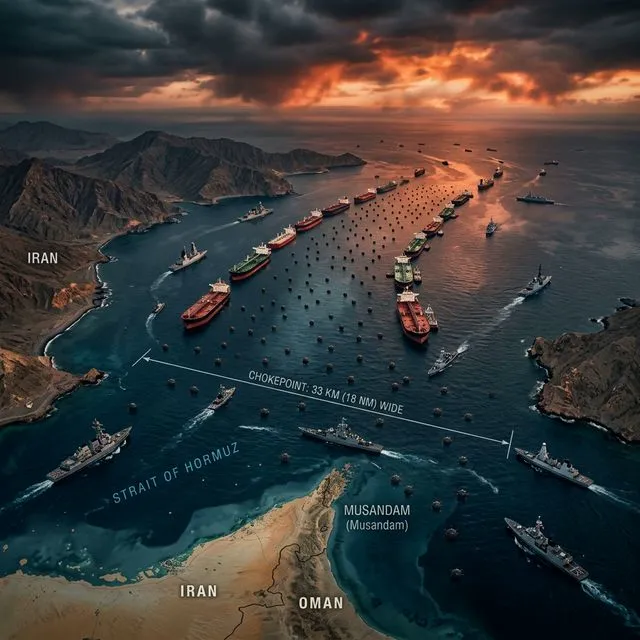
The Strait of Hormuz is a passage only 33 km wide at its narrowest point, connecting the Persian Gulf to the Gulf of Oman and, from there, to the Indian Ocean. Through this strip of water passes:
| Resource | Daily Volume | % of Global |
|---|---|---|
| Crude oil | ~17 million barrels/day | ~20% of world consumption |
| LNG (Liquefied Natural Gas) | ~15 billion m³/month | ~25% of global trade |
| General maritime transport | ~$5.5 billion/day | Incalculable |
In summary: If Hormuz closes, 1/5 of all the world's oil simply disappears from the market overnight.
Who Depends on Hormuz
The countries most affected by the blockade are those importing oil from the Gulf:
| Country/Region | Hormuz Dependency | Impact |
|---|---|---|
| 🇯🇵 Japan | ~80% of imported oil | Critical — insufficient reserves for 6 months |
| 🇰🇷 South Korea | ~70% | Critical — petrochemical industry paralyzed |
| 🇨🇳 China | ~40% | Severe — but has alternative pipelines (Russia, Kazakhstan) |
| 🇮🇳 India | ~60% | Severe — inflation already at 12% |
| 🇪🇺 Europe | ~25% | Significant — worsened by LNG dependence |
| 🇧🇷 Brazil | ~15% | Moderate — but global price directly affects |
| 🇺🇸 USA | ~10% | Lower — but gas price impact is political |
The Economic Impact: The Numbers Are Brutal
Oil: The Price Spiral
| Date | Brent ($/barrel) | Change |
|---|---|---|
| Feb 1, 2026 | $72 | Baseline |
| Feb 24 (conflict begins) | $78 | +8% |
| Mar 5 (tanker hit) | $89 | +24% |
| Mar 11 (IEA releases reserves) | $95 | +32% |
| Mar 14 (Hormuz closes) | $102 | +42% |
| Mar 18 (today) | $109 | +51% |
Oil has risen 51% in less than 7 weeks. For comparison: in 1973, the Arab embargo caused a 300% increase — but over 6 months.
Global Production Loss
Global oil production dropped 8 million barrels per day in March:
- Iran: Exports zeroed (Kharg Island bombed)
- Kuwait: -1.5 million bpd (logistical disruption)
- Iraq: -1 million bpd (pipelines damaged)
- Saudi Arabia: -500,000 bpd (precaution)
- UAE: -500,000 bpd (QatarEnergy facilities hit)
- Others: -500,000 bpd (ships stranded, refineries without feedstock)
Gas Prices Worldwide
Gas prices have already begun rising globally:
| Country | Pre-crisis Price | Current Price | Change |
|---|---|---|---|
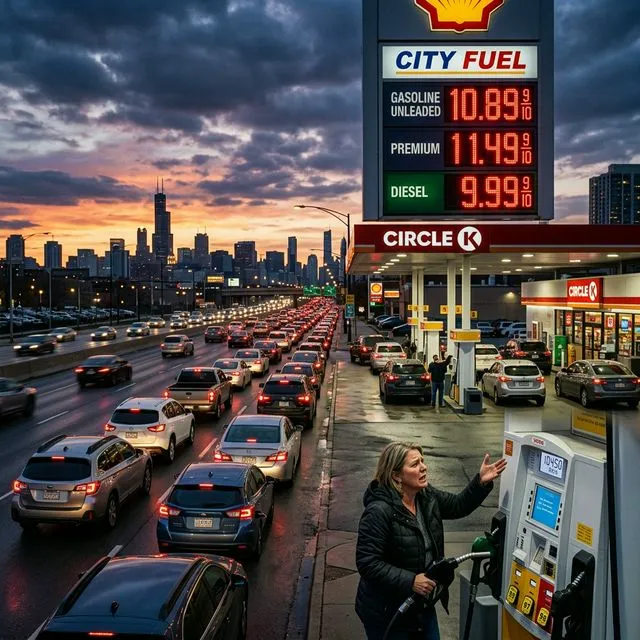
| 🇺🇸 USA | $3.20/gallon | $4.10/gallon | +28% |
| 🇬🇧 UK | £1.35/liter | £1.72/liter | +27% |
| 🇧🇷 Brazil | R$5.89/liter | R$6.70/liter | +14% |
| 🇯🇵 Japan | ¥170/liter | ¥215/liter | +26% |
| 🇮🇳 India | ₹107/liter | ₹138/liter | +29% |
Forecast for Brazil: Analysts estimate gas could reach R$7.50 to R$9.00 per liter if the conflict lasts until April — an increase that would have devastating impact on freight costs and, consequently, food prices.
The Responses: What the World Is Doing
1. IEA Releases 400 Million Barrels
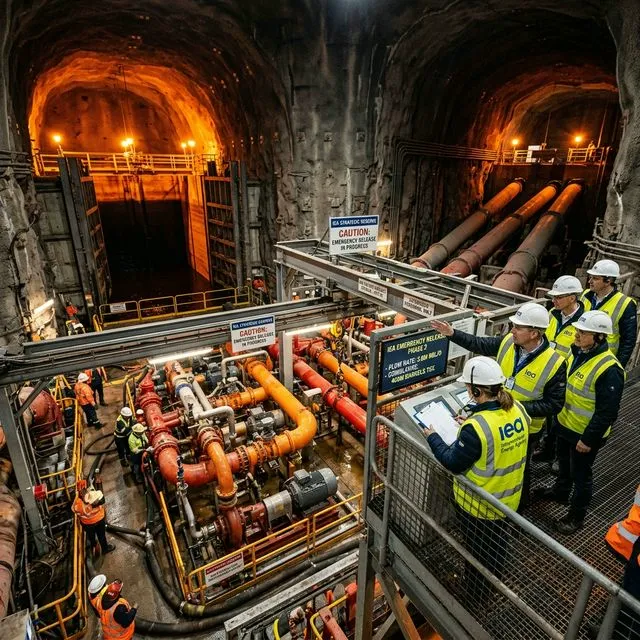
On March 11, the International Energy Agency (IEA) announced the largest coordinated release of strategic reserves in history:
- USA: 180 million barrels (from SPR — Strategic Petroleum Reserve)
- Japan: 75 million barrels
- South Korea: 30 million barrels
- Europe (total): 115 million barrels
The problem: 400 million barrels equals less than 50 days of supply lost from Hormuz closure (8 million bpd × 50 days = 400 million). It's a bandaid on a severed artery — buys time but doesn't solve the problem.
2. US Eases Venezuela Sanctions
The US Treasury Department announced easing of sanctions on Venezuelan oil — a desperate maneuver to increase global supply. Venezuela has the world's largest proven oil reserves (303 billion barrels), but its industry has collapsed after decades of mismanagement and sanctions.
Venezuelan production:
- Theoretical capacity: 3 million bpd
- Current production: ~750,000 bpd
- Possible production with investment: 1.5 million bpd (in 12-18 months)
- The irony: The same Venezuela the US sanctioned is now seen as a lifeline
3. OPEC+ Increases Production (Insufficient)
OPEC+ agreed to add 206,000 barrels/day starting in April — a drop in the ocean compared to the 8 million bpd lost. Saudi Arabia has spare capacity of ~2 million bpd but hesitates to use it all for strategic reasons.
4. Alternative Routes
Gulf producers are exploring routes that bypass Hormuz:
- East-West Pipeline (Saudi Arabia): From Persian Gulf to Red Sea — 5 million bpd capacity
- IPSA Pipeline (Iraq-Turkey): 1.6 million bpd capacity, but vulnerable to sabotage
- ADCOP (UAE): Pipeline carrying oil from Abu Dhabi to Fujairah port, outside Hormuz — 1.5 million bpd
Historical Comparison: The 5 Largest Oil Crises
| Crisis | Year | Cause | Oil Surge | Duration |
|---|---|---|---|---|
| Arab Embargo | 1973 | Yom Kippur War | +300% | 6 months |
| Iranian Revolution | 1979 | Fall of the Shah | +150% | 12 months |
| Kuwait Invasion | 1990 | Gulf War | +130% | 8 months |
| Financial crisis + Libya | 2008/2011 | Demand + Arab Spring | +80% | Variable |
| Hormuz Crisis | 2026 | US-Iran War | +51% (and rising) | Ongoing |
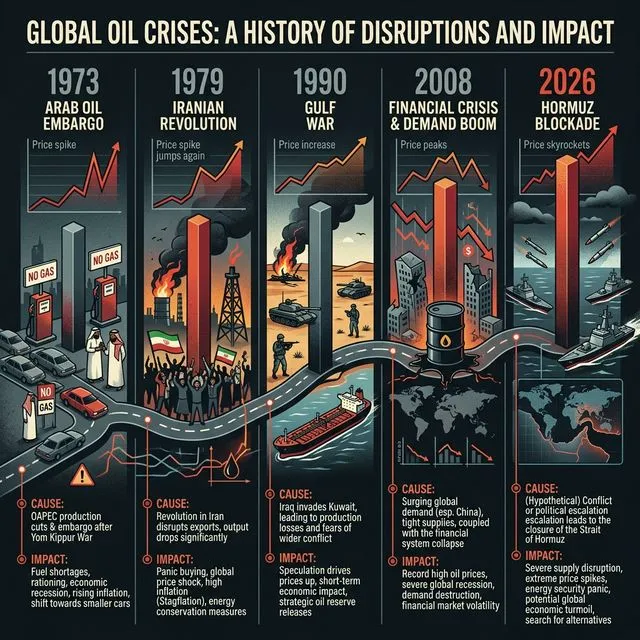
The current crisis is already the 5th largest in oil history — and it's still just beginning.
The Impact on Your Wallet: What's Getting More Expensive
Oil doesn't just affect gasoline. It's in everything:
| Sector | Why It Rises | Expected Increase |
|---|---|---|
| 🚗 Gasoline/Diesel | Direct petroleum derivative | +25 to 40% |
| 🍞 Food | More expensive freight = more expensive food | +10 to 20% |
| 🏠 Electricity | Gas turbines compensate for droughts | +8 to 15% |
| ✈️ Airfare | Aviation fuel up 35% | +20 to 30% |
| 📦 E-commerce/Freight | Diesel up, delivery costs up | +10 to 15% |
| 👕 Clothing | Petrochemicals produce synthetic fibers | +5 to 10% |
| 💊 Medications | Packaging and petrochemical inputs | +5 to 10% |
Global Inflation: The Domino Effect
How Expensive Oil Causes Inflation in Everything
Oil isn't just fuel — it's the base for 6,000+ derived products. When the barrel rises 50%, the cascade effect hits the entire economy:
Chain 1: Transportation → Food
- Diesel rises → Road freight rises → Carriers pass on costs → Supermarkets pass to consumers → Rice, beans, meat get more expensive
- In Brazil, 65% of food is transported by road. Every 1% diesel increase = ~0.3% food increase within 60 days
Chain 2: Petrochemicals → Everything
- Naphtha (petroleum derivative) is raw material for: plastics, packaging, paints, resins, fertilizers, synthetic fabrics, medications
- Every product containing plastic (i.e., almost all of them) becomes more expensive
Chain 3: Energy → Industry
- Natural gas (which follows oil prices) powers thermal plants
- In drought-season Brazil, thermal plants are activated to compensate for hydroelectric — electricity bills rise
- Energy-intensive industries (aluminum, steel, cement) pass on costs
Impact on the 85 Most Vulnerable Countries
The UN has already reported that 85 countries registered fuel price increases since the conflict began. The most affected:
| Region | Situation | Risk |
|---|---|---|
| Sub-Saharan Africa | Total dependence on fuel imports | Imminent food crisis |
| South Asia | India at 12% inflation, Sri Lanka in collapse | Social instability |
| Caribbean | Islands depend on diesel for everything (energy, water, transport) | Widespread blackouts |
| Eastern Europe | Still recovering from 2022 Russian energy shock | Confirmed recession |
Energy Transition: Accelerated by the Crisis?
The Paradox of Expensive Oil
Paradoxically, the Hormuz crisis may accelerate the transition to renewable energy:
Arguments in favor:
- Governments and consumers have urgent incentive to reduce oil dependence
- Electric vehicle sales should rise 30% in 2026 (BloombergNEF forecast)
- Solar and wind investments should increase 20% as a response to energy insecurity
- Sodium-ion batteries (CATL) offer a cheaper, lithium-free alternative
Arguments against:
- The transition takes decades, not months — the world needs oil NOW
- Critical minerals (lithium, cobalt, rare earths) also have supply bottlenecks
- Charging infrastructure is still insufficient in most countries
- Renewables depend on fossil backup (thermal plants) during periods without sun/wind
The verdict: The 2026 crisis will be remembered as the tipping point that finally convinced governments that dependence on Gulf oil is an existential risk. But the effective transition will take 20-30 years.
Frequently Asked Questions (FAQ)
Can the Strait of Hormuz stay closed for months?
It's possible but unlikely. The global economic pressure is so intense that both the US and Iran have incentives to reopen the strait. The question is: at what political cost?
Can Brazil run out of oil?
Not in the short term. Brazil produces ~3.4 million bpd and exports more than it imports in crude. But since Petrobras practices international price parity, prices rise in Brazil even when there's no physical shortage.
Do electric cars get cheaper during the crisis?
In theory, yes — the crisis increases the incentive to abandon fossil fuels. In practice, batteries depend on minerals (lithium, cobalt) that also have elevated prices. But EV sales should increase 30% in 2026.
How long do strategic reserves last?
The 400 million barrels released by the IEA last about 50 days at the current rate of loss. After that, without peace or alternative routes, there will be a real supply crisis.
Does Russia benefit from the crisis?
Enormously. Russia exports ~7 million bpd and, with oil at $109, earns ~$280 billion more per year. It's no coincidence that Moscow hasn't pushed for a cease-fire.
Conclusion: Oil Is Still the World's Blood
The March 2026 crisis proves, painfully, what experts have warned for decades: the world is still dramatically dependent on oil, and most of that oil passes through a 33-km geographic bottleneck.
While warships patrol Hormuz and missiles cross the Gulf skies, every gas station in Brazil, every market in Japan, every airport in Europe feels the direct impact. Globalization is a double-edged sword: it connects everything, but when something breaks at the weakest link, the entire world bleeds.
For the average Brazilian, the crisis materializes in concrete ways: the already expensive liter of gasoline becomes prohibitive, grocery shopping weighs heavier on the wallet, Uber and freight costs skyrocket. Imported inflation through oil respects no borders and hits hardest those least able to absorb the increase.
The barrel at $109 is just the beginning if peace doesn't come soon. And the lesson is clear: as long as the world doesn't diversify its energy sources in a real and urgent way, we'll always be hostages to 33 kilometers of water at the exit of the Persian Gulf.
Sources and References
- IEA — Emergency Oil Reserve Release (March 2026)
- OPEC — Production Adjustment Statement
- Reuters — Strait of Hormuz Navigation Crisis
- Bank of Canada — Policy Rate Decision (March 2026)
- Atlantic Council — Middle East Energy Infrastructure Impact
- Bloomberg NEF — Oil Price Forecast
- The Guardian — Global Oil Crisis Deepens


