31 New Marine Species Discovered Off the Coast of Brazil
Date: June 29, 2026
Reading time: 12 minutes
Emoji: 🌊
In a groundbreaking expedition that has captured the imagination of marine biologists and ocean enthusiasts alike, the Schmidt Ocean Institute has unveiled the discovery of 31 new marine species off the coast of Brazil. This remarkable find, achieved during a two-week expedition in June 2026 aboard the research vessel Falkor (too), has opened new frontiers in our understanding of the ocean's twilight zone. Led by Dr. Karen Osborn from the Smithsonian Institution, the team utilized cutting-edge technology, including a shipboard 3D microscope affectionately nicknamed 'the Squid,' to observe living 3D cellular structures of microbial life for the first time. This expedition not only highlights the rich biodiversity of the midwater regions but also underscores the critical importance of international waters in marine research. As scientists continue to unravel the mysteries of the deep, these discoveries promise to reshape our understanding of marine ecosystems and their role in global biodiversity.
What Happened
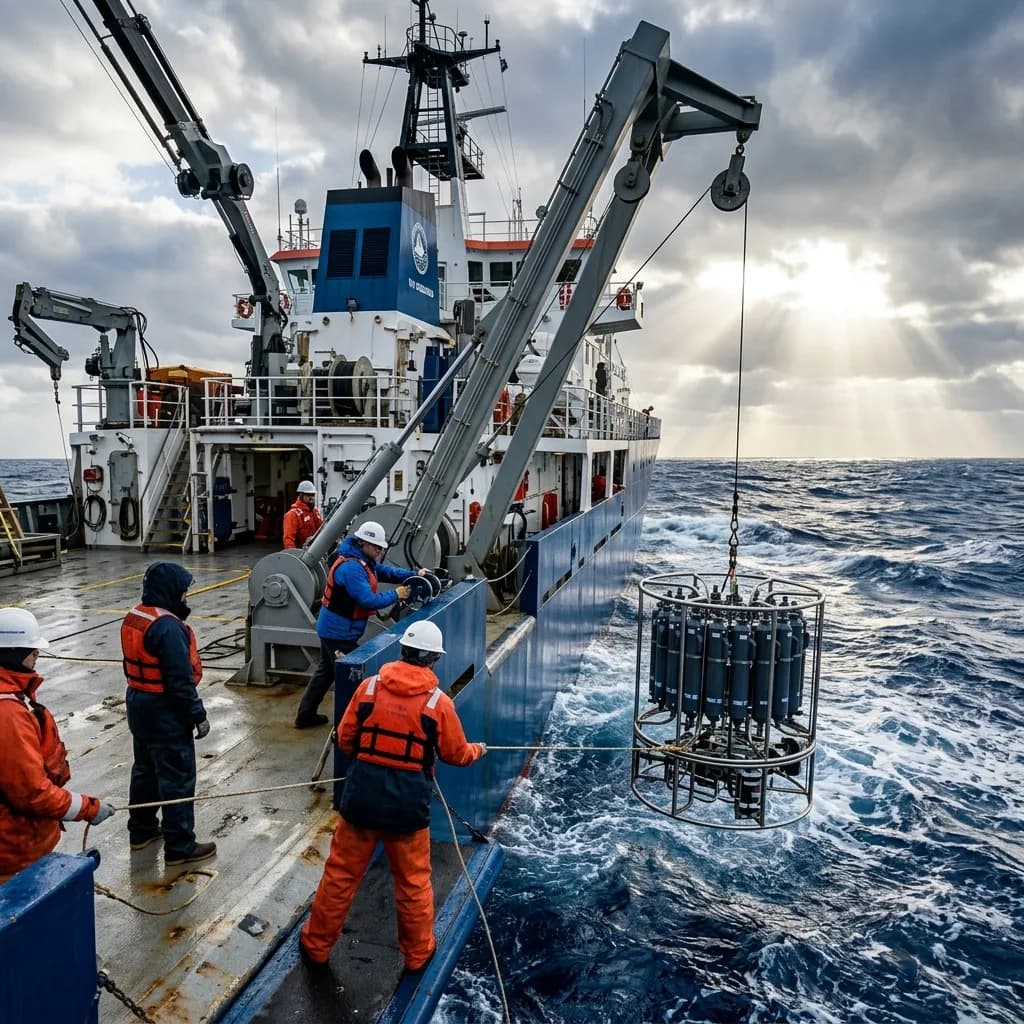
In June 2026, the Schmidt Ocean Institute embarked on a pioneering expedition off the coast of Brazil, with the mission of exploring the midwater regions, often referred to as the twilight zone. This area, situated in international waters, is a realm of the ocean that remains largely unexplored, lying between 200 and 1,000 meters below the surface. Aboard the research vessel Falkor (too), a team of scientists led by Dr. Karen Osborn from the Smithsonian Institution set out to uncover the secrets of this enigmatic zone.
Over the course of two weeks, the team utilized state-of-the-art technology to make unprecedented discoveries. Central to their success was the use of a shipboard 3D microscope, nicknamed 'the Squid,' which allowed researchers to observe living 3D cellular structures of microbial life in their natural environment for the first time. This innovative approach enabled the team to classify new species with remarkable speed and accuracy, thanks to onboard genetic sequencing and high-resolution imaging.
The expedition yielded an astonishing array of new species, including nine jellyfish, seven siphonophores, seven comb jellies (ctenophores), four larvaceans, a gossamer worm (Tomopteris), an amphipod, and two giant rhizarians. In addition to these discoveries, the team also documented a pelagic octopus consuming a jellyfish at a depth of 800 meters, offering rare insights into the behaviors of deep-sea creatures. These findings represent a significant leap forward in our understanding of marine biodiversity and the complex ecosystems that thrive in the twilight zone.
Context and History
The exploration of the ocean's twilight zone has long been a frontier for marine scientists. This region, characterized by low light and high pressure, presents unique challenges for exploration and study. Historically, the midwater zone has been difficult to access, with traditional research methods often falling short in capturing the full scope of its biodiversity. However, advances in technology have gradually opened this mysterious world to scientific inquiry.
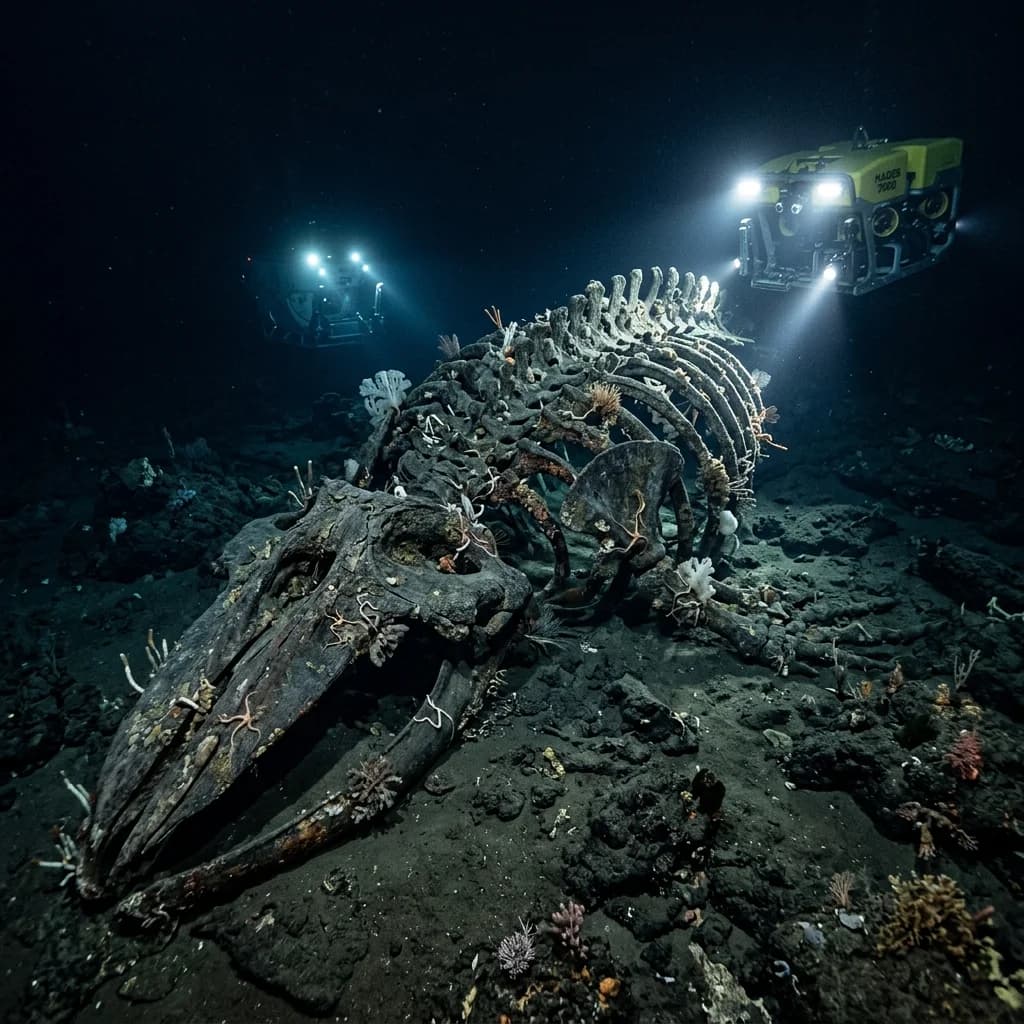
Previous missions have laid the groundwork for the current expedition. Over the past decade, the Schmidt Ocean Institute has been at the forefront of marine exploration, conducting numerous expeditions that have expanded our knowledge of deep-sea ecosystems. These efforts have been complemented by international collaborations and technological innovations, such as remotely operated vehicles (ROVs) and advanced imaging techniques, which have enabled scientists to explore previously inaccessible depths.
The discoveries made during this expedition build on a legacy of scientific exploration and underscore the importance of continued research in international waters. The twilight zone is believed to play a crucial role in global carbon cycling and oceanic food webs, making it a key area of interest for understanding the impacts of climate change on marine environments. As scientists continue to probe the depths of the ocean, each new discovery adds a piece to the puzzle of Earth's complex and interconnected ecosystems.
Impact on the Population
The discovery of 31 new marine species off the coast of Brazil has far-reaching implications for both the scientific community and the general population. These findings highlight the rich biodiversity of the ocean's twilight zone and underscore the importance of preserving these fragile ecosystems. Understanding the diversity and behavior of marine species is crucial for developing effective conservation strategies and ensuring the sustainability of ocean resources.
| Aspect | Before Discovery | After Discovery |
|---|---|---|
| Known Marine Species | Limited understanding | 31 new species identified |
| Technological Advances | Traditional methods | 3D microscopy, genetic sequencing |
| Conservation Efforts | General awareness | Increased focus on twilight zone ecosystems |
The discoveries also have potential implications for industries such as pharmaceuticals and biotechnology, where marine organisms are often a source of novel compounds and materials. By expanding our knowledge of marine biodiversity, scientists can explore new avenues for innovation and sustainable development.
Furthermore, these findings serve as a reminder of the interconnectedness of global ecosystems and the need for international cooperation in marine research. As the impacts of climate change continue to unfold, understanding the dynamics of oceanic ecosystems becomes increasingly important for predicting and mitigating environmental changes.
What the Involved Parties Say
Dr. Karen Osborn, the chief scientist of the expedition, expressed her excitement about the discoveries, stating, "The twilight zone is a treasure trove of biodiversity that we are only beginning to understand. Each new species we discover adds to our understanding of the complex web of life in the ocean."
The Schmidt Ocean Institute emphasized the significance of the expedition, highlighting the role of advanced technology in facilitating these discoveries. "The use of 'the Squid' 3D microscope and onboard genetic sequencing has revolutionized our approach to marine research, allowing us to make rapid and accurate classifications of new species," said a spokesperson for the institute.
Collaborators from the Bigelow Laboratory for Ocean Sciences also praised the findings, noting the importance of international partnerships in advancing marine science. "This expedition demonstrates the power of collaboration and innovation in uncovering the mysteries of the deep sea," remarked a representative from the laboratory.
Next Steps
Following the success of the June 2026 expedition, the Schmidt Ocean Institute plans to continue its exploration of the ocean's twilight zone. Future missions are expected to focus on further mapping the biodiversity of this region and investigating the ecological roles of newly discovered species. These efforts will be supported by ongoing technological advancements, including the development of more sophisticated imaging and sampling tools.
In addition to fieldwork, the institute aims to publish its findings in scientific journals, contributing to the broader body of knowledge on marine ecosystems. Collaborations with international research institutions will also be pursued to facilitate data sharing and joint studies.
As part of its commitment to public engagement, the Schmidt Ocean Institute plans to host educational outreach programs and workshops to raise awareness about the importance of ocean conservation and the role of scientific research in protecting marine environments.
Closing
The discovery of 31 new marine species off the coast of Brazil marks a significant milestone in our quest to understand the ocean's twilight zone. This expedition not only expands our knowledge of marine biodiversity but also highlights the critical role of technology and international collaboration in advancing scientific research. As we continue to explore the depths of the ocean, these findings remind us of the vast and largely untapped potential of our planet's marine ecosystems. By fostering a deeper understanding of the ocean's mysteries, we can work towards a more sustainable and harmonious relationship with the natural world.