On July 12, 2026, researchers aboard the advanced scientific icebreaker Polarstern II recorded a historic sighting at a depth of 3,200 meters beneath the Arctic Ocean. A state-of-the-art remotely operated vehicle (ROV) captured the first-ever high-definition footage of a monumental, vibrantly crimson creature drifting silently through the eternal darkness. The discovery of this new species of giant red jellyfish has shocked scientists and redefines our understanding of how life persists under extreme pressure and cold.
This astonishing encounter occurred during a deep-sea mapping mission in the Fram Strait, one of the least explored regions on Earth. The marine biologists on board were surprised by the sheer scale of the specimen, which measured over a meter in diameter. Scientists have long assumed that harsh polar conditions limited deep-sea biodiversity, but this monumental creature challenges those assumptions.
What Happened
The international expedition DeepArctic 2026 was mapping the geological features of the Arctic seabed when the historic encounter took place. The mission's primary ROV, the Neptune, documented the gelatinous specimen showing a bell diameter of 1.2 meters, with tentacles extending beyond 12 meters in length. Researchers performed a controlled collection of tissue fragments using a specialized low-pressure hydraulic suction system designed to protect the fragile organism.
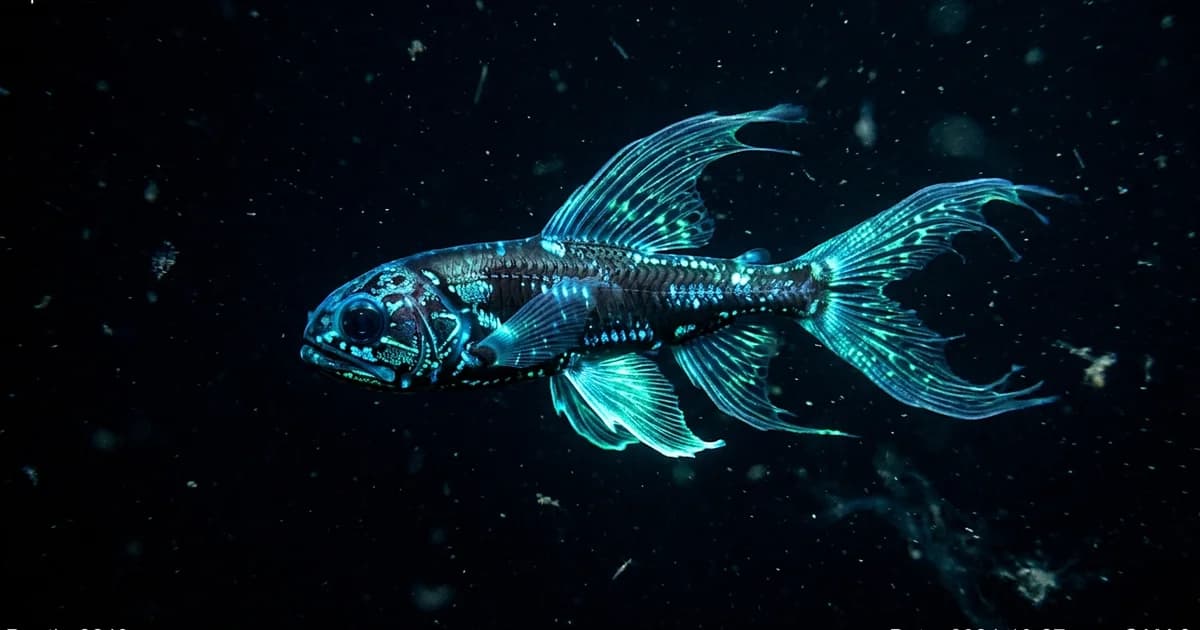
This sampling tool allowed the scientists to gather biological samples without compromising the delicate structural integrity of the jellyfish. Onboard mobile laboratories analyzed the genetic material, revealing that the organism belongs to an entirely new taxonomic family of cnidarians. The discovery reinforces the vital importance of deep-sea investigations, much like the one detailed in the incredible discovery of a new species of fish that glows in the dark in deep waters.
The vibrant crimson coloration of this giant jellyfish is perhaps its most captivating and evolutionarily successful feature. In the deep ocean, where solar light cannot penetrate, this red pigment serves as a highly efficient cloak of invisibility. Because red light wavelengths are absorbed rapidly by water, a crimson organism appears pitch black to any surrounding marine life, allowing the creature to hover undetected as an ambush predator.
Context and History
Studying the abyssal zone of the Arctic Ocean has presented major challenges for oceanographers due to thick pack ice and freezing conditions. Historically, the few vessels that entered these polar waters were either military submarines or commercial exploration ships, neither of which prioritized marine biology. Over the past few decades, however, the accelerated melting of the polar ice caps has opened new navigation routes, granting research vessels unprecedented access.
Before these technological advancements, the general consensus among marine biologists was that the Arctic seafloor supported very little life. It was widely assumed that the constant darkness and lack of organic material created a biological desert, but this discovery completely debunks that assumption. The presence of such a large predator indicates a robust and highly interconnected ecosystem thriving beneath the ice.
Furthermore, this discovery is closely tied to the broader global transformations our planet is experiencing in 2026. Global climate dynamics are rapidly changing ocean temperatures and currents, impacting ecosystems from the surface to the abyss. These large-scale changes remind us of other planetary shifts, such as how scientists revealed that the Moon is moving away from Earth faster than previously thought.
Impact on the Population
Although this giant jellyfish lives thousands of meters below the ocean surface, its discovery has profound implications for humanity. The study of the specialized proteins that allow this creature to survive in extreme cold could revolutionize modern biotechnology and medicine. Researchers hope to isolate enzymes that remain active at freezing temperatures, which could improve the preservation of human organs for transplants.
On an ecological level, understanding the nutrient cycle in the deep Arctic helps scientists predict how climate change will affect global fish stocks. The thermal regulation of our oceans relies on deep-sea organisms that transport organic matter vertically through the water column. The preservation of this pristine polar ecosystem is therefore directly linked to the food security of millions of people who depend on commercial fishing.
Below, we present a comparative table detailing some of the most mysterious and luminous organisms of the deep ocean, highlighting their depth ranges and light-emitting characteristics:

| Common Name | Scientific Name | Depth Range | Glow Color | Primary Function of Bioluminescence |
|---|---|---|---|---|
| Giant Red Jellyfish | Tiburonia granrojo | 600 - 1500 meters | Dark Red | Light absorption camouflage |
| Deep-Sea Anglerfish | Melanocetus johnsonii | 1000 - 4000 meters | Blue-Green | Attracting prey and mates |
| Vampire Squid | Vampyroteuthis infernalis | 600 - 900 meters | Light Blue | Defensive distraction and defense |
| Bomber Worm | Swima bombiviridis | 1800 - 3700 meters | Bright Green | Discharging glowing defensive decoys |
| Lanternfish | Myctophum punctatum | 200 - 1000 meters | Pale Blue | Social communication and counterillumination |
The bioluminescence observed in these diverse species illustrates how natural selection has developed spectacular solutions for survival in lightless environments. Each organism has customized its light output and wavelength to match its specific ecological niche, whether for hunting or evading predators. The discovery of this new red jellyfish adds another critical piece to our understanding of this complex evolutionary puzzle.
What Those Involved Say
Dr. Annelise Vance, lead marine biologist at the Oslo Institute of Oceanography, shared her excitement during a satellite press conference held directly from the research vessel. She stated that the discovery marks a historic milestone in ocean exploration, comparable to finding a new large species in a tropical rainforest. According to Dr. Vance, the extreme fragility of the specimen required the development of entirely new and highly delicate capturing techniques using the ROV's robotic arm.
In contrast, Dr. Marcus Thorne, a polar ecology specialist from the University of Copenhagen, focused on the immediate environmental threats facing the Arctic region. He pointed out that commercial shipping and change are putting pressure on habitats before we can even catalog their biodiversity. Dr. Thorne strongly advocates for the immediate establishment of an international marine sanctuary in the Fram Strait to protect this untouched wilderness.
Representatives of the scientific consortium also emphasized that all genetic data collected during the expedition will be made open-access for researchers worldwide. They believe that international collaboration is essential to decoding the evolutionary secrets hidden in the genome of this mysterious organism. Scientists from multiple countries are already organizing collaborative groups to analyze the first batch of DNA sequences.
Next Steps
The scientific team is already planning a follow-up expedition scheduled for the beginning of the polar winter in late 2026. The main objective of this next phase is to map the population density and geographical distribution of the giant jellyfish. Utilizing advanced ROVs equipped with chemical sensors, the team hopes to observe how the species reacts to variations in water salinity.
Simultaneously, the collected tissue samples will undergo a complete genomic sequencing process at high-security genetics labs in Norway. Scientists hope to identify the specific genes responsible for producing the natural antifreeze proteins that protect the jellyfish's cells from freezing. The team expects to publish their initial genomic findings in leading international peer-reviewed journals before the end of the year.
Another critical next step involves diplomatic discussions regarding the regulation of scientific research and environmental protection in Arctic waters. Several nations bordering the Arctic have expressed interest in participating in the research, though geopolitical debates over territorial sovereignty continue to complicate international agreements. Researchers are hopeful that the shared goal of protecting this unique ecosystem will encourage cooperation over political disputes.
Closing
The discovery of the giant red jellyfish in the Arctic Ocean is a powerful reminder that our planet still holds monumental mysteries. At a time when humanity looks to distant stars for signs of alien life, our own deep oceans demonstrate that Earth's biodiversity remains largely uncharted. Protecting these abyssal frontiers is both an ethical and scientific duty to ensure the long-term stability of the global ecosystem.
Every voyage into these dark, freezing depths reveals that life finds extraordinary ways to adapt and flourish against all odds. It is our responsibility as a global society to ensure that these incredible creatures can continue to drift undisturbed in the dark. The future of marine biology will depend on our collective commitment to sustainable exploration and conservation.