🌍 Your knowledge portal
saude

Bats Have a Double Set of Antibody Genes: The Secret to Exceptional Immunity

📅 2026-09-03⏱️ 8 min read📝
⚡

Quick Summary

Discover how over 500 vesper bat species evolved a double set of antibody genes to fight lethal viral pathogens without suffering damaging inflammation. The incredible ability of bats to host lethal viruses without falling ill has puzzled scientists for decades across the globe.

Key Takeaways:

  • The international scientific community has reacted to this highly detailed publication with great enthusiasm and unprecedented optimism for the future.
  • Bats are the only mammals capable of true sustained flight, a characteristic that consumes immense amounts of metabolic energy constantly.
  • During the extensive research, scientists analyzed the complete genomes of several vesper bat species using advanced next-generation sequencing technologies.
Bats Have a Double Set of Antibody Genes: The Secret to Exceptional Immunity
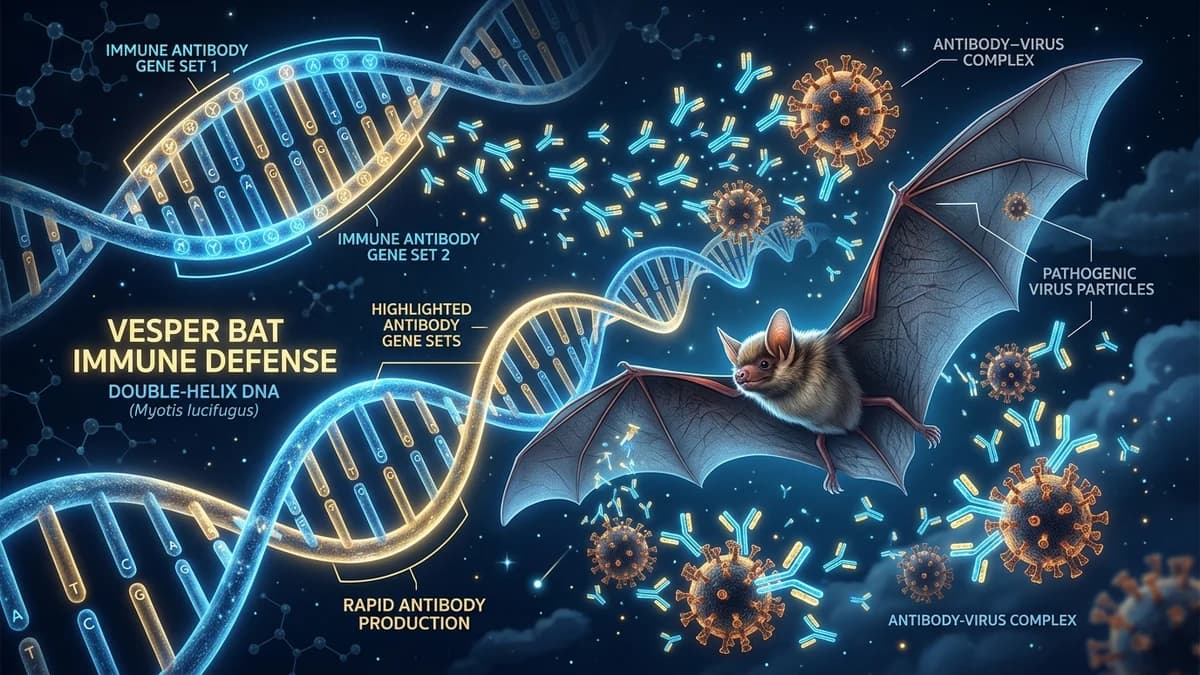
Bats Have a Double Set of Antibody Genes: The Secret to Exceptional Immunity — High-Fidelity Artistic Illustration created by artificial intelligence based on scientific research.

The incredible ability of bats to host lethal viruses without falling ill has puzzled scientists for decades across the globe. A revolutionary study, published on September 3, 2026, finally unraveled one of the most fascinating mechanisms behind this unmatched immunological resilience. Researchers discovered that over 500 species of bats from the Vespertilionidae family possess a double set of antibody genes. This discovery completely alters our understanding of how the mammalian immune system has evolved over millions of years. It also opens new doors for the development of innovative antiviral therapies based on the unique biology of these nocturnal animals.

Bats are the only mammals capable of true sustained flight, a characteristic that consumes immense amounts of metabolic energy constantly. This high metabolic demand would generally result in the excessive production of reactive oxygen species, causing severe DNA damage and cellular inflammation. However, over millions of years of evolution, bats developed genetic adaptations to rapidly and effectively repair damaged DNA strands. Concurrently, they silenced many aggressive inflammatory pathways that remain highly active in other mammals, including humans. The absence of extreme inflammatory reactions is precisely what allows them to survive infections from viruses like Rabies, Ebola, and various coronaviruses.

During the extensive research, scientists analyzed the complete genomes of several vesper bat species using advanced next-generation sequencing technologies. They focused intensively on genes associated with the major histocompatibility complex and immunoglobulin loci, where crucial genetic recombinations occur to produce antibodies. To the team's astonishment, the sequencing results showed a massive duplication in the immunoglobulin heavy chain (IgH) gene region. In practical terms, this means that these bats have a genetic repertoire twice as large as humans to manufacture defensive molecular weapons. This genetic characteristic is entirely unprecedented among any other mammalian families known to science up until this point in history.

The existence of a double set of antibody genes provides an exceptional tactical advantage against highly mutable pathogenic agents. When a virus invades a bat's organism, the immune system has a drastically expanded number of genetic combinations to generate neutralizing antibodies. This enables a highly diversified, rapid, and lethally efficient immune response against a wide spectrum of invading viral pathogens simultaneously. Furthermore, this genetic abundance significantly reduces the probability of the immune system failing when confronted with newly emerging viral variants. In stark contrast, humans and rodents rely on a single, standard set of antibody genes, which inherently limits their immediate defensive response.

Interestingly, the observed genetic amplification did not result in autoimmune disorders, a condition that frequently affects mammals with hyperactive immune systems. The research strongly suggests that bats possess complex regulatory mechanisms that suppress the production of antibodies that could potentially attack their own tissues. This fine-tuned regulation ensures that the extra genetic arsenal is activated exclusively in the presence of real, external viral threats. The perfect coordination between increased antibody production and the dampening of dangerous inflammation is what keeps these mammals incredibly healthy. Understanding this delicate biological balance is currently one of the primary focuses of modern medical biology and immunology research worldwide.

Moreover, the groundbreaking study deepened the analysis of how this dual genetic system affects inflammation, a lethal component of many viral infections in humans. In humans, infections by dangerous viruses often trigger the infamous and deadly cytokine storm within the respiratory and vascular systems. This uncontrolled inflammatory reaction causes multiple organ failure and frequently leads to the patient's death before the virus itself causes irreparable damage. Bats, however, utilize their abundant diverse antibodies to neutralize the virus rapidly without ever activating severe, body-wide inflammatory cascades. This extreme immunological tolerance is the true secret that allows them to act as natural reservoirs for so many dangerous pathogens globally.

The recently published study focused intensively on the Vespertilionidae family, also known as vesper bats, which comprises hundreds of species spread across the globe. These bats represent one of the most diversified and successful groups of mammals in terms of adaptation to vastly different ecological environments. The extensive genetic sequencing revealed that the gene duplication occurred in the common ancestor of this family approximately 30 million years ago. From that singular evolutionary event, all subsequent lineages inherited and possibly refined this highly effective dual immune system framework. The immense adaptive success of this specific group is directly linked to this formidable immunological advantage over competing mammalian species.

To fully grasp the profound impact of this discovery, it is essential to compare the immune response of bats with that of other common mammals. Immune systems vary considerably across species, but they all share basic principles of antigen recognition, cellular defense, and immunological memory. Humans, mice, and bats face the exact same types of viral threats in nature, but their survival strategies have evolved in markedly different ways over time. The following comprehensive table provides a detailed overview of how vesper bats outperform both humans and rodents in managing severe viral infections.

Comparison Table: Mammalian Immune Systems #

Immunological Characteristic Human Immune System Rodent Immune System (Mice) Vesper Bat Immune System
Antibody Gene Set Single (One standard set) Single (One standard set) Double (Massively expanded genetic repertoire)
Inflammatory Response to Viruses High, very prone to deadly cytokine storms Moderate to High, frequently fatal outcomes Very low, extreme natural immunological tolerance
V(D)J Combination Diversity Moderate to High Moderate Extremely High (Due to genetic loci duplication)
DNA Repair Mechanism Standard (Easily damaged by severe oxidative stress) Standard Highly efficient, evolutionary adaptation due to flight
Capacity to Act as Reservoir Low, gets severely ill Moderate, hosts some zoonotic viruses Very High, hosts lethal viruses without clinical symptoms
Autoimmunity Risk Moderate to High, requires intense bodily regulation Moderate Extremely Low, possesses strong inhibitory regulation

The international scientific community has reacted to this highly detailed publication with great enthusiasm and unprecedented optimism for the future. Researchers in the field of virology firmly believe that the unique biology of bats can provide the exact blueprint for novel human treatments. If we can completely understand how to activate similar pathways of immunological tolerance in humans, we could treat aggressive viral diseases with much greater efficacy. Additionally, the broad application of this knowledge extends to chronic inflammatory and autoimmune diseases that severely affect millions of people globally. In theory, advanced pharmaceuticals could be designed to closely mimic the precise cytokine suppression mechanisms found in these remarkable flying mammals.

However, translating these complex genetic discoveries into practical clinical therapies will be a very challenging and time-consuming scientific endeavor. The human immune system evolved under entirely different environmental pressures and heavily relies on inflammation as its first line of defense against many pathogens. Suppressing this crucial inflammation without compromising the body's natural ability to fight secondary bacterial or fungal infections requires a pharmacological precision not yet achieved. Synthetic biology can function as core mechanisms in creating advanced monoclonal antibodies based closely on the vast genetic repertoire of bats. Laboratories worldwide are already actively planning the next phases of research by thoroughly exploring the data from this impressive genetic sequencing effort.

The critical importance of preserving global bat populations has also gained significant spotlight alongside these monumental biological and genetic revelations. Frequently stigmatized and relentlessly hunted due to unfounded fear and widespread habitat destruction, bats are, in reality, vital allies for science and global ecology. They not only control massive insect populations and pollinate vital plants, but they also carry within their DNA the biological secrets that could save humanity from future pandemics. The strict conservation of the hundreds of species within the Vespertilionidae family is absolutely crucial to guarantee that these unique biological models are not lost forever. The study strongly highlights that the preservation of global biodiversity is directly proportional to the long-term preservation of human health and survival.

As technological advancements in genetic editing and molecular biology rapidly accelerate, the promise of bat-inspired clinical therapies becomes increasingly tangible every year. The upcoming decades could witness the emergence of revolutionary medical treatments that will completely transform the field of infectious and severe inflammatory diseases. A complete understanding of exactly how these fascinating nocturnal animals naturally avoid lethal diseases will undeniably remain a top scientific priority in the coming years. The double set of antibody genes is, without a shadow of a doubt, one of the greatest triumphs of animal evolution. And now, finally, we have begun to successfully decipher this ancient biological mystery that remained hidden in caves around the world for millions of years.

Frequently Asked Questions #

1. What exactly does it mean for bats to have a double set of antibody genes?
It means that, throughout their long evolutionary history, bats of the Vespertilionidae family completely duplicated the sections of their genome responsible for manufacturing protective antibodies. This massive genetic duplication provides them with exactly twice the genetic building blocks to generate highly varied and immensely powerful immunological responses. In practice, the bat's immune system can create significantly more combinations of antibodies than humans or other mammals when facing a completely new viral threat. This vastly expanded molecular arsenal makes them highly efficient at rapidly recognizing and neutralizing pathogens, effectively blocking viral replication before it causes any severe cellular damage. Consequently, bats can easily survive dangerous viruses that would quickly annihilate many other living species.

2. Why don't bats suffer from dangerous inflammation during severe viral infections?
Bats developed a highly unique evolutionary adaptation known as immunological tolerance, driven in large part by the extreme physiological challenges of sustained flight. The incredibly high metabolism required to fly continuously demands that the bat's organism strictly controls inflammatory responses to prevent the destruction of its own tissues. Consequently, the molecular signaling cascades that typically cause extreme tissue inflammation and the deadly cytokine storms observed in humans were genetically attenuated in these animals. They rely primarily on the rapid and lethal action of their abundant, diverse antibodies to eliminate the virus, avoiding the use of aggressive inflammatory defenses altogether. This allows them to live healthily even while harboring dangerous viruses that are deadly to most other living beings.

3. How can this discovery improve the development of human medical treatments and drugs?
By fully unraveling the complex genetics behind the superior immune system of bats, modern science can seek innovative ways to mimic these biological mechanisms in human medicine. The primary objective is to develop targeted therapies focused on safely modulating human inflammation during severe infections caused by dangerous viral pathogens. Additionally, the vast repertoire of bat antibody genes can directly inspire the sophisticated design of advanced, more versatile, and potent synthetic antibodies against highly mutable pathogens. Understanding the natural suppression of cellular inflammation in these remarkable mammals could also completely revolutionize the clinical treatments of chronic human autoimmune diseases. The extensive data from this newly discovered genome provides a highly valuable framework for the next generation of innovative biotechnological antiviral treatments.

Scientific References #

  • Nature Communications: Advanced studies focusing on comparative genomics, evolutionary biology, and immunological adaptations in vertebrates and flying mammals.
  • National Institutes of Health (NIH): Official scientific research and extensive data regarding the molecular mechanisms involved in cytokine storms induced by lethal viral infections.
  • ScienceDaily: A global science news platform containing comprehensive summaries of recent publications on physiological adaptations, immune response evolution, and bat virology.

🏷️ Tags:

#morcegos#duplo#conjunto#genes#anticorpos#imunidade

📢 Gostou deste artigo?

Compartilhe com seus amigos e nos conte o que você achou nos comentários!

❓Frequently Asked Questions

It means that, throughout their long evolutionary history, bats of the Vespertilionidae family completely duplicated the sections of their genome responsible for manufacturing protective antibodies. This massive genetic duplication provides them with exactly twice the genetic building blocks to generate highly varied and immensely powerful immunological responses. In practice, the bat's immune system can create significantly more combinations of antibodies than humans or other mammals when facing a completely new viral threat. This vastly expanded molecular arsenal makes them highly efficient at rapidly recognizing and neutralizing pathogens, effectively blocking viral replication before it causes any severe cellular damage. Consequently, bats can easily survive dangerous viruses that would quickly annihilate many other living species.
Bats developed a highly unique evolutionary adaptation known as immunological tolerance, driven in large part by the extreme physiological challenges of sustained flight. The incredibly high metabolism required to fly continuously demands that the bat's organism strictly controls inflammatory responses to prevent the destruction of its own tissues. Consequently, the molecular signaling cascades that typically cause extreme tissue inflammation and the deadly cytokine storms observed in humans were genetically attenuated in these animals. They rely primarily on the rapid and lethal action of their abundant, diverse antibodies to eliminate the virus, avoiding the use of aggressive inflammatory defenses altogether. This allows them to live healthily even while harboring dangerous viruses that are deadly to most other living beings.

By fully unraveling the complex genetics behind the superior immune system of bats, modern science can seek innovative ways to mimic these biological mechanisms in human medicine. The primary objective is to develop targeted therapies focused on safely modulating human inflammation during severe infections caused by dangerous viral pathogens. Additionally, the vast repertoire of bat antibody genes can directly inspire the sophisticated design of advanced, more versatile, and potent synthetic antibodies against highly mutable pathogens. Understanding the natural suppression of cellular inflammation in these remarkable mammals could also completely revolutionize the clinical treatments of chronic human autoimmune diseases. The extensive data from this newly discovered genome provides a highly valuable framework for the next generation of innovative biotechnological antiviral treatments.

Receba novidades!

Cadastre seu email e receba as melhores curiosidades toda semana.

🔒 Sem spam. Cancele quando quiser.

💬 Comentários (0)

Seja o primeiro a comentar! 👋

Receba novidades no WhatsApp!