What Exists in the Depths of the Internet?
When you open Google and search for something, you're accessing only 4% of the entire internet. The other 96%? They're hidden in layers that most people don't even know exist — and some of them hold secrets that defy imagination.
The Deep Web and the Dark Web are the most searched terms when it comes to the hidden side of the internet. But what most people don't know is that the difference between them is crucial — and that the truth is much more complex (and scarier) than sensationalist YouTube videos suggest.
In this investigative article, we'll dive into the hidden layers of the internet, explore the most intriguing mysteries, and reveal what really happens in the digital depths.
Deep Web vs Dark Web: The Difference Everyone Confuses
The Internet Iceberg
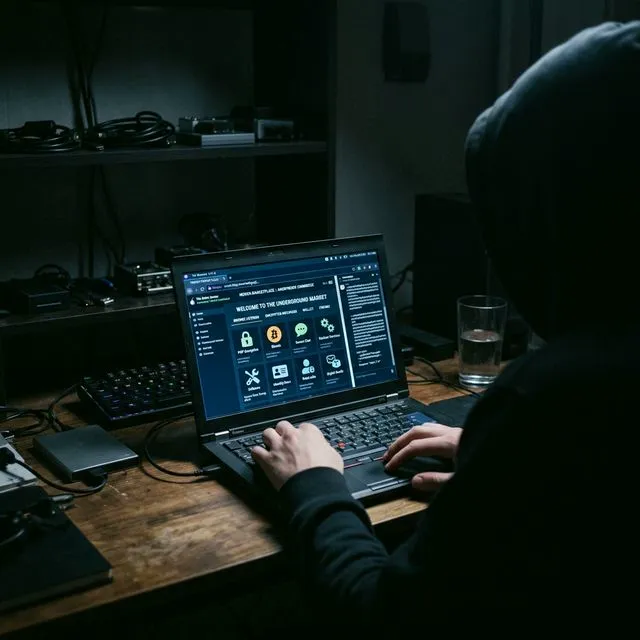
The most accurate analogy is the iceberg:
🔵 Surface Web — 4% of the internet
- Google, Facebook, YouTube, Wikipedia
- Everything indexed by search engines
- Approximately 5.8 billion pages
🔷 Deep Web — 90% of the internet
- Government databases
- Medical and academic records
- Corporate intranets
- Emails (Gmail, Outlook)
- Online bank accounts
- Login-protected content
⬛ Dark Web — ~6% of the internet
- Accessible only via special software (Tor, I2P)
- .onion domains
- Illegal marketplaces, anonymous forums
- But also: activism, journalism, privacy
Important: Accessing the Deep Web is something you do every day when you log into online banking or check your email. Accessing the Dark Web, on the other hand, requires specific software and technical knowledge.
How the Dark Web Works
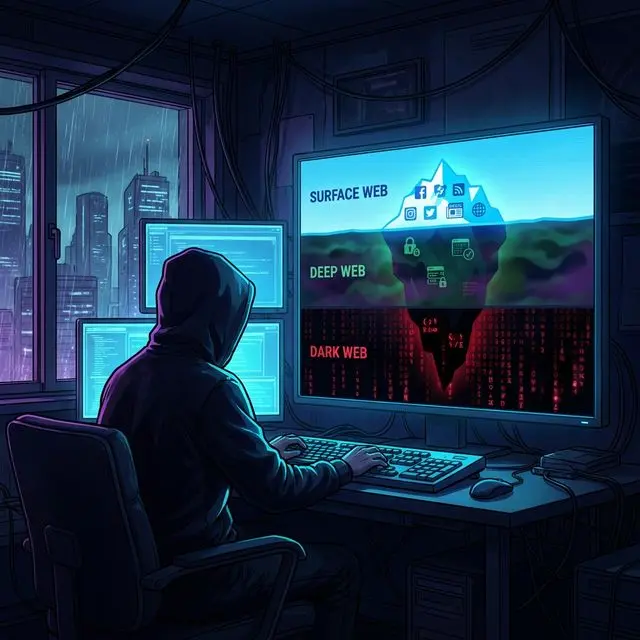
Tor: The Gateway
Tor (The Onion Router) is the most used software to access the Dark Web. Originally developed by the US Navy for secure communications, it works like this:
- You send a request (e.g., access a .onion site)
- The request is encrypted in multiple layers (like an onion — hence the name)
- It passes through at least 3 "nodes" (relays) around the world, each removing one layer of encryption
- No individual node knows where the request came from NOR where it's going
- The site receives the request without knowing who sent it
The result: near-total anonymity for both browsers and hosts.
Tor Numbers in 2026
- ~4 million daily users (according to the Tor Project)
- ~65,000 active .onion sites estimated
- ~6,500 relays (nodes) spread worldwide
- Main legitimate use: Activists in authoritarian regimes, investigative journalists, whistleblowers
The 10 Most Intriguing Dark Web Mysteries
1. Cicada 3301 — The Unsolved Enigma
In January 2012, an image appeared on 4chan with the message: "We are looking for highly intelligent individuals." What followed was a series of puzzles involving:
- Advanced cryptography (RSA, AES)
- Steganography (data hidden in images)
- References to obscure philosophical texts
- Clues scattered across real cities around the world
- Mayan numbers and runes
The enigma repeated in 2013 and 2014, and to this day nobody publicly knows who's behind it. Theories include: CIA, NSA, elite hacker group, philosophical sect, or even an AI.
2. The Silk Road — The Marketplace That Changed Everything
Created by Ross Ulbricht (known as "Dread Pirate Roberts"), the Silk Road operated from 2011 to 2013 as a marketplace where you could buy virtually any illegal substance using Bitcoin.
- Estimated revenue: $1.2 billion in transactions
- Commission: 8-15% per transaction
- Ulbricht: Sentenced to life in prison without possibility of parole
- Legacy: Proved that cryptocurrencies could be used for anonymous transactions at scale
After the Silk Road's closure, dozens of similar markets emerged. In 2026, the most notorious is Nemesis Market.
3. The Red Room — Myth or Reality?
The most famous Dark Web legend: live streaming rooms where people would be tortured for money. The truth?
- Extremely unlikely from a technical standpoint: the Tor network is too slow for quality live streaming
- No confirmed case by international law enforcement
- Europol and the FBI state they've never found evidence of Red Rooms
- Most likely: An internet urban legend that took on a life of its own
4. Unexplained Number Pages
Multiple .onion sites contain only seemingly random number sequences, updated periodically:
- Some follow patterns resembling number stations (radio transmissions used for espionage during the Cold War)
- Others appear to use encryption that no public analyst has been able to crack
- The most accepted theory: they're digital dead drops — information exchange points between intelligence agents
5. The Marianas Web — The Bottom of the Digital Ocean
Legend says that below the Dark Web exists an even deeper layer: the Marianas Web (reference to the Mariana Trench, the deepest point in the ocean). Supposedly:
- Accessible only through quantum computing
- Would contain government secrets, the location of Atlantis, conscious AI
- Reality: It's a myth created by creepypastas. There's no technical evidence of a layer below the Dark Web
6. The Playpen Case — The Largest Dark Web Police Operation
In 2015, the FBI located and took control of Playpen, the largest child exploitation site on the Dark Web:
- The FBI kept the site running for 13 days to identify users
- Used malware (Network Investigative Technique) to discover real IPs
- 870 arrests worldwide
- Raised ethical debates: can the FBI operate an illegal site to catch criminals?
7. WikiLeaks and Secret Files
Before having a public website, WikiLeaks operated extensively on the Dark Web:
- Whistleblowers used Tor to send classified documents anonymously
- The Diplomatic Cables (2010) and CIA Vault 7 (2017) were sent via the Dark Web
- Julian Assange became one of the most controversial figures of the digital age
8. Hackers for Hire
Forums exist on the Dark Web where hackers offer services:
- DDoS as a service: Starting at $50/hour
- Account access: Social media, emails — $100 to $500
- Ransomware as a Service (RaaS): Ready-made kits to launch attacks
- Custom malware development: $1,000 to $10,000
In 2026, the cybercrime market is estimated at $10.5 trillion globally — larger than the GDP of any country except the US and China.
9. The Satoshi Nakamoto Database
Persistent theories exist that the true identity of Satoshi Nakamoto (Bitcoin's creator) is hidden in an encrypted file on the Dark Web:
- Satoshi's original wallet contains ~1.1 million Bitcoins (value: ~$70 billion in 2026)
- They've never been moved
- Nobody knows if Satoshi is alive, dead, or a group of people
10. .onion Sites That Mysteriously Disappear
A common phenomenon: popular .onion sites that simply vanish without warning:
- Sometimes they return weeks later with different content
- Some are "honey pots" (traps) created by intelligence agencies
- Others are taken down by rival hacker groups
- The ephemeral nature of the Dark Web makes it impossible to document everything
Legitimate (And Important) Uses of the Dark Web
Not everything on the Dark Web is crime. There are crucial uses:
Journalism
- SecureDrop: System used by outlets like the Washington Post, The Guardian, and New York Times to receive anonymous tips
- ProPublica: Has a .onion mirror for access in censored countries
- BBC: Launched a .onion version in 2019 for access in authoritarian countries
Activism
- Dissidents in dictatorships: Use Tor to communicate without state surveillance
- LGBTQ+ in hostile countries: The Dark Web offers safe communication spaces
- Arab Spring: Activists used Tor extensively during the 2011 protests
Privacy
- In 2026, with growing digital surveillance, more ordinary people use Tor to:
- Avoid advertising tracking
- Protect sensitive communications
- Access regionally blocked content
The Deep Web in Brazil
Brazil has a significant relationship with the Dark Web:
- 6th largest Tor user base in the world
- Operation Darknet (2014): Federal Police dismantled a Dark Web crime network
- Carding groups: Credit card fraud is the most common crime
- Data leaks: CPFs, IDs, and bank data of Brazilians are sold for pennies
Prices of Brazilian Data on the Dark Web (2026)
| Data | Price |
|---|---|
| CPF + full name | R$0.50 |
| CPF + complete data | R$5.00 |
| Bank account with balance | R$50 - R$500 |
| Valid credit card | R$20 - R$100 |
| Selfie with document | R$30 - R$150 |
| Email access | R$10 - R$50 |
Frequently Asked Questions
Is it illegal to access the Deep Web?
No. Accessing the Deep Web (email, online banking, etc.) is completely legal. Accessing the Dark Web via Tor is also legal in most countries, including Brazil. What's illegal are the criminal activities that may occur there, just as on the regular internet.
Is Tor safe?
Tor offers significant anonymity, but it's not perfect. Intelligence agencies with sufficient resources can de-anonymize users under certain conditions. User errors (using real data, installing plugins) are the main vulnerability.
Can I be tracked on the Dark Web?
It's difficult, but possible. The FBI and Europol have demonstrated the ability to track Dark Web users using sophisticated techniques. The rule is: no technology offers absolute anonymity.
What's the scariest thing on the Dark Web?
For most security experts, the scariest aspect isn't the myths (Red Rooms) — it's the scale of organized cybercrime: ransomware that paralyzes hospitals, personal data sold in bulk, and critical infrastructure vulnerable to attacks.
Conclusion: The Hidden Side That Reflects Society
The Dark Web is, in many ways, a distorted mirror of society. It amplifies both the best and worst of human nature: on one side, it offers privacy and freedom for activists and journalists in danger; on the other, it facilitates crimes that cause real suffering.
The unsolved mysteries of the Dark Web — from Cicada 3301 to unexplained number sites — remind us that, even in the information age, there are secrets that technology cannot (or doesn't want to) reveal.
One thing is certain: as long as the internet exists, its hidden side will exist too. And as long as there's human curiosity, there will be those who venture into its depths.
Sources and References
- Tor Project - Metrics
- Europol - Internet Organised Crime Threat Assessment
- FBI - Darknet Operations
- Cybersecurity Ventures - Cybercrime Report
- Wikipedia - Cicada 3301
Last updated: February 13, 2026