Mali on Fire: Coordinated Attack in Bamako Shakes the Military Junta and Sounds Alarm Across the Sahel
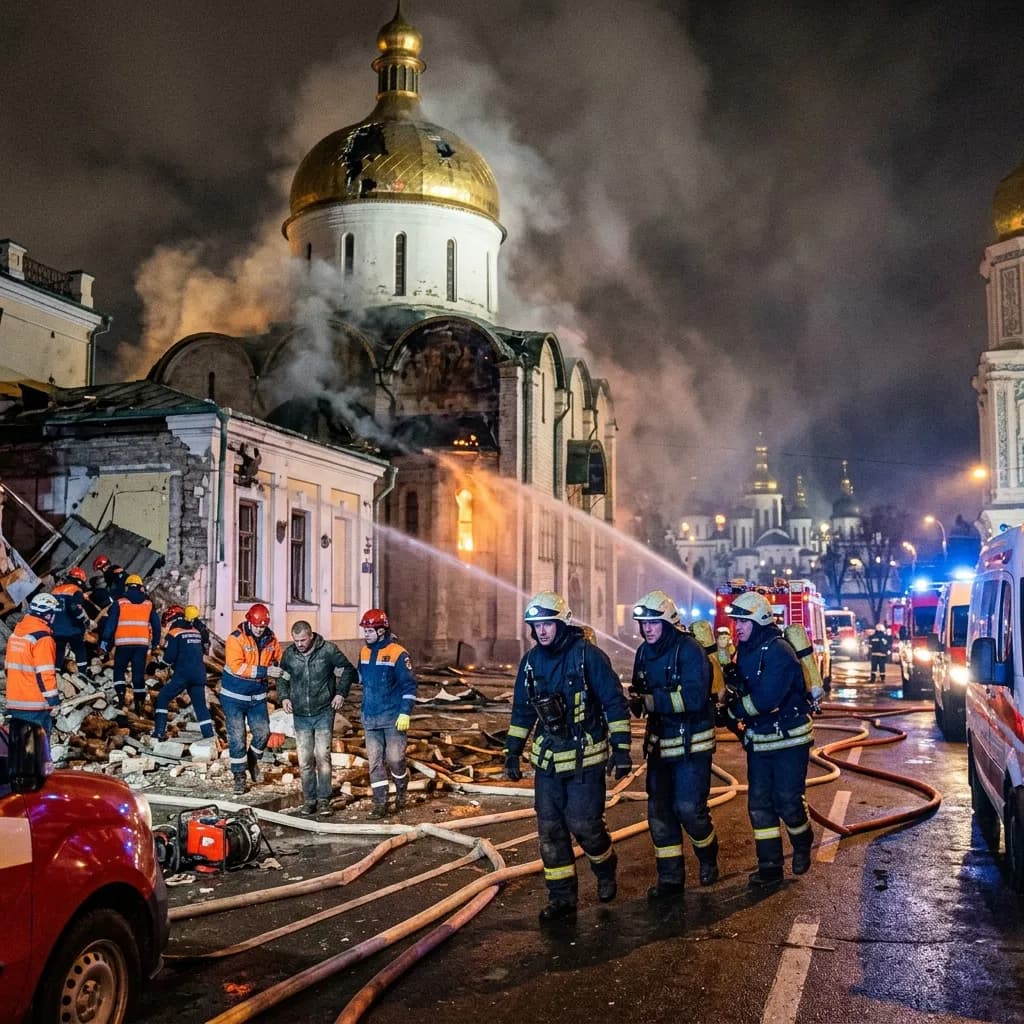
In the early hours of April 25, 2026, Mali's capital Bamako woke to the sound of explosions and gunfire. Unidentified armed groups launched coordinated attacks at multiple points across the city, including areas near the Modibo Keïta International Airport — the country's largest — and residential neighborhoods near military and government facilities.
The Malian army, under the control of the military junta led by General Assimi Goïta, confirmed the attacks in an official communiqué, declared maximum alert, and asked the population to remain at home. The airport was temporarily closed as security forces surrounded the affected areas.
For international security analysts, the attacks represent a dramatic turning point: Bamako — which had been relatively spared from the worst fighting of the insurgency in the north and center of the country — has become a direct target. What this means for Mali, the Sahel, and the stability of all of West Africa is what this article analyzes in depth.
The Context: Five Years of Progressive Collapse
The Coups That Changed Everything
To understand what is happening in Bamako today, we must go back to August 2020, when a group of military officers overthrew democratically elected President Ibrahim Boubacar Keïta. The justification was the government's inability to contain the jihadist insurgency that had already devastated the north of the country for years.
Rather than bringing stability, the coup paved the way for a second coup in May 2021, which put General Assimi Goïta definitively in power. The junta promised elections but repeatedly postponed them. In 2026, Mali remains without an elected civilian government and with no immediate prospect of a democratic transition.
The Expulsion of the West and the Bet on Russia
The junta made a geopolitical decision that shocked the Western world: it expelled French military forces from Operation Barkhane, which had been fighting jihadists in the Sahel for years. It then expelled MINUSMA, the UN peacekeeping mission that had cost the lives of dozens of blue helmets.
In their place, the junta invited the Wagner Group, the Russian mercenary company (now integrated into Russian armed forces after Prigozhin's death). Russian mercenaries arrived in Mali with equipment and, according to human rights organizations, were accused of serious violations against the civilian population in the country's interior.
The Failure of the Military Strategy
Five years later, the balance sheet is grim:
- Jihadist groups control more than 60% of Mali's territory in the north and center
- The city of Kidal — historically a Tuareg stronghold — remains under rebel control
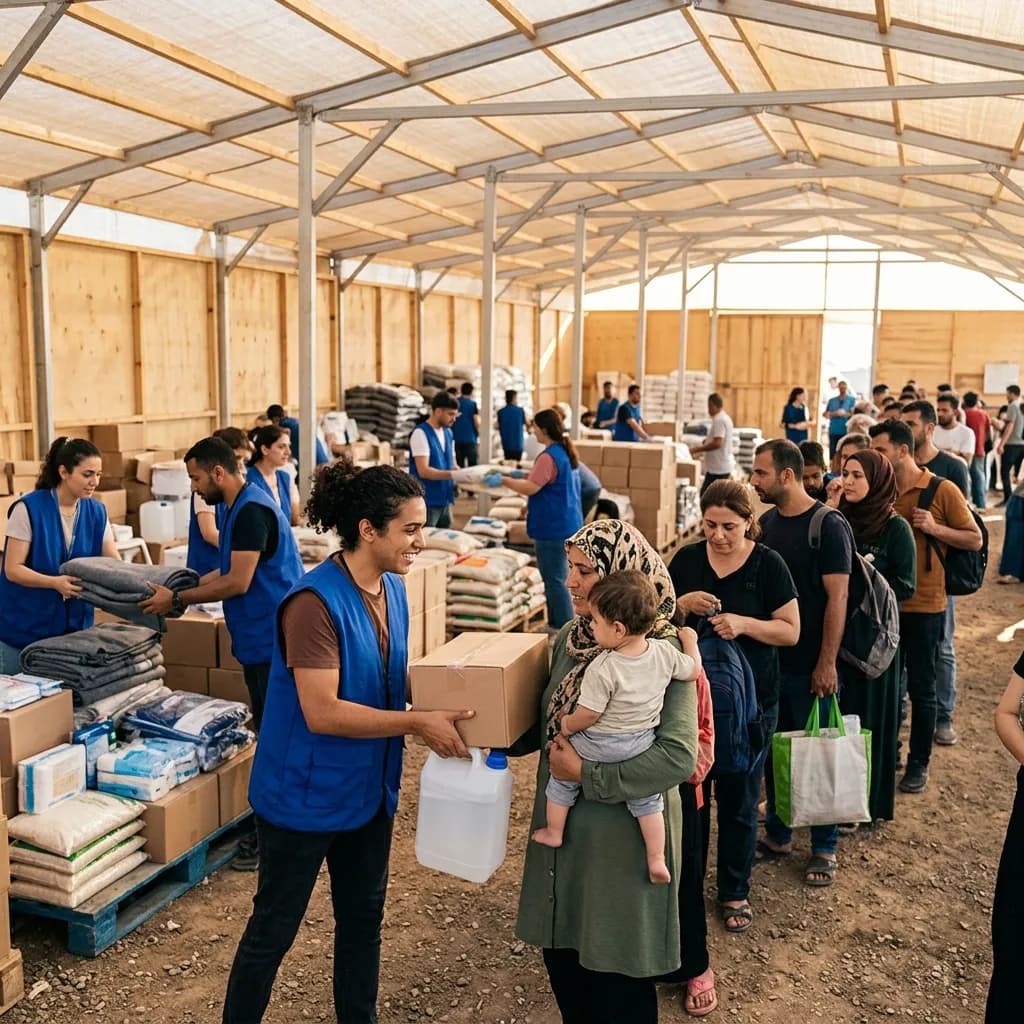
- The number of internally displaced people exceeded 450,000 in 2026
- The food crisis affects more than 6 million Malians (about 25% of the population)
- GDP per capita fell 18% since 2021
The April 25 Attack: What We Know
The Sequence of Events
According to reports from local correspondents and Malian government communiqués, the attacks occurred in multiple phases during the early morning hours:
4:30 AM (local time): First explosions were heard near Modibo Keïta Airport in the Sénou neighborhood. Residents' accounts describe a sequence of detonations followed by intense exchanges of gunfire.
5:15 AM: State television interrupted its programming to broadcast an army communiqué asking for "calm and cooperation" and informing that "patriotic forces are neutralizing terrorist elements."
6:00 AM: New reports of confrontations emerged in the ACI 2000 neighborhood — Bamako's commercial and diplomatic area — and in Badalabougou, near several embassies.
7:30 AM: The airport closed and international flights were diverted to Dakar, Senegal, and Abidjan, Côte d'Ivoire.
Throughout the day: Sporadic fighting continued at different points across the city. The government declared a curfew beginning at 6 PM.
Who Is Responsible?
The junta did not officially point to a culprit, but suspicion falls on two groups:
JNIM (Jama'at Nusrat al-Islam wal-Muslimin): The largest and most powerful jihadist alliance in the Sahel, affiliated with Al-Qaeda. JNIM has been progressively expanding its operations southward, including attacks on smaller cities around Bamako over the past 18 months.
Islamic State in the Greater Sahara (ISGS): JNIM's rival, affiliated with the global Islamic State, the ISGS has increased its presence in eastern Mali and demonstrated the capacity for large-scale attacks.
Security analysts consulted by international agencies note that the sophistication and coordination of the attacks suggest months of planning and infiltration of urban cells — which is particularly alarming.
The Regional Impact: The Entire Sahel at Risk
The Contagion Syndrome
The Sahel is not an isolated region — it is an interconnected system where instability in one country rapidly contaminates its neighbors. The Bamako attacks concern neighboring capitals for very concrete reasons:
Burkina Faso: Governed by a military junta since 2022, also bet on Russian forces, and also faces a growing insurgency. In 2025, jihadist groups managed to cut road access to Ouagadougou, the capital.
Niger: Another country with a military junta, which expelled US forces in 2024. Faces growing attacks and pressure on the capital Niamey.
Mauritania: The Sahel's most stable country, but watching the deterioration of its neighbor Mali with growing alarm.
Senegal: A democratic country receiving growing flows of Malian refugees and fearing the export of instability.
The Wagner Paradox in Mali
The Wagner Group's presence in Mali represents one of the most troubling aspects of the country's security situation. When the junta invited them, the narrative was seductive: experienced Russian mercenaries, without the "constraints" of human rights that Westerners imposed, would destroy the jihadists through brute force.
Reality proved very different. Reports from the UN, NGOs, and investigative journalists have systematically documented that Wagner rarely engages jihadists in direct combat, but is frequently present at massacres of civilians accused of collaborating with armed groups.
The Moura massacre in March 2022 became the darkest symbol of Wagner's presence in Mali. During five days, Malian soldiers and white mercenaries — identified by survivors as Russian-speaking — executed approximately 500 people in an operation the army described as combat against jihadists, but which UN investigators identified as a massacre of civilians, primarily men of productive age.
What to Expect in Coming Months
Three scenarios emerge from the analysis:
Scenario 1 — Containment: The junta manages to isolate the attackers, recovers control of Bamako, and uses the attacks as justification to intensify internal repression. Possible in the short term, but unlikely as a lasting solution.
Scenario 2 — Escalation: Attacks in Bamako become recurrent, confidence in the government collapses further, and Mali plunges into a cycle of urban violence that paralyzes the economy.
Scenario 3 — Institutional Collapse: The junta, worn down and divided, faces internal splits. Other sectors of the armed forces or civil groups seek negotiations with international actors for a transition — the most hopeful scenario, but also the least likely in the short term.
Conclusion: A Warning for the World
The Bamako attacks of April 25, 2026 are more than a Malian crisis. They are a warning to the international community about what happens when:
- Military coups destroy democratic institutions without offering viable alternatives
- Brutal military solutions ignore the deep socioeconomic causes of insurgency
- The world abandons entire regions to their own fate because they are "too far" or "too complicated"
- Unaccountable mercenaries replace regular forces under international supervision
Mali is on fire. And the flames of the Sahel rarely stay contained within borders.
Sources
- Al Jazeera — Mali: Attacks reported in Bamako, military declares alert (Apr. 25, 2026)
- Washington Post — Armed groups strike Mali's capital in coordinated assault (Apr. 25, 2026)
- Agence France-Presse (AFP) — Explosions near Bamako airport as junta declares emergency (Apr. 25, 2026)
- UN / OCHA — Mali Humanitarian Situation Report Q1 2026
- ACLED — Sahel Security Tracker 2026
- Human Rights Watch — Mali: Wagner Forces Implicated in Civilian Massacres (2023)