
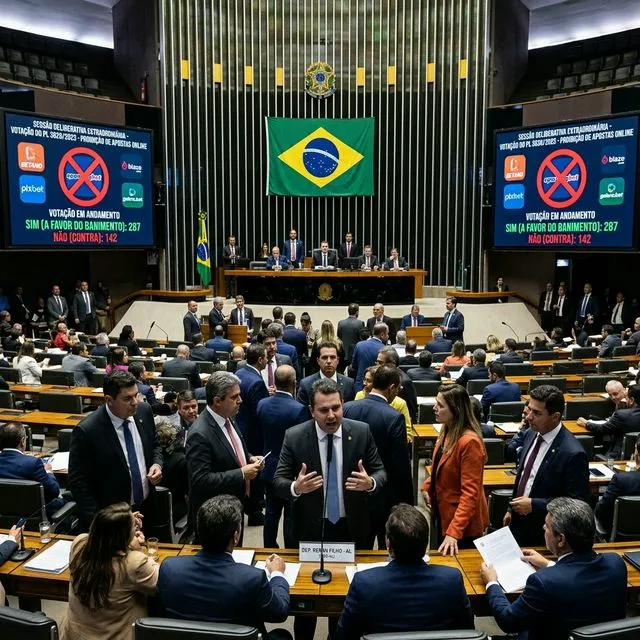
In March 2026, President Lula declared war on digital casinos and online gambling games, promising to ban platforms like the infamous "Tiger Game" (Jogo do Tigrinho) that, according to him, are "bankrupting millions of Brazilian families." The declaration threw billions of reais into uncertainty, shook the regulated betting market, and sparked one of the most heated debates in contemporary Brazil: should the country ban or regulate online betting?
In this article, we'll break down everything: what Lula said exactly, how the current regulation works, how much money is at stake, the impact on Brazilian football, the social consequences of gambling addiction, and what could happen if bets are actually banned.
What Lula Said and Why It Matters
The March 2026 Declaration
In a statement that reverberated across the country, President Lula made a clear distinction: regulated sports betting is one thing; digital casinos and gambling games like the "Tiger Game" are something completely different.
"If physical casinos are banned in Brazil, why do we allow digital casinos to bankrupt families through their phones?" questioned Lula, promising to engage Congress and the Judiciary to implement severe restrictions.
The declaration generated immediate reactions from all sides: the regulated industry warned that prohibition would strengthen the illegal market; consumer protection organizations applauded the initiative; and the football sector — dependent on billions in sponsorship from betting companies — entered a state of calculated panic.
The Context: A Billion-Dollar Industry
To understand the gravity of the situation, one must understand the numbers. The online betting market in Brazil moves an estimated R$150 billion per year in gross bets. From this total, the government collects taxes, companies profit, and millions of Brazilians — many of whom are financially vulnerable — lose money they cannot afford to lose.

How Current Regulation Works
Law 14,790/2023
The regulation of online betting in Brazil was established by Law No. 14,790/2023, which officially came into effect in January 2025. The law's objective was to create a regulated, safe, and transparent environment, replacing the wild west that previously dominated the sector.
Key Rules in Effect
| Aspect | Regulation |
|---|---|
| License | Mandatory — R$30 million fee |
| Domain | Mandatory .bet.br |
| Headquarters | Required in Brazil, Brazilian partner with min. 20% |
| Taxes (GGR) | 13% on gross revenue (2026) |
| Income Tax on Winnings | 15% above exemption threshold (R$2,259) |
| Credit Cards | Prohibited for deposits |
| Cryptocurrencies | Prohibited for transactions |
| Payment Method | Pix as standard |
| Sign-up Bonuses | Prohibited |
| Responsible Gaming | Deposit limits and self-exclusion mandatory |
The SPA: The Betting Sheriff
The Secretariat of Prizes and Bets (SPA), linked to the Ministry of Finance, is the body responsible for supervising and inspecting the sector. In 2025, the SPA blocked hundreds of irregular sites and revoked licenses of operators that violated the rules. However, critics point out that enforcement is still insufficient given the magnitude of the market.
The Tiger Game: The Villain of the Story
What It Is
The "Tiger Game" — formally known as Fortune Tiger — is a digital slot machine game developed by PG Soft. Its colorful visuals, simple mechanics, and promises of quick winnings made it a viral phenomenon in Brazil, especially among lower-income populations (classes C and D).
Why It's So Dangerous
Unlike sports betting, where the bettor can analyze statistics and make informed bets, games like Fortune Tiger are purely based on house algorithms — the outcome is predetermined by a random number generator that ensures the house always wins in the long run.
Addiction specialists compare the Tiger Game to traditional slot machines, known as one of the most addictive forms of gambling in the world. The combination of:
- Mobile access — available 24 hours
- Low minimum bets — starting at R$1
- Immediate visual feedback — lights, sounds, animations
- Illusion of control — the player believes they can find a "pattern"
- Aggressive marketing — influencers promoting fake "results"
...creates a devastating dependency cycle, particularly among young people and low-income individuals.
The Disaster Numbers
According to data from consumer protection organizations and social surveys conducted in 2025-2026:
- More than 50 million Brazilians have bet online at least once
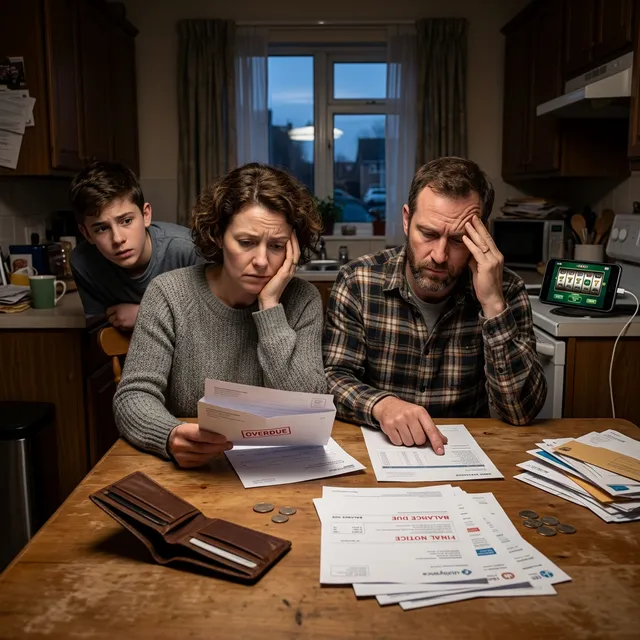
- 22% of bettors report having gone into debt because of betting
- One in four families with income up to 2 minimum wages has had at least one member involved with online betting
- Consumer protection agencies recorded a 340% increase in complaints related to betting platforms between 2024 and 2026
- Psychiatrists report a significant increase in treatments for gambling disorder (ludopathy)
The Impact on Brazilian Football
Billion-Dollar Sponsorships
Brazilian football has become financially dependent on betting companies. Virtually all clubs in Series A and B have sponsorship contracts with betting operators, and these contracts represent, in many cases, the main source of revenue for the clubs.
| Club | Sponsor | Estimated Value |
|---|---|---|
| Corinthians | Bet Master | R$370 million/3 years |
| Flamengo | Pixbet | R$140 million/year |
| Palmeiras | Sportingbet | R$100 million/year |
| São Paulo | Superbet | R$100 million/year |
What Happens If Bets Are Banned
If the government completely bans betting companies — including regulated sports betting — the impact on football would be catastrophic:
- Revenue collapse: clubs would lose between 30% and 60% of their sponsorship revenue
- Salary defaults: players and employees could go unpaid
- Talent flight: players would migrate to foreign leagues
- Quality decline: championships would lose competitiveness
However, the distinction made by Lula — between sports betting and digital casinos — suggests that the intention is not to ban everything, but rather games of chance that do not involve sports competitions.
The Debate: Ban or Better Regulate?
Arguments For Prohibition
- Protection of the vulnerable: low-income families are disproportionately affected
- Mental health: exponential increase in gambling disorder cases
- Indebtedness: millions of Brazilians going into debt because of betting
- Predatory marketing: influencers promote fake results to attract new bettors
- Legal precedent: physical casinos have been banned in Brazil since 1946
Arguments Against Prohibition
- Illegal market: banning doesn't eliminate demand — it just pushes it to the black market, without consumer protection
- Tax revenue: the government would lose billions in taxes
- Jobs: the sector directly and indirectly employs hundreds of thousands of people
- Individual freedom: adults should have the right to decide how to spend their money
- Technology: it's practically impossible to completely block access to betting sites in the digital age
The Middle Path
Experts suggest that the best solution is not total prohibition, but rather stricter regulation that includes:
- Specific prohibition of digital slot machines (like the Tiger Game), while maintaining sports betting
- Mandatory deposit limits proportional to declared income
- Self-exclusion tools that are more accessible and effective
- Advertising restrictions during hours and on platforms accessible to minors
- Financial education mandatory on betting platforms
- Treatment fund funded by operators to treat gambling addiction

International Comparison: What Other Countries Did
| Country | Approach | Result |
|---|---|---|
| United Kingdom | Strict regulation | Regulated market of £14 billion, but social problems persist |
| Italy | Regulation + advertising ban | 40% reduction in advertising, stable market |
| Australia | Regulation with limits | Per-bettor losses above global average |
| USA | State-by-state regulation | Fragmented market, growing |
| China | Total prohibition | Massive illegal market estimated at US$150 billion |
| Turkey | Total prohibition | Thriving illegal market, no consumer protection |
International experience shows that total prohibition rarely works — it merely transfers the problem to the illegal market. On the other hand, regulation without adequate enforcement also fails.
Conclusion: The Country at a Crossroads
Brazil is at a crossroads. On one side, a billion-dollar industry that generates jobs, taxes, and finances football. On the other, millions of indebted families, addicted youth, and a president determined to act. The decision made in the coming months will directly impact the lives of tens of millions of Brazilians.
What seems certain is that the era of "anything goes" in online betting in Brazil is coming to an end. The question is whether the country will move toward selective prohibition — maintaining sports betting while banning digital casinos — or opt for stronger regulation that protects the vulnerable without pushing the market underground.
One thing is undeniable: the Tiger Game and similar products have caused real damage to millions of families. And no economic argument justifies the financial destruction of those who cannot protect themselves. The challenge is finding the balance between economic freedom and social protection — a balance that few countries in the world have managed to achieve.
The discussion about online betting in Brazil goes far beyond a simple regulatory question. It touches on fundamental issues like social inequality, public health, individual freedom, and state responsibility. The fact that people from lower-income classes are the most affected by gambling addiction reveals a social justice dimension that cannot be ignored: when a financial tool disproportionately harms the most vulnerable, state intervention becomes not only justifiable but morally imperative. Brazil has the historic opportunity to become a global reference in responsible gambling regulation, creating a model that protects citizens without pushing the market into illegality.
The reality is that online betting has created an unprecedented regulatory challenge. Unlike traditional casinos, which can be physically shut down, digital platforms operate in a borderless environment where blocking one website simply leads to the creation of another. This technological reality makes total prohibition not only impractical but potentially counterproductive, as it would strip consumers of the few protections that regulation provides.
Furthermore, the mental health implications of gambling addiction cannot be understated. Psychologists and psychiatrists across Brazil report overwhelming demand for treatment services, with many publicly funded facilities operating at full capacity. The emotional toll extends beyond the individual gambler: families are torn apart by financial devastation, children suffer from instability, and communities lose productive members to the grip of compulsive gambling.
What remains clear is that any solution must prioritize the most vulnerable members of society. Economic arguments about tax revenue and job creation, while valid, cannot overshadow the human cost of unregulated gambling. The government must find a way to preserve economic freedom while establishing robust guardrails that prevent the exploitation of those least equipped to protect themselves. Only through a balanced, evidence-based approach can Brazil hope to harness the economic benefits of a regulated betting market while shielding its most vulnerable citizens from exploitation and financial ruin.
Timeline: How We Got Here
To understand how Brazil reached this point, it is fundamental to reconstruct the trajectory of online betting in the country:
| Year | Event |
|---|---|
| 1946 | President Dutra bans physical casinos in Brazil |
| 2018 | Law 13,756 authorizes "fixed odds" sports betting |
| 2019-2023 | Market grows without regulation, hundreds of sites operate freely |
| Dec/2023 | Law 14,790 enacted — regulatory framework for online betting |
| Jan/2025 | Regulation officially comes into effect, .bet.br domain mandatory |
| 2025 | SPA blocks hundreds of irregular sites, but digital casinos proliferate |
| Mar/2026 | Lula declares intention to ban digital casinos and Tiger Game |
The Regulatory Vacuum of 2019-2024
Between the 2018 authorization and effective regulation in 2025, Brazil experienced a period of regulatory vacuum that allowed the uncontrolled proliferation of betting platforms. During these five years, companies from around the world established themselves in the Brazilian market without any oversight, offering not only sports betting but also digital casinos, slots, roulettes, and games like Fortune Tiger.
It was during this period that the social damage was consolidated. Without advertising rules, without deposit limits, without responsible gaming tools, and with aggressive marketing targeting vulnerable audiences — including influencers promoting fake winnings — millions of Brazilians were introduced to online betting without any safety net.
Real Stories: The Human Side of the Crisis
A Brazilian Family's Story
Maria José, 42, from a small city in the interior of Minas Gerais, recounts that her husband started betting on the Tiger Game in 2024 after seeing influencer videos on Instagram showing "how to make easy money." In less than eight months, he had lost R$47,000 — the family's entire savings, including money reserved for house renovation and their eldest son's college tuition.
"He hid it from me. I only found out when the bank called saying the account was overdrawn. It was eight months of lies," says Maria José. Her husband now receives treatment at CAPS (Psychosocial Care Center) and the family is trying to rebuild their finances with help from social workers.
Common Patterns of Destruction
Mental health professionals who treat gambling addicts identify recurring patterns in cases related to online betting:
- Casual start: the person begins betting small amounts for entertainment
- First win: a significant gain creates the illusion that consistent winning is possible
- Escalation: bets increase in value and frequency
- Loss chasing: the bettor starts making larger bets to recover what was lost
- Concealment: begins hiding behavior from family members
- Indebtedness: resorts to loans, credit cards, and asset sales
- Crisis: the situation explodes when debts become impossible to hide
This cycle, well-documented in psychiatric literature on pathological gambling disorder, is dramatically accelerated by the 24-hour availability of digital platforms and the speed of Pix transactions, which enable instant deposits at any time of day or night.
The Role of Influencers
One of the most controversial aspects of the online betting debate in Brazil is the role of digital influencers in promoting these platforms. Celebrities and content creators are paid — often six or seven-figure amounts — to promote betting sites and games like the Tiger Game.
The problem is that many of these influencers show manipulated or selective results, creating the false impression that it's possible to consistently make money. In some documented cases, influencers use "demo" versions of games — which don't involve real money — to simulate big wins and encourage followers to bet with real money.
CONAR (National Council for Advertising Self-Regulation) has been judging cases related to this practice, but enforcement is still considered insufficient by consumer protection agencies. The new regulation prohibits sign-up bonuses but does not sufficiently address influencer marketing.
Frequently Asked Questions (FAQ)
Will sports betting be banned?
According to Lula's statement, no. The focus of the ban is on digital casinos and gambling games, like the Tiger Game. Regulated sports betting with .bet.br licenses should continue to operate normally, although they may face more restrictive regulations, such as advertising bans during specific hours and deposit limits tied to the bettor's declared income. The distinction Lula makes between sports betting and digital casinos is fundamental: in sports betting, there is an element of analysis and knowledge; in gambling games like slots and roulettes, the outcome is purely random and always favors the house.
I already have money on a platform. Will I lose it?
If your platform operates with a valid SPA license, your money is protected by the Consumer Defense Code. In case of operations shutdown, companies are required to return client balances. Unlicensed platforms do not offer this guarantee. It is recommended to regularly check if your betting platform has the .bet.br domain and is registered with the SPA. In case of doubt, consumer protection agencies can be contacted to mediate conflicts between consumers and betting operators.
How do I know if a bet is legalized?
Check if the site has a .bet.br domain and is listed on the official SPA/Ministry of Finance website. Platforms operating with .com or other foreign domains without Brazilian registration are illegal. The SPA maintains an updated list of all licensed operators on its official portal. It is also possible to verify if the company has an active Brazilian CNPJ and clearly displays its licensing information on the site's page.
Is there treatment for gambling addiction?
Yes. The SUS (Brazilian public health system) offers free treatment for gambling disorder (ludopathy) through CAPS (Psychosocial Care Centers). Additionally, organizations like Gamblers Anonymous offer support groups across the country. The World Health Organization (WHO) recognizes pathological gambling disorder as a mental health condition, and treatment may include cognitive-behavioral therapy, medication, and psychosocial support.
What are the signs that someone is addicted to betting?
The main warning signs include: spending more time and money than planned on bets, lying about frequency or amount of bets, borrowing money to bet or pay betting debts, neglecting family or professional responsibilities, and feeling irritation or anxiety when not betting.
Sources and References
- Federal Government — Law 14,790/2023
- Gizmodo Brazil — Lula wants to ban digital casinos
- BNL Data — Impact of betting prohibition
- Click Petróleo e Gás — Lula's statements
Last updated: March 10, 2026


