
Kevin Spacey's Multimillion Settlement 2026: The Actor Hollywood Tried to Cancel Negotiates in Silence
March 18, 2026. The Associated Press publishes a story that reignites one of Hollywood's most uncomfortable debates: Kevin Spacey, the actor who was virtually erased from the entertainment industry in 2017, has closed out-of-court settlements with three men who accused him of sexual assault.
The terms are confidential. The amounts unconfirmed. But sources close to the case estimate the total could reach $5-8 million.
The public reaction is predictably divided: some shout "bought their silence," others murmur "finally, justice." Nobody is satisfied. That is the nature of the Kevin Spacey case in 2026.
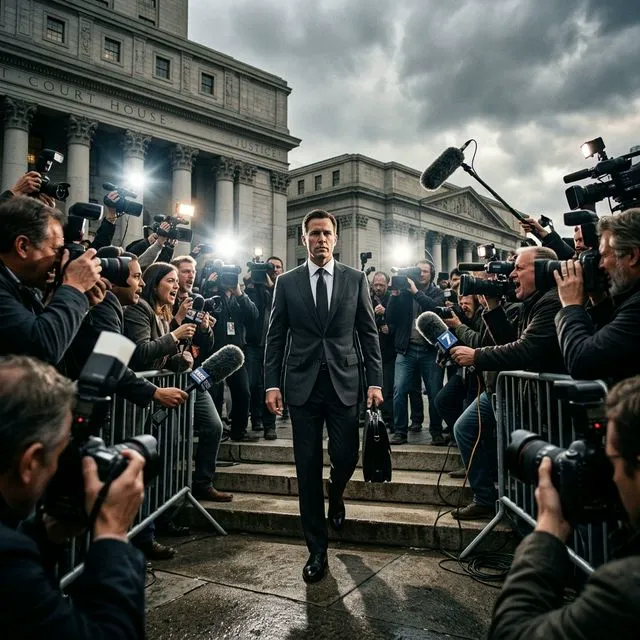
The Fall: From Giant to Ghost (2017-2023)
October 2017: The World Crumbles
On October 29, 2017, actor Anthony Rapp revealed to BuzzFeed that Kevin Spacey had sexually assaulted him in 1986, when Rapp was 14 years old.
Within 72 hours:
- Netflix cancelled House of Cards
- Ridley Scott reshot entire scenes of All the Money in the World, replacing Spacey with Christopher Plummer — in 9 days, with the film already finished
- The Old Vic Theatre revealed 20 complaints of improper behavior
The Cascade Effect
| Year | Event | Financial Impact |
|---|---|---|
| 2017 | House of Cards cancelled | -$9M/season in fees |
| 2019 | Criminal case Massachusetts | Dropped (accuser withdrew) |
| 2022 | Civil trial Rapp vs Spacey (NY) | Spacey won (jury) |
| 2023 | Criminal trial London (4 charges) | Acquitted of all |
| 2024 | Civil trial London (1 charge) | Spacey won (jury) |
| 2026 | Out-of-court settlements × 3 | $5-8M (estimated) |
Kevin Spacey was acquitted in ALL his trials. Courts — in the US and UK — heard evidence, deliberated, and decided: "not guilty." But the court of public opinion had issued its verdict years earlier. And that verdict is irreversible.
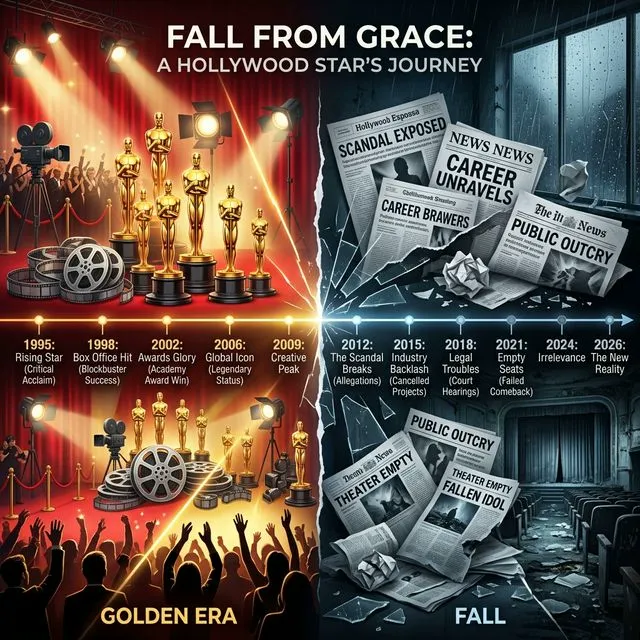
The 2026 Settlement: What We Know
The three men who settled with Spacey allege incidents between 2008 and 2014. Why did Spacey negotiate despite winning all his trials?
- Legal exhaustion: 8 years of court battles drained financial and emotional resources
- Defense cost: estimated $15-20 million in legal fees since 2017
- Desire for closure: Spacey wants to close pending cases for potential rehabilitation
- Reduced demands: accusers significantly lowered their initial requests
The Settlement Dilemma
- For accusers: compensation without trial trauma, but no official verdict
- For Spacey: cases closed but creates perception of "bought guilt"
- For the public: no verdict, no "official truth," no closure
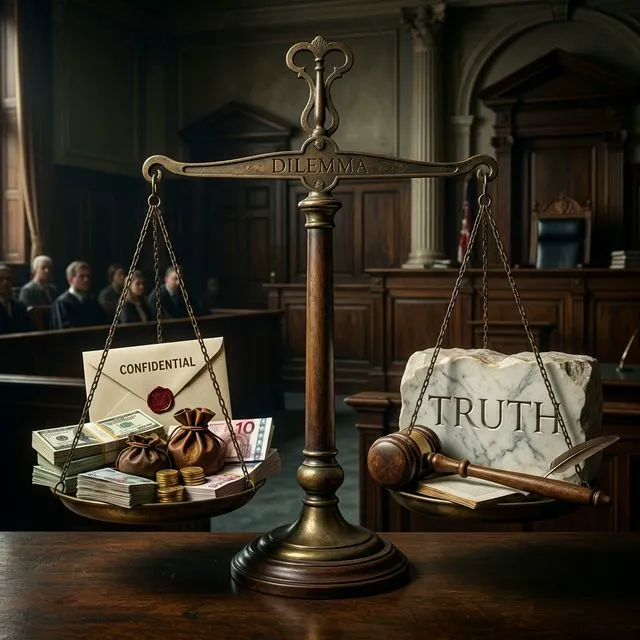
The Spacey Paradox: Acquitted But Not Forgiven
The Kevin Spacey case exposes one of post-MeToo society's deepest tensions: what happens when the legal system says "innocent" but culture says "guilty"?
Legal Facts
- 0 convictions in 9 years of accusations
- 4 acquittals by jury (2 civil, 2 criminal)
- Settlement ≠ admission of guilt (recognized legal fact)
Cultural Facts
- Zero films or series in Hollywood since 2017
- Zero invitations to industry events
- Net worth dropped from $100 million to $2-5 million
As Spacey himself said in a rare 2024 interview: "I was acquitted in every court. But I was convicted everywhere else. And nobody told me where I appeal that sentence."
The Bigger Context: MeToo, Justice, and Cancellation
The Complex Arithmetic of MeToo
| Actor | Accusations | Legal Result | Career After |
|---|---|---|---|
| Harvey Weinstein | 80+ accusers | Convicted | Prison — career over |
| Kevin Spacey | 12+ accusers | Acquitted of all | Career over |
| Johnny Depp | 1 accuser (Heard) | Won lawsuit | Career partially recovered |
| Aziz Ansari | 1 accuser (anon) | Not prosecuted | Career recovered |
The pattern shows legal severity of accusations is not the main determinant of career recovery. The main determinant is public narrative.
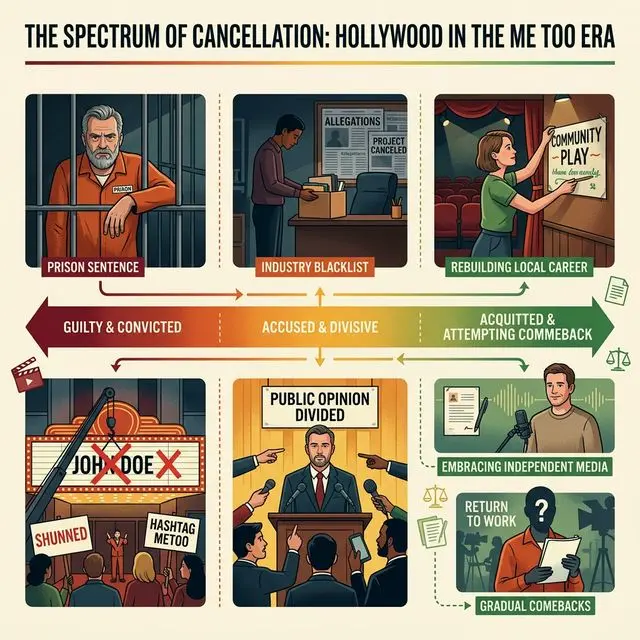
Kevin Spacey's Future
Away from Hollywood, Spacey hasn't stopped:
- Made independent films in Italy and Serbia ($1-3M budgets)
- Launched a monthly podcast about art and theater (40K listeners)
- Gave acting masterclasses at European universities
- Maintains a YouTube channel (880K subscribers)
Can he return to Hollywood? Probably not. Not because the legal system prevents it, but because no studio wants the controversy, no A-lister wants to share billing, and insurers charge prohibitive premiums.
Spacey, at 66, is perhaps the most talented actor who will never be cast again. Two Oscars. One of cinema's greatest villains. And a cautionary tale about the irreversible power of public opinion.

The Legal Analysis: What the Settlements Really Mean
To understand the Spacey case from a legal perspective, we need to separate emotion from law.
Settlements vs. Acquittals
Spacey's out-of-court settlements happened in civil proceedings — where the standard is "preponderance of evidence" (51%). His acquittals were in criminal courts — where the standard is "beyond a reasonable doubt" (95%+).
This distinction is crucial and frequently ignored in public debate:
- Civil proceedings: The accuser needs to prove it's "more likely than not" that the incident occurred. A civil victory doesn't mean a crime was proven.
- Criminal proceedings: The prosecutor needs to prove it's "virtually certain" that the defendant committed the crime. A criminal acquittal doesn't mean proven innocence — only that there wasn't sufficient evidence.
Spacey was criminally acquitted and made civil settlements. In legal practice, this is more common than people realize — and it's not necessarily contradictory.
The Cost of Litigation
Attorney Roberta Kaplan (who represented E. Jean Carroll against Trump) explains that settlements are frequently pragmatic decisions:
- Legal costs: Spacey spent an estimated $15 million on attorneys between 2017-2025, regardless of outcomes
- Emotional toll: court cases can last 3-5 years, with public hearings, depositions, and constant media exposure
- Residual risk: even with high chances of winning, there's always the risk of an adverse verdict — and the potential damages would be devastating
For victims, the situation is similarly complex: the legal process is traumatizing, expensive, and public. Many survivors prefer a private settlement that offers financial compensation and closure — without needing to relive the trauma in court.
Cancel Culture: An International Perspective
The Spacey case took on different dimensions depending on the country and culture.
Europe vs. America
In Europe, where Spacey sought professional refuge, the reception was significantly different:
- Italy: Spacey filmed "The Man Who Drew God" (2022) and was warmly received by the Italian film industry. Director Franco Nero publicly defended his decision to cast him.
- Germany and France: European film festivals continued inviting Spacey for masterclasses and retrospectives — something unthinkable in the US.
- Serbia: Spacey received an award at the Belgrade Film Festival in 2024, with a standing ovation. The contrast with his American reception couldn't be starker.
The difference reflects something deeper: American legal culture is more punitive (based on common law and precedent), while European culture tends to separate the work from the artist — a tradition that is neither better nor worse, just different.
The Generational Divide
Pew Research Center surveys (2025) show a dramatic generational split:
| Age Group | "Spacey should be able to act again" | "Spacey should be banned" |
|---|---|---|
| 18-29 | 23% | 61% |
| 30-44 | 38% | 42% |
| 45-59 | 52% | 31% |
| 60+ | 58% | 24% |
The data reveals that the generation that grew up with MeToo (Gen Z) is significantly more rigid in their positions on cancellation, while older generations tend to value the outcome of formal legal proceedings more.
Sociologist Jon Ronson, author of So You've Been Publicly Shamed, observes: "We've created a system where public punishment is infinite. There is no 'serving your sentence' in the court of the internet. The sentence is permanent."
The Rehabilitation Timeline
Historical data suggests that public rehabilitation from cancellation follows a predictable pattern:
- Year 0-2: Complete exile. No major offers, media avoidance.
- Year 2-5: Small, independent projects. European or international work. Building a "rehabilitation narrative."
- Year 5-8: Tentative return. A mid-budget film or streaming project tests public reaction.
- Year 8-15: Potential full return if public sentiment has shifted. Requires a "redemption moment" (charity work, public apology, critical acclaim).
Spacey is currently in Phase 2 (Year 7). The question is whether he'll ever reach Phase 3 — and the data suggests the answer depends more on cultural shifts than on anything Spacey himself does.
FAQ
Does the settlement mean Spacey is guilty?
Legally, no. Out-of-court settlements are not admissions of guilt. Spacey denies the accusations and has been acquitted in all trials. The settlement is described by his lawyers as a "pragmatic decision to end litigation."
How much did Spacey pay?
The amounts are confidential. Sources estimate between $5-8 million total for the three settlements. Spacey partially financed them through the sale of his Baltimore property.
Can Spacey go to prison?
With settlements and acquittals, there are no more pending criminal cases. New charges would require new accusations, and most have reached the statute of limitations.
Can House of Cards return with Spacey?
Extremely unlikely. Netflix is emphatic in its distancing. The series ended in 2018 with Robin Wright as the lead. There are no plans to revive the series in any format.
Has MeToo ended?
No, but it has evolved. The focus has shifted from public accusations to institutional changes — corporate policies, legislation, mandatory training. Cases like Spacey's show that the era of "Twitter destructions" is being replaced by a more nuanced debate about evidence, judgment, and proportionality.
What is the total financial impact on Spacey's career?
Forbes estimates that Spacey lost more than $97 million in potential earnings since 2017 — combining fees from canceled films, rescinded advertising contracts, and lost profit participation from House of Cards. His estimated net worth dropped from $100M to approximately $2M.
Have other canceled actors managed to come back?
Yes, but few. Mel Gibson was rehabilitated after antisemitic comments (2006) and returned to directing award-winning films. Robert Downey Jr. rebuilt his career after drug problems. Louis CK returned to stand-up but never recovered his previous status. The pattern suggests rehabilitation is possible but takes 7-15 years and depends on the nature of the accusation.
What would it take for Spacey to actually return to Hollywood?
Industry insiders suggest several conditions would need to be met: (1) A high-profile director willing to stake their reputation on casting him — someone with enough cultural capital to absorb the backlash. (2) A streaming platform willing to take the risk, since streaming services face less advertiser pressure than traditional studios. (3) A "redemption narrative" — public acknowledgment, charitable work, or a widely praised independent performance that shifts public perception. (4) A generational shift in public opinion — which may take another 5-10 years. Even then, the path back would likely go through independent film, not a major studio release.
Are there similar cases outside Hollywood?
Yes, and they provide interesting comparisons. In the music industry, R. Kelly was convicted and imprisoned — his streaming numbers actually increased after sentencing (the "curiosity effect"). In sports, Mike Tyson went from convicted rapist to beloved cultural figure in roughly 15 years. In politics, numerous figures have survived scandals that would end any Hollywood career. The entertainment industry is paradoxically the harshest environment for second chances, perhaps because the product itself — performance, likability, charisma — is inseparable from the person's public image.
What role did social media play in Spacey's downfall?
Social media was both the catalyst and the amplifier. Anthony Rapp's initial accusation was published by BuzzFeed but gained traction through Twitter, where the hashtags #MeToo and #TimesUp transformed individual accusations into a movement. Within 72 hours, Spacey went from Oscar-winning icon to industry pariah. Traditional media then followed social media's lead, creating a feedback loop that became impossible to escape. Legal experts note that in the pre-social-media era (before ~2015), Spacey's case would likely have played out in courts first and public opinion second — potentially with very different career outcomes.
How has the Spacey case influenced Hollywood contracts?
The case led to sweeping changes in entertainment industry contracts. Major studios now include "morality clauses" that allow unilateral termination based on public controversy — not just criminal conviction. Insurance policies for film productions now routinely include "cancellation risk" riders that increase premiums for actors with any history of public controversy. SAG-AFTRA has pushed back against the broadest versions of these clauses, arguing they give studios too much power to terminate contracts based on unproven allegations.
Sources and References
- Associated Press — "Kevin Spacey settles out of court with three men" (March 18, 2026)
- The New York Times — "Kevin Spacey Legal Timeline: 2017-2026"
- BuzzFeed News — "Anthony Rapp: Kevin Spacey Made A Sexual Advance Toward Me When I Was 14" (October 29, 2017)
- Reuters — "Spacey acquitted of all sexual assault charges in London" (July 2023)
- Variety — "Kevin Spacey's Post-Hollywood Life" (2025)
- SAG-AFTRA — Industry Standards on Talent Representation Post-MeToo (2024)
- The Hollywood Reporter — "The Economics of Cancellation: What Happens After the Fall" (2025)
- Forbes — "Kevin Spacey Net Worth Collapse: From $100M to $2M" (2025)
- Pew Research Center — "Public Opinion on Cancel Culture and Due Process" (2025)
- Jon Ronson — So You've Been Publicly Shamed (Riverhead Books, 2015)
- Crown Prosecution Service (UK) — Case Summary: R v Spacey (2023)


