The statement was surgical. Without naming names, the Pope managed to:
- Criticize Trump (who posted the Jesus photo)
- Criticize leaders who weaponize religion
- Position himself as a global moral voice
- Provide material for approximately 47 million memes
Trump, predictably, called the comments "purely political" — which is ironic coming from someone who literally portrayed himself as the Messiah for political gain. The irony was not lost on the internet, which turned it into its favorite fuel.
What makes this rivalry particularly delicious for the internet is a detail Trump would probably like to forget: he previously took credit for Leo XIV's election to the papacy. Yes, Trump publicly suggested that his political influence had contributed to the selection of the first American pope.
So, to recap: Trump wants credit for having "created" the Pope, but doesn't want the Pope to have an opinion. It's as if Dr. Frankenstein complained that the monster talks too much. The internet, naturally, loved this contradiction.
The internet of 2026 operates with brutal efficiency when it comes to turning geopolitical crises into shareable content. Here are the memes that dominated social media during the Pope vs Trump: Tyrants Edition week.
The "Choose Your Fighter" format got an epic version with Pope Leo XIV on one side (stats: Morality +99, Patience +85, Shade +100, Followers: 1.4 billion) and Trump on the other (stats: CAPS LOCK +100, Truth Social Posts +334, Humility -50, Followers: "the best, believe me"). The meme spread like wildfire, with variations including power-ups like "Papal Blessing" (heals entire team) and "Tweet Storm" (confuses opponent for 3 turns). A particularly popular version added the Pope wearing a superhero cape with the caption "When the final boss is from Chicago." The meme accumulated over 12 million shares in 48 hours, becoming the most-used template of the week across X, Instagram, and TikTok combined.
A series of edited images showing Pope Leo XIV supposedly reading Trump's 334-word Truth Social post, with facial expressions ranging from polite confusion to genuine pity. The sequence ends with the Pope putting on "deal with it" sunglasses and turning his back. A popular variation showed the Pope running Trump's post through a Vatican paper shredder with the caption "Processing your complaint." Another version featured the Pope forwarding the message to a WhatsApp group called "Cardinals 🔥" with the message "guys, look at this lmao." The format became so popular that even official government accounts (non-American) started using variations, with Ireland's official X account posting a version captioned "When your neighbor complains about the noise but you're the Pope."
The most elaborate meme of the week: a video edit in the style of The Apprentice reality show, with Trump behind his desk saying "You're fired!" to the Pope, who simply responds "I answer to a slightly higher authority than yours" and calmly walks out the door while a celestial choir plays in the background. Variations included the Pope responding in Latin (with subtitles), the Pope showing a red card like a football referee, and a version where Trump tries to fire the Pope but discovers that "the Vatican doesn't accept executive orders." The meme spawned an entire subcategory of content: "Things Trump Can't Fire," which included the Pope, gravity, time, and "the feeling that he's wrong." An animated version accumulated 45 million views on TikTok in three days.
The question isn't really "why did it go viral?" — it's "how could it NOT go viral?" But let's analyze the ingredients of this perfect content storm, because there's real science behind the chaos.
On one side, we have a man in immaculate white robes, speaking with monastic serenity on a continent that represents hope and renewal. On the other, we have a man in a suit and red tie, typing in CAPS LOCK on a social network he created because he was banned from the others. The contrast is so cinematic it looks like it was directed by Wes Anderson after reading a geopolitics textbook.
The internet loves visual contrasts. That's why the "expectation vs reality" format never dies. And Pope vs Trump offers the ultimate contrast: sacred vs secular, serenity vs fury, Latin vs CAPS LOCK.
Trump wants credit for the Pope but doesn't want the Pope to speak. It's the perfect contradiction for memes because it's simultaneously absurd and true. The internet thrives on contradictions — the more obvious, the better. And this one is so obvious it practically turns itself into a meme.
The "tyrants" declaration came after a full week of escalation. The internet was already warmed up, the templates already existed, and the audience was already invested in the narrative. Each new statement was like adding fuel to a fire that was already burning. The meme cycle fed itself in real time: Pope speaks → Trump responds → internet creates memes → Pope speaks again → cycle restarts.
Religion and politics are two of the most universal themes of human experience. Everyone has an opinion about at least one of them. When they collide this spectacularly, the result is content that transcends linguistic and cultural boundaries. Memes about Pope vs Trump were created in Portuguese, English, Spanish, French, Italian, Arabic, and even Latin (because the internet is like that).
One of the reasons the rivalry generated so many memes from both sides is that, depending on your political perspective, either one can be the hero or the villain. This means both Trump supporters and critics found material for memes — which doubled content production. The internet doesn't need consensus to create memes; it needs conflict. And this conflict delivered in abundance.
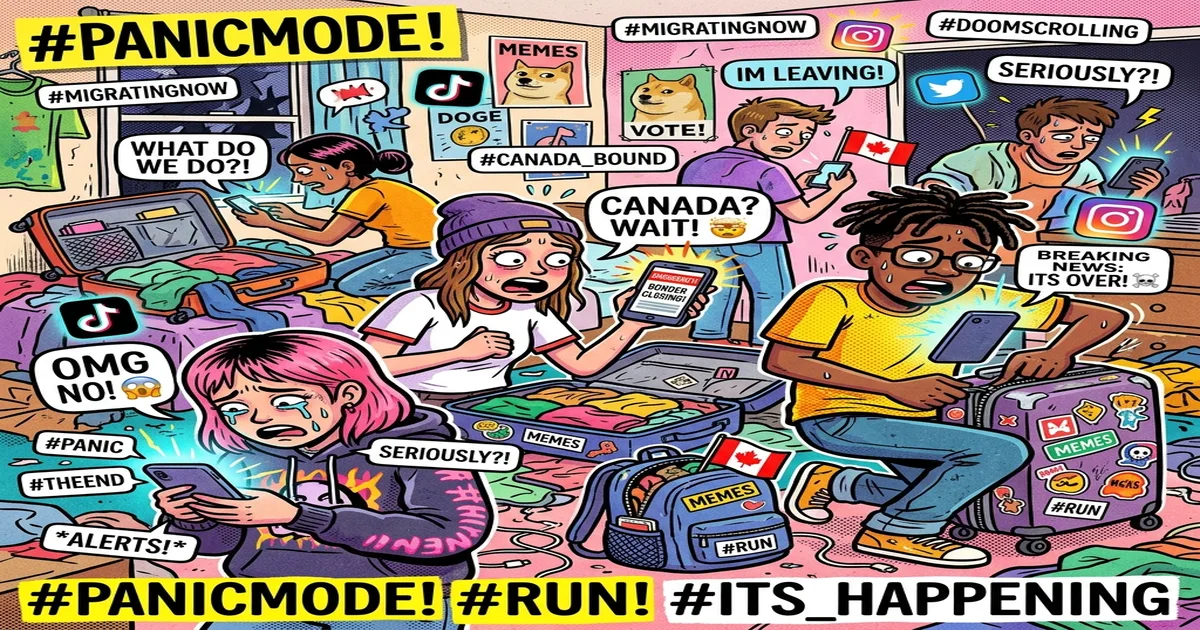
This is where things get interesting — and a bit uncomfortable, if you stop to think about it. Because behind every meme of the Pope with sunglasses and every edit of Trump being "fired" by the Vatican, there's a deeper truth about how we process information in 2026.
When the spiritual leader of 1.4 billion people calls world leaders tyrants, that should concern us. When the President of the United States responds by calling moral statements "political," that should alarm us. But instead of processing this information with the gravity it deserves, we turn it into memes.
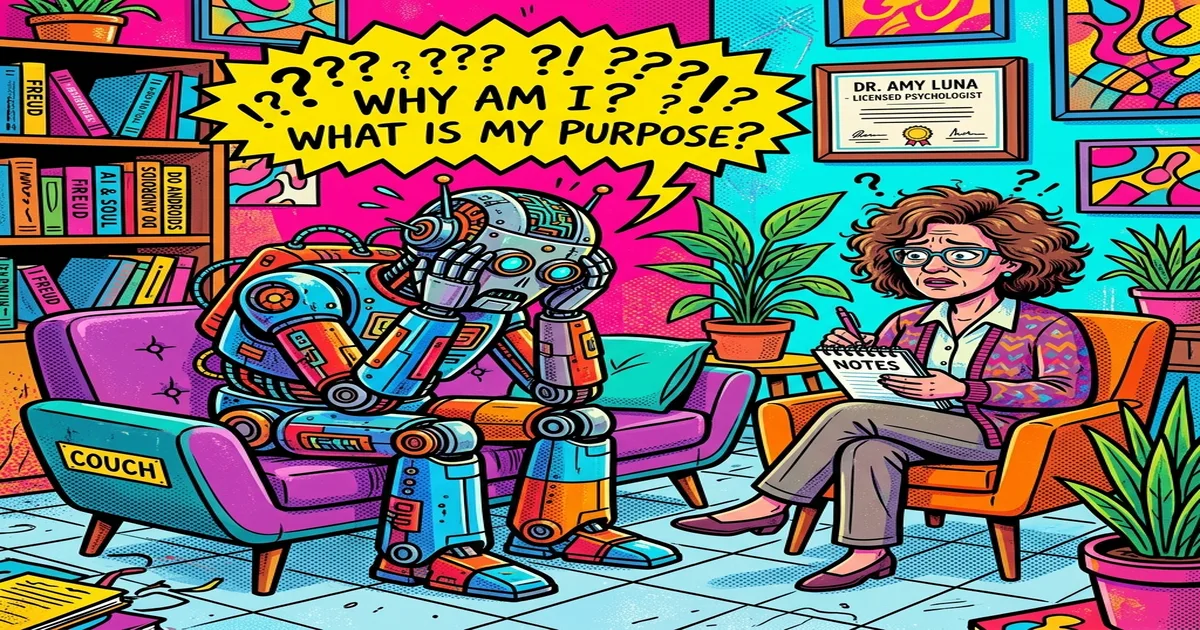
This isn't necessarily bad. Psychologists argue that humor is a healthy defense mechanism against existential anxiety. And let's be honest, existential anxiety in 2026 is at levels that would make Freud need therapy. Memes are how the digital generation processes chaos — it's not escapism, it's emotional processing in shareable format.
There's something profoundly democratic about the fact that anyone with a smartphone can create a meme that simultaneously criticizes the Pope and the President. Before the internet, criticism of powerful figures was the domain of political cartoonists, columnists, and professional comedians. Now, a teenager in Lagos can create a meme that's seen by millions of people in hours.
This changes power dynamics in ways we're still trying to understand. When Trump posts on Truth Social, he's speaking to his followers. When the internet responds with memes, it's speaking to the world. And frequently, the memes are more persuasive than the original posts.
The Pope vs Trump rivalry received more internet attention than virtually any humanitarian crisis happening simultaneously. This isn't the memes' fault — it's the fault of how our brains are wired. Conflict between powerful figures activates our tribal instincts in a way that statistics about poverty or climate change simply cannot.
The Pope, ironically, was trying to draw attention to exactly those issues during his Africa visit. But the internet preferred to focus on the fight with Trump. It's the digital equivalent of going to a lecture about world hunger and only paying attention when someone drops the microphone.
Perhaps the most revealing aspect of this saga is how it demonstrates the erosion of moral authority in 2026. When the Pope speaks, half the internet laughs and the other half creates memes. When Trump responds, the same happens. Neither can be taken completely seriously because we live in an era where everything is content and all content is potentially a meme.
This is liberating and terrifying at the same time. Liberating because it means no authority figure is above satire. Terrifying because it means no serious message can survive the meme cycle intact.
For those who love data (and who doesn't when the data is about memes?), here's the panorama of the global reaction:
| Metric |
Value |
Period |
| Hashtag #PopeVsTrump on X |
89 million impressions |
48 hours |
| Memes created (estimate) |
2.3 million |
1 week |
| TikTok videos |
450,000+ |
5 days |
| Countries trending |
47 |
Peak on 04/17 |
| Average time for new meme |
4.7 minutes |
After each statement |
| Most shared meme |
"Choose Your Fighter" |
12M+ shares |
The meme production speed peaked at one new meme every 4.7 minutes after the "tyrants" declaration — a record that only loses to the moment the internet discovered Trump had posted the Jesus photo.
An aspect frequently ignored by the meme machine is the actual context of the Pope's statement. Leo XIV was in Cameroon, visiting communities affected by armed conflicts, extreme poverty, and natural resource exploitation. His statement about "tyrants" wasn't just about Trump — it was about a global pattern of leadership that prioritizes power over people.
Africa, historically exploited by colonial powers and frequently ignored by Western media, served as the stage for one of the most forceful papal declarations of the century. There's a poetic irony in this: the Pope chose the most marginalized continent to deliver his most powerful criticism. And the internet, true to form, focused on the fight with Trump instead of the African context.
Some African content creators responded with their own memes, pointing out this irony. A particularly viral meme showed the African continent with the caption "I'm the setting, not the character" — a sharp critique of how Western media treats Africa as a backdrop for rich-country dramas.
If recent history has taught us anything, it's that this rivalry is far from over. The Pope has more stops scheduled in Africa, and each speech is an opportunity for new declarations. Trump, for his part, has never left a provocation unanswered — especially when it involves someone he considers "his."
The internet is already preparing. Templates are being created preemptively. Meme accounts are on alert mode. Video editors have their software open. It's as if the entire world is sitting in an arena, waiting for the next round of a fight nobody asked for but everyone wants to watch.
And perhaps that's what makes this saga so fascinating: it's simultaneously absurd and profoundly serious. The Pope is talking about tyranny, war, and the weaponization of religion. Trump is talking about loyalty, politics, and the role of the Church. And the internet is talking about... well, all of it, but in meme format.
At the end of the day, memes aren't just jokes. They're how billions of people process, comment on, and participate in global events that would otherwise be the exclusive domain of diplomats and journalists. When a teenager in São Paulo creates a meme of the Pope with sunglasses, they're participating in a global debate about power, religion, and politics. They're just using Canva instead of writing an op-ed.
And honestly? Sometimes the meme communicates more than the article.
The Pope vs Trump: Tyrants Edition saga is yet another chapter in a rivalry that the internet has turned into the best unscripted series of 2026. The Pope calls leaders tyrants from Africa. Trump calls the Pope political from Washington. And the internet, sitting comfortably between the two, turns every statement into pure shareable content gold.
If you're reading this and thinking "this is ridiculous," you're right. It is ridiculous. But it's also real, it's important, and it's — whether we admit it or not — extremely entertaining to follow.
The next papal statement is one speech away. The next Trump response is one Truth Social post away. And the next meme? That one is already being created as you read this sentence.
Welcome to 2026, where the Pope and the President fight in public and the internet is the judge, the jury, and the comedian.
The author of this article would like to clarify that no popes or presidents were harmed during the production of this content. The memes described are fictional, but the reality that inspired them is, unfortunately, 100% real.