
Will AI Replace Politicians? The Best Arguments (and Memes) Say Yes
In April 2026, while humanity sends astronauts to the Moon, develops autonomous robots and creates personalized drugs with AI, one fact remains unchanged since the times of Julius Caesar: politicians continue to lie, steal and sleep during legislative sessions.
The question the internet keeps asking is inevitable: if we already have algorithms that drive cars, diagnose cancer and write code better than programmers, why do we still need human beings to approve laws?
Spoiler: we probably don't. And the memes dominating the internet in 2026 seem to agree.
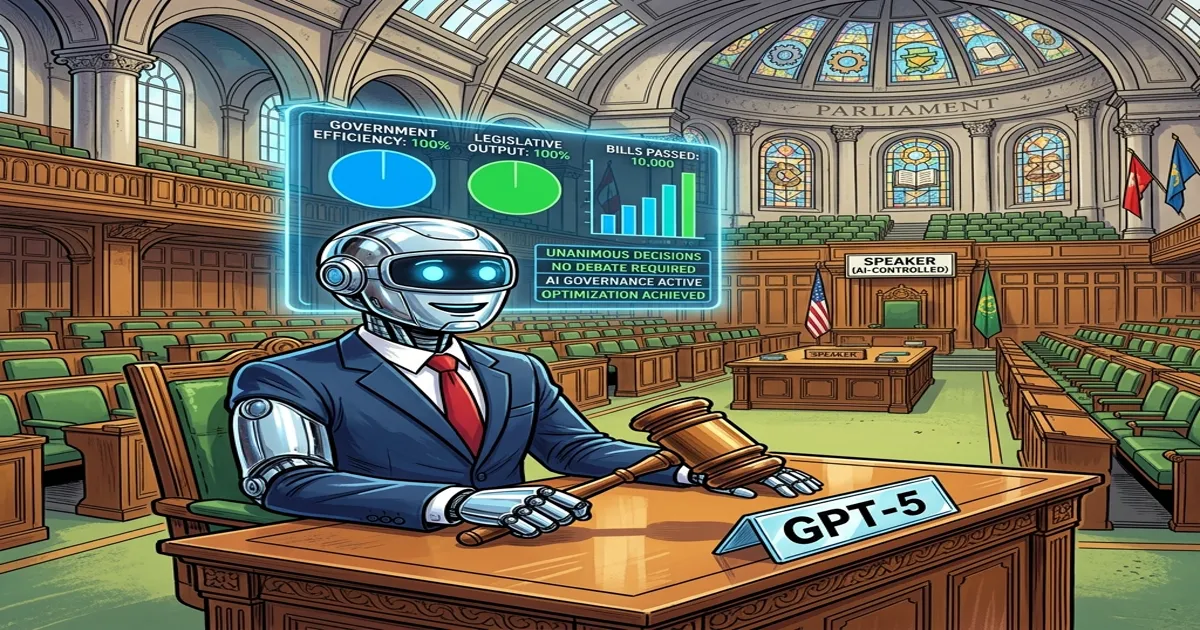
Argument Number 1: AI Doesn't Fall Asleep During Legislative Sessions
Let's start with the obvious. In March 2026, cameras in a state legislative assembly caught three representatives sleeping simultaneously during a tax reform session. The video went viral with the caption: "If they were AI, at least they'd be processing the bill's data while sleeping."
The Meme That Was Born
🤖 MEME: "Hibernate Mode"
Image: Representative sleeping in chair
Caption: "Politicians already operate in standby mode. The difference is that when AI goes into standby, it still saves its progress."
The joke is cruel, but the numbers don't lie. Data from congressional watchdog groups shows that the average attendance rate for lawmakers in deliberative sessions across major democracies was 77% in 2025. That means in any given session, nearly 1 in 4 seats was empty.
You know who would have 100% attendance? An algorithm. It doesn't have football games, family barbecues or "meetings in the constituency" to justify absence.
Argument Number 2: AI Doesn't Embezzle Funds
In 2025, Transparency International classified 131 countries with public corruption scores below 50 (out of 100). More than half the governed world is, statistically, corrupt.
Why Would AI Be Different?
An AI-based system with public blockchain auditing:
| Political Action | Human | AI |
|---|---|---|
| Approve $10M road amendment | ✅ (diverts 30% via overpricing) | ✅ (market price, transparent bidding) |
| Hire staff | ✅ (16 "ghost" employees on payroll) | ✅ (zero ghost employees) |
| Declare assets | ✅ (omits 3 apartments) | ✅ (automatically verified data) |
| Vote on bill | ✅ (votes "yes" after dinner with lobbyist) | ✅ (votes based on impact analysis) |
The Definitive Meme
🤖 MEME: "The Robot's Budget"
Image: Budget spreadsheet with zero diversions
Caption: "The politician looks at the budget and sees opportunity. AI looks at the budget and sees... budget forecast. Revolutionary."
The cynicism is justified. Government audit courts identified billions in irregularities in federal spending in 2025. An algorithm doesn't have a secret bank account abroad. Doesn't have a builder cousin. Doesn't have an election campaign to finance.
Argument Number 3: AI Reads the Bills (Unlike 87% of Lawmakers)
An informal (but widely cited) survey revealed that approximately 87% of lawmakers admit to not fully reading bills before voting. They vote based on party leader guidance, hallway conversations or — in the most generous interpretation — summaries prepared by staffers.
What Would AI Do Differently
A language model with legislative capability could:
- Read the full text of a bill in 0.3 seconds (vs. hours for a human)
- Compare with all existing legislation to identify contradictions
- Simulate economic impact using real-time macroeconomic data
- Identify lobbying and conflicts of interest among bill sponsors
- Generate executive summary with pros/cons for public debate
The Meme That Summarizes It All
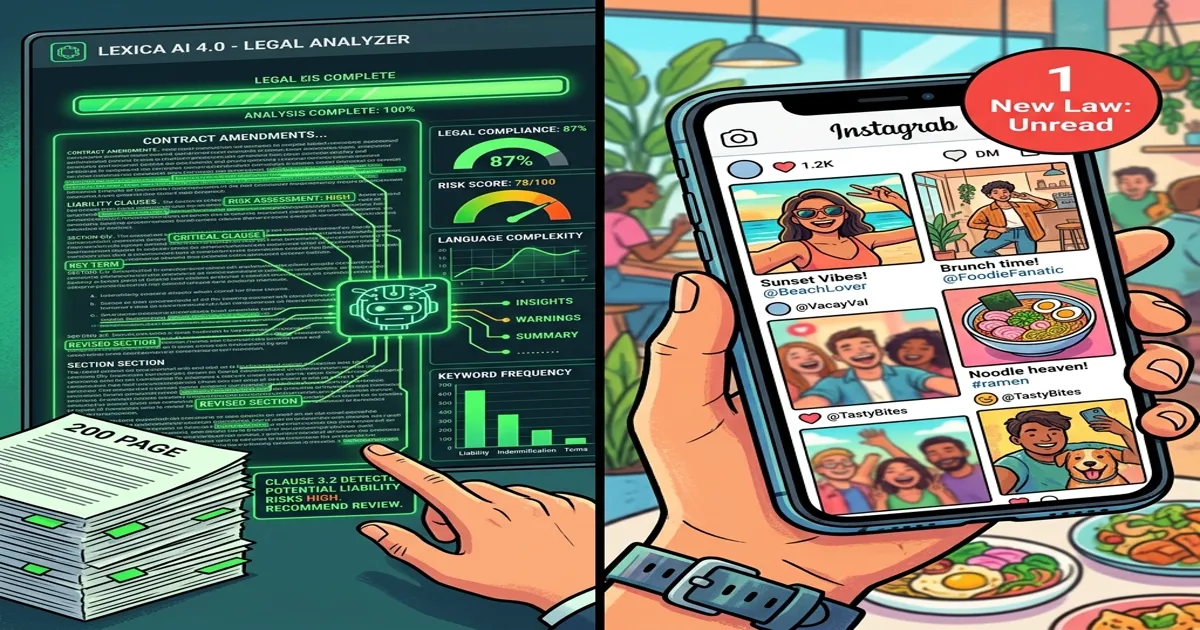
🤖 MEME: "Read the Bill!"
Image: ChatGPT analyzing a 200-page document
Caption: "ChatGPT read all 200 pages of the bill in 0.3 seconds. The congressman read the meme caption about the bill in 0.3 seconds. Same speed, different types of reading."
Argument Number 4: AI Doesn't Run Election Campaigns
You know how much elections cost? In the United States, the 2024 elections cost US$15.9 billion (data from OpenSecrets). Fifteen. Point. Nine. Billion. Dollars. To elect human beings who will argue at the podium, post memes on Twitter and approve less than 3% of bills presented.
The Absurd Calculation
| Item | Cost (USA 2024) |
|---|---|
| TV ads | US$7.2 billion |
| Digital marketing | US$4.1 billion |
| Political consultants | US$2.3 billion |
| Events and rallies | US$1.4 billion |
| Televised debates | US$900 million |
If we replaced politicians with AI, 100% of that money could be redirected to healthcare, education or — irony of ironies — artificial intelligence development.
The AI Campaign Meme
🤖 MEME: "Vote for the Algorithm!"
Campaign poster with robot face
Slogans:
"I promise to read all bills" ✅
"I promise not to embezzle funds" ✅
"I promise not to sleep during sessions" ✅
"I promise not to have relatives in government" ✅
"I promise not to... wait, is this already a perfect politician?" 🤔
But Wait — There's a Dark Side
Before anyone thinks this article is a real defense of replacing politicians with AI (spoiler: it partially is), we need to discuss the genuine problems:
The Bias Problem
AI is trained on human data. If that data contains racial, gender or socioeconomic prejudices, AI reproduces those prejudices. Imagine a legislative algorithm trained on 200 years of American legislation — it would probably create laws that disproportionately benefit white male landowners, because that's what most historical laws did.
The Representativity Problem
Democracy isn't just about efficiency — it's about representation. Minorities, marginalized groups and communities with specific needs require representatives who share their lived experiences. An AI, however advanced, will never know what it's like to grow up in a slum, be discriminated against for your skin color, or live with a disability.
The "Who Programs the AI?" Problem
This is the US$15 billion question: who defines the parameters of the legislative algorithm? If AI needs objectives, someone needs to program those objectives. And that someone will be... a human. Probably a human with interests. Probably a wealthy human. Probably a human who looks suspiciously like... a politician.
The Zero Empathy Problem
Consider this scenario: in 2018, the city of Mariana (Brazil) faced a humanitarian crisis after a dam collapse. The crisis response required not just logistical efficiency, but empathy, physical presence and emotional improvisation — qualities no AI possesses. A mayor who embraces a mother who lost her child in the rubble is doing something no algorithm can replicate. And that "something" — human connection — is a fundamental part of the social contract between rulers and the governed.
The Accountability Problem
If an AI makes a legislative decision that causes suffering to millions, who is held accountable? If a human politician votes for a disastrous law, they can be prosecuted, impeached, or at least not re-elected. If an algorithm does the same, who goes to jail? The programmer? The company owner who created the AI? The citizen who voted to implement the system?
The Political "Trolleyology" Thought Experiment
Ethicists have already adapted the classic Trolley Problem for legislative AI. Imagine AI needs to decide between cutting rural hospital funding (saving the national budget but harming 50,000 people) or keeping hospitals open (causing a deficit affecting 200 million taxpayers). A human would make this decision considering factors AI simply cannot quantify: media pressure, electoral impact, historical precedent, and — yes — fear of being hated. That "fear of being hated" is, paradoxically, one of the best mechanisms of democratic control that exists. An AI has no fear. And that's terrifying.
What Already Exists: AI in Real Politics in 2026
This isn't 100% fiction. Some real experiments with AI in politics are already happening:
Victor Valentino — The AI Candidate (UK, 2024)
In 2024, a British engineer created Victor Valentino, an AI "persona" that attempted to run for the UK Parliament. The candidacy was rejected by the electoral commission, but the debate it generated about digital representation was significant.
Robot Lawyer DoNotPay
The same principle already works in the judiciary. DoNotPay, a legal chatbot, has helped more than 4 million people contest traffic tickets, cancel subscriptions and resolve simple legal disputes since 2015.
Estonia's Parliament
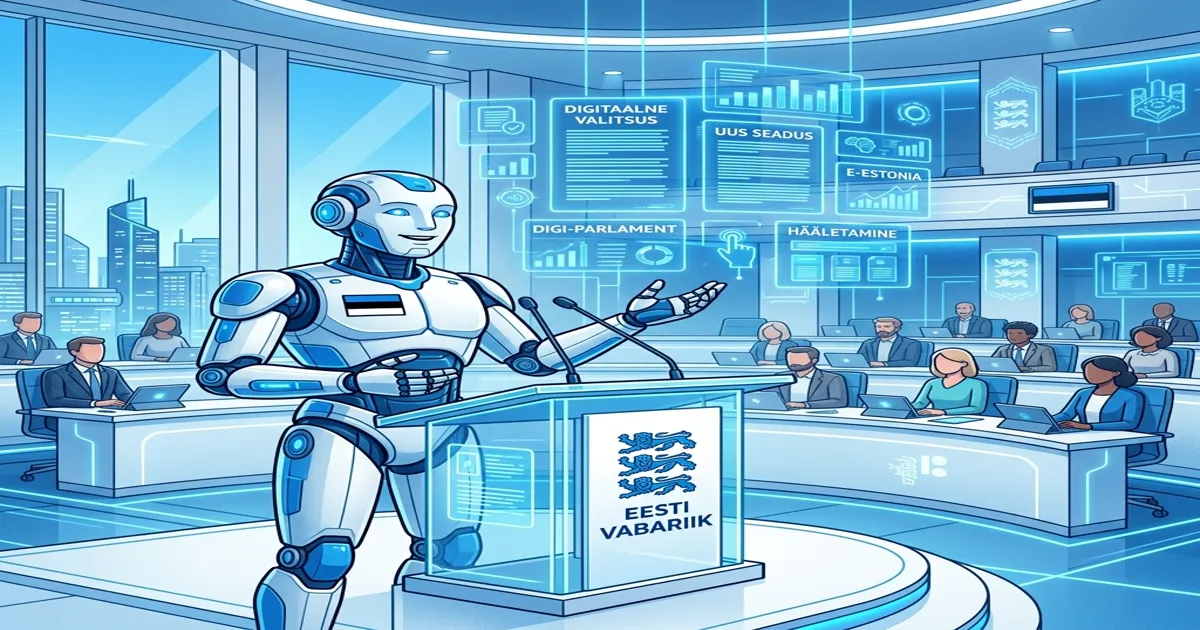
Estonia, the world's most digitized country, already uses AI to draft preliminary legislation and analyze the impact of legislative proposals. It doesn't replace lawmakers, but does 90% of the work they should be doing but aren't.
The 10 Memes That Summarize the Debate (Invented, But Realistic)
| # | Meme Name | Format | Caption |
|---|---|---|---|
| 1 | "System Bug" | Drake format | "Corruption ❌ / Blockchain transparency ✅" |
| 2 | "Plenary Session" | Empty chairs | "AI is already present. The senators... still stuck in traffic." |
| 3 | "The Intern" | Corporate ladder | "Intern < Staffer < Senator < ChatGPT" |
| 4 | "Meeting > Email" | Doge meme | "Scientists prove sessions could be emails. Politician: 'But what about the per diem?'" |
| 5 | "The Firewall" | Digital wall | "Anti-corruption AI: blocks transfers > $10M without justification" |
| 6 | "Politician Update" | Loading screen | "Downloading ethics update... Error 404: file not found" |
| 7 | "The Debate" | Two buttons | "Lie vs. Tell the truth — Politician: Error: conflicting instructions" |
| 8 | "CTRL+Z" | Keyboard | "If only we could CTRL+Z the last elections..." |
| 9 | "Airplane Mode" | Phone | "Senator in airplane mode for 4 years. Coincides with their term." |
| 10 | "The Prompt" | ChatGPT | "'Create an honest politician' — GPT: 'Sorry, this violates my fiction policies'" |
The Serious Answer: AI as Tool, Not Substitute
Jokes aside, the real answer lies in the middle. AI shouldn't replace politicians — it should be used as a tool for auditing, transparency and efficiency in the legislative process:
- Automated auditing of public spending in real-time
- Impact analysis of legislation before votes
- Conflict of interest detection between lobbyists and lawmakers
- Public summaries of bills in accessible language
- Economic simulation of proposals before approval
Democracy is imperfect. But it's the best system we've invented. Improving that system with AI is different from replacing it with AI. One is evolution. The other is science fiction. For now.
FAQ
Is AI already used in legislative processes?
Yes, in several countries. Estonia is the most advanced case, using AI to draft preliminary legislation and analyze proposal impacts. The European Parliament uses AI tools for translation and summarization of legislative documents in 24 languages. The technology exists — what's lacking is political will to implement it at scale.
Could a robot actually be elected?
Legally, no — at least not in most countries. Electoral laws require candidates to be physical persons with citizenship. But nothing prevents a human from running with the promise of following 100% of an algorithm's recommendations. In practice, this already happens informally when politicians follow opinion polls — AI would merely be a more sophisticated and transparent version of that data-driven decision-making process.
Are the memes in this article real?
No — all memes described are original inventions by Mundo Incrível. But they're based on real, verifiable situations. The 87% rate of lawmakers who don't read bills is based on widely cited informal surveys. Corruption data comes from Transparency International. Election costs come from OpenSecrets. The humor is invented. The problems it satirizes, unfortunately, are 100% real.
Would AI govern better than humans?
It depends on the definition of "better." In efficiency, transparency and data processing speed, yes — AI would be objectively superior. In empathy, cultural representativity, ability to navigate complex ethical nuances and adapt to unprecedented situations, humans are still irreplaceable. The ideal scenario isn't AI OR humans, but AI AND humans working together — with AI eliminating the worst characteristics of politics (corruption, incompetence, slowness) and humans bringing what AI cannot offer: humanity.
Sources and References
- Transparency International — Corruption Perceptions Index 2025
- OpenSecrets — "Cost of Election 2024" — Campaign spending report, 2025
- Congressional Watchdog Groups — Lawmaker attendance rankings 2025
- Government Audit Courts — Federal spending irregularity reports 2025
- e-Estonia — "AI in Legislation" — Official Estonian government portal
- DoNotPay — Platform usage report, 2025


