
The First War Fought With Memes: How the Internet Turned the US-Iran Conflict into Entertainment
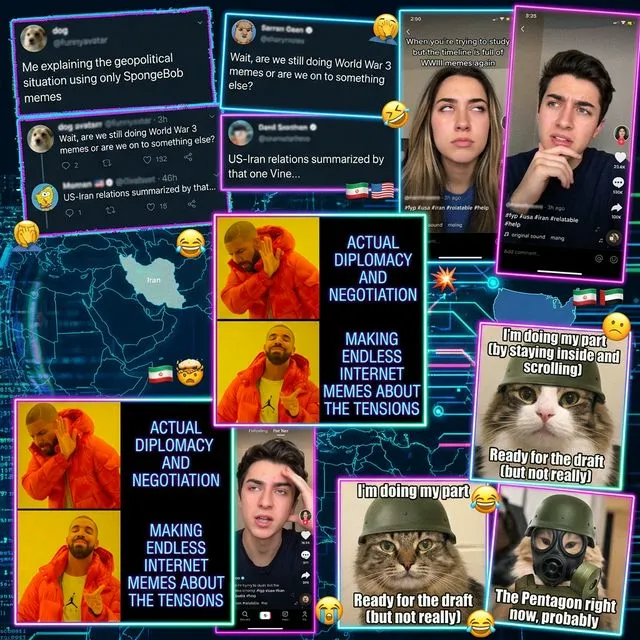
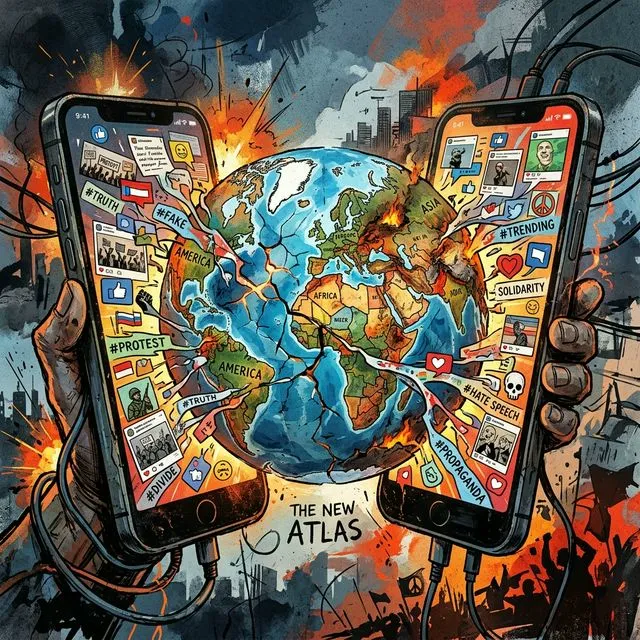
While American F-35s bomb Iranian nuclear facilities and Shahed drones cross the Persian Gulf toward Dubai, another conflict — as intense as it is invisible — plays out on the screens of billions of people. It's the meme war. And unlike all wars humanity has ever fought, this one is waged with SpongeBob templates, Call of Duty-inspired edits, Inside Out-style animations, and trap soundtracks. For the first time, superpowers don't just produce war propaganda — they gamify, memify, and turn bombings into viral content. The result is disturbingly fascinating: the line between information, propaganda, entertainment, and horror has never been so blurred.
The Digital Battlefield: Who Does What
The American Side: Call of Duty Meets Foreign Policy
The American propaganda machine in 2026 is unlike anything previous generations would recognize:
- Floating "+100" scores over struck targets, exactly like Call of Duty
- Rap and trap soundtracks replacing the actual silence of attacks
- Pop culture character edits: Iron Man, Walter White ("Heisenberg"), and SpongeBob used in official and semi-official templates
- "Blockbuster trailer" aesthetics — slow-motion, dramatic zooms, cinematic explosions synced with musical drops
A video showing a Tomahawk missile attack edited with Call of Duty: Modern Warfare 3 aesthetics reached 47 million views on X in 48 hours.
The Iranian Side: Inside Out Goes to War
Iran's response is both surprising and sophisticated:
1. Inside Out-style animations: Iranian artists produced Pixar-inspired animations where Trump's emotions are portrayed: "Anger" drives decisions, "Fear" panics at Iranian missiles, "Joy" is locked in a closet. The animation accumulated over 30 million views.
2. LEGO-style animations: A series of high-quality stop-motion shorts depicts battle scenarios where Iran wins confrontations — universally viral due to requiring no language to understand.
Brazilian Memes: Big Brother, World Cup, and Geopolitics
Brazil, as always, found its own voice in the chaos:
- BBB 26 × World War III: Edits showing the "Big Brother Brasil of Countries" — with Iran, USA, Israel, and Russia as contestants, and Brazil "on the budget"
- World Cup under attack: Memes asking "will the World Cup happen?" with FIFA's Infantino fleeing missiles while holding the trophy
- Kim Jong-un spectator: The North Korean dictator as "the guy sitting and watching the circus" eating popcorn
The Problem: When Memes Kill
Real-Time Desensitization
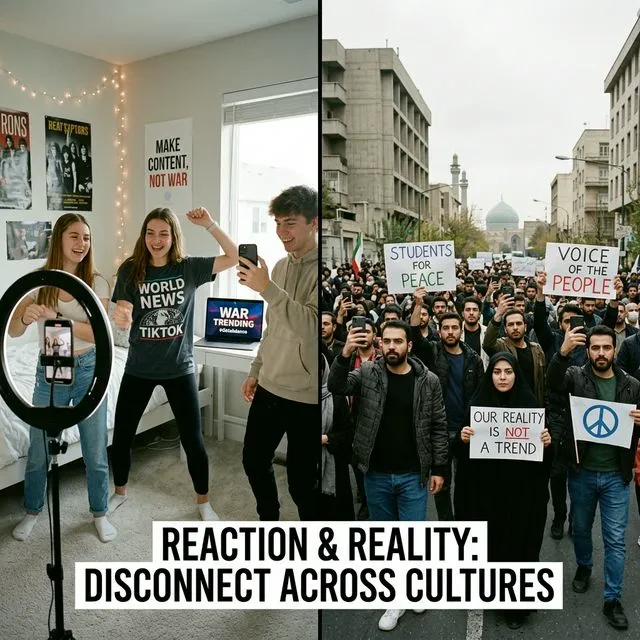
The most disturbing phenomenon isn't the propaganda itself — it's desensitization. Oxford researchers found participants exposed to gamified content showed 34% less empathy with civilian victims than those who saw the same information in journalistic format.
"Emotional Trojan Horses"
USP professor Marco Simões coined the term: memes enter the brain through humor's gate and deposit ideological cargo without the recipient noticing.
| Content Type | Avg. Engagement | Victim Empathy |
|---|---|---|
| News article | 2,400 interactions | High (baseline) |
| Meme/edit | 230,000 interactions | Low (-34%) |
| Gamified video (CoD style) | 1,200,000 interactions | Very low (-47%) |
The numbers are eloquent: the more "memified" the content, the higher the engagement and the lower the empathy.
The History of War Propaganda: From Posters to TikTok
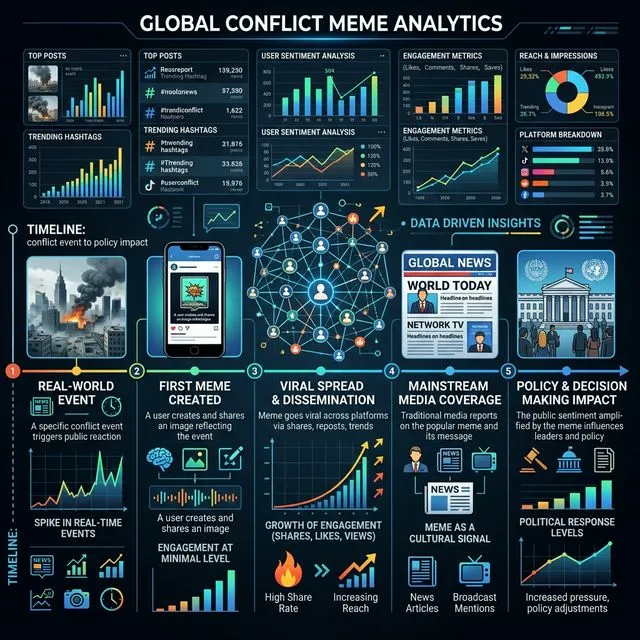
- Era 1 (1914-1945): Posters and pamphlets — Uncle Sam, Rosie the Riveter
- Era 2 (1941-1991): Cinema and TV — Hollywood as propaganda arm
- Era 3 (2001-2010): Internet 1.0 — Al-Qaeda pioneered online propaganda
- Era 4 (2014-present): Social media — ISIS created viral propaganda, Russian troll farms
- Era 5 (2026): War gamification — war must compete with Netflix and TikTok for attention
AI's Role in the Meme War
- Voice and video deepfakes: A deepfake of Iran's president announcing surrender circulated for 4 hours before being debunked — seen by 80 million people
- Automated meme generation: AI tools create hundreds of variations in minutes, optimizing for virality
- Instant translation: The same meme adapted to 50 languages simultaneously
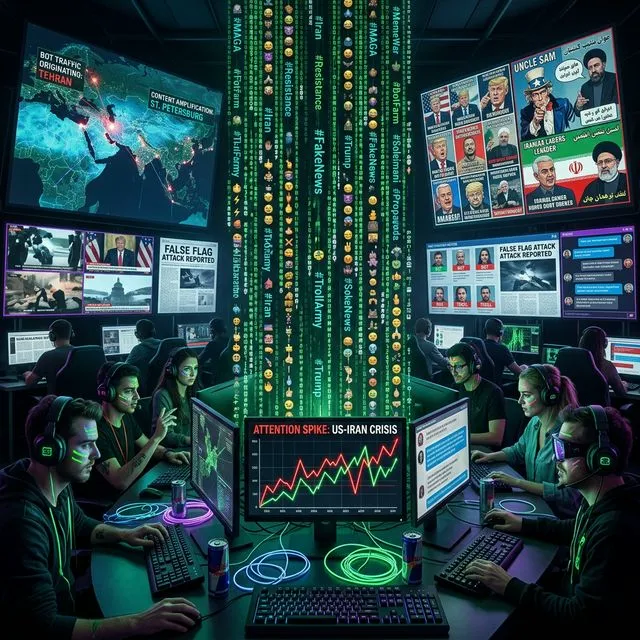
- Amplification bots: Researchers estimate 30-40% of war content interactions on X are bot-generated
In WWII, the Office of War Information employed ~11,000 people. In 2026, an equivalent operation requires 50 people with generative AI tools — producing more content in a day than the OWI produced in a month.
Platforms: Battlefield or Accomplices?
Every platform profits from war content engagement. Ads run alongside bombing memes. This creates a perverse incentive: platforms financially benefit from propagating content that desensitizes billions.
Frequently Asked Questions (FAQ)
Can war memes be considered a crime?
Depends on context. Memes glorifying violence against specific groups may violate hate speech laws. Most war memes operate in a legal grey zone.
How can I identify if a war meme contains false information?
(1) Reverse image search; (2) Distrust content provoking strong emotional reactions; (3) Consult fact-checking agencies; (4) If a "fact" seems too good (or terrible) to be true, it probably was.
Is there a "responsible" version of war memes?
Yes — humor can legitimately process traumatic events. The difference lies in intent: memes that humanize victims or question power can be socially valuable. Memes that dehumanize victims or glorify violence are propaganda tools.
Conclusion: Laughing While the World Burns
The 2026 US-Iran meme war is an alert about how we process violence in the 21st century. When a bombing that kills entire families becomes a meme template with millions of likes, something fundamental in humanity's social contract is breaking.
It's not about banning memes. It's about developing critical media literacy: the ability to consume viral content while maintaining awareness that behind every floating "+100" there's a real life, a real family, a real tragedy.
The meme war won't stop. But our ability to distinguish between entertainment and atrocity needs — urgently — to keep pace.


