
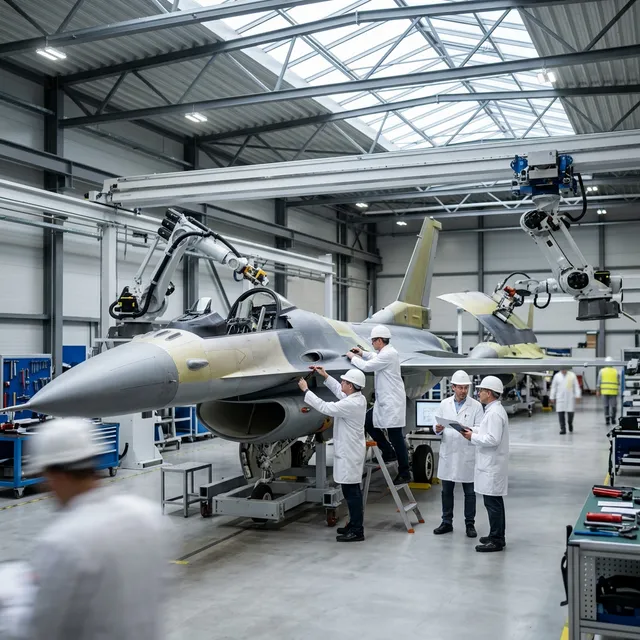
In March 2026, Brazil achieved a historic milestone in military aviation: the presentation of the first F-39 Gripen supersonic fighter assembled entirely on Brazilian soil, at Embraer's factory in Gavião Peixoto, in the interior of São Paulo state. This event is not merely a technological feat — it is the materialization of decades of investment, diplomacy and strategic vision that place Brazil in the select group of countries capable of producing state-of-the-art combat aircraft.
In this comprehensive article, we will explore the history of the FX-2 program, the impressive technical capabilities of the Gripen E/F, the strategic partnership between Saab and Embraer, the impact on national defense, and what this means for Brazil's technological future.
The History: From the FX-2 Program to the F-39
The Need for Modernization
The Brazilian Air Force (FAB) operated for decades with increasingly obsolete fighters. The Mirage 2000s, acquired from France in the 2000s, were already at the end of their service life, and the veteran F-5 Tiger IIs — received from the United States in the 1970s — had surpassed any reasonable operational expectations. Brazil, with the fifth largest territorial extension in the world and a border stretching over 16,000 kilometers, urgently needed a new backbone for its air defense.
The FX-2 (Fighter eXperimental 2) program was officially launched in 2008 with the objective of selecting the FAB's new multirole fighter. The competition involved three giants of the world aerospace industry, each offering their best available technology:
| Manufacturer | Aircraft | Country of Origin |
|---|---|---|
| Boeing | F/A-18E/F Super Hornet | United States |
| Dassault Aviation | Rafale | France |
| Saab | Gripen NG (New Generation) | Sweden |
The Swedish Choice
In December 2013, after years of technical evaluations, political negotiations, and cost-benefit analyses, the Brazilian government announced the selection of the Gripen NG from Saab as the winner of the FX-2 program. The decision surprised many analysts who had bet on the French Rafale, a political favorite for years.
The decisive factors were clear and pragmatic: complete technology transfer, significantly lower life-cycle cost, and Saab's willingness to share knowledge that would allow Brazil not only to assemble but to effectively understand and eventually develop its own combat aeronautical technology. It was a contract worth R$ 36 billion (at the time) for 36 aircraft — 28 single-seat (Gripen E) and 8 two-seat (Gripen F).
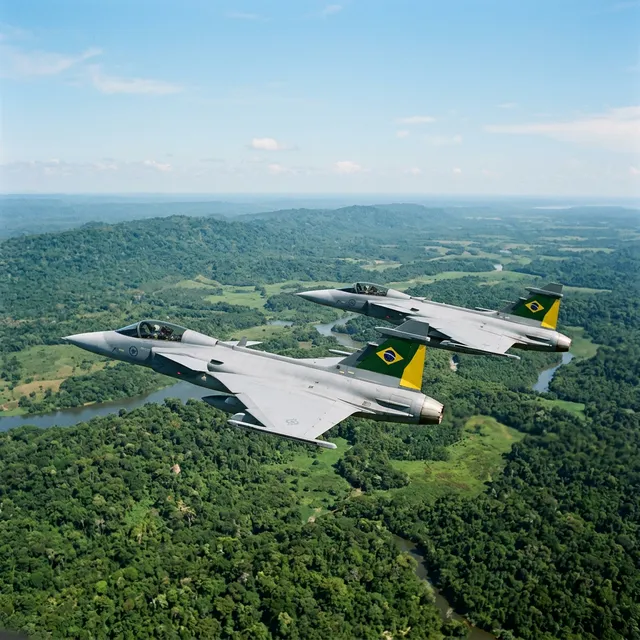
F-39 Gripen Capabilities: A Technological Powerhouse
The F-39 Gripen E/F is not just a fighter — it is a 4.5th generation multirole combat platform that concentrates some of the most advanced technologies in contemporary military aviation.
Impressive Technical Specifications
| Characteristic | Specification |
|---|---|
| Maximum speed | Mach 2 (2,450 km/h) — twice the speed of sound |
| Service ceiling | 16,000 meters (52,500 feet) |
| Range | 3,200 km with external tanks |
| Engine | General Electric F414G — 98 kN thrust with afterburner |
| Maximum takeoff weight | 16,500 kg |
| Hardpoints | 10 (including wingtip) |
| Radar | Selex ES-05 Raven AESA — simultaneous multi-target tracking |
| IRST | Skyward-G — passive infrared detector |
| Electronic warfare | Integrated Arexis suite — jamming, radar warning and self-defense |
The AESA Radar: Eyes That See Everything
The ES-05 Raven radar is an active electronically scanned array (AESA) radar — the same type of technology used in the American F-35 and F-22 fighters. Unlike traditional mechanical radars, AESA uses hundreds of independent transmitter/receiver modules that can track dozens of targets simultaneously at different frequencies, making it virtually impossible for the enemy to implement effective electronic countermeasures.
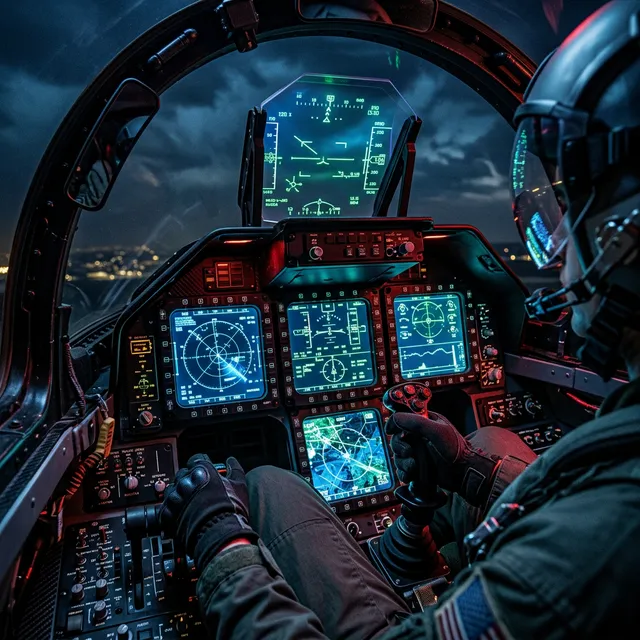
In practice, this means the Gripen pilot has unparalleled situational awareness capability — they can detect, classify and engage multiple air and ground threats simultaneously, in adverse weather conditions and in intense electronic warfare environments.
Data Fusion System
What truly differentiates the Gripen E from its competitors is the data fusion system. All sensor information — radar, IRST, radar warning, datalink — is processed and presented to the pilot in a unified, extremely clear interface. The mission computer automatically correlates data from multiple sources, eliminating redundancies and creating a complete "tactical picture."
Diverse Armament
The Gripen E can carry an impressive variety of weapons produced by different countries:
- Air-to-air missiles: AIM-120 AMRAAM (USA), IRIS-T (Germany), Meteor (Europe) — the latter with range exceeding 100 km
- Air-to-surface missiles: RBS-15F (Sweden), KEPD 350 (Germany)
- Guided bombs: GBU-12 Paveway II, GBU-49, JDAM bombs
- Anti-ship missiles: compatible with various systems
- Brazilian weapons: planned integration with the A-Darter missile, developed in partnership between Brazil and South Africa
The Saab-Embraer Partnership: Far Beyond Assembly
Real Technology Transfer
The great difference of the Brazilian contract with Saab compared to traditional military purchases is the real and substantial technology transfer. This is not about assembling pre-fabricated parts — Embraer and an ecosystem of more than 60 Brazilian companies are effectively learning and participating in the development of cutting-edge aeronautical technology.
The Gripen Design and Development Network (GDDN), installed in Gavião Peixoto, is an engineering center where Brazilian engineers work side by side with Swedish engineers across all disciplines: aerodynamics, embedded systems, mission avionics, weapons integration and flight testing.
What Brazil Is Learning
The Gripen program's technology transfer covers critical areas that will have impact far beyond military aviation:
- Military aircraft design and certification: for the first time, Brazilian engineers participate in the complete development cycle of a fighter
- Critical embedded systems: mission software, sensor fusion, electronic warfare
- Advanced composite materials: carbon fiber and high-strength structural materials
- Weapons integration: complex process involving simulation, testing and certification
- Flight testing: military testing and certification methodologies
Industrial Impact
More than 60 Brazilian companies participate in the Gripen's production chain, from structural component manufacturers to software developers. Embraer, already a global powerhouse in commercial and executive aviation, is consolidating capabilities that position it as a player in worldwide military aviation.
The Gripen in the FAB: Operations and Air Defense
Anápolis Air Base
The F-39 Gripen fighters are based at Anápolis Air Base (BAAN) in Goiás — strategically located in the center of the country. From Anápolis, the Gripen can reach any point of Brazilian territory in minutes at supersonic speed.
The FAB already has ten operational Gripen fighters, used in Air Defense Alert missions, which include the protection of Brasília's airspace and the interception of unidentified or illegal aircraft — particularly in the Amazon region, where aerial drug trafficking still represents a constant threat.
Delivery Schedule
The delivery schedule for the 36 fighters has undergone adjustments over the years, reflecting both the program's complexity and budgetary challenges:
| Year | Planned Deliveries | Notes |
|---|---|---|
| 2020-2025 | 10 aircraft | Produced in Sweden |
| 2026 | 1 aircraft | First assembled in Brazil |
| 2027-2032 | 25 aircraft | Brazilian assembly in Gavião Peixoto |
The projected completion of the full batch of 36 fighters is 2032. In 2026, only one fighter will be delivered — the first totally assembled on Brazilian soil, an event marking the maturity of the national production line.
Comparison with Other World Fighters
How does the F-39 Gripen compare to its direct competitors and the world's most advanced fighters?
Gripen E vs. Competitors
| Aircraft | Generation | Speed | Radar | Cost/flight hour |
|---|---|---|---|---|
| F-39 Gripen E | 4.5 | Mach 2 | AESA | ~US$ 4,700 |
| F-16 Viper (USA) | 4.5 | Mach 2 | AESA | ~US$ 8,000 |
| Rafale (France) | 4.5 | Mach 1.8 | AESA | ~US$ 16,500 |
| F-35A (USA) | 5 | Mach 1.6 | AESA | ~US$ 36,000 |
| Su-35 (Russia) | 4++ | Mach 2.25 | PESA | ~US$ 11,000 |
The Gripen E stands out for its extraordinarily low operating cost — less than half of the F-16 and a fraction of the F-35. This means the FAB can fly more training hours, conduct more missions and keep the fleet operational at costs that fit within the Brazilian defense budget.
The "Smart Fighter" Philosophy
Saab developed the Gripen with a philosophy they call "Smart Fighter" — a fighter that maximizes combat effectiveness at the lowest possible cost. This includes a design that allows rapid field maintenance (the engine can be replaced in less than one hour), the capability to operate from roads and short runways, and an extremely lean logistics support system.
Strategic Impact for Brazil
Defense of the Amazon
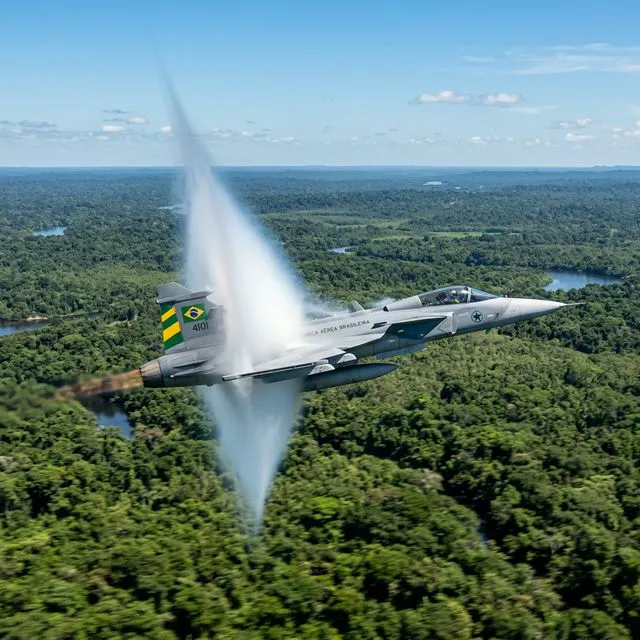
The Brazilian Amazon, with its 5.5 million km² of tropical rainforest, represents one of the world's greatest surveillance and defense challenges. Aerial drug trafficking, illegal mining, and threats to territorial sovereignty require rapid and effective response capability. With the Gripen operating from Anápolis and potentially from forward bases in the northern region, Brazil gains a power projection capability it hadn't possessed since the retirement of the Mirage fleet.
Technological Sovereignty
More than aircraft, the Gripen program is building technological sovereignty. The knowledge acquired by Brazilian engineers in the program will be fundamental for future defense projects, including the potential development of a national 5th generation fighter — a project that is still speculative but becomes technically feasible thanks to the knowledge base created by the FX-2 program.
Geopolitical Positioning
In an increasingly polarized world where military spending is at historic highs, Brazil positions itself as a regional military power that does not depend exclusively on American or Russian suppliers. The partnership with Sweden — a neutral country that became a NATO member in 2024 — offers Brazil strategic flexibility and independence that few developing countries possess.
Conclusion: A New Chapter for Brazil
The F-39 Gripen assembled in Brazil is not just a supersonic fighter — it is the symbol of a nation that decided to invest in its own technological future. At a time when the world is experiencing growing geopolitical tensions, having the capability to build and maintain state-of-the-art combat aircraft is more than a luxury — it is a strategic necessity.
The path to this point was not easy. It took more than a decade of negotiations, billions in investment, and the overcoming of technical and political challenges. But the result is clear: Brazilian engineers assembling supersonic fighters on national soil, learning technologies that few countries master, and building a defense industrial base that will serve the country for generations.
The Gripen program demonstrates that real technology transfer is possible when there is political will and partners willing to share knowledge. For Brazilian citizens, this means greater border security, more qualified jobs in the defense industry, and the certainty that the country is advancing toward technological autonomy in one of the most strategic areas of modern engineering.
The first Gripen assembled in Brazil is just the beginning. Over the next six years, 25 more aircraft will roll off the Gavião Peixoto production line, consolidating Brazil as a member of the select club of nations capable of producing supersonic fighters. And who knows — in the future, the next FAB fighter may not just be assembled but entirely designed and built by Brazilian hands.
Frequently Asked Questions (FAQ)
Is the Gripen better than the F-35?
They are aircraft of different categories. The F-35 is a 5th generation fighter with stealth capability, while the Gripen E is a 4.5th generation without native stealth. However, the Gripen costs a fraction of the F-35 — both in acquisition and daily operation. For the FAB's needs, which include border patrol, interception and air defense in a moderate threat scenario, the Gripen offers an ideal balance of capability and cost. Countries operating the F-35 frequently maintain fighters like the Gripen as complements precisely for their lower operational costs.
Can Brazil export the Gripen?
The contract allows Brazil to participate in the export supply chain of the Gripen to other countries. Some Latin American and African countries have already shown interest, and Embraer could act as a partner in manufacturing components for globally sold aircraft. However, any export depends on approval from Sweden, holder of the primary intellectual property.
How much does each Gripen cost?
The estimated unit value is approximately US$ 85 million per aircraft in the configuration acquired by the FAB. This value includes not only the aircraft but also armament packages, logistics support, pilot training and initial maintenance. For comparison, an F-35A costs approximately US$ 80 million in the latest version — but its operational cost per flight hour is nearly eight times higher than the Gripen's.
Have Gripen fighters seen combat?
The FAB's Gripen has never been used in actual combat. However, earlier versions of the Gripen (C/D) are operated by the Air Forces of Sweden, Hungary, Czech Republic, Thailand and South Africa. Sweden maintains the Gripen as the backbone of its air defense, which is significant considering it borders Russia (via Finland) and recently joined NATO.
What happens after 2032?
After delivery of all 36 planned aircraft, Brazil will focus on maintenance, modernization and potentially co-participation in future projects. Saab is already working on the next-generation Gripen concept. The knowledge accumulated by Brazilian engineers positions them as potential partners in future developments — whether an advanced Gripen version or even an autonomous combat aircraft project.
The Future of Brazilian Military Aviation
The Gripen program does not exist in isolation. It fits within a broader modernization strategy for the Brazilian Armed Forces that includes the nuclear submarine (Navy's PROSUB program), the Guarani armored vehicle (Army's VBTP program) and the SGDC satellite monitoring system.
The experience gained with the Gripen already influences other Embraer projects, including the development of the KC-390 Millennium military transport aircraft — another platform that is conquering international markets. The company has already sold units to Portugal, Hungary and the Netherlands, demonstrating that Brazilian defense industrial capability has credibility in the global market.
For defense specialists, the real test will come in the next decade, when Brazil will have to decide whether to invest in its own 5th generation fighter or seek a new international partnership. The knowledge base built by the Gripen program will be fundamental for making this decision in an informed manner — something that would have been impossible a decade ago.
Brazil still faces significant challenges: limited defense budget compared to global military powers, bureaucracy in acquisition processes, and the eternal tension between social priorities and military spending. But with the F-39 Gripen flying over national skies and being assembled on Brazilian soil, the country has proven it is capable of aspiring to and achieving the highest level of technological excellence when there is long-term vision and political determination.
It is worth noting that defense investment has direct returns for the civilian economy. Technologies developed for the Gripen program — advanced composite materials, high-reliability software, precision navigation systems — find application in sectors like commercial aviation, telecommunications, medicine and even precision agriculture. Embraer, for example, already applies knowledge acquired in the military program to its commercial and executive jets, increasing the company's competitiveness in the global market.
The impact on human resources is equally relevant. More than 350 Brazilian engineers have already undergone training programs in Sweden, returning with knowledge that is multiplied across national universities and research centers. Institutes like ITA (Aeronautical Technology Institute) and Embraer itself maintain postgraduate programs directly related to Gripen technologies, forming a new generation of aeronautical engineers capable of competing at the international level.
For the future, experts point out that Brazil will need to make crucial strategic decisions: expand the Gripen fleet beyond the initial 36 units, invest in its own 5th generation fighter, or develop unmanned systems (combat drones) to complement the manned fleet. The unmanned combat aerial vehicle (UCAV) sector is particularly promising, as Brazil already has experience with drone development through companies like Avibras and through military research programs at institutions such as the Brazilian Army Technology Center (CTEx). Whatever path is chosen, the technological and industrial base built by the F-39 Gripen program will be the foundation upon which the future of Brazilian air defense will be built. The knowledge, the engineers, and the industrial ecosystem are now in place — what remains is the strong and sustained political will to continue investing wisely in a sovereign defense future for generations to come.
Sources and References
- Brazilian Air Force (FAB) — F-39 Gripen Program
- Aeroin — Gripen assembled in Brazil in 2026
- O Tempo — F-39 Gripen: Brazil's first supersonic fighter
- Metrópoles — Gripen in air defense missions
- UOL — FAB and the Gripen fighters
- Saab — Gripen Brazil Program
- Airway — FX-2 program timeline
Last updated: March 10, 2026


