
CRISPR and the Great Agricultural Revolution: Gene-Edited Drought-Resistant Crops Could End World Hunger
Date: March 8, 2026
Reading time: 25 minutes
Emoji: 🌾
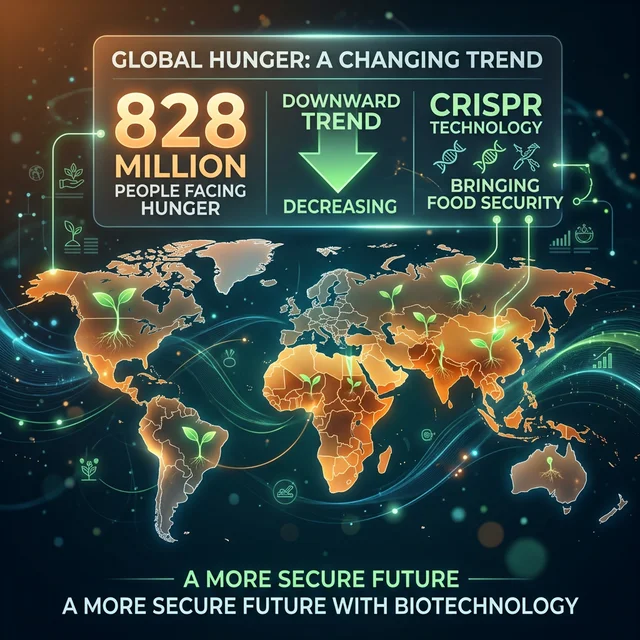
In a world where 828 million people go to bed hungry every single night, where climate change is systematically transforming fertile lands into barren deserts, and where increasingly intense and frequent droughts destroy entire harvests in a matter of weeks, a technology born in microbiology laboratories is proving to be humanity's most powerful weapon against hunger: CRISPR gene editing. In March 2026, the first CRISPR-edited crops specifically designed to resist extreme droughts, devastating pests, and depleted soils are beginning to be commercially planted at large scale across Africa, Asia, and Latin America — and the preliminary results are exceeding all expectations of the scientists who created them. This is not a future promise or a mere laboratory curiosity: it is a real agricultural revolution happening right now on farms and fields across dozens of countries, silently transforming the fundamental relationship between humanity, climate, and food production in ways that could reshape and redefine global civilization for generations to come.
What Is CRISPR: The Molecular Scissors That Rewrite DNA
The Technology That Won the Nobel Prize
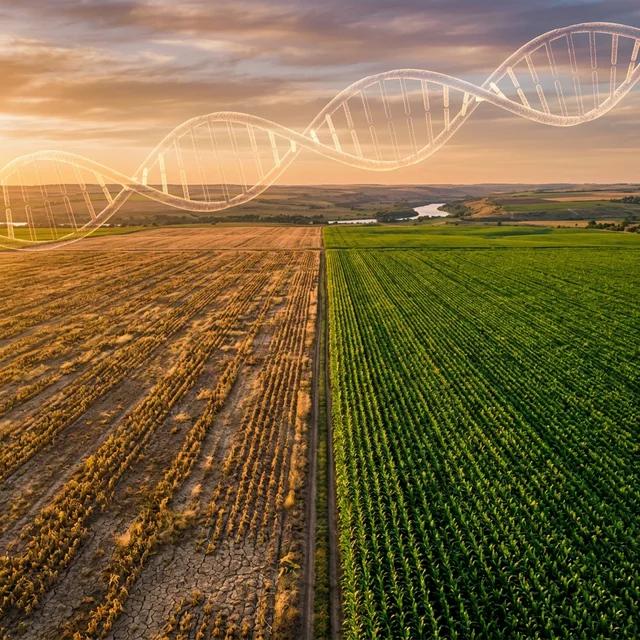
CRISPR-Cas9 (Clustered Regularly Interspaced Short Palindromic Repeats) is a revolutionary gene editing tool that allows scientists to cut, remove, add, or modify specific sequences of DNA in any living organism with unprecedented precision. Discovered from a natural bacterial defense mechanism against viruses, the technology earned the 2020 Nobel Prize in Chemistry for researchers Jennifer Doudna and Emmanuelle Charpentier, and has since revolutionized virtually every field of molecular biology and applied genetics.
The simplest analogy for understanding CRISPR is that of a "molecular word processor": just as a word processor allows you to find a specific word in a document of millions of characters and replace it with another in a single click, CRISPR allows you to locate a specific genetic sequence among the billions of base pairs of an organism's DNA and edit it with surgical precision. The crucial difference between CRISPR and previous genetic modification techniques is precision: while traditional transgenic methods inserted genes from other species in a relatively random fashion, CRISPR allows editing genes that the plant already possesses, activating natural resistance mechanisms that evolution developed but that were lost or silenced over millennia of agricultural domestication.
CRISPR vs. GMOs: A Fundamental Difference
It is absolutely crucial to understand that CRISPR-edited crops are not genetically modified in the traditional sense of the term — they do not contain genes from other species or foreign organisms. CRISPR editing works exclusively with the plant's own genome, activating, deactivating, or optimizing genes that already exist naturally in its genetic code. This distinction is not merely semantic — it has profound regulatory implications: in 2023, the European Union reformed its legislation to distinguish between traditional genetically modified organisms (GMOs) and CRISPR-edited organisms, recognizing that gene editing produces results equivalent to those that could be obtained through advanced conventional crossbreeding, only much faster and more precisely.
To put this speed in perspective: developing a new heat-resistant wheat variety through traditional crossbreeding and selection methods takes, on average, 12 to 15 years of intensive work. With CRISPR, the same result can be achieved in 2 to 3 years — an acceleration of 5 to 7 times that is absolutely crucial when climate change is altering growing conditions faster than conventional agriculture can adapt. Additionally, development costs have dropped dramatically: while creating a traditional transgenic variety cost between $50 and $136 million, an equivalent CRISPR edit can cost less than $1 million — making the technology accessible to public laboratories in developing countries, not just agricultural multinationals.
The Global Food Crisis: Why We Need Resistant Crops
The Devastating Scenario of 2026
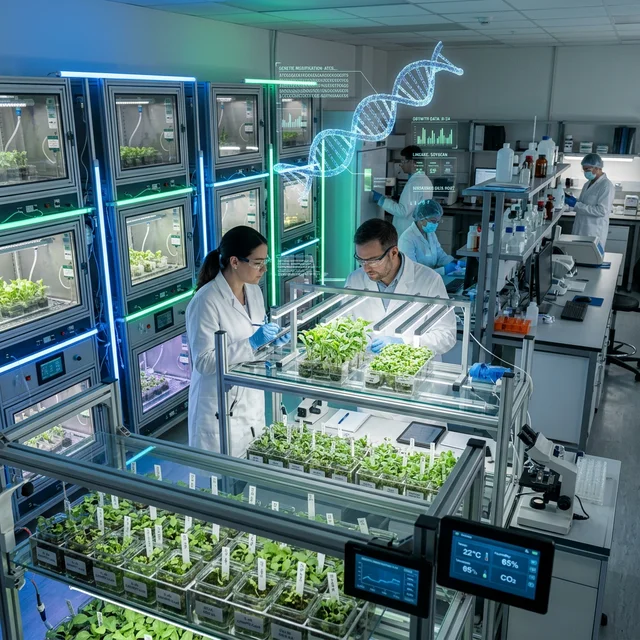
The convergence of multiple crises is creating a perfect storm that threatens global food security like never before in modern history:
| Crisis Factor | Impact in 2026 |
|---|---|
| People in chronic hunger | 828 million |
| People in food insecurity | 2.4 billion |
| Arable land lost per year | 12 million hectares |
| Food price increase (2020-2026) | +45% globally |
| Extreme weather events per year | 400+ |
| Freshwater available per capita (vs. 1970) | -40% |
| World population in 2050 (projected) | 9.7 billion |
Climate change is intensifying droughts, heat waves, and extreme weather events in regions that produce food for billions of people. The Horn of Africa faces the worst drought in 40 years, with over 36 million people affected across Somalia, Ethiopia, and Kenya. South Asia is experiencing an unprecedented water crisis that threatens rice production for 2 billion people, with groundwater tables dropping at alarming rates across India, Bangladesh, and Pakistan. Latin America recorded record droughts in 2025 that devastated corn and soy harvests in Brazil, Argentina, and Paraguay, causing global commodity price spikes that reverberated through every economy on Earth. And the Middle East, where temperatures above 50°C are becoming routine, faces an existential crisis of agricultural production that further aggravates the geopolitical tensions of the region, already intensified by Operation Roaring Lion and its catastrophic consequences.
Revolutionary Advances: CRISPR Crops That Are Changing Everything
HeatShield Wheat: Productivity in Extreme Temperatures
The first major commercial success of CRISPR in agriculture is happening with wheat. Researchers at the International Maize and Wheat Improvement Center (CIMMYT) in Mexico, in collaboration with universities in China, India, and Australia, developed the "HeatShield" variety — a CRISPR-edited wheat that maintains productive yields above 85% even at temperatures that would kill 60-70% of production in conventional varieties.
The gene editing involved activating two genes (TaHSFA6e and TaDREB2) that encode heat shock proteins — cellular defense mechanisms against extreme heat that have existed silenced in the wheat genome since before domestication, more than 10,000 years ago. The scientific breakthrough was realizing that these ancient protective mechanisms were systematically "turned off" during millennia of selective breeding that prioritized grain size and yield over environmental resilience. The result is a plant that "senses" heat stress earlier and activates protective responses that preserve photosynthesis and grain formation even at temperatures 8-12°C above the tolerance threshold of standard varieties. Early commercial plantings in the Punjab region of India and in central Australia have yielded crops worth an estimated $340 million more than what conventional wheat would have produced under the same extreme heat conditions.
AquaSave Rice: 40% Less Water
Rice directly feeds 3.5 billion people — nearly half of humanity — and is one of the most vulnerable crops to changes in rainfall patterns and water availability. Researchers at the International Rice Research Institute (IRRI) in the Philippines developed "AquaSave Rice" — a CRISPR-edited variety that produces yields comparable to conventional rice using 40% less water throughout its growth cycle.
The gene editing focused on three simultaneous mechanisms: modification of the root system to penetrate 30% deeper into the soil reaching underground water reserves, optimization of stomatal efficiency (the microscopic leaf pores that control water loss through transpiration), and activation of metabolic pathways that produce protective osmolytes — molecules that allow plant cells to maintain their structural integrity even under severe water stress. Field tests in Bangladesh, Myanmar, and northeastern Brazil demonstrated that AquaSave Rice maintains 90% of its productivity in drought conditions that would reduce conventional rice production by 50-70%. The implications for global food security are staggering: if AquaSave Rice were adopted across just 30% of Asia's rice paddies, it could save approximately 150 cubic kilometers of freshwater annually — enough to supply the drinking water needs of 500 million people for an entire year.
BtShield Corn: Pest Resistance Without Pesticides
The CRISPR-edited "BtShield" corn, developed by the Institute of Genetics and Developmental Biology (IGDB) of the Chinese Academy of Sciences, represents a revolutionary approach to pest control without the use of toxic chemical pesticides. Instead of inserting bacterial genes (as in traditional Bt corn), BtShield uses CRISPR to activate and amplify natural defense genes in the corn itself that produce secondary compounds (benzoxazinoids) toxic to pest insects but completely harmless to humans and pollinators like bees.
Field results in 2025-2026 showed a 75% reduction in insecticide use and a 20% increase in productivity compared to conventional varieties, with zero detectable negative impact on beneficial insect biodiversity. The economic importance of this advance is monumental: farmers in developing countries spend, on average, between 15% and 25% of their annual revenue on chemical pesticides. The elimination of this expense, combined with increased productivity, can represent a transformative leap in income and quality of life for hundreds of millions of small rural producers worldwide.
Salt-Tolerant Soybeans: Farming on "Impossible" Soils
Soil salinization — the progressive accumulation of mineral salts in irrigated land — is a silent problem that has already rendered over 1 billion hectares of agricultural land globally unusable, an area equivalent to the territory of China. Researchers at the University of São Paulo (USP), in partnership with EMBRAPA and Australian universities, developed a CRISPR-edited soybean with salinity tolerance 300% higher than conventional varieties. The editing activated genes responsible for producing ion channels that regulate sodium transport in the roots, preventing toxic salt from reaching the leaves and grains. The first commercial tests are being conducted in the Brazilian semiarid northeast and in the Murray-Darling region of Australia in 2026, with preliminary results showing economic viability of cultivation in soils previously considered unusable.
Global Impact: Feeding 10 Billion People
The Revolution in Africa
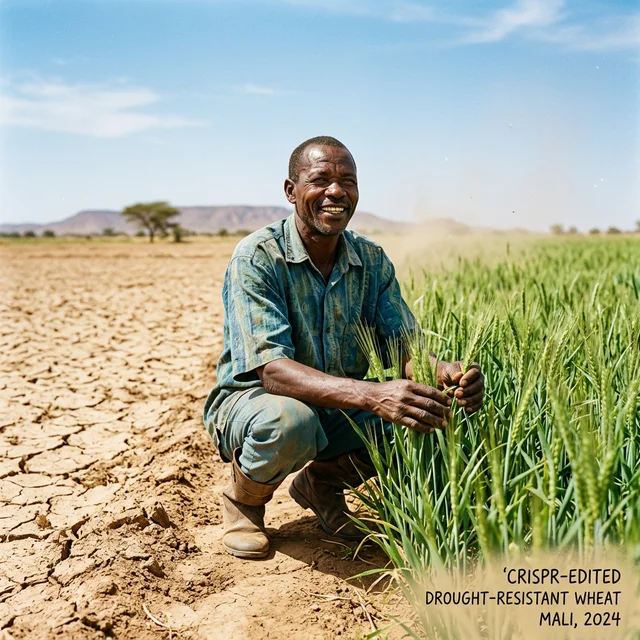
Sub-Saharan Africa is unquestionably the region of the world where the CRISPR revolution could have the most profoundly transformative and urgently needed impact. The continent harbors 60% of the world's uncultivated arable land, but its agricultural productivity is the lowest on the planet — producing, on average, only 25% of what the same crops produce in Europe or North America. The main reason is not lack of resources or knowledge, but the devastation caused by increasingly severe droughts, degraded soils, and pests that destroy up to 40% of harvests before collection.
The African Union's "Seeds for Future" program, in partnership with CGIAR and funded by the Bill & Melinda Gates Foundation with an initial investment of $420 million, is distributing CRISPR-edited sorghum, millet, and cowpea seeds to 2 million smallholder farmers in 12 African countries in 2026 — including Kenya, Ethiopia, Nigeria, Tanzania, Mozambique, and Senegal. Results from pilot programs conducted throughout 2025 showed productivity increases between 35-60% in moderate to severe drought conditions, representing literally the difference between chronic hunger and adequate nutrition for millions of rural families who depend exclusively on subsistence farming to survive.
The Nutritional Revolution
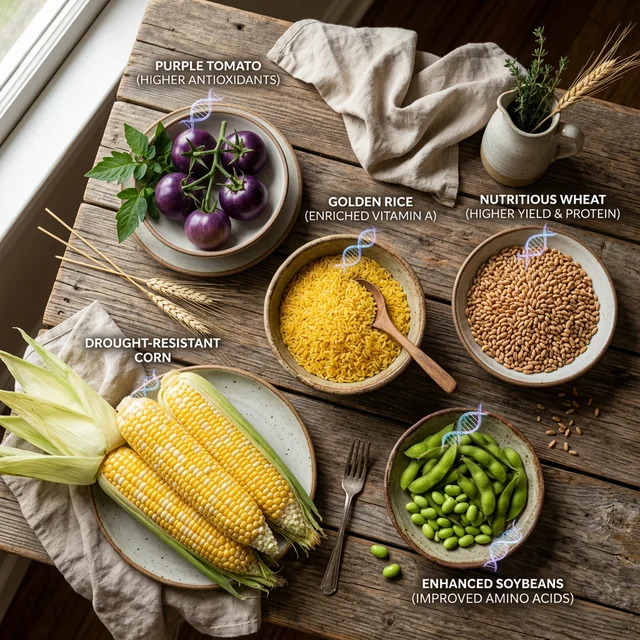
Beyond climate resistance, CRISPR is being used to improve the nutritional profile of foods in ways that conventional selection could never achieve:
- Golden Rice 2.0: New version with 3x higher levels of pro-vitamin A than the original, potentially preventing 500,000 cases of childhood blindness per year caused by vitamin A deficiency in developing countries
- Purple Tomato: Edited to produce anthocyanins (powerful antioxidants normally found in blueberries), with studies showing significant anticancer potential in animal models
- High-Iron Wheat: Variety with 60% more bioavailable iron, crucial for combating anemia that affects 1.6 billion people globally, especially women and children
- Enriched Cassava: The dietary staple of 800 million people in Africa and Asia, edited to contain 50% more protein and significantly lower levels of toxic cyanogens
Regulation and Controversies: The Global Debate
The Regulatory Map in 2026
The regulation of CRISPR-edited crops varies drastically between countries and regions, creating a complex mosaic that directly affects the speed of adoption and poor farmers' access to the technology:
- United States and Argentina: Consider CRISPR-edited crops equivalent to conventionally bred crops when they contain no foreign DNA — simplified and fast approval
- European Union: Reformed its legislation in 2023 to create a differentiated category for edited organisms, with lighter regulation than traditional GMOs but still more rigorous than the US
- China: Adopted progressive regulation encouraging research and development of edited crops, but maintains strict state control over commercialization and intellectual property
- Brazil: Case-by-case classification by CTNBio, with recent favorable decisions positioning the country as a regional leader in adoption of agricultural gene editing technologies
- India: Approved in 2025 the commercialization of the first CRISPR-edited crop (oilseed mustard) after years of regulatory deliberation and pressure from agricultural groups
The Ethical and Social Debate
The controversies surrounding agricultural CRISPR are intense and legitimate, involving questions that go beyond science:
Intellectual property: Who "owns" a CRISPR-edited plant variety? Major agricultural corporations (Bayer, Corteva, Syngenta) hold significant patents on CRISPR applications. There is a real risk that the technology that could feed the world becomes yet another tool for corporate power concentration in the global food chain, keeping smallholder farmers in a position of permanent dependence.
Biodiversity: Mass adoption of a few "super-edited" varieties could dangerously reduce the genetic diversity of global food crops, making world agriculture more vulnerable to new pests or diseases that these specific varieties cannot resist — repeating historical errors like the Great Irish Famine caused by potato monoculture in the 19th century.
Equitable access: If CRISPR-edited crops are patented and marketed as high-cost premium products, the poorest farmers — exactly those who would benefit most from the technology and who produce food for the most vulnerable communities on the planet — could be permanently excluded from its benefits, perpetuating and even dramatically worsening the global food inequalities that the technology promised to solve.
Conclusion: Hope Planted in DNA
CRISPR gene editing applied to agriculture is not a magic solution for world hunger — no single technology is. Hunger is a systemic problem involving public policy, income distribution, logistical infrastructure, armed conflicts, and deep historical injustices that no laboratory breakthrough alone can resolve. However, CRISPR represents the most powerful technological tool humanity has ever developed to adapt its food crops to a planet that is changing faster than natural selection can keep up with.
The numbers are eloquent: crops that produce 40% more with 40% less water; wheat that survives temperatures that would kill any conventional variety; corn that naturally defends itself against pests without a drop of pesticide; soybeans that grow in salty soils considered useless for agriculture. Each of these innovations, individually, would be a significant breakthrough worthy of international recognition. Together, they represent a fundamental and historic transformation in humanity's ability to feed itself in a world increasingly hostile to traditional agricultural methods and practices.
The drought-resistant, heat-tolerant, and pest-resistant crops being planted in 2026 are not science fiction — they are agricultural reality already saving harvests and lives in rural communities across Africa, Asia, and Latin America. The challenge now is no longer scientific or technological — it is political, economic, and ethical: ensuring that this genomic revolution reaches the farmers who need it most, not just those who can afford it. The future of human food production is literally being rewritten in DNA. The question is whether we will write a chapter of equity and hope, or repeat the mistakes of the past with more powerful technologies that benefit only the few.
Sources and References
- Nature — CRISPR Agriculture — Publications on agricultural gene editing
- CIMMYT — International Maize and Wheat Improvement Center
- IRRI — International Rice Research Institute
- FAO — State of Food Security — Global hunger data
- CGIAR — International agricultural research consortium
- Bill & Melinda Gates Foundation — Sustainable agriculture programs


