
New research from Michigan State University published in March 2026 has just revealed the exact molecular mechanism that causes cocaine to "reprogram" the brain — and explains why so many people relapse even after years of sobriety. The protagonists of this discovery are two previously poorly understood proteins: DeltaFosB and calreticulin. Together, they alter the expression of more than 1,400 genes in the reward system neurons, creating a kind of "permanent memory" of the drug's pleasure that persists for months or even years.
In this article, we'll dive deep into the neuroscience of addiction, explain how cocaine hijacks the brain's reward system, detail the revolutionary role of DeltaFosB and calreticulin, and discuss how this discovery could lead to more effective treatments for chemical dependency.
The Reward System: The Brain's Pleasure Machine
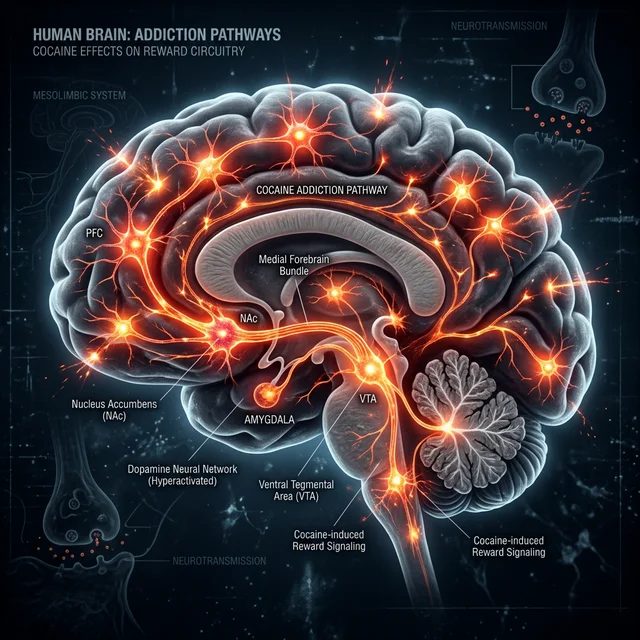
To understand how cocaine reprograms the brain, we first need to understand the reward system — a sophisticated neural circuit that evolved over millions of years to motivate us to seek behaviors essential for survival: eating, drinking water, having sex, and creating social bonds.
The reward system consists of three main brain regions:
- Ventral Tegmental Area (VTA): The brain's "dopamine factory." Neurons here produce and release dopamine.
- Nucleus Accumbens (NAc): The "pleasure center." Receives dopamine from the VTA and generates feelings of reward and motivation.
- Prefrontal Cortex (PFC): The "judge." Interprets information from the NAc and makes decisions about whether to seek a reward.
When you eat something delicious or receive a hug, the VTA releases a moderate amount of dopamine into the NAc, generating a pleasant sensation that motivates you to repeat the behavior. It's an elegant and well-calibrated system. Cocaine, however, explodes this system with brutal force.
How Cocaine Hijacks the Dopaminergic System
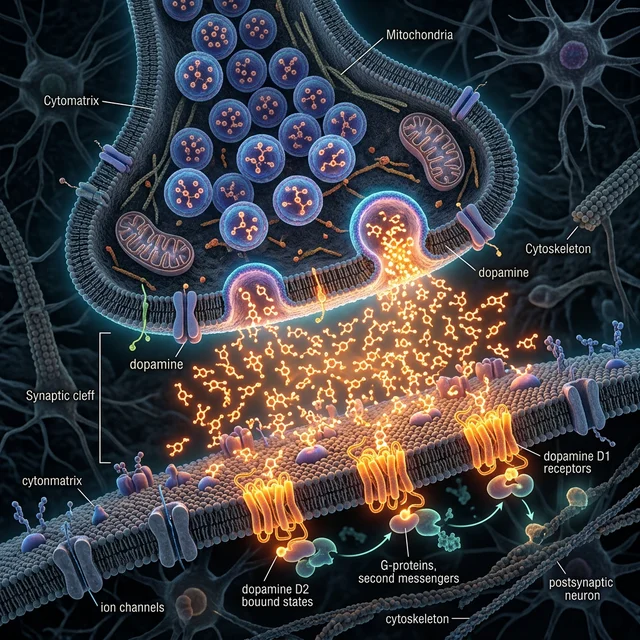
Under normal conditions, after dopamine sends its signal at the synapse, it's recaptured by presynaptic neurons through a protein called the dopamine transporter (DAT). This "recycling" mechanism ensures dopamine levels are controlled and pleasure signals have defined beginnings and endings.
Cocaine acts as a DAT blocker. By binding to the transporter, it prevents dopamine from being recaptured, causing massive amounts of the neurotransmitter to accumulate in the synaptic cleft. The result is a dopamine flood 2 to 10 times greater than any natural reward — generating an intense euphoria that no normal biological experience can match.
| Stimulus | Dopamine Increase | Duration |
|---|---|---|
| Tasty food | ~50% above baseline | 10-20 min |
| Sex | ~100% above baseline | 15-30 min |
| Favorite music | ~20% above baseline | 5-15 min |
| Nicotine | ~150% above baseline | 20-40 min |
| Cocaine | 350-1000% above baseline | 15-30 min |
| Methamphetamine | 1200% above baseline | 6-12 hours |
The problem isn't just the intensity of pleasure — it's what happens after.
DeltaFosB: The "Molecular Switch" of Addiction
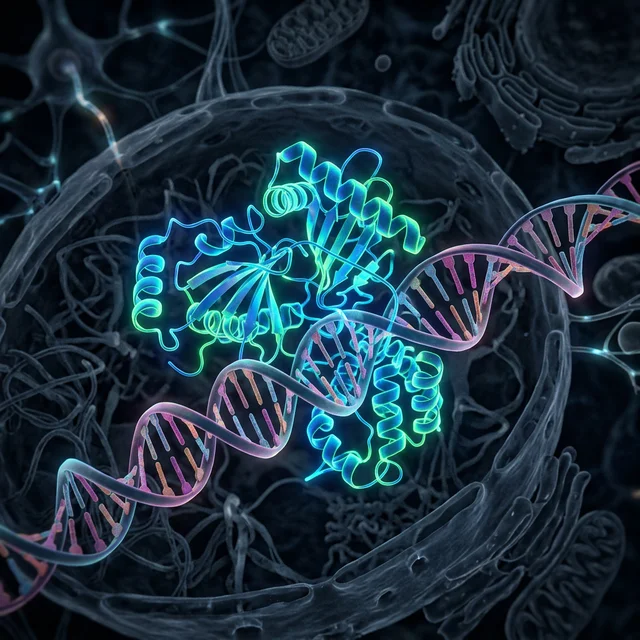
The breakthrough of the 2026 research lies in the protein DeltaFosB (ΔFosB). Unlike most brain proteins that are produced and degraded within hours, DeltaFosB is exceptionally stable — it accumulates in Nucleus Accumbens neurons and can persist for weeks or months after the last drug exposure.
What DeltaFosB Does
DeltaFosB is a transcription factor — a protein that binds to DNA and controls which genes are activated or silenced. When cocaine causes chronic accumulation of DeltaFosB, it:
- Increases glutamate receptor expression (GluR2): Making neurons more sensitive to excitatory signals related to reward
- Modifies synapse structure: Promotes growth of dendritic spines — the "antennas" that receive signals from other neurons — specifically in reward circuits
- Reduces dynorphin expression: A neurotransmitter that normally slows down the reward system, creating a natural "brake" against excess pleasure
- Alters dopamine sensitivity: Increasing the brain's response to environmental cues associated with the drug
The result is a brain that literally rewires itself to obsessively seek cocaine, even when the person consciously doesn't want to use it.
Calreticulin: The Missing Puzzle Piece
The major news of 2026 is the discovery of the crucial role of calreticulin — a protein previously known only for its role in processing other proteins in the endoplasmic reticulum. The Michigan State University team discovered that calreticulin acts as a "cofactor" of DeltaFosB, amplifying and stabilizing its epigenetic effects.
Specifically, calreticulin:
- Helps DeltaFosB bind more firmly to DNA
- Protects DeltaFosB from degradation, prolonging its effects
- Facilitates histone modification — the proteins that "package" DNA, controlling which genes are accessible for transcription
- Affects more than 1,400 genes in the Nucleus Accumbens — four times more than previously believed
The Neurobiology of Relapse
Relapse is perhaps the most devastating and misunderstood aspect of cocaine addiction. Clinical data shows that 40 to 60% of cocaine addicts relapse within the first 12 months after treatment, and many do so after years of sobriety. Now, thanks to the DeltaFosB and calreticulin research, we understand why.
The Relapse Cycle in 5 Steps
- Environmental cues: A song, a place, a smell or a person associated with use triggers a response from the altered reward circuit
- Modified NAc activation: DeltaFosB has created extra-sensitive neural connections that respond intensely to these cues
- Intense craving: The brain generates an overwhelming desire for the drug perceived as a biological "need"
- Executive control failure: The PFC — already weakened by chronic use — cannot "veto" the NAc's impulse
- Use or agonizing resistance: The person uses the drug or resists with extraordinary effort consuming most of their mental resources
How Long Do the Changes Persist?
One of the most impactful discoveries is the durability of DeltaFosB-calreticulin-induced modifications:
| Alteration | Persistence after last dose | Implication |
|---|---|---|
| Extra dendritic spines in NAc | 1-4 months | Hypersensitivity to drug cues |
| Altered GluR2 expression | 2-6 months | Exaggerated response to reward stimuli |
| Epigenetic modifications (histones) | 6-12+ months | Long-term vulnerability to relapse |
| Gray matter reduction in PFC | 12-24 months (partial) | Reduced self-control and decision-making |
| Cross-sensitization | Years | Increased risk with other substances |
These data explain why cocaine addiction is classified as a chronic brain disease and not as a "moral weakness" or "lack of willpower."
New Pathways for Treatment

The identification of calreticulin's role opens doors to completely new therapeutic strategies. Historically, treating cocaine addiction has been one of psychiatry's greatest challenges — no medications are specifically approved for it (unlike alcoholism and opioid addiction).
Therapies in Development (2026-2030)
Calreticulin Inhibitors: Molecules that block the interaction between calreticulin and DeltaFosB could prevent genetic "reprogramming" without affecting calreticulin's normal function in other cells. Three candidates are in preclinical phase.
Targeted Epigenetic Therapy: Using modified CRISPR-dCas9 tools to reverse histone alterations in DeltaFosB target genes, restoring normal gene expression patterns.
Anti-Cocaine Vaccine: Already in phase 2 clinical trials, the TA-CD vaccine generates antibodies that bind to cocaine molecules in the blood, preventing them from crossing the blood-brain barrier.
Transcranial Magnetic Stimulation (TMS): Application of pulsed magnetic fields over the PFC to strengthen executive control circuits weakened by chronic use.
Psilocybin Therapy: Clinical trials at US and European universities are testing microdoses of psilocybin as adjuvant to psychotherapeutic treatment, with promising results in reducing craving.
Global Cocaine Addiction Numbers
The global context illustrates the urgency of this research:
- 21 million people use cocaine regularly worldwide (UNODC, 2025)
- Brazil is the 2nd largest cocaine consumer market in the world, behind only the US
- The global cost of cocaine addiction exceeds $180 billion annually in healthcare, criminal justice and lost productivity
- Only 25% of addicts who seek treatment complete rehabilitation programs
- The 5-year relapse rate is 80-90% without effective pharmacological treatment
Brain vs. Willpower: What Science Really Says

One of the most debated questions in addiction science is: "If addiction is a brain disease, does the person lose all control?" The answer is more nuanced than "yes" or "no."
The 2026 research shows that cocaine doesn't eliminate the capacity for choice — it profoundly distorts the decision field. It's like playing a game with loaded dice: you still make choices, but the options are massively tilted in favor of addictive behavior. The PFC still functions, but it's fighting against a rewired and overstimulated NAc.
Comparison with Other Substances
DeltaFosB is induced by various drugs, but to different degrees:
| Substance | DeltaFosB Level Induced | Accumulation Speed | Treatment Difficulty |
|---|---|---|---|
| Alcohol | Moderate | Slow (months) | Moderate (naltrexone available) |
| Cannabis | Low | Slow (months) | Low to moderate |
| Nicotine | Moderate | Fast (weeks) | Moderate (varenicline available) |
| Cocaine | High | Fast (weeks) | High (no approved medication) |
| Methamphetamine | Very high | Very fast (days) | Very high |
| Opioids | Moderate-High | Moderate | High (but buprenorphine exists) |
Neuroplasticity: The Hope for Recovery
Despite the severity of DeltaFosB and calreticulin-induced alterations, the human brain possesses an extraordinary capacity to repair itself. Neuroplasticity — the ability of neurons to form new connections and reorganize circuits — is the foundation of addiction recovery.
Recent research shows that:
- Mindfulness meditation for 8 weeks can increase cortical thickness in the PFC by up to 5%, strengthening executive control circuits
- Cognitive behavioral therapy (CBT) produces measurable changes in PFC activity visible on functional MRI after just 12 sessions
- Enriched environments (social, cognitive, physical) accelerate natural DeltaFosB degradation and promote healthy new connections
- Adequate sleep (7-9 hours per night) is crucial for consolidating new neural patterns that replace addictive circuits
- Omega-3 rich diets (fish, flaxseed) facilitate repair of neuronal membranes damaged by cocaine-induced oxidative stress
Prevention: Lessons from Neuroscience
Understanding molecular addiction mechanisms also informs more effective prevention strategies:
- Science-based education: Explaining how cocaine physically alters the brain is more effective than moralizing campaigns
- Genetic risk identification: Variations in dopamine receptor D2 (DRD2) and dopamine transporter (DAT1) genes increase vulnerability
- Early intervention: Since DeltaFosB accumulates progressively, stopping use in early stages is exponentially more effective
- Integrated mental health: Depression, anxiety and ADHD are significant risk factors for addiction
- Evidence-based public policy: Harm reduction programs and neuroscience-based treatment access are more effective than purely punitive approaches
Frequently Asked Questions
Does cocaine cause permanent brain damage? Epigenetic alterations can last months to years, but evidence suggests many are reversible with time and adequate treatment. Brain neuroplasticity allows significant recovery, though it may take years.
Can a single cocaine use cause addiction? A single use isn't sufficient to accumulate significant DeltaFosB levels. However, repeated use — even relatively spaced — creates a cumulative effect that can lead to addiction.
Can exercise help recovery? Yes, there's robust evidence. Regular aerobic exercise stimulates BDNF production, which promotes neuroplasticity and helps restore circuits damaged by cocaine. Studies show 30 minutes of intense exercise can reduce craving by up to 40%.
Why isn't there a pill for cocaine? Cocaine affects multiple neurotransmitter systems simultaneously (dopamine, serotonin, noradrenaline), making it hard to find a single pharmacological target. Calreticulin may be that target.
Historical Context: Three Decades of DeltaFosB Research
The story of DeltaFosB research stretches back to the 1990s, when Dr. Eric Nestler at Yale (now at Mount Sinai) first identified this unusual protein in the brains of laboratory mice exposed to chronic cocaine. His initial 1999 paper in Nature demonstrated that DeltaFosB accumulated in the Nucleus Accumbens in a dose-dependent manner — the more cocaine, the more DeltaFosB.
However, for over two decades, the field struggled to understand exactly how DeltaFosB caused such lasting behavioral changes. The protein was known to modify gene expression, but the full scope of its genetic targets remained elusive. Several research groups attempted to map DeltaFosB's genome-wide binding patterns using chromatin immunoprecipitation (ChIP-seq), but the results were inconsistent and difficult to replicate.
The breakthrough came when the Michigan State team realized that calreticulin — a protein no one had considered relevant to addiction — was acting as an essential stabilizer for DeltaFosB's binding to chromatin. Without calreticulin, DeltaFosB could only modify a few hundred genes. With calreticulin, that number jumped to over 1,400 — explaining the wide-ranging and persistent effects of cocaine on brain function.
This discovery also helps explain why some individuals are more vulnerable to addiction than others. Genetic variations in the calreticulin gene (CALR) may influence how strongly DeltaFosB can reprogram neural circuits, potentially identifying at-risk individuals before exposure to drugs.
The Economic and Social Burden
Beyond the devastating personal effects, cocaine addiction imposes a staggering economic burden on societies worldwide. According to the UNODC World Drug Report 2025:
- The global cocaine market is valued at approximately $150 billion annually, making it one of the most profitable illegal industries on Earth
- Healthcare costs related to cocaine addiction in the United States alone exceed $35 billion per year, including emergency room visits, psychiatric hospitalizations, and long-term treatment programs
- Lost workplace productivity due to cocaine use disorders costs an additional $25 billion annually in the US economy
- The criminal justice system spends over $50 billion globally on cocaine-related law enforcement, incarceration, and judicial proceedings each year
- In Brazil, cocaine-related violence accounts for a significant portion of the country's homicide rate, placing enormous strain on the public healthcare system
These numbers underscore the urgent need for effective pharmacological treatments. If calreticulin inhibitors can reduce relapse rates by even 20-30%, the economic savings would be in the tens of billions of dollars — far exceeding the research investment required.
Breaking the Stigma: From Moral Failure to Medical Condition
Perhaps the most important implication of the DeltaFosB-calreticulin discovery is its potential to reshape public perception of addiction. Throughout history, substance addiction has been viewed primarily as a moral failing, a character weakness, or a personal choice. This perception has led to policies that prioritize punishment over treatment and stigma over support.
The 2026 research provides irrefutable molecular evidence that cocaine addiction involves physical changes to the brain's DNA regulation system — changes that are measurable, reproducible, and potentially reversible with targeted therapy. This is no different from understanding that diabetes involves changes to pancreatic function or that heart disease involves changes to cardiovascular structure.
Professional medical organizations worldwide, including the American Medical Association, WHO, and the Brazilian Association of Psychiatry, have long classified addiction as a brain disease. Now, with the DeltaFosB-calreticulin mechanism fully mapped, this classification has its most compelling scientific foundation yet.
Conclusion: Addiction Is a Disease — And Now We Know Exactly How It Works
The discovery of the DeltaFosB-calreticulin mechanism represents a paradigm shift in the scientific understanding of cocaine addiction. For the first time, we have a detailed molecular view of how the drug reprograms the brain, creating vulnerabilities that persist far beyond the period of active use.
This understanding doesn't diminish individual responsibility, but it contextualizes the fight against addiction in a more humane and scientific way. Relapse isn't weakness — it's biology. And now that we know the mechanism, we can finally begin developing tools to combat it.
2026 may be the year we stop treating addiction as a moral crime and start treating it for what it really is: a treatable neurological disease. With well-defined molecular targets like calreticulin, the scientific community finally has the tools to develop specific medicines that could change the lives of millions worldwide who suffer from cocaine addiction.
Sources and References
- Michigan State University. "How cocaine rewires the brain: DeltaFosB and calreticulin mechanism." March 2026.
- Nature Neuroscience. "Calreticulin amplifies DeltaFosB-mediated epigenetic remodeling in nucleus accumbens." 2026.
- National Institute on Drug Abuse (NIDA). "Understanding Drug Addiction and Dependence." drugabuse.gov
- UNODC World Drug Report 2025.
- Nestler, E.J. "Molecular mechanisms of drug addiction." Journal of Neuroscience, 2013.


