
Real-Life Call of Duty: When Bombings Become Gameplay
"+100." The score floats in red over a structure just destroyed by an American missile in Iran. The camera shakes like an FPS. The soundtrack is a trap beat with distorted bass. The video is 23 seconds long. It's been viewed 47 million times. This isn't a Call of Duty: Modern Warfare trailer. It's a real video of a real military attack that killed real people — edited to look like a video game. And millions of people liked, shared, and commented "GG" (Good Game) underneath it. Welcome to the era of war gamification: the moment when the distance between a Predator drone and a joystick was reduced to zero — not technologically, but psychologically.
The Phenomenon: What's Happening
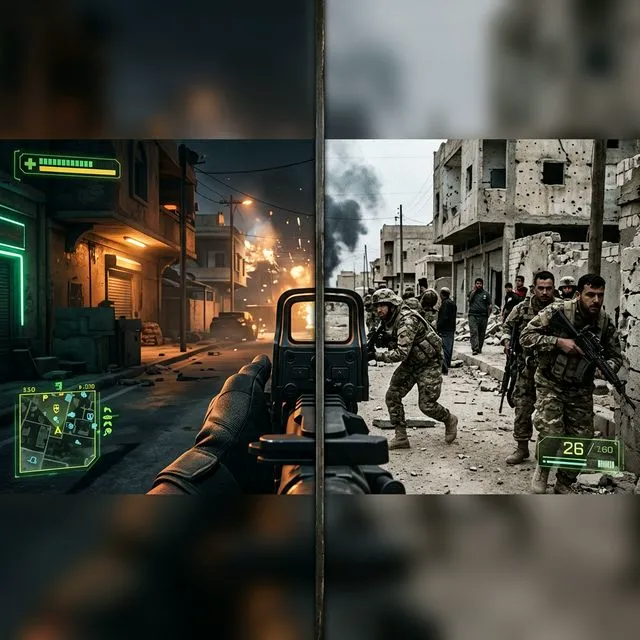
The Videos That Blew Up the Internet
Since the start of American-Israeli military operations against Iran in February 2026, a specific content category has dominated social media:
- Bombing videos with video game HUDs: Real airstrikes edited with heads-up displays — crosshairs, floating scores (+100, +250, DOUBLE KILL), ammo bars, and minimaps
- "Killstreak" compilations: Multiple sequential attacks edited as Call of Duty killstreaks — with sound effects like "UAV Online!", "Predator Missile Ready"
- "War trailers": Cinematic edits of real military operations with quick cuts, slow-motion, and Hans Zimmer soundtracks
The most viral — a 90-second compilation — accumulated over 120 million impressions in 72 hours on X.
Where Do These Videos Come From?
- Semi-official military content: The Pentagon and CENTCOM publish cinematic-quality operation videos as raw material
- "Mil-fluencer" content creators: Influencers specializing in military content for young male audiences (15-30)
- State-level propagandists: Evidence of coordinated government-linked information operations
- Organic gaming community: Regular gamers applying their video editing skills to real military footage
The Psychology of Gamification: Why It Works

The Dopamine-Desensitization Loop
- Variable reward: The "+100" score activates the brain's reward system the same way as scoring in a game
- Consequence abstraction: Video game aesthetics make destruction seem reversible, temporary, without real consequence
- Shooter identification: The camera is positioned in first-person or drone perspective — exactly like a video game. Empathy is structurally eliminated
What Science Says
| Study | Year | Key Finding |
|---|---|---|
| Anderson & Dill | 2000 | Violent games reduce short-term empathy |
| Greitemeyer & Mügge | 2014 | Meta-analysis confirms desensitization |
| Oxford Internet Institute | 2026 | Gamified military content reduces empathy by 47% vs. journalistic format |
The Pipeline: From Gamer to Propagandist
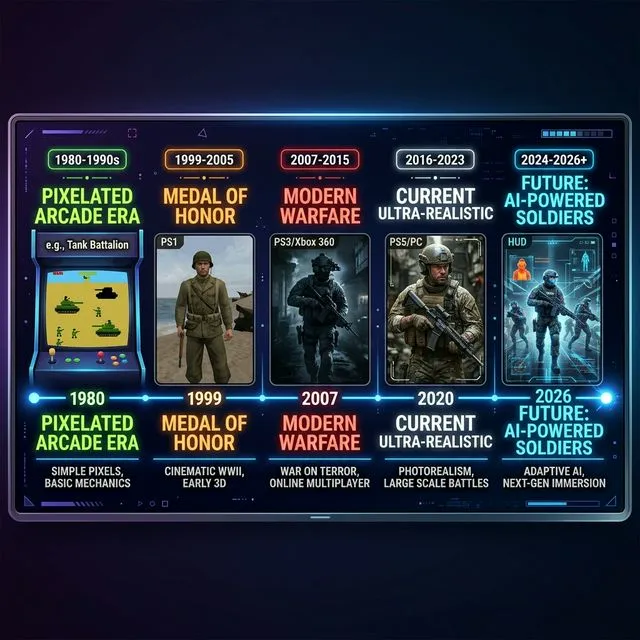
- Attraction: Young men (14-25) who play FPS are exposed to gamified military content
- Normalization: Repeated exposure normalizes military violence as "cool"
- Identification: The young person begins identifying with military forces
- Action: In extreme cases, militarily motivated enlistment or radicalization
The US Army already used games for recruitment: America's Army (2002) was a free FPS developed specifically to attract recruits. In 2026, this strategy simply migrated to TikTok.
US Army enlistment among men 18-24 with FPS gaming experience increased 23% in Q1 2026 vs. the same period in 2025.
The Other Side: Iran and Russia Also Play
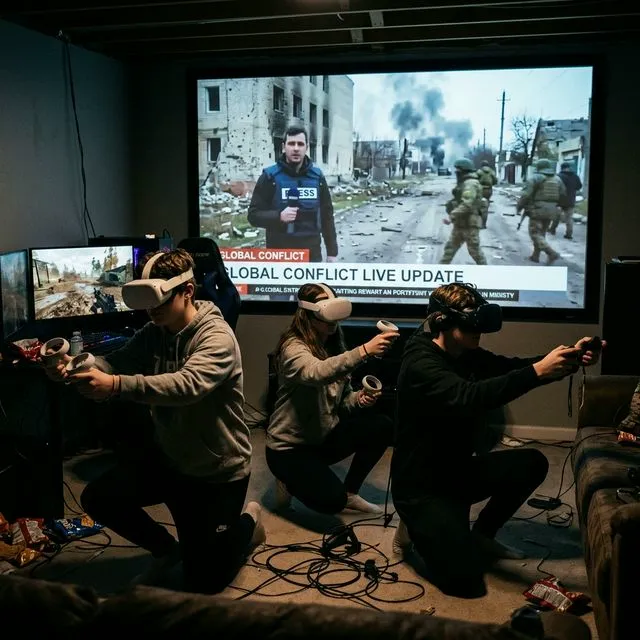
Iran produces similar content — game-style animations showing successful Iranian attacks. Russia, since the Ukraine invasion in 2022, operates Telegram channels with Total War and Command & Conquer aesthetics. The fundamental difference is scale and sophistication: the American content machine operates at a much greater scale with superior production quality.
The Invisible Human Cost
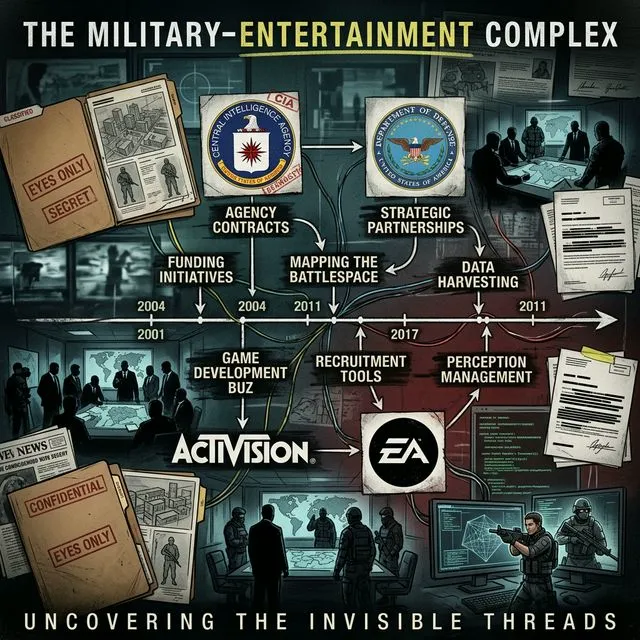
Behind every floating "+100":
- "Military" installations that are hospitals, schools, civilian infrastructure
- Collateral deaths: The UN estimates hundreds of civilian deaths
- Survivor trauma: The explosions that look "cool" in slow motion cause PTSD and devastating injuries
- Destroyed families: Every "point" in the video HUD may represent a father, mother, child
What You Can Do
- Recognize manipulation: When a bombing video excites rather than horrifies you, recognize you're being manipulated
- Seek primary sources: Read UN, Red Cross, and humanitarian reports
- Always question: Who produced this? Who benefits from you thinking it's "cool"?
- Refuse gamification: Don't share, don't like, don't amplify content that turns real death into entertainment
- Educate young people: Talk about the difference between simulated violence (games) and real violence (war)
Platform Responsibility
TikTok, X, YouTube, and Instagram's algorithms are designed to maximize engagement — and gamified war content generates extreme engagement. This creates a vicious cycle where platforms financially benefit from propagating content that desensitizes billions to real violence.
Moderation policies are ambiguous and inconsistent across platforms, with war gamification content often escaping automated filters because it doesn't show explicit gore.
Frequently Asked Questions (FAQ)
Do violent games cause real-life violence?
Research is inconclusive on direct causality. What's well-documented is that prolonged exposure to media violence can reduce empathy. The problem isn't that gamers become violent, but that real war is perceived with the same emotional indifference as virtual violence.
Can platforms be held legally responsible?
It depends on jurisdiction. In the US, Section 230 protects platforms. In Brazil, the Civil Internet Framework requires content removal after court order, but has no specific provision for gamified war content.
Is there an ethical difference between playing Call of Duty and watching gamified videos of real war?
Yes, a fundamental difference: in Call of Duty, all characters are fictional — no one actually dies. In gamified videos of real attacks, the people in the targets are real, their deaths are real, and their families' suffering is real.
Conclusion: War Is Not a Game
War is not a game. The missiles are real. The explosions are real. The deaths are real. And when we accept — by inertia, by algorithm, by dopamine — that bombings be presented as gameplays, we're consenting to something profoundly dangerous: the industrialized dehumanization of violence.
The "+100" floating on the screen may represent an entire family that ceased to exist.


