"The Ball Rolls in America: The Largest and Most Technological World Cup of All Time Begins"
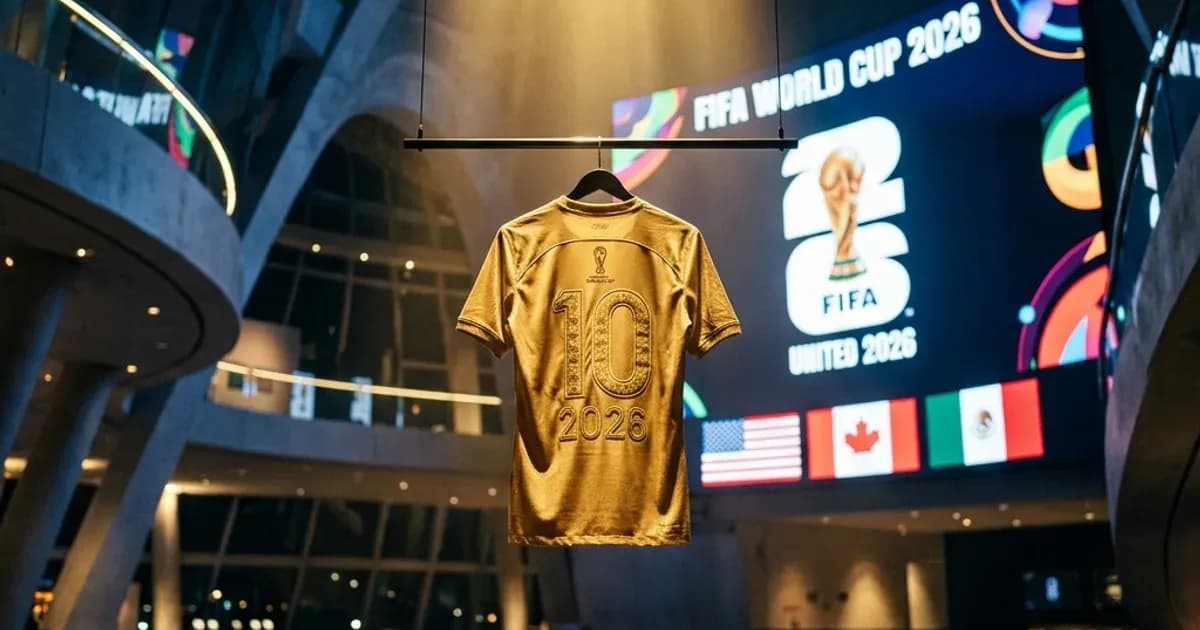
On June 11, 2026, the football world will come together to celebrate the opening ceremony of the FIFA World Cup, an event that promises to be a milestone in the history of the sport. For the first time, three nations – the United States, Mexico, and Canada – will unite to host the largest football tournament on the planet, featuring 48 teams competing for the most coveted title in football. This tournament is not just a sporting competition; it is a celebration of diversity, culture, and the passion that football inspires in millions of people around the globe.
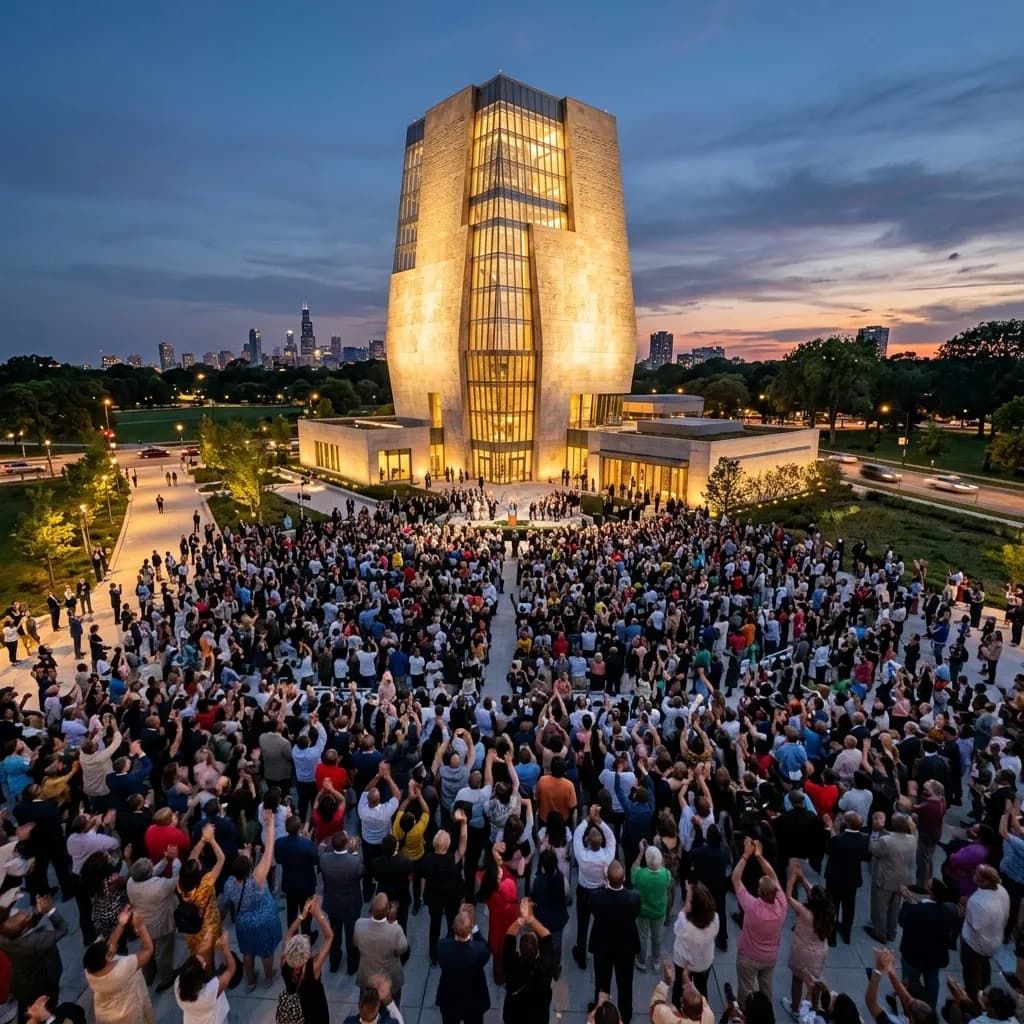
The opening ceremony will be a grand spectacle, designed to capture the essence of football and the unity of peoples. World-renowned artists are expected to perform, bringing a mix of music, dance, and performances that reflect the rich cultural tapestry of the three host countries. The event will be a showcase of talent, with exciting moments that will touch the hearts of fans and create lasting memories.
Additionally, the ceremony will serve as an invitation for the world to join in this celebration, highlighting the importance of football as a bond that connects different cultures and nations. With a global audience tuned in, the opening of the 2026 World Cup will be a unique opportunity to showcase the beauty of the sport and the camaraderie it promotes. As fans gather in stadiums and on screens around the world, the spirit of football will be palpable, uniting people of all ages and backgrounds in a single passion.
Get ready for an unforgettable spectacle, where the excitement of football and the celebration of diversity will meet in an event that will be etched in the memory of all. The countdown has already begun, and the world is about to witness one of the greatest moments in the history of sport.
What Happened
On June 11, 2026, the world of football came together to celebrate the opening of the FIFA World Cup, an event that not only marks the passion for the sport but also symbolizes the unity of nations. The opening ceremony was held simultaneously in three iconic stadiums: the Estadio Azteca in Mexico City, MetLife Stadium in New Jersey, and BMO Field in Toronto. This edition of the tournament is historic, as it is the first time the World Cup is held in three different countries: Mexico, the United States, and Canada. The opening ceremony, filled with emotion and symbolism, highlighted the rich cultural diversity of the host countries and the importance of football as a link between nations.
Estadio Azteca, one of the temples of world football and the stage for memorable matches from previous World Cups, was the chosen venue for the initial show. The ceremony began with a vibrant performance that blended music, dance, and traditional elements from each of the host countries. Local and international artists came together to create a stunning visual spectacle, which included dancers dressed in traditional costumes, projections of digital art, and a soundtrack that reverberated throughout the stadium, enveloping the fans in a celebratory atmosphere. The presence of football legends, such as Pelé and Diego Maradona, in hologram form, added a nostalgic and reverent touch to the event, reminding everyone of the rich history of the sport.
Meanwhile, at MetLife Stadium, the opening celebration had an equally grand character. The stadium, which has hosted major sporting events, was transformed into a stage for a presentation that emphasized the cultural diversity of the United States and Canada. Pop music celebrities and local artists performed, creating a festive atmosphere that energized the attending fans. The ceremony culminated with the entrance of the host teams, who were met with deafening applause. The excitement was palpable, and the anticipation for the upcoming matches was tangible.
After the opening ceremonies, the focus shifted to the field, where the host teams, Mexico, the United States, and Canada, made their debuts in the competition. Mexico faced Sweden at Estadio Azteca in a match that promised to be an exciting battle. Mexican fans, dressed in the colors of the flag, created an electrifying environment, and the team did not disappoint, showcasing vibrant and offensive football. The match ended in a convincing victory for the hosts, with a decisive goal that sent the crowd into a frenzy of joy.
Simultaneously, at MetLife Stadium, the United States faced Colombia in a match that also promised to be full of excitement. The American team, supported by an enthusiastic crowd, took the field with determination. The game was balanced and filled with opportunities for both sides, but the skill of the American players prevailed, securing a victory that solidified the team's confidence in the competition. Finally, at BMO Field, Canada faced New Zealand in a game that also drew the attention of fans. The Canadian team, playing at home, delivered a solid performance, ensuring a victory that made history for Canadian football.
The opening of the 2026 World Cup was more than just a sporting event; it was a celebration of unity, diversity, and the passion that football brings. With an opening ceremony that captivated the audience and thrilling matches that marked the start of the competition, the tournament promised to be a memorable edition, filled with stories and moments that will be etched in the memories of fans around the world. The 2026 World Cup not only celebrated football but also the ability of the sport to unite people from different cultures and backgrounds around a common goal: the pursuit of glory on the field.
Context and History
The decision to expand the World Cup format from 32 to 48 teams, to be held in 2026, represents a significant change in the history of the most prestigious tournament in world football. This expansion, approved by FIFA in January 2017, aims to increase the participation of developing countries and provide a more inclusive and diverse experience for fans. However, this change also brings to light a series of logistical and diplomatic challenges, especially considering that the 2026 World Cup will be co-hosted by three countries: the United States, Canada, and Mexico.
Historically, the World Cup has been an event that not only celebrates the sport but also promotes unity among nations. Since its first edition in 1930, the tournament has evolved, reflecting social, political, and economic changes around the world. The decision to increase the number of participating teams is seen as a response to the growing demand for inclusion and diversity in football, as well as an acknowledgment of the market potential in regions that have traditionally had less representation in the event.
The expansion to 48 teams means that the tournament will feature a total of 80 matches, compared to the 64 that were previously played. This change requires meticulous logistical planning, as the existing infrastructure in each of the host countries will need to be adapted to accommodate the increased number of games and fans. Stadiums, transportation, security, and accommodations are just a few of the aspects that require effective coordination among the three nations. The logistical complexity is amplified by the fact that the United States, Canada, and Mexico have different transportation systems and regulations that need to be harmonized to ensure a smooth experience for visitors.
In addition to logistical challenges, diplomatic unity among the three host countries is a crucial aspect for the success of the event. The joint bid was a historic milestone, marking the first time that three countries have come together to host the World Cup. This collaboration not only demonstrates a joint effort to promote football in North America but also serves as a symbol of regional cooperation at a time when political tensions may threaten harmony among nations. The partnership between the United States, Canada, and Mexico can be seen as an attempt to strengthen diplomatic and economic ties, especially in a global context where polarization and protectionism are on the rise.
The choice to host the World Cup in three countries also reflects a strategy by FIFA to expand its influence and market. Football is a global phenomenon, and the inclusion of more teams in the tournament can help increase interest in countries that might otherwise be overlooked. This approach is particularly relevant for nations in Central America and the Caribbean, which will benefit from the opportunity to compete on a larger stage, thereby increasing the visibility and development of football in their regions.
However, the expansion also raises questions about the quality of the tournament. Critics argue that the inclusion of more teams may dilute the competitive level of the World Cup, making it less exciting. FIFA, in turn, argues that the diversity of teams can bring new stories and rivalries, enriching the narrative of the tournament.
In summary, the expansion of the World Cup from 32 to 48 teams in 2026 reflects changes in the landscape of global football and the needs for inclusion and diversity. The logistical challenges and the need for effective diplomatic collaboration among the United States, Canada, and Mexico are fundamental to ensuring that the event is a success. As the tournament approaches, the world of football is watching closely how this new era will unfold, both on and off the field.
Impact on the Population
The hosting of large sporting events, such as the World Cup, generates a phenomenon known as "tourist fever," especially in the host cities. This phenomenon translates into a significant increase in the flow of visitors, which can bring economic benefits but also challenges for local infrastructure. The cities that host matches experience an injection of financial resources, with tourists spending on hotels, restaurants, and local commerce. However, this sudden demand can overwhelm public services, such as transportation and healthcare, requiring careful planning by the authorities.
In addition to the economic impact, technology plays a crucial role in the experience of fans and in the management of the event. One of the most notable innovations is the implementation of virtual reality broadcasts. This technology allows fans from around the world to watch the games in an immersive way, as if they were present in the stadium. This not only expands the reach of the event but also democratizes access to the sporting spectacle, allowing people who cannot travel to the host cities to experience the excitement of the World Cup.
Another technological aspect that deserves attention is the introduction of semi-autonomous VAR (Video Assistant Referee). This technology has revolutionized the way refereeing decisions are made, providing greater accuracy in calls and, consequently, increasing fairness in matches. The use of VAR has been a controversial topic, but its implementation is a significant step towards the modernization of football, reflecting the need for the sport to adapt to contemporary demands.
The table below illustrates the significant changes that occurred with the reformulation of the World Cup format, comparing the number of matches, total tournament days, and estimated revenues before and after the change:
| Aspect | Before the Reformulation | After the Reformulation |
|---|---|---|
| Number of Matches | 64 | 48 |
| Total Days of Tournament | 32 | 28 |
| Estimated Revenues (in billions) | 4.5 | 6.0 |
As we can see in the table, the reformulation of the World Cup format resulted in a reduction in the number of matches, decreasing from 64 to 48. This change, while shortening the total duration of the tournament from 32 to 28 days, also had a positive impact on estimated revenues, which increased from 4.5 billion to 6 billion dollars. This strategy was designed to optimize the fan experience and maximize profits, reflecting a more modern and efficient approach to organizing sporting events.
In summary, the tourist fever in host cities, combined with technological innovations such as virtual reality and semi-autonomous VAR, brings a significant impact to the population. While the economic benefits are evident, it is essential that local authorities are prepared to address the challenges that arise with the hosting of an event of this magnitude. The combination of strategic planning and technological innovation can ensure that the World Cup not only celebrates football but also promotes a positive legacy for the communities involved.
What Those Involved Are Saying
The new format of the World Cup, which will feature 48 teams starting in 2026, has generated a series of reactions among the key stakeholders in the world of football. FIFA President Gianni Infantino was one of the first to speak out about the change. In a press conference, he stated: "Increasing the number of participating teams is a way to democratize football. More countries will have the opportunity to compete on one of the biggest stages in sports, which will certainly enrich the experience for both fans and players." Infantino also emphasized that the inclusion of more teams will allow developing nations the chance to shine on the international stage, promoting the growth of football globally.
Legendary former players, such as Pelé and Diego Maradona, have also expressed their opinions on the new format. Pelé, the Brazilian icon, commented: "The World Cup has always been a tournament that celebrates the best of football. With 48 teams, we will have more diversity and more stories to tell. However, it is crucial that the quality of the game is not compromised. Football must always be played at its highest level." On the other hand, Maradona, who has always been a defender of tradition, raised concerns: "We cannot forget that the essence of the World Cup is the competition among the best teams. With so many teams, we risk diluting the quality of the tournament. I hope FIFA finds a balance."
The reactions of fans in fan zones, gathering places to watch the matches, also reflect a mix of enthusiasm and apprehension. In a fan zone in São Paulo, a group of young fans expressed their excitement: "More teams means more exciting matches! It’s an opportunity to see teams that we normally wouldn’t have the chance to watch live. I’m excited to see how the smaller nations will perform against the big football powers." Another fan, however, raised a valid concern: "It’s great to have more teams, but what about the quality? I hope this doesn’t mean boring or uneven matches. The World Cup should be a spectacle."
Additionally, in a fan zone in Lisbon, a group of Portuguese fans commented on the inclusion of more European teams. "It’s good to see that more countries from Europe will have the chance to compete, but I hope this doesn’t mean that football giants like Germany and Brazil won’t have the same dominance. The competition should be fierce," one of them said.
With such diverse opinions, it is clear that the new 48-team World Cup format is a topic that evokes passions and heated debates. While some see it as an opportunity for growth and inclusion, others fear that the essence of the tournament may be lost. What is certain is that the anticipation for the next edition of the World Cup has never been higher, and all eyes will be on how this new era unfolds on the pitch.
Next Steps
With the group stage approaching, the match schedule promises exciting moments for soccer fans. The favorite teams, such as Brazil, Germany, Argentina, and France, are prepared to face significant challenges. The start of the group stage is set for November 20, with matches taking place at different times throughout the day, allowing fans from all over the world to follow their teams. Each team will have the opportunity to showcase their talent in three matches, with the top two from each group advancing to the knockout stage.
The path for the favorite teams is not guaranteed, and each game will be crucial. Brazil, for example, is seeking its sixth championship, but will face strong opponents such as Croatia and Spain, who also have a history of success in international tournaments. Germany, known for its resilience, will have to overcome a competitive group that includes Italy and England. Meanwhile, France, the current champion, will try to maintain its prominent position but cannot underestimate emerging teams that have shown impressive performances in the qualifiers.
Closing
Soccer, as the most popular sport on the planet, has the incredible ability to integrate cultures and unite people from different backgrounds. During the group stage, fans from around the world come together to celebrate their teams, creating an atmosphere of camaraderie and healthy rivalry. The stands are filled with flags, chants, and dances, reflecting the cultural diversity that soccer encompasses. Each match is an opportunity for nations to showcase not only their skills on the field but also their traditions and values.
Furthermore, soccer transcends linguistic and social barriers, promoting a sense of belonging and identity. The stories of overcoming challenges and unity that emerge during tournaments are a testament to the power of sport in connecting people. As the teams take to the field, they are not just competitors; they are ambassadors of their cultures, conveying the message that, regardless of differences, the love for soccer is a bond that unites us.
Sources and References
The information contained in this article has been extracted from reliable and reputable sources, including FIFA.com, ESPN, Fox Sports, and The Athletic. These platforms provide detailed analyses, statistics, and updates about the tournament, ensuring that fans are always informed about what is happening in the world of football.