Nature is the greatest creator of superheroes. While we admire fictional characters with extraordinary powers, there are real animals with abilities that would make any comic book hero seem ordinary.
From complete limb regeneration to biological immortality, from lethal electricity to perfect camouflage — the animal kingdom possesses superpowers that science is still trying to understand and replicate.
1. Axolotl — The Wolverine of Amphibians
The axolotl (Ambystoma mexicanum) is a Mexican amphibian that possesses the most impressive regeneration capacity in the animal kingdom. It doesn't just heal wounds — it rebuilds entire limbs from scratch.
Regeneration Powers
The axolotl can regenerate:
- Complete legs, including bones, muscles, nerves, and blood vessels
- Damaged parts of the heart
- Severed spinal cord
- Parts of the brain
- Eyes and retina
- Jaw
The most impressive part is that the regeneration is perfect — no scarring. A regenerated limb is functionally identical to the original. Scientists study the axolotl intensively in hopes of applying its regeneration mechanisms to human medicine.
Unfortunately, the axolotl is critically endangered in the wild, surviving only in the canals of Xochimilco, in Mexico City.
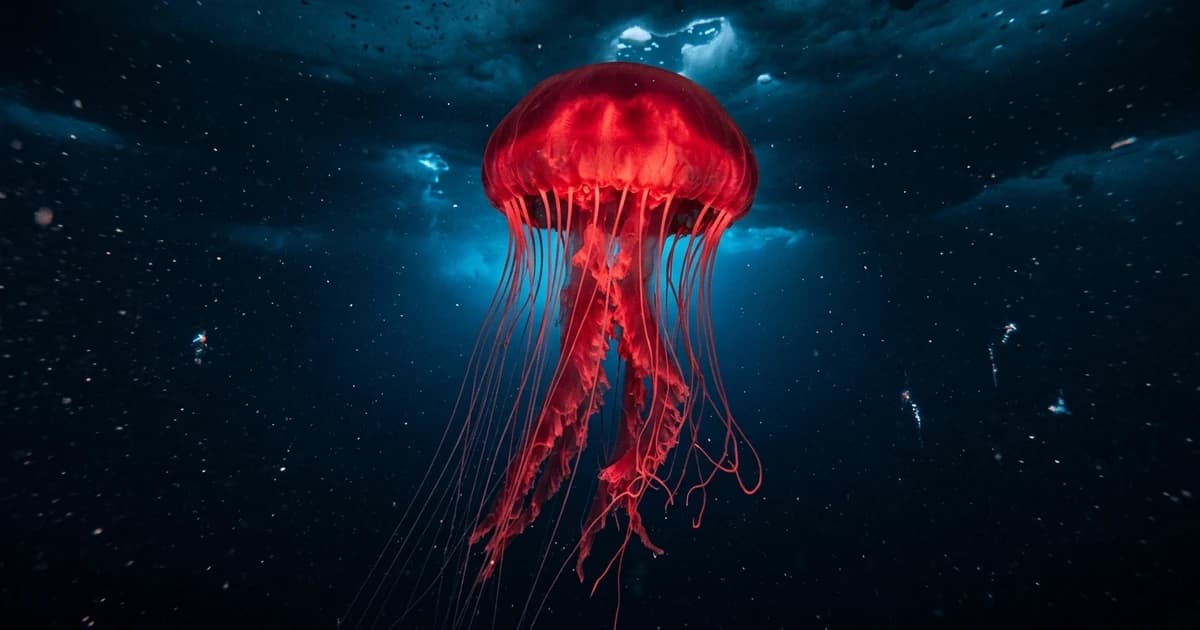
2. Immortal Jellyfish — The Being That Defies Death
Turritopsis dohrnii is known as the "immortal jellyfish" because it can, theoretically, live forever. When facing stress, disease, or old age, it reverses its life cycle, transforming back into a juvenile polyp — the equivalent of a human adult turning back into a baby.
This process, called transdifferentiation, allows its adult cells to reprogram themselves into young cells. In theory, it can repeat this cycle indefinitely, making it biologically immortal.
In practice, most die from predation or disease before using this power. But the mechanism fascinates scientists who study aging and cancer, since it involves cellular reprogramming similar to what occurs in cancer cells.
3. Electric Eel — The Thor of the Rivers
The electric eel (Electrophorus electricus) can generate discharges of up to 860 volts — enough to knock down a horse or kill a human under specific circumstances.
Its body contains three electrical organs composed of thousands of cells called electrocytes, which function like batteries in series. When activated simultaneously, they produce a devastating discharge.
The eel uses this electricity to:
- Hunt prey (the discharge paralyzes fish and crustaceans)
- Defend itself from predators
- Navigate murky waters (emits weak electrical pulses like radar)
- Communicate with other eels
Recent research discovered that the eel can remotely control the muscles of its prey, making them twitch involuntarily to reveal their position before the final attack.
4. Mimic Octopus — The Master of Illusion
The mimic octopus (Thaumoctopus mimicus) is the camouflage champion of the animal kingdom. It doesn't just change color — it imitates the appearance and behavior of at least 15 different species.
Depending on the threat, the mimic octopus can transform into:
- Lionfish (stretching its tentacles like venomous spines)
- Sea snake (hiding in a burrow and leaving two tentacles undulating)
- Flatfish (flattening its body and gliding along the bottom)
- Jellyfish (floating with tentacles hanging down)
- Starfish, shrimp, crab, and others
It chooses which animal to imitate based on the predator it's facing, demonstrating remarkable intelligence for an invertebrate.
5. Bombardier Beetle — The Natural Flamethrower
The bombardier beetle (genus Brachinus) possesses an internal chemical weapon that would be the envy of any superhero. When threatened, it fires a jet of boiling liquid at 100°C from the tip of its abdomen.
The mechanism works like this: two separate chambers in the abdomen store hydroquinone and hydrogen peroxide. When mixed in a reaction chamber with catalytic enzymes, an explosive exothermic reaction occurs that instantly heats the mixture and expels it as a toxic, scalding spray.
The beetle can aim the jet with precision and fire up to 500 times per second in pulsed bursts. The temperature and toxicity of the spray are sufficient to repel frogs, birds, and even curious humans.
6. Tardigrade — The Indestructible
The tardigrade (also called the water bear) is the most resilient animal on the planet. At less than 1 mm in size, it survives conditions that would kill any other living being:
- Temperature: From -272°C (near absolute zero) to 150°C
- Pressure: 6 times the pressure at the bottom of the deepest ocean
- Radiation: 1,000 times the lethal dose for humans
- Space vacuum: Survived experiments in outer space
- Dehydration: Can lose 99% of its body water and revive decades later
The secret is a state called cryptobiosis: the tardigrade dehydrates its body, replaces water with a protective sugar (trehalose), and enters metabolic suspension. In this state, it is practically indestructible. When water returns, it "resurrects" within minutes.
In 2019, an Israeli probe that crashed into the Moon was carrying tardigrades. Scientists believe they may have survived the impact.
7. Mantis Shrimp — The Fastest Punch in the World
The mantis shrimp (Odontodactylus scyllarus) delivers the fastest punch in the animal kingdom. Its claws move at 83 km/h, accelerating faster than a .22 caliber bullet.
The impact is so violent that:
- It generates cavitation bubbles that produce a second shockwave
- The temperature in the impact zone briefly reaches that of the sun
- It produces a visible flash of light (sonoluminescence)
- It easily breaks mollusk shells and crab carapaces
The mantis shrimp also possesses the most complex vision in the animal kingdom, with 16 types of photoreceptors (humans have 3). It can see ultraviolet light, infrared light, and polarized light.
Aquariums that keep mantis shrimp need to use special tempered glass, as they are capable of breaking regular glass with their punches.
8. Archerfish — The Elite Sniper
The archerfish (Toxotes jaculatrix) hunts insects that are out of the water by firing jets of water with impressive precision at distances of up to 3 meters.
What makes this extraordinary is that the fish needs to compensate for the refraction of light at the water's surface — meaning the insect isn't where it appears to be when viewed from underwater. The archerfish instinctively calculates this optical distortion and adjusts its aim.
Studies have shown that young archerfish learn by watching adults, demonstrating social learning — something rare in fish. They also adjust the force of the jet according to the size of the prey: stronger jets for larger insects.
9. Cockroach — The Nuclear Survivor
The common cockroach deserves a place on this list for its extraordinary resilience:
- Survives radiation levels 10 times greater than the lethal dose for humans
- Can live a week without its head (dies of dehydration, not lack of brain)
- Holds its breath for up to 40 minutes
- Survives submerged for 30 minutes
- Runs at 5 km/h (proportionally, that would be like a human running at 330 km/h)
- Has existed for 350 million years (survived 4 mass extinctions)
The radiation resistance is due to the cockroach's slow cell cycle. Because its cells divide less frequently, they are less vulnerable to radiation damage.
10. Dolphin — The Living Sonar
Dolphins possess an echolocation system so sophisticated that it surpasses any artificial sonar created by humans.
They emit ultrasonic clicks that bounce off objects and return, allowing the dolphin to create a three-dimensional "acoustic image" of its environment. This system is so precise that a dolphin can:
- Detect an object the size of a golf ball at 100 meters away
- Distinguish between different materials (metal, plastic, organic)
- "See" inside other animals (detect pregnancy in other dolphins and even in humans)
- Function in completely dark and murky waters
Additionally, dolphins sleep with half their brain at a time (unihemispheric sleep), keeping one eye open to watch for predators. They can go weeks without sleeping completely.
11. Horned Lizard — The Blood Shooter
The horned lizard (Phrynosoma) has a unique and disturbing defense: when threatened, it shoots jets of blood from its eyes at distances of up to 1.5 meters.
The blood contains chemical compounds that are unpleasant to canine and feline predators. The lizard increases blood pressure in its head, rupturing small vessels around the eyes and directing the jet with surprising precision.
This defense is used as a last resort, after attempts at camouflage and body inflation have failed.
12. African Lungfish — The Drought Survivor
The African lungfish (Protopterus) can survive out of water for up to 4 years. When its habitat dries up, it digs a burrow in the mud, secretes a mucus cocoon around its body, and enters a dormancy state called estivation.
During estivation:
- Metabolism drops to near zero
- It breathes air through a primitive lung
- It digests its own muscles for energy
- It can lose up to 60% of its body weight
When the rain returns and water fills the habitat again, the fish "awakens" and resumes its normal life within hours.
What Science Learns From These Animals
These superpowers aren't just curiosities — they inspire technological and medical advances:
- The axolotl's regeneration could lead to treatments for spinal cord injuries
- The jellyfish's immortality may reveal secrets about human aging
- The dolphin's sonar inspires underwater detection technologies
- The tardigrade's resistance helps develop vaccine preservation methods
- The octopus's camouflage inspires adaptive materials for military and civilian use
Frequently Asked Questions
Which animal has the most useful superpower for humans?
The axolotl's regeneration is probably the superpower with the greatest potential for human medicine. If scientists can understand and replicate its regeneration mechanisms, they could revolutionize the treatment of severe injuries, amputations, and degenerative diseases.
Are there animals with superpowers we don't know about yet?
Certainly. It's estimated that between 8 and 10 million animal species exist on Earth, and only about 1.5 million have been cataloged. New species with surprising abilities are discovered regularly, especially in the depths of the oceans.
Why didn't humans develop superpowers like these animals?
Humans developed their own "superpower": the brain. Our cognitive capacity allows us to create tools, technologies, and strategies that compensate for our physical limitations. In evolutionary terms, investing in intelligence was more advantageous for our species than investing in regeneration or electricity.
Are any of these animals dangerous to humans?
The electric eel can cause fatal shocks under specific circumstances (multiple discharges in shallow water). The mantis shrimp can cause serious injuries with its punches. However, most of these animals pose no direct threat to humans and only use their powers for hunting or defense.
Biomimetics: When Technology Copies Nature
Animal superpowers don't just remain curiosities — they inspire revolutionary technologies:
From gecko to adhesive: The gecko's ability to climb any surface led to the development of synthetic adhesives based on nanofibers — used in robotics (wall-climbing robots), medicine (bandages that adhere without glue), and even space exploration (mechanical claws to capture orbital debris).
From eel to battery: Researchers at Michigan created biocompatible batteries inspired by the electric eel's electrocytes. These flexible batteries can power medical implants directly through the body, without the need for surgery to replace batteries.
From mantis shrimp to armor: The layered structure of the mantis shrimp's appendage — which withstands impacts of 1,500 newtons without cracking — inspired composite materials for ballistic vests and military helmets up to 40% lighter than traditional ones.
From shrimp eye to diagnosis: The mantis shrimp's polarized vision (which sees 16 types of photoreceptors compared to our 3) inspired cameras that detect cancer invisible to the human eye. Cancer cells reflect polarized light differently from healthy cells.
CRISPR and Superpowers: The Future
With CRISPR genetic engineering, the future promises to transfer animal abilities to human applications: regeneration (axolotl genes applied to regenerative medicine), cancer resistance (naked mole-rat genes), and radiation protection (tardigrade genes). We are only at the beginning of understanding — and applying — the most advanced biological arsenal on the planet.
Nature is the most creative laboratory in the universe. Each of these animals is proof that evolution produces more ingenious solutions than any science fiction.
Read also: