
Water on Mars: The Discovery That Changes Everything — And Why We Now Believe We Are Not Alone
Date: March 7, 2026
Reading time: 25 minutes
Emoji: 🔴
Mars is not the dry, dead desert we thought it was. Beneath the red, dusty surface of the Red Planet, enormous reservoirs of liquid water lie hidden — possibly containing more water than all of North America's Great Lakes combined. In 2024, data from the MARSIS radar aboard ESA's Mars Express probe and seismic measurements from NASA's InSight lander confirmed what scientists had suspected for decades: Mars has subsurface liquid water in massive quantities. In 2025, the Perseverance rover found minerals in Jezero Crater that can only form in the presence of persistent liquid water, including evidence of complex organic compounds. This discovery has fundamentally transformed our understanding of the planet, the possibility of extraterrestrial life, and plans for human colonization of Mars. What we have found changes everything — and this article explains exactly how and why.
Mars: From Dead Desert to Hidden Water World
The Transformation of Our Understanding
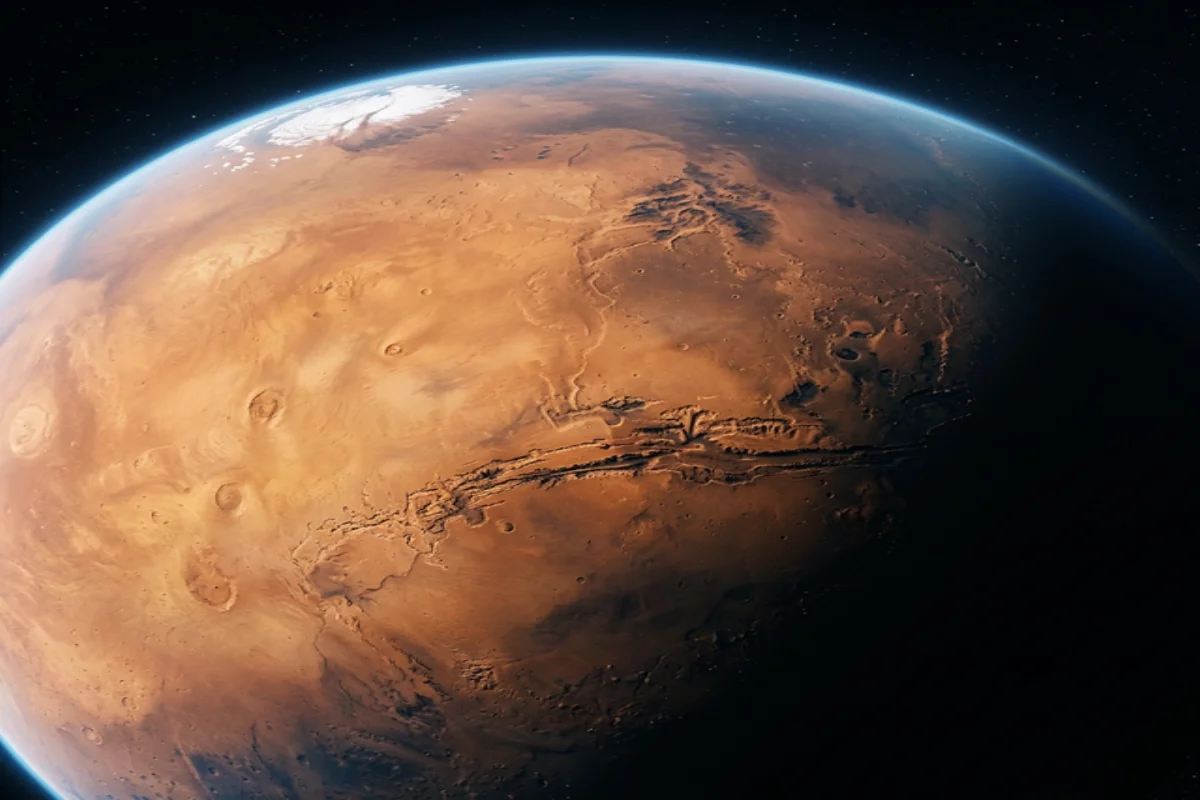
For decades, Mars was considered a hostile and completely arid world. The surface, bombarded by ultraviolet radiation, with an average temperature of -60°C and an atmosphere so thin that pressure is only 0.6% of Earth's, seemed incompatible with the existence of liquid water. But this view has changed radically in recent years, thanks to a series of revolutionary and progressive discoveries:
| Year | Discovery | Mission/Instrument |
|---|---|---|
| 2002 | Large subsurface ice deposits | Mars Odyssey (NASA) |
| 2008 | Water ice confirmed at north pole | Phoenix Lander (NASA) |
| 2015 | Recurring Slope Lineae (RSL) suggesting liquid brine | MRO/HiRISE (NASA) |
| 2018 | Underground lake detected beneath south pole | Mars Express/MARSIS (ESA) |
| 2024 | Enormous deep aquifers confirmed by seismics | InSight (NASA) |
| 2025 | Complex organic compounds in riverbed rocks | Perseverance (NASA) |
How Much Water Is There on Mars?
The answer is far more than anyone had imagined. The most recent data, combining orbital radar, seismics, and geochemical analysis, paint a surprising and dramatic picture that has fundamentally altered our understanding of Mars as a planetary body:
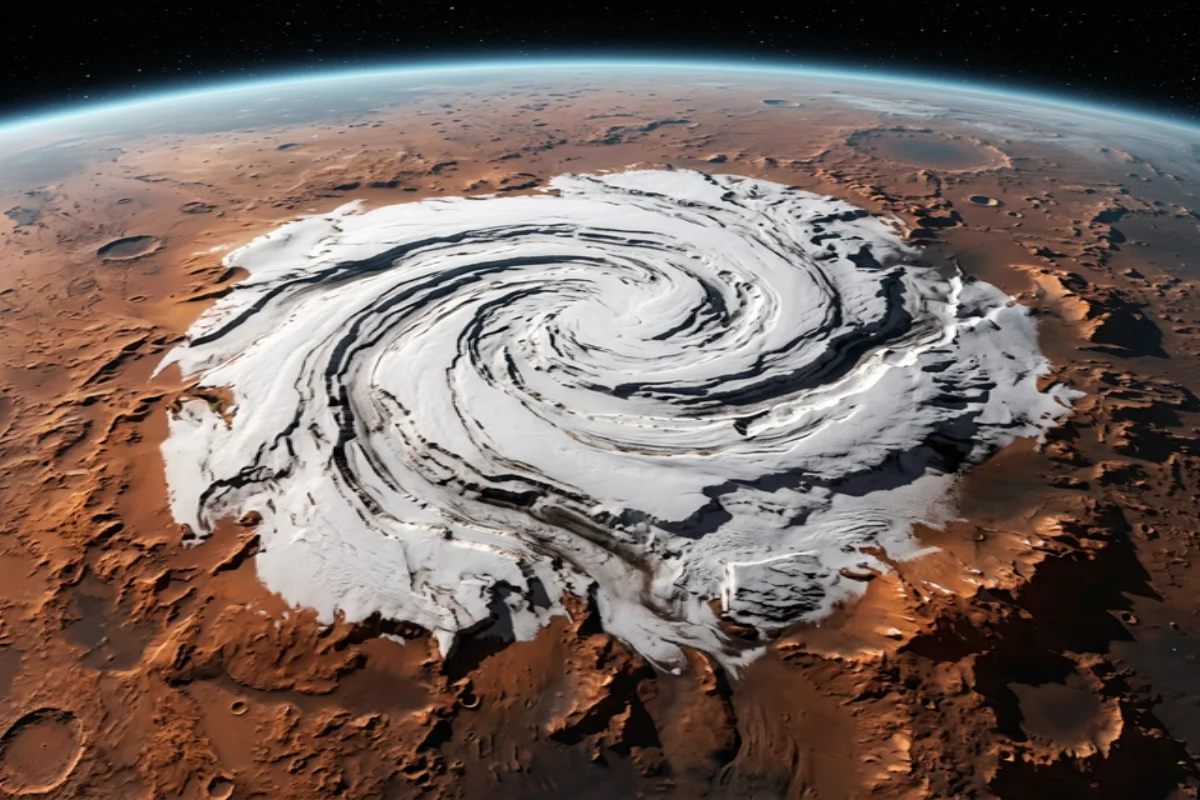
- Polar ice caps: Mars's two polar ice caps contain approximately 5 million km³ of water ice — enough to cover the entire planet with a 35-meter-deep layer if melted
- Subsurface ice (permafrost): A permafrost layer extending from the poles to mid-latitudes, containing enormous volumes of ice mixed with Martian soil and regolith
- Deep aquifers: Seismic data from InSight revealed liquid water reservoirs at depths of 10-20 km, potentially containing more water than Earth's Great Lakes combined
- Hydrated minerals: Vast areas of the surface contain minerals that have incorporated water into their crystalline structure, indicating that water was once abundant
Mars's Watery Past: A Blue Planet
3.5 Billion Years Ago
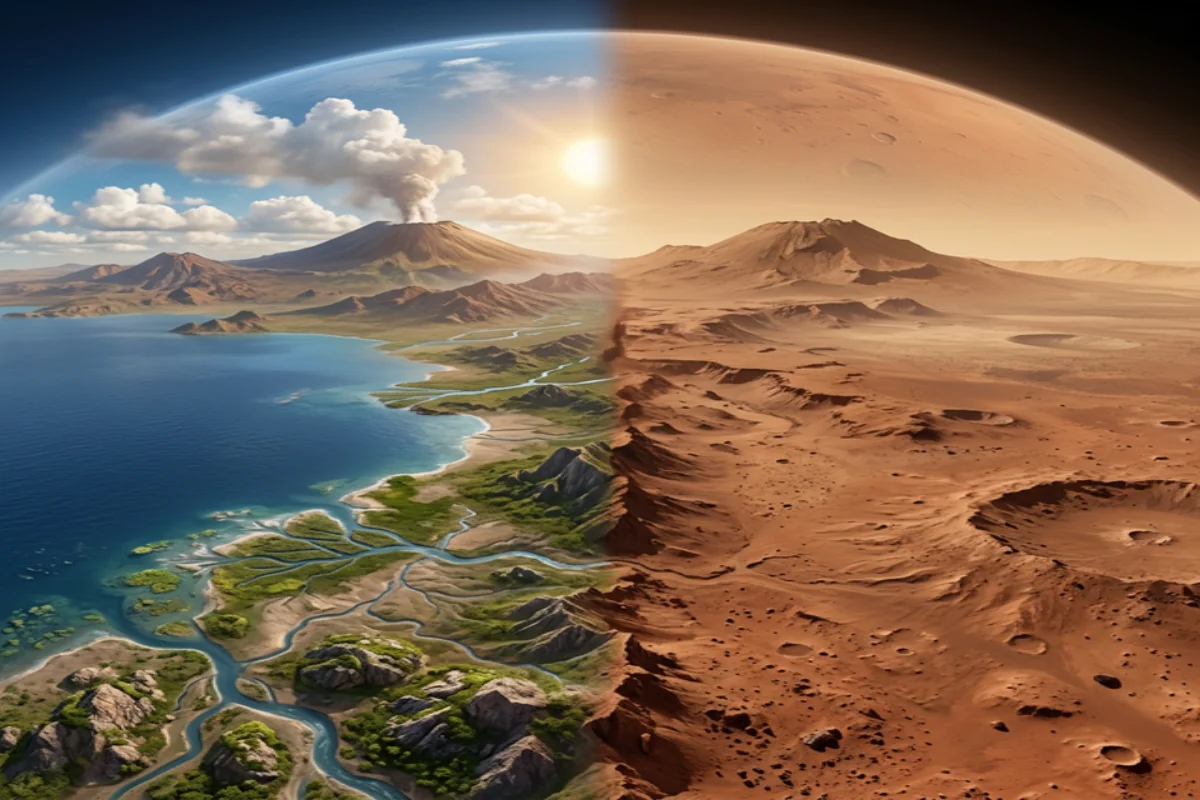
The evidence is now overwhelming and virtually irrefutable: Mars was once a warm, wet world, with oceans, rivers, lakes, and rain. During the Noachian period (4.1 to 3.7 billion years ago), Mars possessed conditions remarkably similar to those of primordial Earth, making it a prime candidate for the independent origin of life:
- Boreal Ocean: Mars's northern hemisphere was covered by a vast ocean containing approximately 20 million km³ of water — more than Earth's entire Arctic Ocean
- Rivers and deltas: More than 400 ancient river deltas have been identified on the surface, including the Jezero Crater delta where Perseverance is currently operating
- Long-lasting lakes: Lake Gale, where the Curiosity rover operates, existed for at least 10 million years — more than enough time for microbial life to emerge and evolve
- Dense atmosphere: Mars possessed a CO₂-rich atmosphere with sufficient pressure to maintain liquid water on the surface, likely with clouds and regular precipitation
What Happened to the Water?
The question that has intrigued scientists for decades now has increasingly clear answers. Mars lost most of its water through three primary mechanisms:
- Loss of the magnetic field: About 3.7 billion years ago, Mars's core cooled and stopped generating a global magnetic field. Without this protection, the solar wind began stripping away the Martian atmosphere — and with it, water that continuously evaporated into space
- Atmospheric escape: NASA's MAVEN mission directly measured the rate of atmospheric loss and confirmed that Mars loses approximately 100 grams of atmosphere per second to the solar wind, even today
- Mineral absorption and underground migration: Much of the water was literally absorbed by rocks (forming hydrated minerals) or migrated to deep reservoirs beneath the surface, where it remains today, protected from radiation and evaporation
The Discoveries That Changed Everything
The MARSIS Radar and Underground Lakes
In 2018, the MARSIS radar on ESA's Mars Express probe made a bombshell discovery: a lake of liquid water beneath Mars's south polar ice cap, at 1.5 km depth. The lake, informally named Lake Ultimi Scopuli, is approximately 20 km in diameter. The water is extremely salty (hypersaline brine), containing dissolved magnesium and sodium perchlorates, which allows it to remain liquid even at temperatures of -68°C — the same principle that makes road salt melt snow and ice in winter, but taken to an extreme never seen on Earth. Subsequent studies identified at least three more smaller lakes in the same region, suggesting a complex and interconnected subsurface hydrological system that may extend far beyond the polar region. The discovery generated intense debate in the scientific community — some researchers argue that the radar signals could also be explained by clay mineral deposits, but multiple independent analyses using different methodologies continue to favor the liquid water interpretation.
InSight and the Deep Aquifers
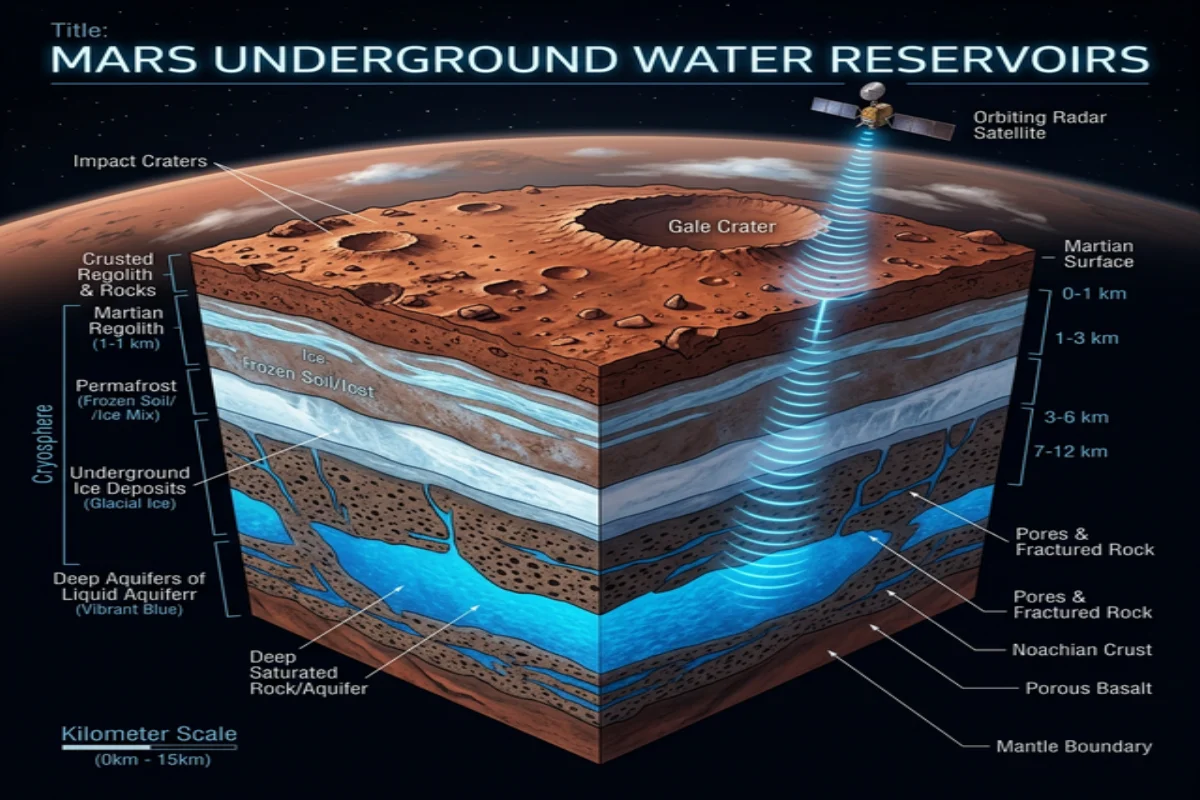
In 2024, seismic data from NASA's InSight lander — which recorded more than 1,300 marsquakes (Martian earthquakes) during its groundbreaking four-year mission on the Red Planet — revealed something truly extraordinary: the velocity of seismic waves in certain deep crustal layers is consistent with rocks saturated with liquid water, not solid ice as previously assumed. These deep aquifers, located at 10-20 km beneath the surface, may contain a volume of water comparable to or even greater than Earth's Great Lakes, which together store an impressive 22,671 km³ of fresh water. The discovery fundamentally changed the scientific consensus about Mars's subsurface hydrology and raised tantalizing questions about the potential for deep biospheres analogous to those found kilometers underground on Earth.
Perseverance and Jezero Crater
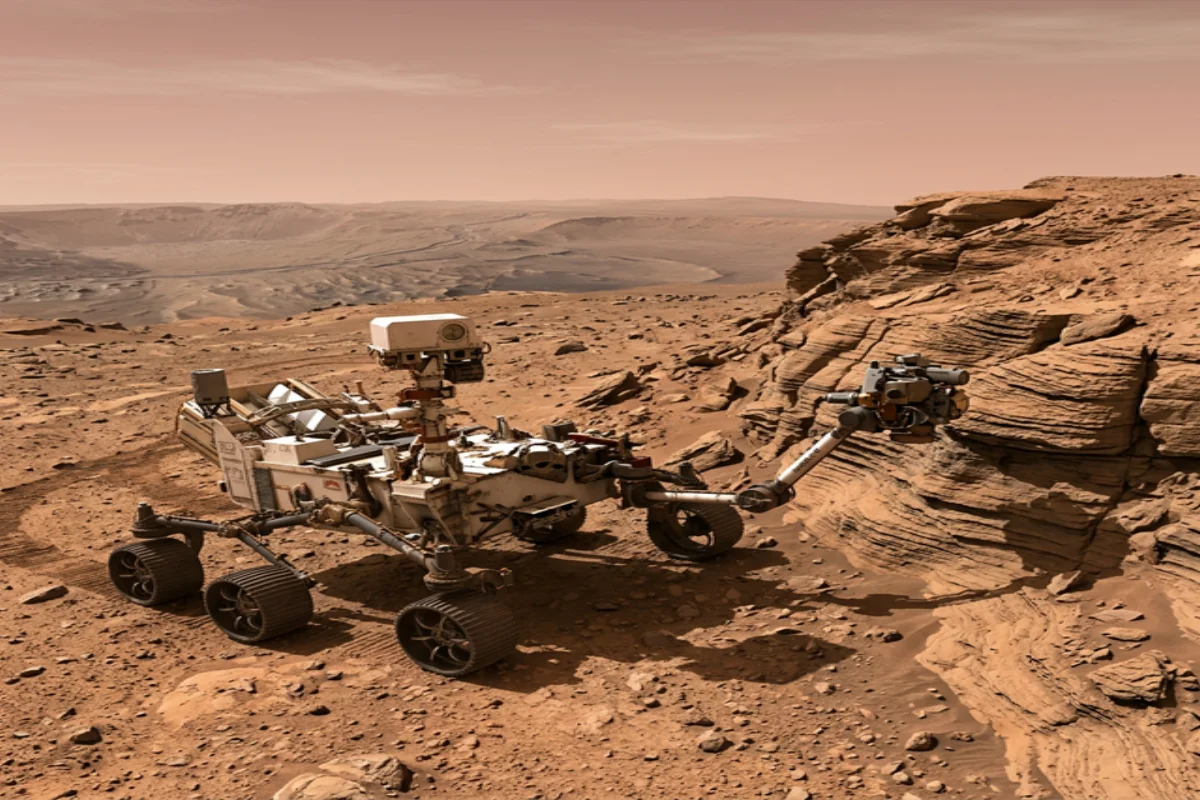
The Perseverance rover landed in Jezero Crater in February 2021 precisely because scientists had identified, via satellite, a preserved ancient river delta — indicating that the crater was once a lake. Perseverance's results have exceeded all expectations:
- Igneous and sedimentary rocks: Confirmed that the crater alternated between periods of volcanic activity and periods as a lake with both standing and flowing water
- Carbonate and sulfate minerals: These only form in the presence of persistent liquid water, confirming the lake lasted millions of years
- Organic compounds: The SHERLOC instrument detected aromatic organic molecules in multiple rock samples — not proof of life, but they are the essential "ingredients" for biology
- Collected samples: 43 sealed tubes of rock and soil are deposited on the surface, awaiting the Mars Sample Return mission to be brought back to Earth for definitive laboratory analysis
Water on Mars and the Search for Life
The Conditions for Life
The presence of liquid water, organic compounds, and energy sources (geothermal, chemical) means that all the basic conditions for life as we know it may exist on Mars. The most promising environments for searching for Martian life are:
- Underground aquifers: Protected from ultraviolet and cosmic radiation by overlying rock, with salty liquid water and potentially stable temperatures, these environments are analogous to hydrothermal vents on Earth's ocean floors — where life thrives without sunlight
- Caves and lava tubes: Mars has thousands of satellite-detected lava tubes, some kilometers long. These environments offer radiation protection, more stable temperatures, and possible ice deposits
- Ice-rock interfaces: Where subsurface ice meets volcanic rock, geochemical reactions can provide energy and nutrients for extremophile organisms
- Deliquescent salts: Certain Martian salts (perchlorates) can absorb water from the atmosphere and form small amounts of liquid brine on the surface, creating temporary micro-habitats
The Perchlorate Question
A significant complication is the abundance of perchlorates in Martian soil — chemical compounds that are toxic to most terrestrial life at concentrations as low as parts per million. The Phoenix Lander detected perchlorates at concentrations of 0.4-0.6% in Martian soil — hundreds of times above the safe limit for humans. However, on Earth, there are microorganisms that not only tolerate perchlorates but actively use them as an energy source in a process called perchlorate-reducing respiration. Bacteria such as Dechloromonas aromatica can convert perchlorates into chloride and oxygen, effectively "breathing" these toxic compounds. If life arose on Mars when conditions were more favorable — during the warm, wet Noachian period — extremophile organisms could have progressively adapted to the increasingly hostile conditions over hundreds of millions of years, just as terrestrial life has adapted to extreme environments such as hydrothermal vents, acid lakes, deep mines, and even the interior of nuclear reactors.
Implications for Human Colonization
Water: The Most Precious Resource
For any plan for human colonization of Mars, access to water is absolutely fundamental. Water is not just for drinking — it is the foundation of all off-Earth survival infrastructure:
- Drinking water: Essential for human survival, a person needs at least 2 liters per day
- Oxygen production: Electrolysis of water separates H₂O into hydrogen and oxygen, providing breathable air
- Rocket fuel: Liquid hydrogen and oxygen are rocket propellants — in-situ fuel production (ISRU) is central to NASA's and SpaceX's plans for Mars return missions
- Agriculture: Hydroponic cultivation in pressurized habitats requires large volumes of water
- Radiation protection: Water tanks around habitats can function as shields against cosmic radiation
Where to Land?
The discovery of deep aquifers and accessible ice deposits is redefining landing site selection for future crewed missions. The most promising locations include:
- Arcadia Planitia: Large subsurface ice deposits just tens of meters from the surface, at a latitude low enough to receive adequate solar energy throughout the Martian year
- Amazonis Planitia: Flat terrain ideal for safe landing, with subsurface ice detected by radar at depths accessible with conventional drilling technology
- Hellas Planitia: Mars's deepest impact basin, where atmospheric pressure is the highest on the planet — almost sufficient to temporarily permit liquid water on the surface during the Martian summer
- Utopia Planitia: Where the Viking 2 lander touched down in 1976 and where radar data revealed a massive subsurface ice layer, with an estimated thickness of 80-170 meters, covering an area larger than the entire state of California
The Colonization Timeline
Space agencies and private companies are adjusting their colonization plans based on water discoveries:
- 2030s (NASA Artemis Mars): First crewed orbital missions and short-duration landings, with demonstration of ISRU technology (water extraction and in-situ oxygen production)
- 2030s (SpaceX Starship): Elon Musk plans to send the first cargo Starships to Mars to pre-position supplies and water extraction equipment before human arrival
- 2040s-2050s: Establishment of permanent bases at locations with confirmed access to subsurface ice, with self-sufficient production of water, oxygen, and fuel
The Future: Missions and Discoveries in Progress
Mars Sample Return
The most ambitious mission in the history of space exploration is in advanced planning: bringing the samples collected by Perseverance back to Earth. With all 43 sealed tubes already on the Martian surface, NASA and ESA are working on the lander and Mars Ascent Vehicle (MAV) that will collect the tubes and send them to an orbiting satellite for return to Earth. The estimated mission cost is $7-11 billion, making it the most expensive robotic mission ever conceived. But the reward is incalculable: analysis of these samples in terrestrial laboratories will be thousands of times more sensitive than any instrument we could send to Mars — techniques such as ultra-high-resolution mass spectrometry, transmission electron microscopy, and isotopic analysis will be able to detect biosignatures at the molecular scale. The mission may finally answer the definitive question that has consumed generations of scientists: was there life on Mars?
ExoMars Rosalind Franklin
ESA's ExoMars rover, successfully launched in 2025 and named in honor of the British crystallographer who helped discover the structure of DNA, carries a tool that no other mission possessed: a drill capable of boring 2 meters below the Martian surface. At that depth, the soil is protected from the intense ultraviolet radiation that destroys organic compounds on the surface within hours. In addition to the drill, ExoMars carries the MOMA instrument (Mars Organic Molecule Analyzer), a miniaturized chemical laboratory capable of detecting amino acids, sugars, and other molecules fundamental to life. It is the best chance yet to find preserved biosignatures on Mars.
Perseverance and Ingenuity Continue
In March 2026, Perseverance continues operating in Jezero Crater, now exploring the crater rim — rocks that predate the lake formation and may contain fundamental clues about Mars's oldest conditions, including evidence of volcanic processes that may have heated water and created habitable environments. The Ingenuity helicopter, after completing more than 72 spectacular flights — far beyond the 5 originally planned — continues serving as an indispensable aerial scout, photographing terrains inaccessible to the rover, mapping geological formations of interest, and identifying the safest and most scientifically productive paths for Perseverance to follow. Each flight of Ingenuity demonstrates that aviation on another planet is possible and viable, opening extraordinary possibilities for future exploration missions.
Conclusion: Mars May Not Be as Dead as We Thought
The discovery of liquid water on Mars is not merely a scientific curiosity — it is potentially the greatest revelation in all of human history. If we find evidence of life, even microbial, on another planet in our own solar system, it will mean that life is not an isolated and improbable cosmic accident, but a natural and perhaps inevitable consequence of the right conditions existing for sufficient time. And the philosophical, religious, cultural, and scientific implications of this discovery would be truly revolutionary and permanently transformative for all of human civilization, reshaping everything from theology to biology to our understanding of humanity's place in the cosmos. As NASA astrobiologist Dr. Chris McKay has said: "Finding life on Mars, even if it's just a bacterium, would be the most important scientific discovery of all time. It would mean that life arises easily, and that the universe is probably teeming with it."
Each rock sample that Perseverance collects with millimetric precision, each meter of subsurface that ExoMars patiently drills, and each radar signal that penetrates the Martian subsurface brings us inexorably closer to the answer to one of the most profound and transformative questions humanity has ever asked: are we alone in the universe?
The water on Mars — abundant, persistent, and potentially habitable — strongly suggests that perhaps we are not alone in the cosmos. And that profound possibility is at once deeply humbling and endlessly inspiring for all of humanity.
Sources and References
- NASA — Mars Exploration Program — Active missions on Mars
- ESA — Mars Express — MARSIS radar and discoveries
- JPL — Perseverance Rover — Jezero Crater results
- Nature — Subsurface water on Mars — Original deep aquifer study
- USGS — Mars Water Evidence — Water evidence review
- Science — Mars InSight results — InSight seismic data


