Venom is one of nature's most efficient weapons. Developed over millions of years of evolution, it serves both for hunting and defense. Some animals carry toxins so potent that a single dose can kill dozens of adult humans.
Curiously, the most venomous animal in the world isn't a snake — it's a jellyfish. And there's a seemingly harmless snail capable of killing 20 people with its venom.
1. Box Jellyfish (Sea Wasp)
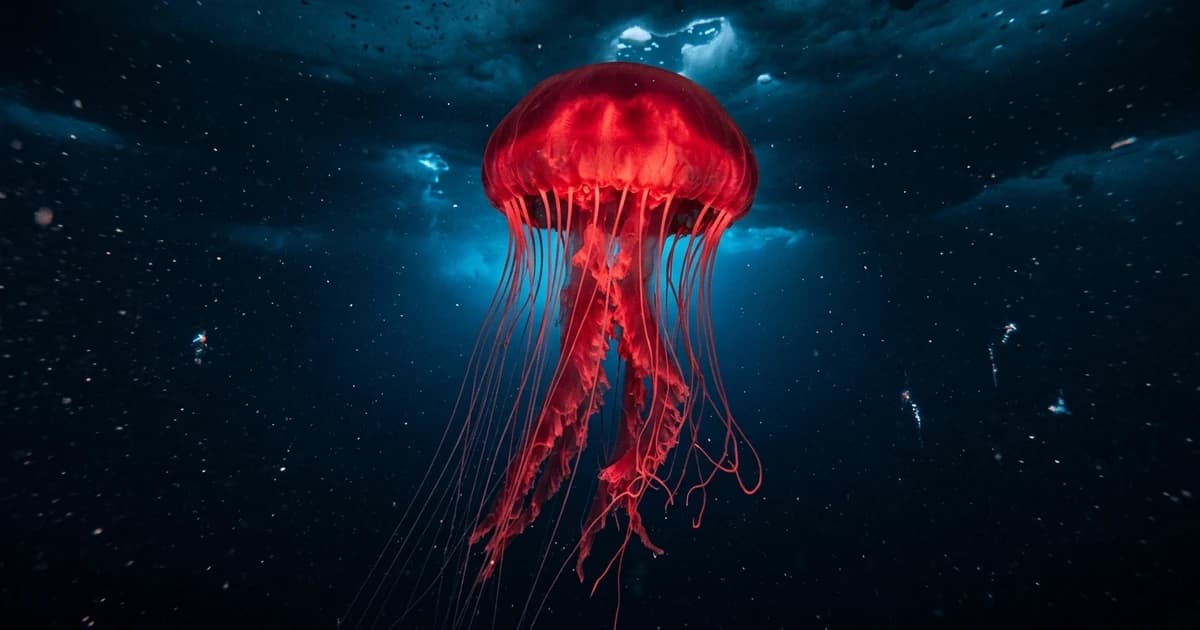
The box jellyfish (Chironex fleckeri) lives in the coastal waters of Australia and Southeast Asia. It is considered the most venomous animal on the planet. Its venom simultaneously attacks the heart, nervous system, and skin cells.
The pain is so intense that victims frequently go into shock and drown before the venom kills them. Its tentacles can reach 3 meters and contain millions of stinging cells. A single jellyfish carries enough venom to kill 60 adult humans, and death can occur in 2 to 5 minutes.
Emergency treatment includes applying vinegar to deactivate stinging cells that haven't yet fired. Antivenom exists but needs to be administered quickly.
2. Blue-Ringed Octopus
At only 12 to 20 centimeters, the blue-ringed octopus (Hapalochlaena) carries enough tetrodotoxin to kill 26 adult humans in minutes. There is no antivenom. Tetrodotoxin is 1,200 times more toxic than cyanide.
The venom causes progressive muscle paralysis, including the respiratory muscles. The victim remains conscious while losing the ability to breathe. The only treatment is artificial respiratory support until the venom is metabolized, which can take 24 hours.
When threatened, its blue rings glow intensely as a warning. It lives in the Pacific Ocean, from Australia to Japan.
3. Inland Taipan
The most venomous snake in the world lives in the interior of Australia. The inland taipan (Oxyuranus microlepidotus) possesses enough venom in a single bite to kill 100 adult humans or 250,000 mice. Its venom is 50 times more potent than that of the king cobra.
Despite its lethal potency, it is extremely shy and rarely encountered by humans. It lives in remote, desert regions. There are no confirmed human deaths from this species, thanks to its evasive behavior and the availability of antivenom.
4. Cone Snail
The cone snail (Conus geographus) possesses a venomous harpoon that fires like a hypodermic needle. Its venom, called conotoxin, is a cocktail of hundreds of peptides that attack the nervous system in different ways simultaneously.
A single sting can kill up to 20 humans. There is no antivenom. Divers are the most common victims, picking up the snail thinking it's harmless. It lives in the tropical waters of the Indo-Pacific.
Ironically, components of the venom are being studied for the development of painkillers more potent than morphine and without the risk of addiction.
5. Golden Poison Frog
The golden poison frog (Phyllobates terribilis) is the most venomous vertebrate in the world. It lives in the tropical forests of Colombia and carries enough batrachotoxin to kill 10 to 20 adult humans. Simply touching its skin is enough to absorb the toxin.
The indigenous Emberá people of Colombia have used the venom on blowgun darts for centuries. The toxin is so potent that a poisoned dart remains lethal for up to 2 years. The frog obtains its venom from the insects it eats — frogs raised in captivity on a different diet are not venomous.
6. Stonefish
The most venomous fish in the world (Synanceia verrucosa) is also one of the best camouflaged. It looks like a rock covered in algae on the ocean floor. Its 13 dorsal spines inject venom when stepped on.
The pain is described as the worst a human being can experience. Victims report wanting to amputate the affected limb. The venom causes tissue necrosis, paralysis, and can be fatal without treatment. Immersing the limb in hot water (45 degrees Celsius) helps denature the venom's proteins. It lives in the Indo-Pacific.
7. Black Mamba
The fastest snake in the world (up to 20 km/h) and one of the most lethal. The black mamba (Dendroaspis polylepis) lives in sub-Saharan Africa. Its venom is a mixture of neurotoxins and cardiotoxins that can kill a human in 20 minutes without treatment.
Contrary to its name, it isn't black — it's olive-green or brown. The name comes from the interior of its mouth, which is black as ink. A single bite injects up to 400 mg of venom, while the lethal dose for humans is only 15 mg. Before antivenom, the mortality rate was nearly 100%.
8. Brazilian Wandering Spider
Considered the most venomous spider in the world by the Guinness Book, the Brazilian wandering spider (Phoneutria nigriventer) lives in Brazil and South America. Unlike most spiders that flee, it assumes an aggressive posture, raising its front legs.
Its venom causes intense pain, inflammation, cardiac problems, and in men, priapism. Brazilian researchers are studying components of the venom for erectile dysfunction treatments. It is frequently found in banana bunches.
9. Yellow Scorpion
The most dangerous scorpion in Brazil (Tityus serrulatus) is responsible for the majority of serious scorpion accidents in the country. Its venom is particularly dangerous for children and the elderly, potentially causing cardiac arrhythmias, pulmonary edema, and death.
It reproduces through parthenogenesis — females produce offspring without males. This allows populations to grow rapidly in urban environments, where they find shelter in debris, sewers, and crevices.
10. King Cobra
The largest venomous snake in the world (up to 5.5 meters), the king cobra (Ophiophagus hannah) lives in Southeast Asia and India. A single bite injects up to 7 ml of venom — enough to kill an Asian elephant or 20 humans.
Despite its size and potency, it is relatively shy and prefers to flee. Its scientific name means "snake eater" — it feeds primarily on other serpents, including venomous snakes.
11. Pufferfish (Fugu)
The pufferfish contains tetrodotoxin in its internal organs — the same venom as the blue-ringed octopus. A single pufferfish carries enough venom to kill 30 humans, and there is no antivenom.
In Japan, the pufferfish (fugu) is considered a delicacy. Chefs need a special license and years of training to prepare it, carefully removing the toxic organs. Even so, deaths from fugu occur occasionally.
12. Black Widow
The black widow's venom (Latrodectus mactans) is 15 times more potent than that of a rattlesnake. It causes intense muscle pain, abdominal cramps, nausea, and rarely death (less than 1% of cases with treatment). Found in the Americas, Europe, Asia, and Australia.
The name comes from the female's habit of occasionally eating the male after mating — although this is less common than popularly believed.
13. Irukandji (Mini Jellyfish)
At only 1 cubic centimeter, the Irukandji (Carukia barnesi) is nearly invisible in the water. It lives in Australian waters. Its sting causes Irukandji syndrome: excruciating pain, nausea, vomiting, a sense of impending doom, severe hypertension, and in serious cases, cerebral hemorrhage and death.
The most disturbing aspect is that the initial sting is nearly painless — symptoms appear 30 minutes later, when the victim has already left the water.
14. Komodo Dragon
The largest lizard in the world (up to 3 meters), the Komodo dragon (Varanus komodoensis) lives on the islands of Indonesia. It possesses venom glands in its lower jaw that secrete anticoagulant toxins. A bite causes blood pressure drops, massive hemorrhaging, and shock.
Beyond the venom, its mouth harbors dozens of pathogenic bacteria. Its hunting strategy is to bite prey and follow it for days until the venom and infections weaken it.
15. Platypus
Surprisingly, the adorable platypus (Ornithorhynchus anatinus) is one of the few venomous mammals. Males possess spurs on their hind legs that inject extremely painful venom. It lives in eastern Australia.
The venom is not lethal to humans, but the pain is described as incapacitating and can last for weeks. Common painkillers, including morphine, are ineffective against this pain.
Venom vs. Poison: An Important Distinction
An important distinction: poisonous animals are dangerous when touched or ingested (like the golden poison frog). Venomous animals actively inject venom through fangs, stingers, or spines (like snakes and scorpions). In practice, many people use "venomous" for both cases, though the biological distinction matters.
Venom in Medicine
Animal venoms are a source of revolutionary medications. Captopril, used by millions of hypertension patients, was developed from the venom of the Brazilian jararaca snake. Components from snake, spider, scorpion, and cone snail venoms are being studied for painkillers, anticoagulants, and cancer treatments.
Ziconotide, derived from cone snail venom, is a painkiller 1,000 times more potent than morphine, used in patients with severe chronic pain.
Venomics: Venoms That Save Lives
Paradoxically, the world's most lethal venoms are among the most promising sources of new medications. The field of venomics studies the molecular composition of venoms to develop treatments:
Captopril (from the Brazilian jararaca): One of the most widely used antihypertensives in the world, derived from peptides in the venom of Bothrops jararaca. Discovered by Brazilian scientist Sérgio Henrique Ferreira, it saves millions of lives per year.
Exenatide (from the Gila monster): A type 2 diabetes medication derived from a protein in the venomous lizard's saliva. Annual sales exceed US$1 billion.
Ziconotide (from the cone snail): A painkiller 1,000 times more potent than morphine, without causing addiction. Derived from the ω-MVIIA conotoxin of Conus magus.
Ongoing research: Scorpion venom is being tested against glioblastoma (aggressive brain cancer). Sea snake toxins show potential against HIV. Brazilian wandering spider venom contains a molecule (PnTx2-6) that may treat erectile dysfunction.
The Butantan Institute (São Paulo) is one of the world's largest venom research centers, maintaining serpentariums with more than 60,000 snakes and producing 80% of Brazil's antivenoms.
Synthetic Venoms: The Future of Pharmacology
Laboratory production of venoms is revolutionizing medicine. Researchers can now synthesize specific toxins instead of extracting them from live animals — using recombinant peptides and synthetic biology. This is crucial because capturing venomous animals for extraction endangers species and produces limited quantities. With synthesis, a single promising molecule can be produced on an industrial scale.
Botulinum toxin (Botox) is the most profitable venom in the world: used in therapeutic doses, it generates US$6 billion annually in cosmetic and medical treatments (chronic migraines, muscle spasms, overactive bladder). It is the most toxic substance known — one gram could kill 1 million people — transformed into a medical tool through precise dosing.
Venom is one of the greatest proofs of evolution's creativity. Each toxin is a biochemical masterpiece, refined over millions of years.
Read also:
Frequently Asked Questions
What is the most venomous animal in Brazil?
The Brazilian wandering spider (Phoneutria) is considered the most venomous, but the yellow scorpion (Tityus serrulatus) causes more deaths because it's more common in urban areas. Among snakes, the jararaca is responsible for the majority of snakebite accidents in the country.
Why does Australia have so many venomous animals?
Australia's geographic isolation for millions of years allowed species to evolve in unique niches. Intense competition and hostile environments favored the development of potent venoms as a survival strategy.
What should you do if bitten by a venomous animal?
Stay calm, immobilize the affected limb, don't apply a tourniquet, and don't try to suck out the venom. Seek immediate medical attention and, if possible, identify or photograph the animal to help choose the correct antivenom.
Are venomous animals immune to their own venom?
In most cases, yes. Venomous snakes have proteins in their blood that neutralize their own venom. However, accidents happen — snakes can envenomate themselves by biting their own tongue or during fights with other snakes.