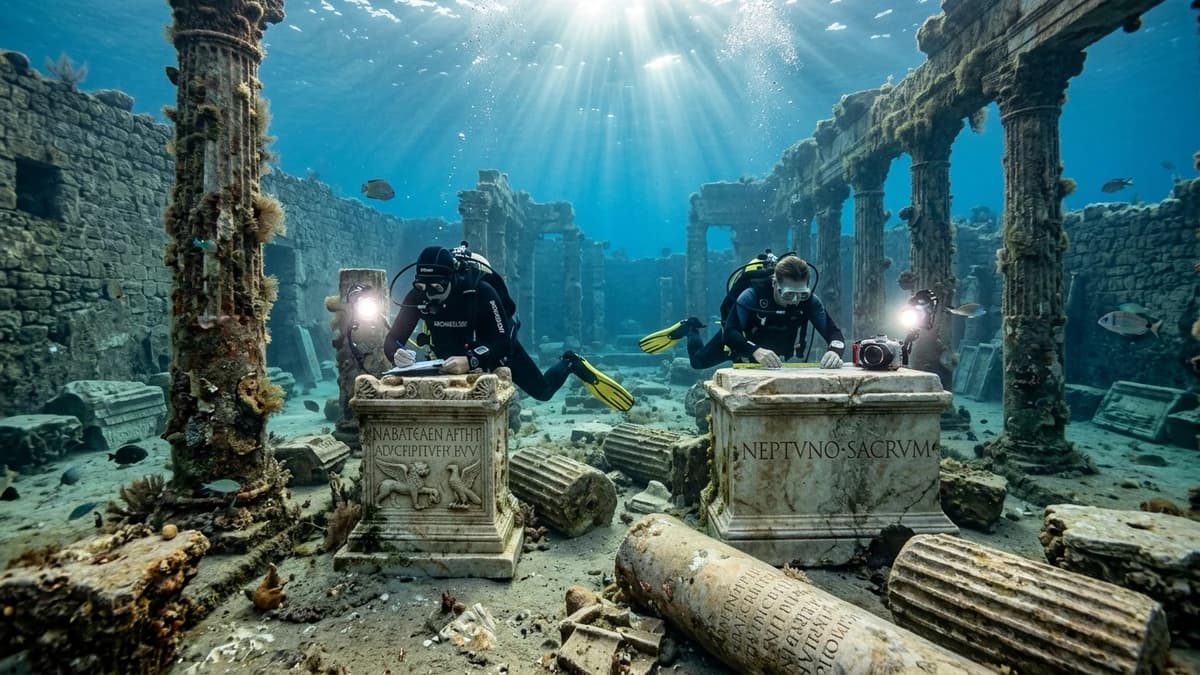
The volcanic dynamics that shaped Pozzuoli's archaeology remains one of the most fascinating study subjects in contemporary earth sciences. Comprehending tectonic forces that entombed ancient monuments helps calibrate volcanic hazard forecasting models for modern populations residing across the Gulf of Naples. This connection between natural phenomena and historical preservation directly echoes major archaeological breakthroughs such as the 1200-year-old dog mummy discovered in Peru and other ancestral sites.
The Nabataeans attained colossal wealth by commanding key watering stations and secret desert oases across the arid Negev and Arabian Peninsula. Their trade caravans hauled aromatic frankincense from Oman, medicinal myrrh from Yemen, and refined Asian spices to coastal embarkation ports like Gaza and Alexandria.
To market their luxury goods directly to aristocratic families and civic temples throughout the Roman capital, merchants established permanent maritime shipping associations based in Puteoli. Maintaining an official religious sanctuary in Italy was not merely a spiritual devotion, but a crucial element for validating mercantile treaties and confirming contracts under sacred oath.
Researchers highlighted in Archaeology magazine emphasize that the Nabataeans maintained distinguished diplomatic privileges in the peninsula. Their mercantile riches helped sustain the steady supply of luxury commodities that patrician nobility demanded for lavish banquets and solemn funerary rituals. Discovering the submerged temple illuminates the physical reality of a network previously known almost exclusively from ancient manuscripts.
Reading epigraphic inscriptions carved into the flanks of the marble blocks revealed formal dedications rendered by Nabataean consular magistrates to the Roman imperial household. The inscribed texts blend traditional Roman legal formulas with Semitic sacral invocations honoring eastern protective deities.
These bilingual messages testify to the sophisticated level of cultural integration achieved by foreign merchants in the heart of imperial power. While preserving their ancestral religious traditions with uncompromising devotion, traders adopted Latin and Greek to mediate commercial transactions and foster ties with municipal magistrates. This institutional hybridity was the cornerstone ensuring the prosperity of their vast trading diaspora.
Precision in lapidary lettering allowed epigraphers to date the sanctuary's golden age between 1 BC and 50 AD, coinciding with the height of Petra's domestic prosperity. Ceramic fragments and transport amphorae unearthed around the altar plinths confirm the ceremonial consumption of exotic goods during feast celebrations. Each newly cleared stone reveals the complexity of cosmopolitan daily life in one of antiquity's most critical maritime hubs.
Excavating and conserving an ancient historical site beneath turbulent Mediterranean waves demands rigorous methodological protocols. Archaeologists utilize pneumatic sediment dredges powered by compressed air to clear marine silt and shell hash without inducing mechanical wear onto carved stone reliefs.
Furthermore, ultrasonic positioning arrays and underwater cameras equipped with turbid-water correction algorithms generate three-dimensional models that can be examined on dry land without removing stone blocks from the water. This non-destructive methodology preserves the delicate chemical balance of the marble, preventing salt crystallization that would shatter inscriptions upon exposure to atmospheric oxygen.
The Puteoli archaeological park now forms part of a protected underwater cultural marine trail stewarded by Italian authorities, marrying eco-tourism with continuous academic excavation. New visualization technologies enable certified divers and researchers to observe classical history exactly where ancient peoples erected their monumental heritage. Marine conservation cements its role as one of the most vibrant frontiers of world historical stewardship.
Discovering the submerged temple of Pozzuoli bridges a substantial gap in the historiography of classical relations between the Near East and pre-medieval Europe. The finding proves that borders of the classical world were permeable and dynamic, bound together by expansive economic networks that transcended linguistic and religious divisions.
The monuments erected by Nabataean seafarers in the Gulf of Naples stand as silent witnesses to the diplomatic skill of a nation that commanded the sea as effectively as it mastered desert sands. The legendary city of Petra was not an isolated kingdom among barren canyons, but the beating heart of an international commonwealth projecting influence to the gates of Rome.
As archaeologists advance further into mapping submerged sectors of Pozzuoli and neighboring Baiae, additional maritime warehouses and public buildings are expected to emerge. Human history gains richer contours when forgotten ruins return to light to tell the story of those who connected ancient continents. The submerged temple of the Nabataeans stands permanently among the most captivating treasures ever recovered from the seabed.