Most Watched TV Series of All Time: The Definitive Ranking 📺🏆
Television series have become the dominant form of entertainment worldwide. With the streaming explosion, content production has reached unprecedented levels — in 2025 alone, more than 600 original series were launched across major platforms. Global audiences break records every season, and productions that would have been impossible a decade ago now command budgets comparable to Hollywood blockbusters.
In this ranking, we gathered audience data from broadcast TV, cable, and streaming platforms to compile the definitive list. Prepare to agree with some choices and be surprised by others.
How We Measured Audience
In traditional TV, the Nielsen system (US) counts viewers in real time using sample panels. In streaming, the main metric is hours watched in the first weeks — Netflix has published this data weekly since 2021.
The challenge is comparing different eras: MASH* (1983) attracted 105 million viewers for its finale, but there were only 3 channels on American TV. Today, competition is fragmented across hundreds of options. We combined live audience, cumulative viewership, cultural impact, and global reach for this ranking.
Top 20 Most Watched Series
1. Game of Thrones (2011-2019) 🐉
The HBO series based on George R.R. Martin's books redefined what television could be. The finale reached 19.3 million live viewers in the US, but each episode of the final season reached 44+ million including streaming and reruns. The budget grew from $6 million/episode in season 1 to $15 million in season 8.
The cultural impact was immense: it influenced fashion, baby names (Arya and Khaleesi skyrocketed), and generated its own vocabulary. Despite the controversial final season — which spawned a petition with 1.8 million signatures requesting a reshoot — it remains a landmark of television.
2. Breaking Bad (2008-2013) 🧪
Walter White started as a chemistry teacher and ended as one of TV's most iconic villains. AMC grew from 1.4 million in season 1 to 10.3 million for the finale — unprecedented growth, driven by Netflix between seasons. Bryan Cranston won 4 consecutive Emmys for Best Actor. The series accumulated 16 Emmys and is frequently cited as the best drama series ever produced.
3. The Walking Dead (2010-2022) 🧟
AMC's zombie apocalypse dominated TV for over a decade. Peak: 17.3 million for the season 5 premiere. The franchise spawned multiple spin-offs (Fear the Walking Dead, Dead City, Daryl Dixon) and maintained dedicated fans across 11 seasons.
4. Stranger Things (2016-present) 👾
The Netflix series that brought 80s nostalgia to a new generation. Season 4 accumulated 1.35 billion hours in its first four weeks — the most-watched English-language series in Netflix history. Cultural impact beyond numbers: it revived Kate Bush's "Running Up That Hill" (37 years after release), which returned to #1 in 34 countries.
5. Friends (1994-2004) ☕
Decades after ending, Friends remains a global phenomenon. Finale: 52.5 million in the US (4th most-watched ever). In the streaming era, it generates billions of hours annually. Warner paid $425 million to keep it on HBO Max for 5 years — demonstrating the permanent value of catalog content.
6. The Mandalorian (2019-present) 🌟
The first live-action Star Wars series. Baby Yoda (Grogu) became an instant phenomenon — GIFs went viral before the show even had an official name for the character. Consistently the most-watched show on Disney+.
7. Squid Game (2021-present) 🦑
Hwang Dong-hyuk's South Korean series broke every record: 1.65 billion hours in its first 4 weeks. It proved that content does not need to be in English to conquer the world. Season 2 maintained impressive numbers. Estimated total budget: $21.4 million for season 1 — an astronomical return on investment for Netflix.
8. The Office (2005-2013) 📎
The mockumentary comedy accumulated 57 billion minutes watched in 2020 alone in the US. Most-watched series on streaming for consecutive years. Its subtle humor and characters became permanent cultural references. Peacock paid $500 million for streaming rights.
9. Wednesday (2022-present) 🖤
Tim Burton's reimagining of Wednesday Addams accumulated 1.02 billion hours in 4 weeks on Netflix. Jenna Ortega became a global star overnight. Wednesday's dance went viral on TikTok with billions of views.
10. House of the Dragon (2022-present) 🔥
The Game of Thrones spin-off premiered with 10 million — HBO's biggest premiere audience ever. It proved that Westeros still attracts massive audiences, even after the controversial conclusion of the original series.
11. The Last of Us (2023-present) 🍄
HBO's video game adaptation premiered with 4.7 million and grew every episode, reaching 8.2 million for the season 1 finale — 74% growth. Pedro Pascal and Bella Ramsey delivered acclaimed performances. Considered the best video game adaptation ever made, proving that games can be a legitimate source of high-level television narrative.
12. Peaky Blinders (2013-2022) 🎩
The Shelby family saga in post-WWI Birmingham conquered massive global audiences. It started modestly on BBC but exploded after joining Netflix, reaching 6 million+ per episode in the final season. Cillian Murphy gained worldwide recognition and a film is in production.
13. Money Heist / La Casa de Papel (2017-2021) 🎭
Álex Pina's Spanish series became the most-watched non-English production on Netflix before Squid Game. The Professor and his team conquered fans in 190+ countries. The Dalí mask became a protest symbol at demonstrations worldwide.
14. The Crown (2016-2023) 👑
Six seasons covering Elizabeth II's reign. Each new season generated intense debates about historical accuracy — especially the seasons about Princess Diana. Estimated total budget of $260 million, making it one of the most expensive series ever produced.
15. Succession (2018-2023) 💰
The Roy family drama and their media empire was the most critically acclaimed series of its era. Sharp dialogue defined a generation. The finale attracted 2.9 million live on HBO, but cultural impact multiplied that reach exponentially.
16. Narcos (2015-2017) 💊
The story of Pablo Escobar captivated global audiences. The series and its spin-off Narcos: Mexico accumulated billions of hours and popularized the narco-drama genre on a worldwide scale.
17. The Witcher (2019-present) ⚔️
Adaptation of Andrzej Sapkowski's books with Henry Cavill: 76 million households in season 1. It brought Polish fantasy to the global mainstream.
18. Bridgerton (2020-present) 💕
Shonda Rhimes redefined period drama with cast diversity and vibrant tones. Season 2: 251 million hours in 4 weeks.
19. Dark (2017-2020) ⏰
The German sci-fi series proved that complex time-travel narratives can conquer global fans, even demanding the viewer's full attention.
20. Cobra Kai (2018-present) 🥋
The Karate Kid continuation surprised by becoming a Netflix hit, proving that well-executed nostalgia conquers old and new generations alike.
Streaming Trends in 2025-2026
The landscape has changed dramatically. International content has exploded: series in Korean, Spanish, German, and Portuguese conquer global audiences — the language barrier has practically disappeared thanks to quality subtitles and dubbing. Researchers call this the "Netflix effect."
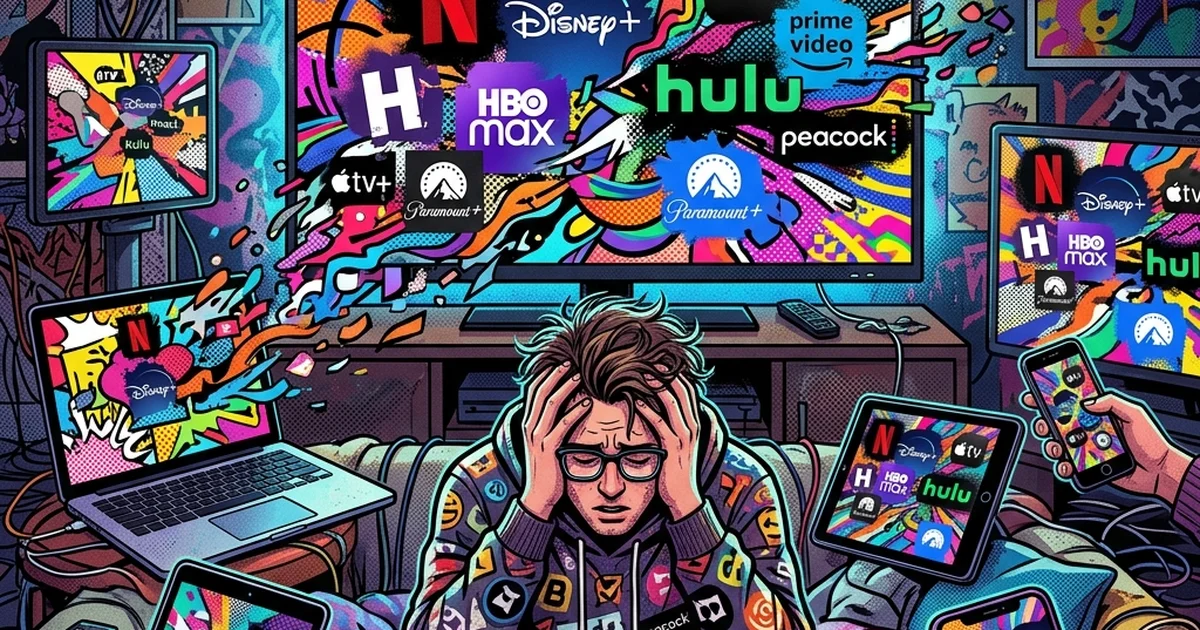
Shorter seasons have become standard: 6-10 episodes instead of 22, prioritizing quality. The streaming war intensifies competition: Netflix, Max, Disney+, Prime Video, and Apple TV+ collectively invest more than $50 billion/year in original content. And the release model has divided opinions: Netflix drops everything at once (binge), while HBO and Disney+ release weekly to maintain online conversations longer.
The Hallyu Phenomenon (Korean Wave)
The rise of Korean series (K-dramas) is one of the most significant cultural transformations of the last decade. Squid Game broke every Netflix record. Hellbound, All of Us Are Dead, and The Glory dominated rankings in dozens of countries.
The Korean secret: massive government investment in cultural industry (KOCCA invests $500 million/year in content), emotionally intense narratives, and cinematic production of the highest quality. The K-content market reached $12.5 billion in 2025 — representing 2% of South Korean GDP.
Netflix, recognizing this trend, invested more than $2.5 billion in Korean content since 2020. The result: of the 10 most-watched series globally on the platform in 2025, 4 were Korean. The lesson for the industry is clear — global audiences want diverse stories, not just Hollywood.
The Economic Impact of Series
The streaming market generates over $100 billion annually in subscription revenue. But the economic impact goes far beyond: series generate tourism (Dubrovnik, Game of Thrones' setting, saw a 300% increase in visitors), merchandise sales (Star Wars generates more in products than box office), and even influence financial markets (Netflix stock fluctuates with releases).
How Series Change Culture
TV series have become the primary vehicle for cultural discussion in the 21st century:
Representation: Series like Pose (trans culture), Master of None (immigration), and Maid (poverty) spotlight realities that cinema rarely explores in depth. The long format of series allows complex character development impossible in 2-hour films.
Mental health: 13 Reasons Why generated global debate about youth suicide. Ted Lasso popularized the idea of mental health in sports. Euphoria opened conversations about substance use among teenagers. Researchers documented the "Ted Lasso effect" — increased therapy searches after the show's premiere.
Politics: The Handmaid's Tale became a symbol of feminist movements. Years and Years anticipated real political crises. Chernobyl reignited debate about nuclear energy.
Frequently Asked Questions
What is the most-watched series of all time?
It depends on the metric: in per-episode audience, Game of Thrones (44M+). In total streaming hours, Squid Game (1.65B hours). In TV finale audience, MAS*H (105M in 1983, but with only 3 competing channels).
Which Netflix series has the most hours watched?
Squid Game (season 1): 1.65 billion hours in 28 days. In English, Stranger Things 4: 1.35 billion.
Can non-English series compete with English productions?
Absolutely. Squid Game (Korean), Money Heist (Spanish), Dark (German), and Lupin (French) proved that quality transcends language.
What is the average budget for a streaming series?
It varies enormously. Smaller series cost $2-5 million per episode. High-profile productions like The Rings of Power (Amazon) cost $58 million per episode in season 1 — the most expensive content in TV history.
Sources: Nielsen, Netflix Engagement Reports, HBO/Warner Bros. Discovery, Variety, The Hollywood Reporter. Ranking updated January 2026.
Read also: