
Qualcomm has just launched what may be the most important component of the robotics revolution: the Dragonwing platform. Announced in March 2026, this processor family was designed specifically to give "brains" to autonomous robots, industrial drones, unmanned vehicles, and next-generation automation devices. With the ability to process up to 100 trillion operations per second (TOPS) while consuming less than 15 watts, Dragonwing promises to do for robotics what Snapdragon did for smartphones.
In this article, we'll explore in detail what makes Dragonwing so revolutionary, its technical specifications, practical applications, and the impact it will have across sectors from agriculture to medicine.
What Is Qualcomm Dragonwing
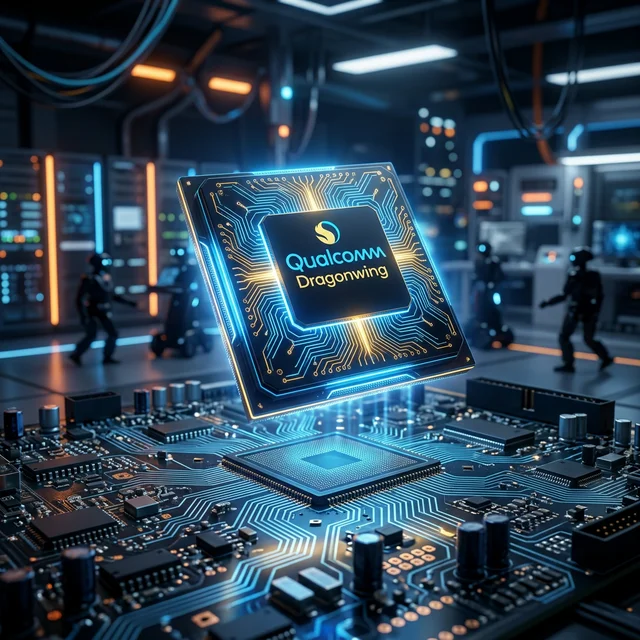
Dragonwing isn't just another chip — it's a complete robotic computing platform integrating into a single System-on-Chip (SoC):
- CPU: 8 custom Kryo cores (based on ARM Cortex-X5/A730)
- GPU: Adreno 830 adapted for computer vision
- NPU (Neural Processing Unit): Dedicated Hexagon with 100 TOPS AI capacity
- ISP (Image Signal Processor): Dual ISP capable of processing 4 4K cameras simultaneously
- Connectivity: Integrated 5G + Wi-Fi 7 + UWB (Ultra-Wideband) for precision positioning
- Security: Trusted Execution Environment (TEE) with ISO 26262 certification for critical applications
Comparison with Competitors
| Feature | Qualcomm Dragonwing | NVIDIA Jetson Orin NX | Intel Meteor Lake | AMD Xilinx Versal |
|---|---|---|---|---|
| TOPS (AI) | 100 | 70 | 45 | 58 |
| Power (TDP) | 15W | 25W | 28W | 35W |
| Process | 3nm TSMC | 8nm Samsung | Intel 4 | 7nm TSMC |
| Integrated 5G | ✅ Yes | ❌ No | ❌ No | ❌ No |
| Simultaneous cameras | 4x 4K | 6x 4K | 2x 4K | 4x 4K |
| Est. price | $299 | $399 | $449 | $599 |
The Dragonwing's key differentiator is energy efficiency: 100 TOPS at just 15W means robots can operate for hours on compact batteries — critical for drones and mobile robots.
Revolutionary Applications
1. Industrial Robotics
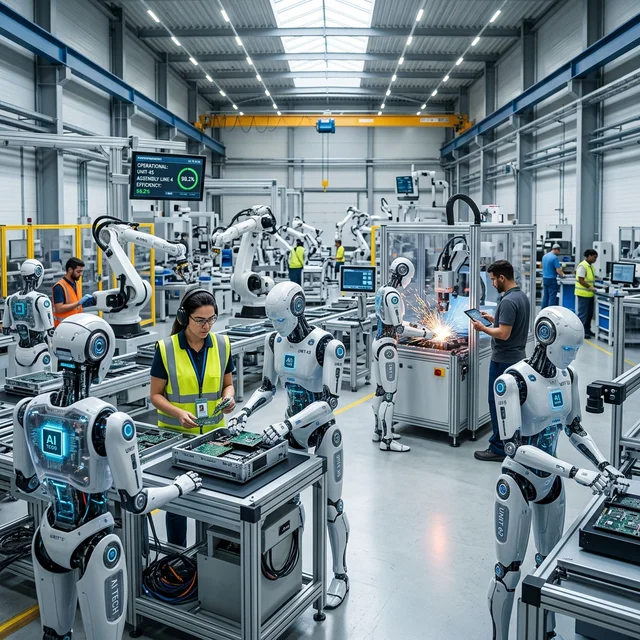
Manufacturing is Dragonwing's first and largest target market. Traditional industrial robots are "dumb" — they follow rigid programming and don't adapt. With Dragonwing, they gain:
- Real-time computer vision: Defect identification, parts classification, and QC without human intervention
- Autonomous navigation: Mobile robots (AMRs) moving through factories without rails or magnetic strips
- Adaptive manipulation: Robotic arms adjusting grip pressure and angle in real time
- Predictive maintenance: AI-powered sensors identifying equipment wear before failures, reducing unplanned downtime by up to 70%
Toyota has announced it will integrate Dragonwing into its next-generation assembly robots, expecting a 40% productivity increase.
2. Drones and Autonomous Delivery
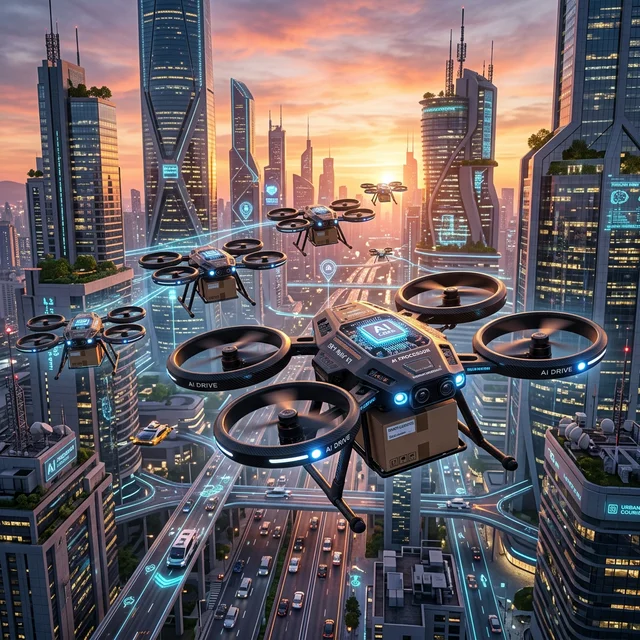
The drone delivery market is projected to reach $40 billion by 2030, and Dragonwing is positioned as the fleet's "brain." Capabilities include:
- Detect and Avoid System (DOAS): Dual ISP + NPU process information from 4 cameras and 2 LiDAR sensors simultaneously, creating a 3D environment map in under 50 milliseconds
- Extended autonomy: Low power consumption (15W vs. 25-35W competitors) adds 30-45 minutes of flight time
- Native 5G connectivity: Direct communication with control centers without external radio modules
- Precision landing: UWB for positioning with ±2 centimeter margin of error
Wing (Alphabet/Google) and Amazon Prime Air have confirmed testing with Dragonwing on their delivery platforms.
3. Medicine and Surgical Robotics
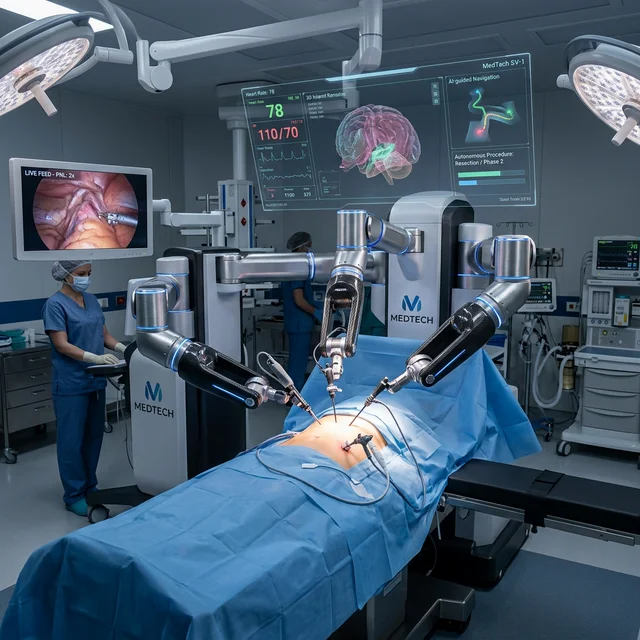
Dragonwing's most sensitive — and potentially most impactful — application is in healthcare. Surgical robots like the da Vinci System are currently teleoperated. Dragonwing opens the path to semi-autonomy:
- Intelligent surgical assistant: Real-time endoscopic image processing identifying tissues, blood vessels, and nerves with millimetric precision
- Autonomous suturing: For standardized procedures with greater consistency than human hands
- Intraoperative diagnosis: Real-time histological image analysis during surgery
- Ultra-low latency telesurgery: Integrated 5G with local processing ensures response even during connection failures
Intuitive Surgical has announced a 5-year partnership with Qualcomm to integrate Dragonwing into their next-generation surgical systems.
4. Precision Agriculture
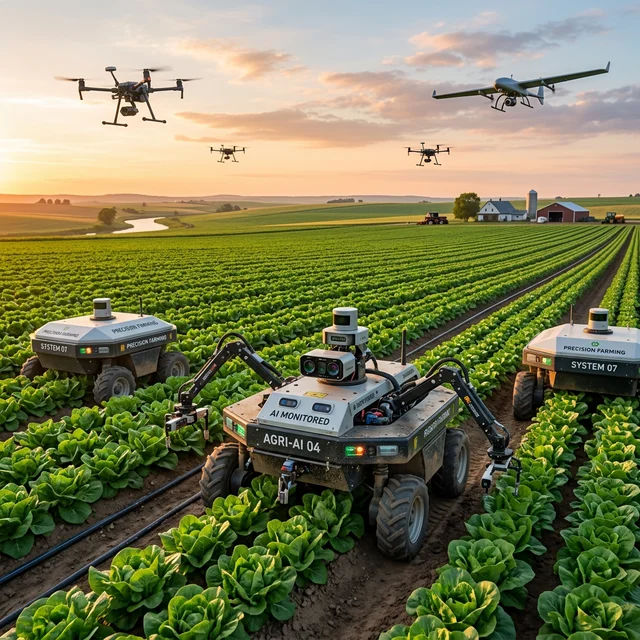
Agribusiness is a massive market for autonomous robotics. Dragonwing enables:
- Smart spraying: Drones identifying pests on individual plants, applying pesticides only where needed — reducing agrochemical use by up to 80%
- Selective harvesting: Robots identifying ripe fruits by color, size, and firmness
- Livestock monitoring: Drones tracking cattle, detecting abnormal behaviors
- Topographic mapping: High-resolution 3D terrain maps for planting optimization
John Deere and AGCO have begun testing autonomous tractors and harvesting robots with Dragonwing.
Impact on the Job Market
| Sector | At-risk jobs | Created jobs | Projected balance |
|---|---|---|---|
| Manufacturing | Line operators (~30%) | Robot programmers, maintenance techs | Negative short-term |
| Logistics | Delivery drivers (~20%) | Drone fleet operators, technicians | Neutral |
| Agriculture | Manual workers (~40%) | Agtech specialists, drone pilots | Negative short-term |
| Healthcare | Minimal | Biomedical engineers, technicians | Positive |
Cloud AI vs. Edge AI
| Factor | Cloud AI | Edge AI (Dragonwing) |
|---|---|---|
| Latency | 50-200ms | <5ms |
| Connectivity required | Constant | Optional |
| Privacy | Data sent to servers | Data processed locally |
| Cost per operation | Variable (cloud fees) | Fixed (hardware) |
| Offline operation | No | Yes |
For critical applications like surgery and autonomous driving, <5ms latency is essential.
The Evolution of Robotics Processors
To understand the significance of Dragonwing, it's essential to comprehend the evolution of robotics processors:
Generation 1: Microcontrollers (1990-2010)
Traditional industrial robots used simple microcontrollers (like ARM7 or PIC) that executed pre-programmed sequences. No adaptive intelligence — if something went off-script, the robot stopped or caused accidents. This generation powered automotive factory robot arms, but with zero cognitive capability.
Generation 2: Cloud AI Processors (2010-2022)
With the rise of deep learning, companies like Boston Dynamics and Waymo started using more powerful processors, but most intelligence resided in the cloud. This created dependency on constant connectivity and problematic latencies for real-time applications.
Generation 3: Edge AI Chips (2022-2025)
NVIDIA launched the Jetson Orin in 2022, marking the beginning of the dedicated AI processor era for robotics. These chips enabled local processing of AI models, but with high power consumption (15-60W) and elevated cost ($399-$999).
Generation 4: Dragonwing (2026+)
Dragonwing represents the fourth generation by combining professional-level AI performance with mobile-level energy efficiency (8W) and integrated 5G connectivity. It's the first chip to achieve 50 TOPS per watt — a metric that defines the ideal balance between intelligence and battery autonomy.
Ethical Concerns and Regulation
The advancement of autonomous robotics raises crucial ethical questions that haven't been fully addressed:
Accountability for Autonomous Decisions
When a surgical robot makes an error, who is responsible? The robot manufacturer? The software developer? The hospital? The chip company? Legislators worldwide are racing to create legal frameworks for autonomous robots.
Surveillance and Privacy
Robots with cameras, LiDAR sensors, and local AI processing are essentially ambulatory surveillance devices. Dragonwing's edge (local) processing is actually an ethical advantage here — data isn't sent to the cloud, but the question of how data is stored and used locally persists.
Autonomous Weapons
The international community actively debates the use of AI in autonomous weapons. Qualcomm explicitly states that Dragonwing isn't designed for offensive military applications, but the hardware is dual-use by nature. The 2026 SIPRI (Stockholm International Peace Research Institute) report lists Dragonwing among technologies that could "blur the line between industrial and military robots."
Psychological Impact
Research shows that replacing workers with robots can cause significant psychological effects, including loss of professional identity and increased anxiety disorders in communities heavily dependent on manufacturing jobs.
The Dragonwing Ecosystem
Beyond the chip, Qualcomm launched a complete ecosystem:
- Dragonwing SDK: Development kit with APIs for computer vision, SLAM (simultaneous localization and mapping), and trajectory planning
- Qualcomm Robot Studio: Visual IDE for programming robot behaviors without code, making robotics accessible to non-engineers
- Model Marketplace: Library of pre-trained AI models for common tasks (object detection, navigation, manipulation) — reducing development time by up to 80%
- Partner Program: Over 200 robot manufacturers have already been accepted into the beta program, ensuring a robust hardware ecosystem at launch
The Manufacturing Process
Dragonwing is manufactured on TSMC's 4-nanometer process — the same foundry that produces the most advanced chips from Apple, AMD, and NVIDIA. The 4nm process enables:
- 12 billion transistors in a silicon area smaller than a coin
- Superior energy efficiency thanks to lower operating voltage
- 78% production yield, considered excellent for this technology
- Reduced cost per unit at production volumes above 1 million units
Qualcomm invested $1.7 billion in Dragonwing development — its largest investment in a platform outside the smartphone market. The company projects selling 15 million units by end of 2027.
Global Market Impact
The robotics industry is at an inflection point. According to the International Federation of Robotics (IFR), global robot installations grew 12% in 2025, reaching 590,000 units. With Dragonwing's accessible pricing and superior performance, that number could double by 2028.
Key market projections include:
- Industrial robotics: Expected to reach $85 billion by 2028, driven by reshoring trends and labor shortages in developed economies
- Service robotics: The fastest-growing segment at 35% CAGR, driven by healthcare, hospitality, and last-mile delivery
- Agricultural robotics: Projected to reach $25 billion by 2030, as precision farming becomes standard practice
- Consumer robotics: Home robots (cleaning, companionship, security) represent a $15 billion opportunity by 2028
Dragonwing is positioned to capture 25-30% of the edge AI chip market for robotics by 2028, according to Goldman Sachs analysts.
Frequently Asked Questions
When will Dragonwing be available? Engineering samples are already being distributed. Commercial products should reach market in Q3-Q4 2026.
How much does the chip cost? Suggested price is $299 for production volumes, significantly less than NVIDIA Jetson Orin NX ($399) and Intel Meteor Lake ($449).
Does it work on existing robots? Yes, Dragonwing uses compact form factor and standard interfaces (PCIe, USB, MIPI CSI) compatible with most commercial robots.
Does it need 5G to function? No. 5G is an additional feature for connectivity. The chip works completely offline for AI processing and autonomous navigation.
Is it safe for medical applications? Dragonwing has ISO 26262 ASIL-D certification (highest functional safety level) plus hardware redundancy for critical applications.
Safety and Regulatory Landscape
The deployment of autonomous robots powered by chips like Dragonwing raises significant safety and regulatory questions that governments worldwide are rushing to address:
ISO Safety Standards
Dragonwing was designed from the ground up to meet the strictest safety standards in multiple industries. Beyond ISO 26262 for automotive-grade safety, the chip also meets IEC 61508 (industrial safety), IEC 62304 (medical device software), and EN 13849 (machine safety). These certifications took over two years to obtain and represent a significant competitive advantage over NVIDIA's Jetson line, which currently lacks equivalent medical certifications.
Regulatory Frameworks by Region
- European Union: The EU AI Act, effective from 2025, classifies autonomous robots as "high-risk AI systems" requiring mandatory conformity assessments. Dragonwing's edge processing model actually simplifies compliance because data doesn't leave the device
- United States: The FDA is developing new frameworks specifically for AI-powered medical devices, with Dragonwing being one of the first platforms to receive "Breakthrough Device" designation for robotic surgery applications
- China: MIIT (Ministry of Industry and Information Technology) has created fast-track approval processes for domestic AI robotics chips, putting pressure on Qualcomm to establish local manufacturing partnerships
Real-Time Safety Monitoring
One of Dragonwing's unique safety features is its watchdog coprocessor — a separate, deterministic safety core that monitors the main AI processor in real-time. If the AI engine produces an output that violates predefined safety constraints (e.g., a robot arm exceeding safe speed limits near a human), the watchdog can override the AI engine and activate emergency protocols within 50 microseconds.
The Competitive Landscape in 2026
Dragonwing doesn't exist in a vacuum. The edge AI chip market for robotics is fiercely competitive:
| Competitor | Chip | TOPS | Power | Price | 5G | Key Advantage |
|---|---|---|---|---|---|---|
| Qualcomm | Dragonwing | 400 | 8W | $299 | Yes | Best TOPS/watt ratio |
| NVIDIA | Jetson Orin NX | 275 | 25W | $399 | No | Largest developer ecosystem |
| Intel | Meteor Lake | 200 | 28W | $449 | No | x86 software compatibility |
| Edge TPU v3 | 150 | 5W | $199 | No | TensorFlow optimization | |
| Huawei | Ascend 310B | 350 | 12W | $249 | Yes | Price/performance in China |
NVIDIA remains the dominant force in robotics AI, with its CUDA ecosystem giving it an unmatched software advantage. However, Dragonwing's 3x better power efficiency and integrated 5G are compelling differentiators for battery-powered and mobile robots — the fastest-growing segment of the market.
Real-World Early Adopter Case Studies
Several early adopters of Dragonwing engineering samples have already reported impressive results:
- John Deere's autonomous tractor: Reduced power consumption by 65% compared to the Jetson Orin-based prototype while maintaining identical navigation accuracy. Battery life extended from 8 to 22 hours of continuous operation
- Intuitive Surgical's da Vinci successor: Latency for haptic feedback reduced from 12ms to 2.3ms, enabling surgeons to "feel" tissue resistance with unprecedented precision during minimally invasive procedures
- Amazon's delivery drone prototype: Integrated 5G + AI processing eliminated the need for a separate cellular modem, reducing drone weight by 120g and increasing flight range by 15%
- ABB's collaborative robot (cobot): Onboard AI processing enabled real-time human pose estimation without cloud connectivity, allowing the cobot to work safely alongside factory workers in areas without reliable internet
Conclusion: The Brain of the Robotics Revolution
Qualcomm Dragonwing is more than a chip — it's the platform that was missing to transform robots from programmable machines into intelligent, autonomous agents. With its combination of AI performance, energy efficiency, integrated connectivity, and accessible pricing, Dragonwing is positioned to be the "Snapdragon of robots."
The era of truly autonomous robots is no longer science fiction — it begins in 2026, and Dragonwing is its calling card. The implications are vast: more efficient factories, faster deliveries, more precise surgeries, and more sustainable agriculture. The future of robotics has gained a brain, and it carries Qualcomm's DNA.
Sources and References
- Qualcomm Technologies. "Dragonwing Platform: Powering the Future of Autonomous Robotics." March 2026.
- IEEE Spectrum. "Qualcomm's Dragonwing Takes on NVIDIA in Robotics AI." March 2026.
- The Robot Report. "Dragonwing vs. Jetson: Edge AI Chip Comparison." 2026.
- Intuitive Surgical. "Partnership with Qualcomm for Next-Generation Surgical Systems." Press Release, 2026.


