2026 Winter Olympics: Milano Cortina — The Definitive Guide 🏔️
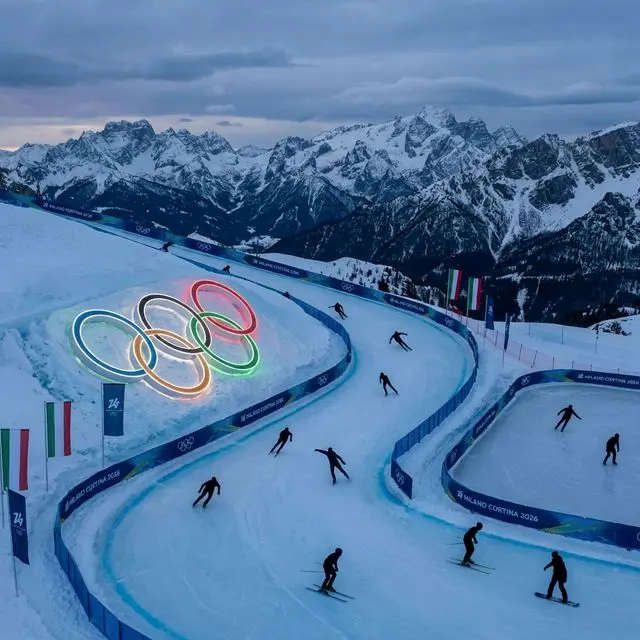
The 2026 Winter Olympics are taking place from February 6 to 22, 2026 in the cities of Milan and Cortina d'Ampezzo, in northern Italy. These are the XXV Olympic Winter Games, and the first time Italy has officially hosted the Winter Games since Turin 2006, 20 years ago.
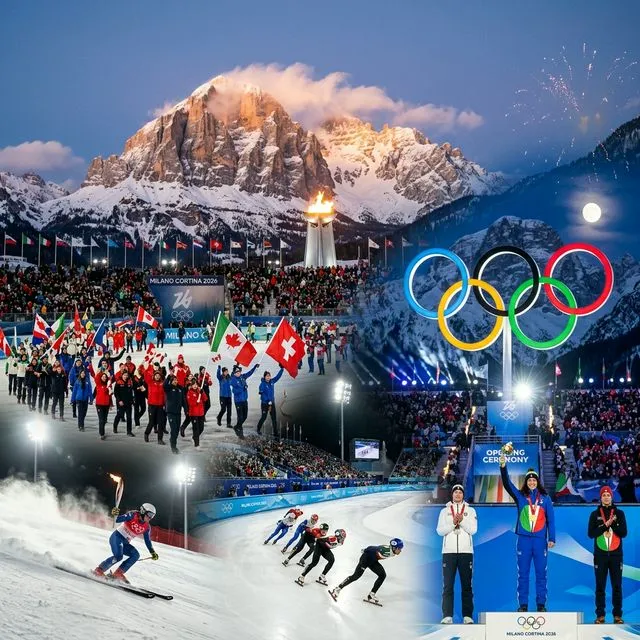
The opening ceremony took place on February 6 at San Siro Stadium, Milan's legendary football stadium, gathering more than 75,000 spectators. The ceremony celebrated Italian culture, fashion, gastronomy and passion for sports, with performances by Italian artists and visual references to the Renaissance, La Dolce Vita and modern design.
📋 General Information
| Detail | Info |
|---|---|
| Official name | XXV Olympic Winter Games |
| Host cities | Milan and Cortina d'Ampezzo, Italy 🇮🇹 |
| Period | February 6 to 22, 2026 |
| Opening ceremony | February 6, San Siro Stadium |
| Closing ceremony | February 22, Italia Arena, Verona |
| Sports | 16 disciplines |
| Medal events | 110+ events |
| Athletes | ~2,900 from 90+ countries |
| Mascots | Tina and Milo (Italian mountain ermines) |
| Paralympics | March 6 to 15, 2026 |
🏟️ Competition Venues
The 2026 Games are distributed across four clusters in northern Italy, each with its specialty:
| Cluster | Location | Disciplines |
|---|---|---|
| Milano | Milan | Ice hockey, figure skating, short track speed skating |
| Cortina d'Ampezzo | Dolomites | Alpine skiing, bobsled, luge, skeleton, curling |
| Valtellina | Livigno/Bormio | Snowboard, cross-country skiing, biathlon, Nordic combined |
| Val di Fiemme | Predazzo | Ski jumping, cross-country skiing, Nordic combined |
The Milano Cortina Arena and PalaItalia Santa Giulia were built specifically for the Games, while historic venues like the Cortina Olympic Track (used in 1956) were renovated.
⛸️ Figure Skating — The Highlights
Figure skating is traditionally one of the most watched disciplines at the Winter Games, and 2026 did not disappoint:
Men's Individual
| Position | Athlete | Country | Highlight |
|---|---|---|---|
| 🥇 | Yuma Kagiyama | 🇯🇵 Japan | Flawless performance — pre-Games favorite |
| 🥈 | Ilia Malinin | 🇺🇸 USA | The "Quad God" — attempted the quadruple axel |
| 🥉 | Shun Sato | 🇯🇵 Japan | Japan dominates the men's podium |
Note: Kazakhstan surprised with Mikhail Shaidorov in a historic performance during the early stages. Update: partial results — competition ongoing.
Women's Individual
- Competition ongoing during the final week of the Games
- Favorites: Kaori Sakamoto 🇯🇵, Isabeau Levito 🇺🇸, Kim Chaeyeon 🇰🇷
Pairs and Ice Dance
- Japan achieved a historic result in pairs, reaching the podium for the first time
- USA secured gold in the team event
- The team competition brought together the best skaters from each country in an exciting format
🎿 Alpine Skiing — The Queen of the Alps
Alpine skiing takes place on the legendary Olympia delle Tofane course in Cortina d'Ampezzo, one of the most iconic in the world, in use since the 1956 Olympics.
Men's Results (Partial)
| Event | Gold 🥇 | Country | Highlight |
|---|---|---|---|
| Giant Slalom | Loïc Meillard | 🇨🇭 Switzerland | Flawless technical performance |
| Super-G | In competition | — | Technical and dangerous course |
| Downhill | In competition | — | The fastest event — 140+ km/h |
| Slalom | In competition | — | Millimetric precision between gates |
| Combined | In competition | — | Speed + technique |
Highlights
- Lindsey Vonn 🇺🇸 came back from retirement at 41 to compete again at the Olympics — an inspiring story of determination
- Austria and Switzerland lead the alpine skiing competition, as is tradition
- Snow conditions in Cortina were considered excellent for competition
🏒 Ice Hockey — The Passion
Ice hockey is the most popular team sport at the Winter Games, and Milan 2026 marks the return of NHL players to the Olympic tournament after their absence in Pyeongchang 2018.
Men's Tournament
| Phase | Status | Highlight |
|---|---|---|
| Group stage | ✅ Completed | 12 teams in 3 groups |
| Quarterfinals | 🔄 Ongoing (Feb 18) | Elimination matchups |
| Semifinals | 📅 February 20 | — |
| Final | 📅 February 22 | — |
Favorites: 🇨🇦 Canada (with NHL stars like Connor McDavid), 🇺🇸 USA, 🇸🇪 Sweden, 🇫🇮 Finland (current Olympic champion)
Women's Tournament
| Phase | Status | Highlight |
|---|---|---|
| Final | 📅 February 19 | 🇺🇸 USA vs 🇨🇦 Canada |
The USA vs Canada rivalry in women's hockey is the greatest in the sport — they are the two absolute powers and have faced each other in Olympic finals since Nagano 1998. The 2022 final in Beijing went to Canada. Now the USA seeks revenge on European soil.
🏂 Snowboard and Snow Sports
Women's Halfpipe
| Position | Athlete | Country | Highlight |
|---|---|---|---|
| 🥇 | In competition | — | — |
| Favorite | Chloe Kim | 🇺🇸 USA | Two-time Olympic champion seeking a third! |
Chloe Kim 🇺🇸, the dominator of women's halfpipe, seeks her third consecutive Olympic gold after PyeongChang 2018 and Beijing 2022. At 25, she is considered the greatest female snowboarder of all time in halfpipe.
Slopestyle
- Competitions delayed due to adverse weather conditions in Livigno
- Slopestyle combines acrobatic jumps with rail slides, requiring creativity and technique
Snowboard Cross
- Direct elimination format — 4 competitors side by side racing down the course
- One of the most unpredictable and exciting events at the Games
🏅 Medal Standings (Partial — February 17)
| Pos | Country | 🥇 | 🥈 | 🥉 | Total |
|---|---|---|---|---|---|
| 1 | 🇳🇴 Norway | 8 | 5 | 4 | 17 |
| 2 | 🇮🇹 Italy | 5 | 4 | 3 | 12 |
| 3 | 🇺🇸 USA | 4 | 5 | 4 | 13 |
| 4 | 🇨🇭 Switzerland | 4 | 3 | 2 | 9 |
| 5 | 🇸🇪 Sweden | 3 | 4 | 2 | 9 |
| 6 | 🇩🇪 Germany | 3 | 3 | 5 | 11 |
| 7 | 🇯🇵 Japan | 3 | 2 | 1 | 6 |
| 8 | 🇦🇹 Austria | 2 | 3 | 3 | 8 |
| 9 | 🇨🇦 Canada | 2 | 2 | 4 | 8 |
| 10 | 🇫🇷 France | 2 | 2 | 2 | 6 |
Standings updated on February 17, 2026
Norway leads as tradition dictates — they are historically the greatest Winter Games power, with more total medals than any other country in history. Italy surprises at home, boosted by the crowd and investment in their sports program.
🌍 Russia and the Geopolitical Question
One of the most discussed topics before and during the 2026 Games was the participation of Russian and Belarusian athletes. Due to the invasion of Ukraine in 2022, the International Olympic Committee (IOC) imposed severe restrictions:
- Russian and Belarusian athletes compete as "Individual Neutral Athletes" (AIN), without flag or national anthem
- Only athletes who did not publicly support the war were authorized to compete
- The number of neutral athletes was significantly reduced compared to previous Russian delegations
- The decision generated intense debate — some countries called for a total ban, while others defended the rights of individual athletes
The absence of a complete Russian delegation changed the dynamics of several disciplines, especially in figure skating and ice hockey, where Russia historically dominates.
🏔️ Sustainability and Innovation
The Milan-Cortina 2026 Games were planned with a strong emphasis on sustainability, a response to growing criticism about the environmental impact of mega sporting events:
- 80% of venues are pre-existing or temporary, drastically reducing permanent infrastructure construction
- Renewable energy: all competition venues are powered by renewable sources
- Green transport: incentives for using trains and electric buses between clusters
- Carbon offset: tree planting program in the Italian Alps
- Artificial snow: due to climate change, some of the snow used in competitions is artificially produced, raising questions about the future of winter sports
The artificial snow issue is particularly relevant. With global warming, ski resorts at lower altitudes face increasingly shorter seasons. Organizers invested in advanced snow production systems, but environmentalists question whether Winter Games will be viable in the coming decades at traditional locations.
�� Coverage and Audience
The 2026 Games broke digital audience records:
- Streaming: for the first time, more people watched via streaming than traditional TV
- Social media: mascots Tina and Milo went viral on TikTok and Instagram
- Augmented reality: viewers could use AR to see real-time statistics during competitions
- 8K: ultra-high definition broadcast available in select markets
The opening ceremony at San Siro was watched by an estimated 1.2 billion people globally, making it one of the most watched in Winter Games history.
📊 Fun Facts About the Games
| Fact | Detail |
|---|---|
| Italy's last alpine skiing gold at home | Deborah Compagnoni, Cortina 1956 (Tofane course!) |
| Largest delegation | 🇺🇸 USA with 220+ athletes |
| Southernmost country | 🇧🇷 Brazil and 🇦🇺 Australia |
| Mascots | Tina (white ermine) and Milo (brown ermine) — chosen by popular vote |
| Investment | €2.7 billion in sports and transport infrastructure |
| Sustainability | 80% of venues are pre-existing or temporary |
| Average temperature | -5°C to 5°C in competition areas |
| Maximum altitude | 2,800m in Livigno (snowboard and cross-country skiing) |
| Volunteers | 18,000+ volunteers from 50+ countries |
🎭 The Opening Ceremony in Detail
The opening ceremony at San Siro Stadium was a spectacular celebration of Italian culture lasting approximately 3 hours. Highlights included:
- Parade of delegations: 90+ countries entering the stadium to classic and contemporary Italian music
- Light show: mapped projections on the stadium creating impressive visual illusions
- Renaissance tribute: an artistic sequence celebrating Leonardo da Vinci, Michelangelo and Italy's contribution to world art
- Italian fashion: models showcasing creations by Armani, Versace and Prada on an ice runway
- Cauldron lighting: the Olympic cauldron was lit by a pair of Italian athletes — a veteran and a young prospect — symbolizing the passing of generations
- Music: performances by Andrea Bocelli, Laura Pausini and Måneskin, who closed the ceremony with a special version of "Zitti e buoni"
The closing ceremony is scheduled for February 22 at the Arena di Verona, the 2,000-year-old Roman amphitheater — a choice that connects the modern Games to Italy's millennial history.
�� The Economic Legacy
The 2026 Games cost approximately €2.7 billion, but the expected economic impact is significantly greater:
- Tourism: 1.5 million visitors expected during the Games
- Infrastructure: new high-speed train lines connecting Milan to Cortina
- Employment: 20,000+ direct and indirect jobs created during the preparation and hosting of the Games
- Brand Italy: reinforcement of Italy's image as a winter sports destination (competing with Switzerland and Austria)
- Sports legacy: the facilities built and renovated will serve as training centers for Italian and European athletes in the coming decades
🔜 Next Games
| Edition | Year | Location |
|---|---|---|
| XXVI Winter Games | 2030 | French Alps 🇫🇷 |
| XXVII Winter Games | 2034 | Salt Lake City, USA 🇺🇸 |
🇧🇷 Brazil at the Winter Olympics: A Growing Presence
Brazil's participation in the Winter Olympics has grown steadily over the decades. While the country is known for its tropical climate and dominance in summer sports, Brazilian athletes have been making their mark on ice and snow since the 1990s.
At Milano Cortina 2026, Brazil sent a delegation of 6 athletes competing in cross-country skiing, bobsled, skeleton and alpine skiing. The Brazilian team trained extensively in European facilities, with some athletes based permanently in countries like Austria and Switzerland to access proper training conditions year-round.
Notable Brazilian Winter Athletes
Nicole Silveira is perhaps the most prominent Brazilian winter athlete, competing in skeleton. She has been a consistent performer on the World Cup circuit and represented Brazil at Beijing 2022, where she finished in the top 20 — a remarkable achievement for a country without a single natural skeleton track.
Edson Bindilatti is a veteran bobsled pilot who has competed in multiple Winter Olympics, carrying the Brazilian flag at previous ceremonies. His dedication to the sport spans over two decades, and he has been instrumental in developing bobsled in Brazil.
The cross-country skiing team includes athletes who discovered the sport through exchange programs and international competitions. Their journey from tropical Brazil to the snowy slopes of the Italian Alps is a testament to the universal appeal of the Olympic movement.
Infrastructure Challenges
Brazil faces unique challenges in developing winter sports:
- No natural snow: athletes must train abroad for most of the year
- Limited funding: winter sports receive a fraction of the budget allocated to summer disciplines
- Cultural barriers: most Brazilians have never seen snow, making recruitment difficult
- Equipment costs: specialized winter sports equipment is expensive and must be imported
Despite these obstacles, the Brazilian Winter Sports Confederation (CBDG) has been working to expand the country's presence. Indoor ice rinks in São Paulo and Rio de Janeiro have helped introduce sports like figure skating and short track speed skating to young Brazilians.
The Dream of a Medal
While a Winter Olympic medal remains a distant dream for Brazil, the country's trajectory is encouraging. Each Games sees more Brazilian athletes qualifying on merit rather than through universality quotas. The goal for 2030 in the French Alps is to have at least 8 athletes competing across 5 disciplines.
The story of Brazilian winter athletes is one of perseverance, creativity and passion — qualities that define the Olympic spirit regardless of the thermometer reading.
🏔️ The Future of Winter Olympics and Climate Change
The 2026 Games in Milano Cortina have brought the conversation about climate change and winter sports to the forefront. As global temperatures rise, the viability of traditional Winter Olympic venues is increasingly questioned.
The Snow Problem
According to a 2023 study published in the journal Current Issues in Tourism, only one of the 21 cities that have hosted Winter Olympics would be able to reliably host them again by 2080 under current warming trends. The study found that:
- Average winter temperatures in traditional host cities have risen by 2.1°C since the first Winter Games in 1924
- Natural snowfall has decreased by 12% on average across Alpine regions in the last 50 years
- The reliance on artificial snow has increased from virtually zero in the 1980s to 80-90% at recent Games
At Milano Cortina 2026, organizers invested heavily in snow-making technology, with over 300 snow cannons deployed across venues. While this ensures competition can proceed, it raises questions about energy consumption and environmental impact.
Adapting to a Warmer World
The IOC has acknowledged the challenge and is taking steps to future-proof the Winter Games:
- Venue selection: prioritizing higher-altitude locations with more reliable snow
- Flexible scheduling: allowing Games to be held earlier in the season when conditions are better
- Technology investment: supporting research into more efficient and environmentally friendly snow-making
- Sustainability requirements: making environmental responsibility a key criterion for host city selection
The 2030 Games in the French Alps and the 2034 Games in Salt Lake City both feature venues at higher altitudes, which should provide more reliable winter conditions. However, the long-term question remains: how long can the Winter Olympics continue in their current form?
A New Era for Winter Sports
Some experts suggest that the Winter Olympics may need to fundamentally evolve:
- Indoor venues: more disciplines could move to controlled indoor environments
- Geographic shift: future Games may need to be held in Scandinavia, Canada or high-altitude Asian locations
- Season adjustment: competitions could shift to January or even December to catch colder temperatures
- New disciplines: sports less dependent on natural snow conditions could be added
Whatever the future holds, the 2026 Games in Milano Cortina serve as both a celebration of winter sports tradition and a reminder that this tradition faces unprecedented challenges. The beauty of the Dolomites covered in snow — whether natural or artificial — remains breathtaking, but the conversation about sustainability will only grow louder in the years ahead.
Frequently Asked Questions
Where are the 2026 Winter Olympics?
In Milan and Cortina d'Ampezzo, in northern Italy. The Games take place from February 6 to 22, 2026.
How many disciplines are there?
16 sports disciplines with more than 110 medal events.
Who leads the medal standings?
As of February 17, Norway leads with the most golds. Italy surprises in 2nd place.
Does Brazil participate in the Winter Olympics?
Yes! Brazil sent a small delegation competing in cross-country skiing, bobsled and skeleton.
When is the next Winter Olympics?
In 2030, in the French Alps.
By Hercules Gobbi — Sports and pop culture.
Last updated: February 17, 2026 (partial results — Games ongoing)
#MilanoCortina2026 #WinterOlympics #IceSkating #Hockey #Snowboard #Skiing #Olympics