
AI Generates Entire Films Without Cameras or Actors: The Revolution That Is Transforming Cinema Forever
Date: March 8, 2026
Reading time: 25 minutes
Emoji: 🎬
Imagine a two-hour film with visual effects worthy of Avatar, emotionally convincing performances, and a spine-tingling soundtrack — all created without a single camera, without any human actor, without a film set, and with a budget 100 times smaller than a Hollywood production. Sound impossible? Well, in March 2026, this is no longer science fiction — it is reality. The explosive convergence of video generation models like OpenAI's Sora 3.0, Runway's Gen-4, and Google's Dream Machine Ultra with AI systems for screenwriting, directing, editing, and musical composition is inaugurating a new era in world cinema. An era where anyone with a creative idea and a computer can produce visual content with quality that, until two years ago, required hundreds of professionals, months of production, and tens of millions of dollars in investment. The implications for the entertainment industry, the job market, artistic identity, and the very definition of human creativity are profound, far-reaching, and will reshape our cultural landscape for generations to come.
The Dizzying Evolution: From Blurred Pixels to Cinematic Photorealism
2023-2024: The First Clumsy Steps
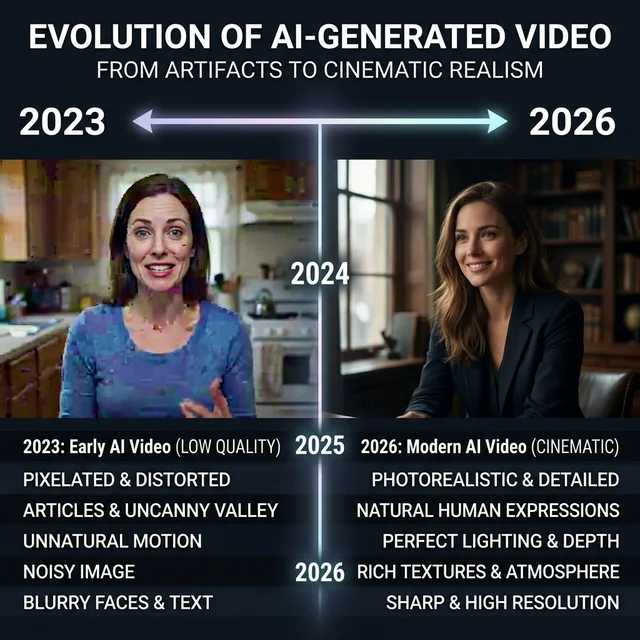
To fully appreciate what is happening in 2026, it is necessary to remember what AI-generated video looked like just three years ago. In mid-2023, when the first models like Runway's Gen-1 and Stable Video Diffusion emerged, the results were impressive as technological demonstrations but completely unusable for any professional purpose: distorted faces that dissolved into amorphous mass between frames, hands with six or seven fingers, movements that alternated between slow motion and impossible speed, and a visual inconsistency that made any video longer than 4 seconds an exercise in unintentional body horror.
The launch of Sora by OpenAI in February 2024 represented the first genuine qualitative leap: for the first time, AI-generated videos featured coherent physics, natural movement in most scenarios, and a resolution approaching acceptable quality. However, the original Sora still produced obvious artifacts — impossible reflections, inconsistent gravity, transitions that seemed to belong to different universes — and was limited to 60-second clips that could not be easily connected in a coherent narrative fashion.
2025-2026: The Quantum Leap in Quality
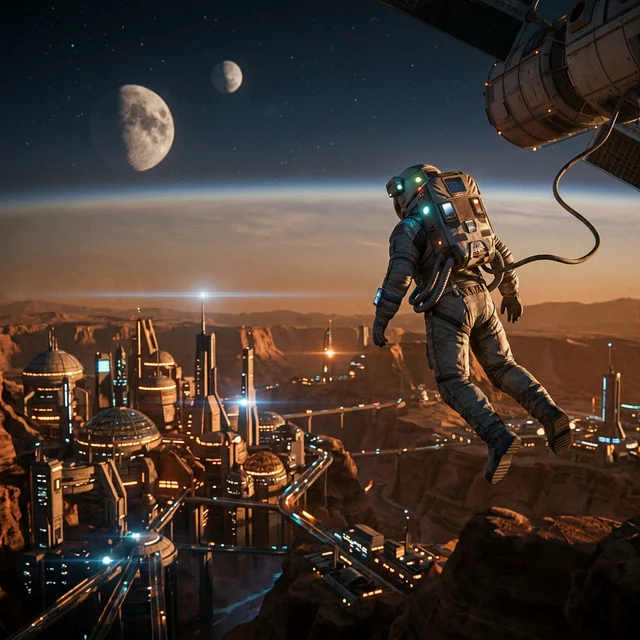
In just two years, the technology evolved in ways that experts describe as exponential. The video generation models of 2026 produce content that challenges the trained human eye's ability to distinguish between real footage and digital generation. The fundamental improvements include:
Perfect temporal consistency: Characters, sets, and lighting remain consistent throughout sequences of several minutes, not seconds. A character who appears at the beginning of the film maintains exactly the same appearance, clothing, and physical mannerisms in all subsequent scenes — something that was absolutely impossible in 2024.
Photorealistic physics: Water that behaves like real water. Hair that moves naturally with the wind. Fabrics that fall and fold with convincing gravity. Reflections that respect the laws of optics. Physical simulation has reached a level where only visual effects specialists can occasionally identify the subtleties that betray the artificial origin.
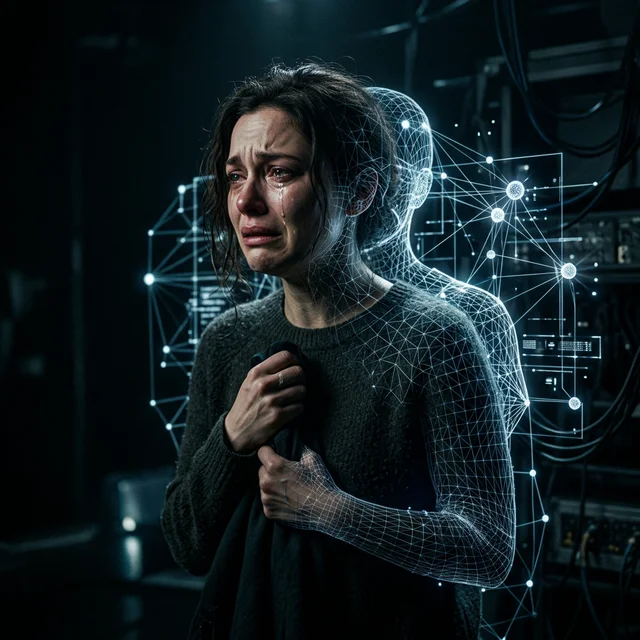
Hyper-realistic facial expressions: The AI-generated faces of 2026 display micro-expressions, emotional subtleties, and acting nuances that would be considered impressive even for experienced human actors. AI's ability to represent complex emotions — irony, ambivalence, vulnerability masked by bravado — has reached a level that is forcing the industry to redefine the very concept of "acting."
Integrated audio and soundtrack: Beyond the image, 2026 models generate dialogue with emotionally expressive synthetic voices, spatialized sound effects, and original soundtracks that dynamically adapt to the narrative rhythm of the scene. The integration between audio and video has eliminated the need for dubbing studios, foley artists, and traditional composers for intermediate-scale productions.
Resolution and format: The 2026 models natively produce content in 4K at 60fps, with 8K options for premium productions. They support all standard cinematic formats, including anamorphic widescreen (2.39:1), IMAX (1.43:1), and the controversial vertical format for mobile consumption. The 10-bit HDR color depth and extended dynamic range ensure that AI-generated content is technically compatible with the largest cinema screens in the world.
The Pioneers: Who Is Leading the Revolution
OpenAI Sora 3.0: The Model That Changed Everything
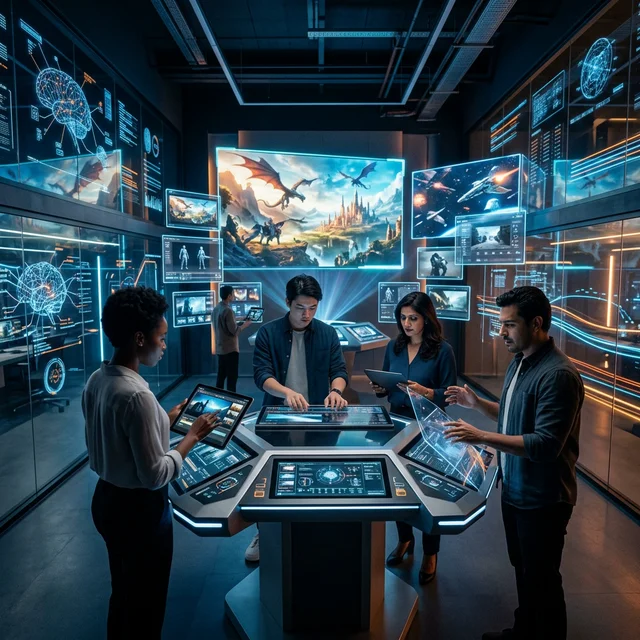
The third iteration of Sora, launched in January 2026, is considered the definitive tipping point for generative cinema. Its capabilities include continuous 4K video generation of up to 20 minutes, precise camera control with natural language (e.g., "slow dolly zoom while the character turns and looks directly at the camera with a revelation expression"), and the revolutionary "Director's Chair" mode that allows users to adjust lighting, composition, color, and atmosphere of already-generated scenes in real-time.
The model also introduced the concept of "character lock" — the ability to define a visual character with extreme specificity and maintain it consistent across hundreds of different scenes, with natural variations in expression, clothing, and aging as needed. This functionality alone eliminated the biggest technical obstacle to producing complete films with AI.
Runway Gen-4: Professional Cinematic Control
Runway, the company that has been consistently at the vanguard of generative video, launched its Gen-4 focused specifically on professional production control. While Sora excels at generation "from scratch using text," Gen-4 offers granular tools for filmmakers who want to use AI as an extension of a specific artistic vision: frame-by-frame composition control, professional-grade integrated color grading, and the ability to "nest" visual references that ensure stylistic coherence throughout an entire feature film.
Google Dream Machine Ultra: The Complete Ecosystem
Google responded with the Dream Machine Ultra — not just a video generation model, but a complete AI filmmaking ecosystem. Natively integrated with Gemini for screenwriting, MusicFX for original soundtrack, and new editing and post-production tools, the Dream Machine Ultra allows a single creator to produce a complete short film — with screenplay, cinematography, acting, editing, and soundtrack — in hours, not months. The ecosystem also includes YouTube integration for immediate distribution and automatic localization tools that translate and dub content into more than 40 languages with lip-sync preservation — a functionality that is revolutionizing the global content market.
The competition between these three giants is accelerating innovation at unprecedented speed. Every month, significant model updates are released, each surpassing the previous in quality, speed, and creative control. Analysts estimate that the AI generative video market will reach $15 billion by 2028, becoming the fastest-growing segment of the entertainment industry.
The First 100% AI Feature Film: "The Infinite Canvas"
The Work That Started the Debate
In February 2026, independent filmmaker Julian Mora from Barcelona released "The Infinite Canvas" — the first 92-minute feature film created entirely by generative AI, without any real footage, human actors, or physical locations. The film, a science fiction drama about artificial consciousness set in 2089, was produced in 6 weeks by a team of just 4 people (Mora as director/screenwriter, a prompt designer, an AI-assisted music composer, and a video editor) with a total budget of $47,000 — approximately 0.02% of the cost of a comparable Hollywood production.
The result divided the film industry like no other event in recent history. Critics at Sundance Film Festival, where the film had its world premiere, described the experience as "disturbingly convincing" — the digital characters' performances were emotionally engaging, the cinematography displayed sophisticated and coherent visual language, and the narrative maintained dramatic tension throughout. The film received a 7.8/10 on Rotten Tomatoes and was acquired by A24 for limited theatrical distribution — the first 100% AI film to achieve traditional theatrical release.
The Industry's Response
Hollywood's reaction was a volatile mixture of existential dread, technological fascination, and economic pragmatism. The major studios quickly divided into two ideological camps: the "integrators," led by figures like Disney CEO Bob Iger, who see AI as a tool to reduce production costs and democratize visual storytelling; and the "preservationists," led by filmmakers like Christopher Nolan and Denis Villeneuve, who argue that cinema without direct human participation is not cinema — it is a sophisticated simulation lacking artistic soul and genuine emotional authenticity.
Meanwhile, the numbers speak for themselves: productions that previously cost $150-200 million can now be achieved with comparable visual results for less than $500,000. Major studios are quietly investing billions in internal generative AI divisions, even while publicly expressing caution — a hypocrisy that unions and artists do not hesitate to point out.
The Human Impact: Jobs, Art, and Identity
The Crisis in the Film Job Market
The global film industry directly employs more than 2.6 million people and indirectly supports another 10 million in adjacent services — from catering on film sets to hotels at production locations. AI generative cinema threatens to disrupt virtually all of these professional categories to some degree:
| Profession | Threat Level | Estimated Impact |
|---|---|---|
| Extras and background actors | Very High | 90%+ replaceable by AI |
| Camera operators | High | 70% of functions automatable |
| Video editors | High | 60% of work automatable |
| Set designers | High | 75% replaceable by generation |
| Makeup artists/Costume designers | Medium-High | 50% of functions threatened |
| Screenwriters | Medium | 30-40% AI-assisted |
| Directors | Low-Medium | Role reformulated, not eliminated |
| Lead actors | Controversial | Depends on regulation |
The historic SAG-AFTRA strike of 2023, which lasted 118 days and paralyzed Hollywood, was precipitated largely by the fear of AI replacement. In March 2026, those fears are no longer hypothetical — they are operational reality forcing unions, studios, and regulators to urgently negotiate new protection structures for creative workers. The situation is particularly acute for below-the-line workers — the camera operators, grips, lighting technicians, set builders, and countless others who constitute the invisible backbone of the film industry. While actors and directors dominate headlines, these workers face the most immediate and existential threat from generative AI, with few of the public advocacy tools available to higher-profile talent.
The Philosophical Debate: What Is Art?
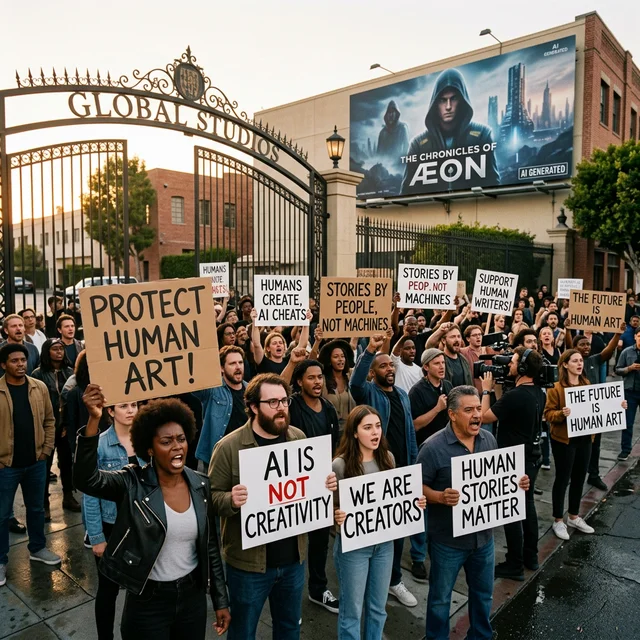
The emergence of generative cinema is forcing humanity to confront fundamental philosophical questions about the nature of creativity and art. If an AI can produce a film that moves, provokes reflection, and generates empathy — functions we historically considered exclusively human — what exactly differentiates "real" art from "artificial" art?
Critics like Martin Scorsese argue that cinema is fundamentally about the human experience told by humans, and that AI, however sophisticated, is merely recombining patterns of human data without genuine understanding. Defenders like Julián Mora respond that the tool does not define the art — that a painter using digital brushes instead of oil paint does not produce "less authentic art," and that AI is simply the most powerful brush ever invented.
Regulation: The World Tries to Keep Up
Governments around the world are racing to create legislation that keeps pace with a technology evolving faster than any legislative process can possibly accommodate. The European Union proposed in February 2026 the "AI Creative Works Act," requiring all AI-generated audiovisual content to be clearly labeled as such and prohibiting the use of real people's image or voice without explicit and compensated consent. China has already implemented comprehensive regulations requiring government registration of any AI-generated film content intended for commercial distribution within its borders.
In the United States, a bipartisan bill called the "CREATIVE Act" (Content Rights for Every American Through Innovation and Voluntary Equity) proposes creating a licensing system for digital actors based on real people, ensuring actors receive perpetual royalties for the use of their digital likeness — living or dead. The bill also addresses the contentious issue of posthumous digital performances, requiring explicit authorization from estates before deceased actors can be digitally recreated for new productions. The bill faces resistance from both studios (who consider the royalties excessive and the estate requirements impractical) and open AI advocates (who fear regulation will stifle innovation and consolidate power in the hands of existing entertainment conglomerates at the expense of independent creators).
The Future: Democratized Cinema or Dehumanized Art?
The Optimistic Vision: A Billion Filmmakers
The democratizing potential is transformative and historically without parallel in any art form. For the first time in the history of human entertainment, telling visual stories at cinematic scale is no longer the exclusive privilege of those with access to millions of dollars and deep industry connections. A creative teenager in rural India, a retired grandmother in Japan with fascinating stories to share, a Brazilian student with no financial resources whatsoever — anyone with a story to tell and internet access can create a film with visual quality that would rival the biggest productions in Hollywood. This could catalyze an unprecedented explosion of narrative diversity, bringing voices, cultures, and perspectives that the traditional film system has systematically marginalized throughout more than a century of existence.
The Pessimistic Vision: The Content Flood
The dark side of this democratization is the potential flood of generic and derivative content that could make it virtually impossible for any work — human or AI-generated — to stand out in an infinite ocean of video. If anyone can make a film, the rarity and prestige of cinematic art are irreversibly diluted, and platforms like Netflix, YouTube, and Amazon find themselves drowning in content that no recommendation algorithm can adequately curate. There is already an industry term for this phenomenon: "AI slop" — mass-generated content without curation or genuine artistic value that pollutes platforms and makes discovering quality work extremely difficult.
The Likely Truth: Complex Coexistence
The most likely reality is a complex and sometimes uncomfortable coexistence between human cinema and generative cinema, similar to the relationship between analog and digital photography that developed over the past two decades. Big-budget films with renowned actors will continue to exist as premium and culturally significant experiences — just as fine dining restaurants coexist with fast food without either invalidating the other's existence. AI will be widely adopted as a tool for pre-visualization, visual effects, and intermediate content production, while human productions of high artistic value will maintain their space as a distinct category, valued and sought after by audiences seeking authenticity.
Conclusion: The Most Powerful Camera Never Built
Artificial intelligence is not replacing cinema — it is creating an entirely new form of visual expression that will coexist, compete, and eventually merge with traditional cinema in ways we cannot yet fully predict. The tools are here. The technology works. The quality is undeniable. Production costs have plummeted from hundreds of millions to tens of thousands of dollars. And creation speed has compressed from years to weeks. We are witnessing the most significant disruption in visual storytelling since the invention of the motion picture camera itself.
The fundamental question humanity needs to answer in the coming years is not technical — it is philosophical, ethical, and economic: how do we balance the unprecedented democratization of artistic creation with the protection of professionals whose lives and careers are being transformed by this technological revolution? How do we ensure that the authenticity of human expression maintains its value in a world saturated with artificial content? And how do we regulate a technology that evolves faster than any legislation can keep up? The answer will define not just the future of cinema, but the future of the relationship between human creativity and artificial intelligence in all forms of art, entertainment, and visual communication.
Sources and References
- OpenAI — Sora — Video generation model
- Runway — Gen-4 — Generative video tools
- Google DeepMind — Generative AI research
- SAG-AFTRA — Actors' union
- Variety — AI in Film — Film industry coverage
- The Hollywood Reporter — Industry news


