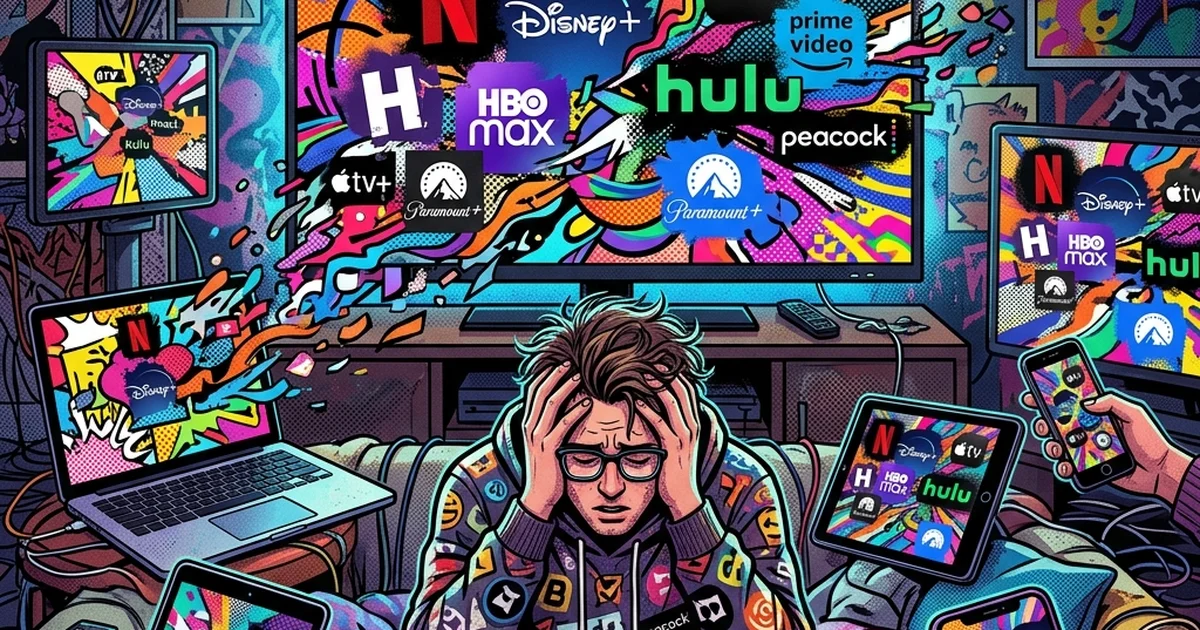
The story begins with Bob Iger, who returned to the CEO role in November 2022 after the turbulent tenure of Bob Chapek. Iger inherited a company bloated by the aggressive expansion of the streaming era. Disney had invested billions in Disney+, launched in 2019, betting that the future of entertainment lay in direct-to-consumer distribution. The platform grew rapidly, reaching over 160 million global subscribers, but at a devastating cost: Disney+ accumulated losses of more than $11 billion before reaching marginal profitability.
The fundamental problem is structural. Streaming simply does not generate the same revenue as traditional television. A subscriber paying $13.99 per month for Disney+ generates a fraction of the revenue Disney earned through content licensing to TV networks, advertising on linear channels, and cable distribution fees. The math is unforgiving: even with hundreds of millions of subscribers, per-user revenue in streaming is significantly lower than in the traditional model.
At the same time, cinema box office sales — another historic revenue source for Disney — have been declining. Productions that once guaranteed billion-dollar box offices began facing mixed results. The Marvel Cinematic Universe, which between 2018 and 2019 produced the two highest-grossing films in history (Avengers: Infinity War and Avengers: Endgame), saw its more recent productions generate increasingly diminished returns. The so-called "superhero fatigue" went from being an analyst theory to a reality reflected in the numbers.
Competition has also intensified dramatically. Amazon, with its Prime Video and the acquisition of MGM, has become a streaming powerhouse with budgets that rival Disney's. YouTube, which many underestimated as a direct competitor, has consolidated itself as the platform where younger generations spend most of their entertainment time — and its content creators produce material at a fraction of the cost of a Disney production.
In this landscape, Iger conducted the first rounds of cuts between 2023 and 2025, eliminating thousands of positions and reorganizing the company's structure. But in February 2026, Iger passed the baton to Josh D'Amaro, an executive with a very different operational profile. While Iger was known as a dealmaker — the man who bought Pixar, Marvel, Lucasfilm, and 21st Century Fox — D'Amaro is an operator. His experience in theme parks, where every penny of cost is monitored and every square meter needs to generate revenue, shaped a management vision focused on efficiency and return on investment.
The April 2026 cuts are, therefore, the first concrete manifestation of the D'Amaro philosophy applied to the entire company. This is not just about reducing costs — it is about redefining what Disney is and what it wants to be in the coming years. And that redefinition, as the 1,000 laid-off employees can attest, is painful.
Disney's layoffs reverberate far beyond the walls of Burbank. For fans, for the entertainment industry, and for the creative job market, the April 2026 cuts signal profound changes that will affect the type of content we consume, how frequently it is produced, and the quality we can expect.
| Aspect |
Before (Iger Era) |
After (D'Amaro Era) |
Impact |
| Employees |
~220,000 |
~211,000 (estimated) |
-8,000+ since 2022 |
| Marvel Marketing |
Full team |
8% cut |
Fewer campaigns |
| TV Divisions |
ESPN + traditional channels |
Streaming consolidation |
ESPN cuts |
| Strategy |
Aggressive expansion |
Efficiency and profit |
Fewer productions |
For Marvel content consumers, the 8% workforce cut — with emphasis on marketing — means smaller promotional campaigns, fewer publicity events, and a reduced presence on social media and digital platforms. This may seem trivial, but marketing is the engine that transforms a film into a cultural event. When Disney reduced marketing budgets on previous productions, the result was lower-than-expected box office returns — a cycle that now feeds itself.
The reduction in film and TV production teams suggests that Disney will produce less content in the coming years. For Disney+ subscribers, this could mean longer gaps between series and film releases. The "quantity over quality" strategy that marked the early years of Disney+ — with multiple Marvel and Star Wars series launching simultaneously — is being replaced by a more selective approach, where each project must justify its cost before being greenlit.
For the entertainment industry as a whole, Disney's cuts function as a barometer. When the world's largest entertainment company lays off 1,000 people at once, other companies in the sector interpret this as validation for their own restructurings. Smaller studios, independent producers, and entertainment-adjacent tech companies tend to follow suit, creating a cascade effect that could affect tens of thousands of professionals across Hollywood's entire production chain.
The creative job market in Los Angeles, already suffering from the 2023 writers' and actors' strikes, now faces another wave of qualified professionals seeking new positions. Marketing directors, producers, editors, designers, and technology professionals who built their careers at Disney now compete for an ever-shrinking number of positions in a saturated market.
For international audiences, the impact can be felt in specific ways. Disney has significant operations worldwide, including TV channels, streaming platforms, and product licensing. Although the cuts announced in April 2026 are concentrated in the United States, global restructurings frequently result in adjustments to international operations in the following months. Additionally, the reduction in content production directly affects the catalog available on Disney+ in international markets, which already faces criticism for less frequent updates compared to competitors like Netflix and Amazon Prime Video.
ESPN, another affected division, has particular relevance for sports audiences globally. The network, which broadcasts events like the NFL, NBA, and UFC internationally, may see its coverage reduced or its local production teams downsized as a consequence of the global cuts. For those who follow American sports through ESPN, the quality of coverage and depth of analysis may be compromised.
There is also a broader cultural dimension. Disney is not just a company — it is a cultural institution that shaped the childhood of generations. When that institution cuts jobs en masse and reduces its creative output, the impact goes beyond the financial. It means fewer stories being told, fewer creative voices getting opportunities, and less content diversity reaching screens. For a generation that grew up with the MCU, with Star Wars, and with Pixar animations, the message is unsettling: even the enchanted castle needs to cut costs.
If you follow transformations in the entertainment industry, check out our analysis on how streaming changed Hollywood and the impact of new AI technologies on content production.
Josh D'Amaro's memo to employees, obtained by outlets including Business Insider and Outlook Business, set the company's official tone. D'Amaro acknowledged that the decisions were "difficult but necessary" to ensure Disney's long-term sustainability. The CEO emphasized that the company needs to adapt to an entertainment market that has fundamentally changed and that the organizational structure must reflect this new reality.
Internal sources described the atmosphere at Burbank offices as tense in the weeks leading up to the announcement. Marvel employees reported that the marketing consolidation, which began in January, had already created an atmosphere of uncertainty. When the cuts were made official, many said the confirmation was almost a relief after months of speculation — though the relief was short-lived for those who received termination notices.
Wall Street analysts reacted with mixed feelings. Some praised D'Amaro for acting quickly and showing willingness to make unpopular decisions, arguing that Disney needed an operational leader after years of expansion without financial discipline. Others questioned whether cutting 1,000 positions would be enough to solve the company's structural problems, suggesting that additional rounds of layoffs might be necessary in the coming quarters.
TechRepublic highlighted that the cuts in the technology division reflect a broader trend in the industry, where entertainment companies are reassessing their investments in digital infrastructure. Disney invested heavily in technology in recent years — from the streaming platform to artificial intelligence systems for content personalization — but now questions whether all those investments are generating proportional returns.
Laid-off employees who spoke anonymously with the press expressed frustration with the disparity in severance packages. While senior executives received generous packages including months of salary, extended benefits, and professional outplacement assistance, mid-level and junior employees reported significantly less favorable conditions. This disparity, while common in corporate restructurings, fueled resentment among affected professionals.
Unions and professional associations in Hollywood issued statements criticizing the cuts and calling for greater transparency about the criteria used to select laid-off employees. The concern is that the cuts disproportionately affect mid-level professionals — those who perform the day-to-day creative and operational work — while preserving management layers that, according to critics, contributed to the strategic decisions that led the company to its current situation.
Hollywood's creative community, already shaken by the 2023 strikes and mass layoffs at other entertainment companies, received the news with a mixture of resignation and outrage. Writers, directors, and producers who work with Disney expressed concern that the cuts will result in fewer projects being developed, fewer opportunities for emerging talent, and an even greater concentration of power in the hands of a reduced number of executives.
The April 2026 cuts will likely not be the last under Josh D'Amaro's leadership. Industry analysts point out that the announced restructuring is only the first phase of a broader plan to reshape Disney. The expectation is that new rounds of adjustments will occur throughout 2026 and 2027, as D'Amaro evaluates each division's performance and identifies additional areas where efficiency can be improved.
For Marvel, the immediate future involves a significant recalibration. With fewer marketing professionals and a more selective production strategy, the division will need to choose more carefully which projects to develop and how to promote them. Phase 7 of the MCU, which is in planning, may have fewer titles than previous phases, but with marketing budgets more concentrated on projects considered priorities. The bet is that fewer, higher-quality productions will generate better results than the previous model of frequent releases.
ESPN is at the center of a strategic transformation that goes beyond personnel cuts. Disney has been negotiating partnerships and possible external investments for the sports brand, including rumors of a partial public offering or a joint venture with technology companies. The ESPN cuts may be a prelude to a deeper restructuring that redefines the brand's role within the Disney portfolio.
In streaming, Disney+ is expected to continue its transition from a platform focused on subscriber growth to one focused on profitability. This means less original content, higher prices, and a greater emphasis on content that generates measurable engagement. The era of weekly Marvel and Star Wars series releases may give way to a more spaced-out calendar, with larger and more impactful content events.
For employees who remained at the company, the atmosphere is one of cautious uncertainty. The implicit message of the cuts is that no position is guaranteed and that every team needs to demonstrate its value continuously. This pressure can generate both positive results — more focused and efficient teams — and negative ones — loss of talent who decide to seek opportunities at companies with less volatile environments.
The market will be watching Disney's financial results in the coming quarters to assess whether the cuts are producing the desired effects. If the company can demonstrate improved profit margins without compromising content quality, D'Amaro will have validated his approach. If, on the other hand, the cuts result in lower-quality productions and a loss of cultural relevance, pressure on the CEO will mount quickly.
The entertainment industry as a whole watches Disney as an indicator of what lies ahead. If the world's largest entertainment company is cutting jobs and reducing production, what does that mean for smaller studios, independent producers, and freelance professionals who depend on the Disney ecosystem? The answer to that question will define Hollywood's future in the coming years.
The 1,000 cuts announced by Disney in April 2026 are more than a corporate restructuring — they are a signal that the entertainment industry is undergoing a structural transformation that will redefine how stories are told, distributed, and monetized. Josh D'Amaro inherited a company that grew too much, spent too much, and now needs to find a balance between the magic that made Disney a cultural icon and the financial discipline that investors demand. Marvel, which for a decade was Hollywood's money-printing machine, now faces the reality that even superheroes need to justify their cost. For the thousands of professionals affected — the 1,000 in April and the more than 8,000 since 2022 — the message is harsh: in the new Hollywood, efficiency is worth more than legacy. The enchanted castle still stands, but its corridors are emptier than ever.