Dennis Carvalho — the man who directed some of the most iconic telenovelas in Brazilian television history, who voiced heroes for entire generations, who acted alongside the greatest names in national drama, and who brought humor and genius to TV Globo's backstage for over four decades — passed away on Friday, February 28, 2026, at the age of 78, at Hospital Copa Star in Rio de Janeiro. The cause of death was not disclosed at the family's request. This is not just a tribute. This is the complete story of a life intertwined with the very history of Brazilian television.
First Steps: From a Boy in São Paulo to TV Paulista (1947–1964)
Dennis de Carvalho was born on September 27, 1947, in São Paulo, son of Erasmo de Carvalho and Djanira Lucchesi. From an early age, the boy demonstrated an irresistible inclination toward the arts. At eleven years old, he had his first audition at TV Paulista, being selected for the television adaptation of "Oliver Twist" — a remarkable feat for a child with no prior connections to the entertainment world.
That audition would change the course of his life forever. The experience in the studios lit a flame that would never go out. The shy boy from São Paulo had found his place in the world: in front of the cameras.
TV Tupi and Live Theater Productions (1964)
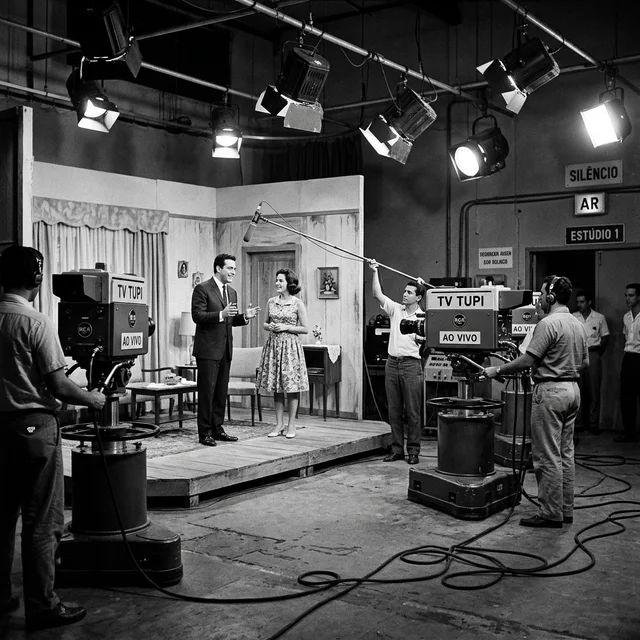
In 1964, as a teenager, Dennis joined TV Tupi, Brazil's first television broadcaster and one of the first in Latin America. At Tupi, he participated in several live drama productions — dramatic performances broadcasted live that were the television equivalent of classical theater. These experiences forged in him a dramatic discipline and versatility that would mark his entire career.
TV Tupi was an unforgiving school: mistakes could not be edited (everything was live), rehearsals were short, and actors needed to memorize extensive scripts with pinpoint accuracy. Dennis didn't just survive — he flourished.
The Voice Actor of Heroes: A Forgotten Facet
Before becoming the celebrated director we know, Dennis Carvalho lent his voice to characters that marked the childhood of millions of Brazilians. His career as a voice actor is often overlooked in tributes, but it was fundamental to his artistic formation.
Iconic Characters Voiced by Dennis Carvalho
| Series/Cartoon | Character | Period |
|---|---|---|
| Jonny Quest | Roger "Race" Bannon | 1960s |
| Rin Tin Tin | Corporal Rusty | 1960s |
| Star Trek | Captain James T. Kirk | 1960s-70s |
| The Time Tunnel | Jerry | 1960s |
Imagine: the voice that guided Captain Kirk through the stars on Brazilian television was the same that, decades later, would shout "action!" on the sets of the country's greatest telenovelas. It's a poetic convergence that few notice.
The voice acting experience taught Dennis something crucial about directing: the power of vocal interpretation, the importance of silences, and how intonation can completely transform a scene. These lessons would be obsessively applied when he began directing actors at Globo's studios.
Arrival at TV Globo: A Milestone in History (1975)
Dennis Carvalho's journey at Rede Globo began in 1975, when he was called to act in the first version of "Roque Santeiro", written by Dias Gomes. However, fate had a setback in store: the telenovela was banned by military censorship before even going on air.
Despite the blow, Dennis stayed at the network and built a dual career — as actor and director — that would last over 40 years. It was at Globo that he would create the entirety of his most significant work, shaping Brazilian television drama with his unique artistic vision.
Locomotivas (1977): The Directorial Debut
The telenovela "Locomotivas" (1977) was the turning point. Dennis was acting in it as the character Netinho, but during the final stretch of the story, he received the opportunity to direct his first scenes. The experience was revelatory: he discovered that his true gift was not only in front of the cameras, but behind them.
From "Sem Lenço, Sem Documento" (1977) onward, Dennis consolidated his transition to directing, beginning a phase that would become legendary. He didn't abandon acting — he continued balancing both roles for years — but the director's chair became his true home.
Acting Career: A Brilliant Trajectory
Dennis Carvalho built a solid acting career in Brazilian television, playing memorable characters that captivated audiences for decades. His screen presence was magnetic — a mix of charm, intensity, and naturalness that few can achieve.
Major Television Roles
| Year | Telenovela/Series | Character | Network |
|---|---|---|---|
| 1958 | Oliver Twist | — | TV Paulista |
| 1970 | O Meu Pé de Laranja Lima | — | TV Globo |
| 1975 | Pecado Capital | — | TV Globo |
| 1976 | O Casarão | — | TV Globo |
| 1977 | Locomotivas | Netinho | TV Globo |
| 1979 | Malu Mulher | Pedro Henrique | TV Globo |
| 1981 | Brilhante | Inácio Newman | TV Globo |
| 1987 | Brega & Chique | Baltazar | TV Globo |
| 1988 | Vale Tudo | William | TV Globo |
| 1995 | História de Amor | Vicente Gomide | TV Globo |
Spotlight: Vale Tudo (1988) — The Actor and the Director
In Vale Tudo, Dennis accomplished a rare feat: he acted as William and co-directed the telenovela simultaneously. The plot, written by Gilberto Braga, Aguinaldo Silva, and Leonor Bassères, is considered one of the greatest telenovelas ever produced in Brazil and broke audience records with the famous mystery "Who killed Odete Roitman?"
The duality of acting and directing in the same production required superhuman concentration. Dennis needed to step away from in front of the cameras, rush to the directing monitor, and coordinate the next scene — all while maintaining the emotional coherence of his own character.
The Golden Era as Director: Over 40 Productions
If Dennis Carvalho's acting career was remarkable, his trajectory as a director was absolutely monumental. He directed over 40 productions including telenovelas, miniseries, and programs, forming a legendary partnership with author Gilberto Braga that produced some of Brazilian TV's most acclaimed works.
Complete Directing Filmography
| Year | Title | Format |
|---|---|---|
| 1977 | Sem Lenço, Sem Documento | Telenovela |
| 1978 | Dancin' Days | Telenovela |
| 1983 | Eu Prometo | Telenovela |
| 1984 | Corpo a Corpo | Telenovela |
| 1986 | Roda de Fogo | Telenovela |
| 1988 | Vale Tudo | Telenovela |
| 1991 | O Dono do Mundo | Telenovela |
| 1992 | Anos Rebeldes | Miniseries |
| 1993 | Fera Ferida | Telenovela |
| 1995 | Explode Coração | Telenovela |
| 2003 | Celebridade | Telenovela |
| 2006 | JK | Miniseries |
| 2007 | Paraíso Tropical | Telenovela |
| 2010 | Dalva e Herivelto | Miniseries |
| 2012 | Lado a Lado | Telenovela |
| 2015 | Babilônia | Telenovela |
| 2018 | Segundo Sol | Telenovela |
Masterpieces: Telenovelas That Changed TV
Vale Tudo (1988) — The Telenovela That Stopped Brazil
Vale Tudo was not just a telenovela — it was a cultural phenomenon that examined Brazilian corruption with unprecedented rawness for television fiction. The final episode, which revealed Odete Roitman's killer, achieved 90% audience share — a record that has never been matched.
Anos Rebeldes (1992) — The Miniseries That Awakened a Nation
Anos Rebeldes told the story of Brazil during the military dictatorship, between 1964 and 1979, through the eyes of young people who fought against repression. The miniseries was broadcast during the impeachment movement against President Fernando Collor — and became fuel for popular demonstrations. Anos Rebeldes proved that television could be more than entertainment — it could be an instrument of social transformation.
Celebridade (2003) — A Look at Fame
Celebridade dissected the universe of fame, media, and appearances in early 2000s Brazil. Dennis directed the telenovela with a sophisticated aesthetic that incorporated cinematic elements, elevating the visual standard of Brazilian television drama.
The Legendary Partnership with Gilberto Braga
One of the most fascinating aspects of Dennis Carvalho's career was his decades-long partnership with author Gilberto Braga (1945–2021). Together, they formed one of the most prolific and acclaimed duos in world television.
Works in Partnership
| Telenovela | Year | Defining Characteristic |
|---|---|---|
| Dancin' Days | 1978 | Revolutionized fashion on TV |
| Vale Tudo | 1988 | "Who killed Odete Roitman?" |
| Anos Rebeldes | 1992 | Military dictatorship with real political impact |
| Celebridade | 2003 | Fame and media |
| Paraíso Tropical | 2007 | Sophisticated thriller |
| Babilônia | 2015 | Diversity and modernity |
The symbiosis between Dennis and Gilberto was unique: the author created complex plots and multifaceted characters, and the director translated them into images with a cinematic sensitivity that elevated each scene above conventional television standards. When Gilberto Braga passed away in October 2021, Dennis lost not only a professional partner but a lifelong friend.
Personal Life: Loves, Children, and Tragedies
Dennis Carvalho's personal life was as intense and complex as his telenovelas. He had six marriages, mostly with actresses he worked with, and faced tragedies that deeply marked his existence.
Marriages
| Period | Wife | Profession |
|---|---|---|
| 1970–1975 | Bete Mendes | Actress and politician |
| 1977–1980 | Christiane Torloni | Actress |
| 1981–1982 | Monique Alves | Actress |
| 1983–1985 | Tássia Camargo | Actress |
| 1985–1987 | Ângela Figueiredo | — |
| 1988–2012 | Deborah Evelyn | Actress |
His longest marriage was to actress Deborah Evelyn, lasting 24 years (1988–2012). Despite their separation, they maintained a friendly relationship, especially for their daughter Luiza.
Children
Dennis leaves four children: Leonardo and Guilherme (twins, with Christiane Torloni — Guilherme died tragically in 1991 at age 12 in a car accident), Tainah (with Monique Alves), and Luiza (with Deborah Evelyn).
The loss of his son Guilherme was the most devastating blow Dennis Carvalho faced in his life, leaving deep scars that friends and colleagues said never fully healed. Dennis also battled substance abuse at one point in his life — a struggle he faced with the same determination he applied to his work, managing to overcome addiction and resume his career with renewed vigor.
Dennis Carvalho by the Numbers
| Category | Data |
|---|---|
| Full name | Dennis de Carvalho |
| Born | September 27, 1947, São Paulo |
| Died | February 28, 2026, Rio de Janeiro |
| Age | 78 years |
| Total career | ~65 years (1958–2022) |
| Years at TV Globo | 43+ (1975–2022) |
| Telenovelas directed | 30+ |
| Miniseries directed | 5+ |
| Marriages | 6 |
| Children | 4 |
| Partnership with Gilberto Braga | 10+ works |
| Record audience | 90% (Vale Tudo, 1988) |
Legacy: What Dennis Carvalho Leaves to Brazilian TV
1. Raised the visual standard of TV
Dennis brought a cinematic language to television that was decades ahead of its time, proving that TV deserved the same aesthetic care as cinema.
2. Demonstrated the political power of fiction
With Anos Rebeldes (1992), Dennis proved that a fictional work can have real impact on society, galvanizing the impeachment movement against President Collor.
3. Trained talents for generations
Dozens of actors, directors, set designers, and TV photographers working in Brazil today passed through Dennis Carvalho's hands. He didn't just direct telenovelas — he formed artists.
4. Proved that directing and acting can coexist
Dennis's ability to act and direct simultaneously opened the way for a new understanding of the artistic director's role in Brazilian TV.
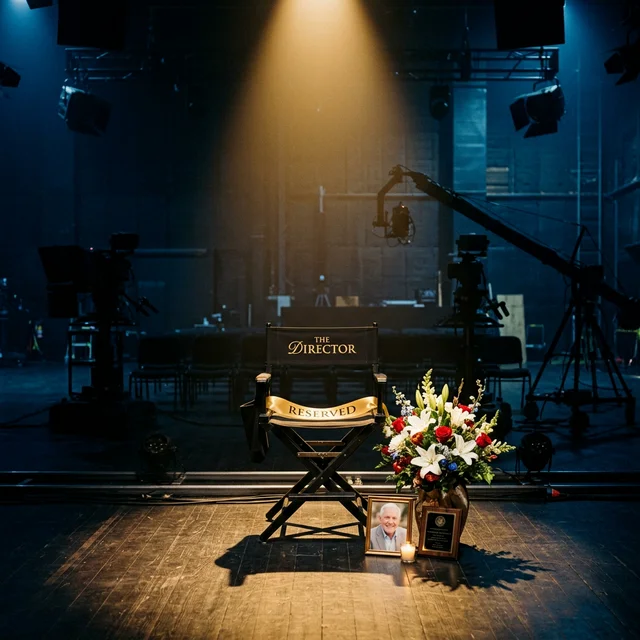
Conclusion: The Empty Chair No One Can Fill
Dennis Carvalho was not just a telenovela director. He was a complete artist — actor, voice actor, director — who lived and breathed television from age eleven until his final days. He gave voice to Captain Kirk, life to William in Vale Tudo, and artistic vision to over 40 productions that shaped the cultural identity of an entire country.
There is an empty director's chair in some television studio that will never be filled the same way. There will be no other Dennis — with his catchphrases, his pranks, his perfectionist demands, and his ability to transform written words into images that made 200 million Brazilians stop to watch.
Brazilian television lost one of its greatest geniuses. But the telenovelas Dennis directed will live on — in reruns, in memories, and in the DNA of every production that came after him and learned from him what it means to make real television.
Rest in peace, Dennis. All of Brazil mourns, and the cameras will never be the same without you.
Read Also
- Robert Carradine: A Hollywood Star's Legacy
- Artists Who Died Young: The 27 Club
- How Hollywood Special Effects Are Made
Frequently Asked Questions
Who was Dennis Carvalho?
Dennis Carvalho (1947–2026) was a Brazilian actor, director, and voice actor considered one of the greatest directors in the history of Brazilian television. He worked at TV Globo for over 40 years, directing iconic telenovelas such as Vale Tudo (1988), Anos Rebeldes (1992), Celebridade (2003), and Paraíso Tropical (2007). He also acted in numerous productions and voiced classic characters like Captain Kirk from Star Trek.
What were the main telenovelas directed by Dennis Carvalho?
Dennis Carvalho directed over 40 works on TV. His greatest successes include Vale Tudo (1988), which reached 90% audience share; Anos Rebeldes (1992), a miniseries that impacted Brazil's impeachment movement; Celebridade (2003); Paraíso Tropical (2007); and Segundo Sol (2018), his last directing work.
How did Dennis Carvalho die?
Dennis Carvalho passed away on February 28, 2026, at the age of 78, at Hospital Copa Star in Rio de Janeiro. The cause of death was not disclosed at the family's request. He had left TV Globo in 2022 after more than 40 years of dedicated service.
How many times was Dennis Carvalho married?
Dennis Carvalho was married six times. His wives included actresses Bete Mendes, Christiane Torloni, Tássia Camargo, and Deborah Evelyn — the latter being his longest marriage, from 1988 to 2012 (24 years). He left four children: Leonardo, Guilherme (who died in 1991), Tainah, and Luiza.
Sources: Wikipedia, CNN Brasil, Metrópoles, UOL, Memória Globo. Updated as of February 28, 2026.