
The International Energy Agency (IEA) announced on March 11, 2026, the largest coordinated release of strategic oil reserves in its history: 400 million barrels will be poured into the global market to try to contain an energy crisis unprecedented since the 1970s. The decision, unanimously approved by the organization's 32 member countries, came in direct response to the virtual blockade of the Strait of Hormuz — the most vital artery of global energy trade — caused by the escalation of the conflict between the United States, Israel, and Iran.
With Brent crude oil surpassing the psychological mark of $100 per barrel and global stock markets in freefall, the measure represents a desperate attempt to prevent the world from plunging into a recession fueled by energy inflation. But will 400 million barrels be enough to save the global economy?
The Strait of Hormuz: The World's Chokepoint
The Strait of Hormuz, located between Iran and Oman, is a maritime passage only 34 kilometers wide at its narrowest point. Despite its modest dimensions, this waterway is responsible for the transit of approximately 20% of all oil consumed worldwide — about 21 million barrels per day under normal conditions.
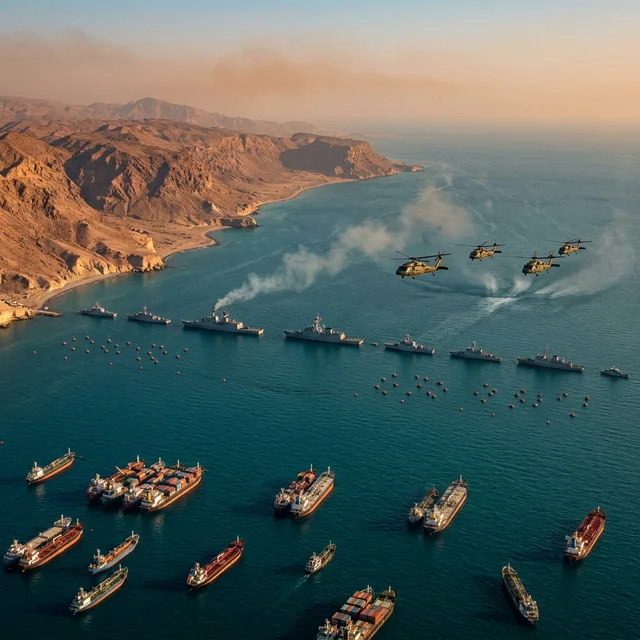
The strategic importance of this strait cannot be overstated. Through it pass the oil exports of giants such as Saudi Arabia, Iraq, Kuwait, the United Arab Emirates, and Qatar. When Iran began using the Strait as a geopolitical weapon in response to Israeli and American airstrikes on its territory, the domino effect was instantaneous and devastating.
How the Blockade Happened
The escalation that led to the virtual blockade of the Strait of Hormuz followed a dramatic sequence of events. After coordinated US and Israeli attacks against Iranian nuclear facilities in early March, Iran's new supreme leader vowed retaliation using the most powerful weapon at Tehran's disposal: control over the Strait of Hormuz.
Commercial ships were struck near the strait, and the Iranian navy was accused of laying naval mines in commercial shipping lanes. In response, the United States destroyed 16 Iranian mine-laying vessels, but the damage was already done. Export volumes of crude oil and refined products passing through the strait fell to less than 10% of pre-conflict levels.
Immediate Price Impact
The disruption in oil flow through the Strait of Hormuz had immediate and brutal consequences on global markets:
| Indicator | Pre-Crisis | Post-Blockade | Change |
|---|---|---|---|
| Brent (barrel) | $72 | $102 | +41.7% |
| WTI (barrel) | $68 | $97 | +42.6% |
| Gasoline (US/gallon) | $3.20 | $4.85 | +51.6% |
| Diesel (Europe/liter) | €1.45 | €2.18 | +50.3% |
| Dow Jones | 42,500 | 38,200 | -10.1% |
| S&P 500 | 5,850 | 5,280 | -9.7% |
The speed of the price escalation surprised even the most pessimistic analysts. In just two weeks, Brent crude jumped more than 40%, reaching levels not seen since the 2022 crisis caused by Russia's invasion of Ukraine.
The IEA Response: An Operation of Historic Scale
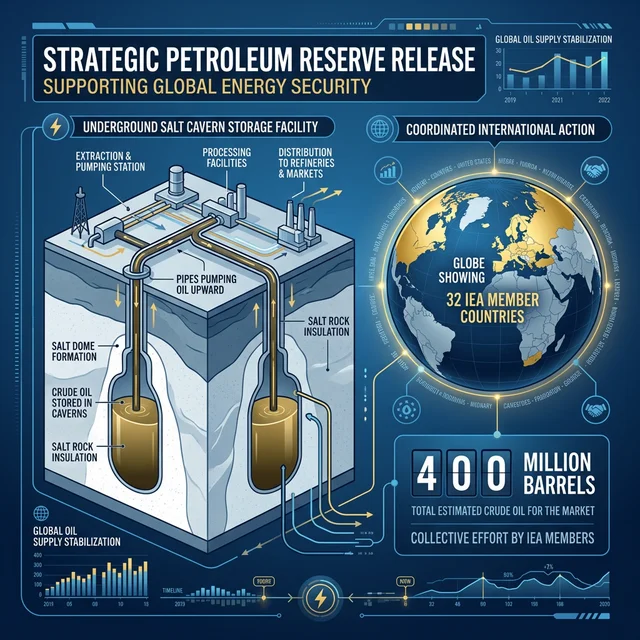
Faced with the gravity of the situation, IEA Executive Director Fatih Birol convened an emergency meeting with the organization's 32 member countries. The result was unanimous: the coordinated release of 400 million barrels of strategic oil reserves — the largest in the agency's history since its founding in 1974.
"The challenges facing the oil market are unprecedented in scale," Birol declared at a press conference. "This emergency collective action of unprecedented size is necessary to protect the global economy and consumers."
How Much Each Country Will Release
The distribution of reserves among member countries roughly follows each nation's consumption proportion:
| Country | Volume (million barrels) | Release Timeline | % of Total |
|---|---|---|---|
| United States | 172 | 120 days | 43% |
| Japan | 80 | From Mar 16 | 20% |
| Germany | 19.5 | 90 days | 4.9% |
| South Korea | 22.5 | 60 days | 5.6% |
| France | 18 | 90 days | 4.5% |
| Italy | 15 | 90 days | 3.8% |
| Other 26 countries | 73 | Variable | 18.2% |
| TOTAL | 400 | Variable | 100% |
The United States, as the largest consumer and holder of the world's largest Strategic Petroleum Reserve (SPR), assumes the largest share of the operation, with 172 million barrels coming from the gigantic salt caverns in Texas and Louisiana.
What Are Strategic Petroleum Reserves?
Strategic petroleum reserves are stocks maintained by governments to be used in emergency situations — wars, natural disasters, or severe supply disruptions. Most are stored in underground salt caverns, carved hundreds of meters below the earth's surface.
The US Strategic Petroleum Reserve (SPR), created in 1975 after the 1973-74 Arab oil embargo, is the world's largest, with capacity to store up to 714 million barrels in four underground complexes along the US Gulf Coast. Before this release, the SPR contained approximately 390 million barrels — already reduced from previous releases during the Ukrainian crisis.
Historical Precedent: The IEA's 6 Coordinated Releases
This is only the sixth time in history that the IEA has coordinated a collective reserve release. Each previous one marked a moment of significant geopolitical crisis:
| Year | Event | Volume (million barrels) |
|---|---|---|
| 1991 | Gulf War | 60 |
| 2005 | Hurricane Katrina | 60 |
| 2011 | Libyan Civil War | 60 |
| 2022 | Russian Invasion of Ukraine (1st round) | 62.7 |
| 2022 | Russian Invasion of Ukraine (2nd round) | 120 |
| 2026 | Iran-US/Israel War | 400 |
The 2026 release is by far the largest — more than three times the combined volume of the two 2022 releases. This demonstrates the unprecedented gravity of the current situation.
Alternative Routes: Bypassing the Blockade
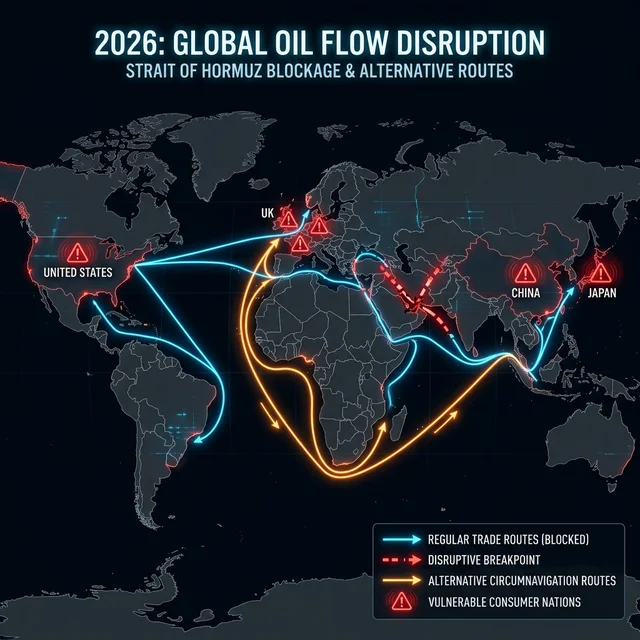
With the Strait of Hormuz virtually closed to commerce, producing and consuming countries are seeking alternatives:
Cape of Good Hope Route
The main alternative is to circumnavigate all of Africa via the Cape of Good Hope, at the southern tip of the continent. However, this route adds 2,700 additional nautical miles (about 5,000 km) to the journey, increasing transit time by 10 to 15 days and significantly raising freight costs. To put this in perspective, the freight cost of a supertanker (VLCC) on the Persian Gulf to Europe route jumped from $2.50 per barrel to an impressive $8.75 — a 250% increase that is passed directly to the end consumer. Furthermore, the limited capacity of tanker ships available on the world market means that not all the volume that passed through Hormuz can simply be rerouted via this alternative.
Saudi Arabia's East-West Pipeline
Saudi Arabia has the Petroline, a 1,200 km pipeline connecting its eastern oil fields to the port of Yanbu on the Red Sea. With a capacity of 5 million barrels per day, this pipeline offers an alternative route that completely bypasses the Strait of Hormuz. However, full utilization of the Petroline would require additional investment and time to reach maximum capacity. The Saudi kingdom has already ordered acceleration of pipeline operations, but analysts estimate it will take at least 3 to 4 weeks for flow to reach significant volumes.
UAE Pipeline
Similarly, the United Arab Emirates has the Habshan-Fujairah pipeline, with a capacity of 1.5 million barrels per day, which transports oil directly to the port of Fujairah in the Gulf of Oman, bypassing the Strait. This infrastructure was built specifically as "insurance" against a potential Hormuz blockade. Together, the Saudi and Emirati pipelines can offset only about 6.5 million barrels per day of the 19 million lost — leaving a structural deficit that only the reopening of the Strait can definitively resolve.
Iraq and Kuwait: No Alternative
Unlike their neighbors, Iraq and Kuwait do not have alternative pipelines that bypass the Strait of Hormuz. All Iraqi oil exported from the Basrah terminal in the south of the country must necessarily pass through the strait. This places these two countries in a particularly vulnerable position, with their export revenues falling dramatically since the beginning of the crisis.
Impact on the Global Economy: The Domino Effect
The 2026 oil crisis affects far more than just the energy sector. Its tentacles extend throughout the global economy, creating a domino effect that threatens the prosperity of billions of people. International Monetary Fund (IMF) economists have already revised their global growth forecasts downward, cutting the world GDP estimate from 3.2% to 2.4% in 2026 — a scenario that, if confirmed, would dangerously approach the limits of a synchronized global recession.

Global Inflation
The European Central Bank (ECB) warned that every $10 sustained increase in the price per barrel of oil adds approximately 0.4 percentage points to eurozone inflation. With oil rising more than $30 since the beginning of the crisis, inflation could jump 1.2 percentage points — a harsh blow to consumers already facing elevated living costs since the COVID-19 pandemic.
Most Affected Sectors
The most vulnerable economic sectors include:
- Air transport: Airlines face fuel costs representing 25-30% of their operational expenses. With jet fuel rising proportionally to crude oil, airfares should become 20-35% more expensive.
- Agriculture: The cost of diesel for agricultural machinery and natural gas for fertilizer production pressures food prices throughout the chain.
- Petrochemical industry: Plastics, rubbers, and petroleum-derived chemicals suffer increased raw material costs.
- Logistics and freight: Road and maritime transport costs impact virtually all consumer goods.
Brazil and the Crisis
Brazil, despite being a major oil producer, is not immune to the crisis effects. As a country that exports heavy crude oil and imports lighter derivatives (refined gasoline and diesel), international price increases directly pressure prices at Brazilian gas stations.
Petrobras, following an international price parity policy (PPI), faces pressure to adjust domestic prices. Each R$0.10 increase per liter of gasoline adds approximately 0.05 percentage points to the IPCA (Broad National Consumer Price Index), according to Central Bank estimates.
Brazil's pre-salt deposits, producing about 3.5 million barrels per day, represent one of the greatest success stories in the global oil industry. However, not even this robust production fully protects the country from external shocks. Imported diesel, essential for road freight transport — responsible for 65% of Brazilian freight — suffers proportional adjustments to the international market. Truckers are already threatening mobilizations if prices continue rising, evoking memories of the 2018 strike that paralyzed the country for 11 days.
The impact also hits Brazil's agricultural sector, one of the pillars of the national economy. The cost of nitrogen fertilizers, produced from natural gas, has already risen 28% since the beginning of the crisis. For soy, corn, and cotton producers — crops highly dependent on fertilizers — this means compressed profit margins and possible reduction in planted area in the next harvest.
The War Behind the Crisis: The US-Israel vs. Iran Conflict
To understand the current energy crisis, it is necessary to understand the geopolitical conflict fueling it. The escalation between the United States, Israel, and Iran reached a new level in March 2026, when coordinated attacks against Iranian nuclear facilities triggered unprecedented retaliation.
Iran, the second-largest oil reserve holder in OPEC and de facto controller of the Strait of Hormuz, used its strategic geographic position as a weapon. The destruction of 16 Iranian mine-laying vessels by the US Navy did not prevent the placement of enough devices to make commercial navigation through the strait practically impossible.
The conflict also extended to Lebanon, where intensified Israeli strikes resulted in significant casualties in Beirut's southern suburbs. According to the UN refugee agency (UNHCR), up to 3.2 million people in Iran and 800,000 in Lebanon have been displaced by the war. The humanitarian crisis grows daily, with international organizations warning of shortages of medical supplies, food, and shelter in the most affected areas. The UN High Commissioner for Refugees classified the situation as "one of the greatest displacement crises of the 21st century."
Are 400 Million Barrels Enough?
The big question analysts and economists are asking is: will the release of 400 million barrels be sufficient to stabilize the market? The answer requires numerical context.
The world consumes approximately 100 million barrels of oil per day. Before the crisis, the Strait of Hormuz transported about 21 million barrels daily. With volumes falling to less than 10% of normal, the daily global deficit is approximately 19 million barrels.
If this deficit holds, the 400 million barrels released by the IEA would last only about 21 days. Even with alternative routes partially compensating for the loss, it is clear that the IEA measure is temporary relief, not a definitive solution. The true determining factor will be the resolution — or not — of the military conflict in the Persian Gulf.
Possible Scenarios
Goldman Sachs and JPMorgan analysts have outlined three possible scenarios:
Optimistic Scenario (30% probability): Negotiated ceasefire within 30-60 days, gradual reopening of the Strait, oil falling back to $80-85. The released reserves would be sufficient to cover the transition period. This outcome would require significant diplomatic breakthroughs and willingness from all parties to de-escalate tensions in the region.
Base Scenario (45% probability): Prolonged conflict for 3-6 months with partial reopening of the Strait. Oil stabilizing between $90-100. Need for additional reserve releases and rationing in some countries. Under this scenario, alternative shipping routes and pipeline expansions would gradually compensate for some of the lost capacity, but global economic growth would still take a significant hit.
Pessimistic Scenario (25% probability): Escalation of the conflict involving more countries in the region, Strait remaining closed for more than 6 months. Oil reaching $120-150. Global recession inevitable. In this worst-case scenario, food insecurity would spread across developing nations dependent on energy imports, and central banks worldwide would be forced into emergency monetary policy actions to prevent complete economic collapse.
The Diplomatic Chessboard
The international community is working frantically behind the scenes to broker a ceasefire. China and India, both major oil importers, have offered to mediate between the warring parties. The United Nations Security Council has called for an emergency session, though meaningful resolution remains challenging given the deep-rooted geopolitical interests at stake. European nations, particularly France and Germany, have proposed a comprehensive diplomatic framework that would address both the immediate military conflict and the long-standing nuclear proliferation concerns that sparked the initial confrontation.
The Future of Energy: Lessons from the 2026 Crisis
Regardless of how the crisis resolves, it is already accelerating profound transformations in the global energy sector. The vulnerability demonstrated by dependence on oil — and on a single chokepoint like the Strait of Hormuz — is driving record investments in alternatives:
- Renewable energy: Governments are accelerating approvals for solar and wind projects that were under bureaucratic review.
- Electric vehicles: EV sales have surged in countries like Japan and South Korea, where fossil fuel prices have more than doubled.
- Green hydrogen: Green hydrogen projects, previously considered economically unviable, have gained new competitiveness with oil above $100.
- Nuclear: Several European countries have announced extensions of their nuclear power plant lifespans and new small modular reactor (SMR) projects.
The 2026 crisis may, ironically, end up being the definitive catalyst for the energy transition that environmentalists and scientists have been calling for decades. Energy sector analysts project that global investments in clean energy could surpass $2 trillion in 2026, a historic record driven by the urgency to diversify energy sources and reduce geopolitical dependence on Persian Gulf oil.
Crisis Timeline
To understand the speed at which events unfolded:
| Date | Event |
|---|---|
| March 1 | US/Israel attacks on Iranian nuclear facilities |
| March 3 | Iran announces retaliation and threatens to close Strait of Hormuz |
| March 5 | First commercial ships struck near the Strait |
| March 7 | US destroys 16 Iranian mine-laying vessels |
| March 8 | Brent crude surpasses $90 |
| March 10 | Strait volumes fall to less than 10% of normal |
| March 11 | IEA announces record release of 400 million barrels |
| March 12 | Brent crude reaches $102 |
What to Expect in the Coming Days
In the short term, markets await signs that the released reserves will effectively begin reaching the market. The first American barrels should start flowing the week of March 17, while Japan plans to begin its releases as early as March 16.
The world's eyes are turned to the Strait of Hormuz. Any sign of reopening — through diplomatic negotiation or military force — will have an immediate impact on prices. Similarly, any new escalation in the conflict could nullify the effects of the reserve release and push prices to even higher levels.
One thing is certain: the 2026 oil crisis will enter the history books as one of the most critical moments for global energy security — and as the catalyst that finally forced the world to rethink its century-old dependence on black gold.
Sources: International Energy Agency (IEA), Associated Press, Reuters, Bloomberg, The Guardian, PBS, Axios, Ship&Bunker


