We are living through a historic moment in technology. In 2026, quantum computing has gone from a distant promise to a reality that is about to transform entire industries. IBM announced that the scientific community will confirm "verified quantum advantage" by the end of this year. Google crossed a threshold that scientists considered impossible just a decade ago. And Microsoft is betting on a revolutionary approach that could change the entire game.
This is no longer a race to prove that quantum computers can exist — that's already been demonstrated. Now, it's a race to make them useful. And the coming years will determine who dominates a technology that promises to revolutionize everything from drug discovery to the security of all digital communications on the planet.
What Is Quantum Computing (Simple Explanation)
Bits vs Qubits: The Fundamental Difference
Classical computers use bits — units of information that can be in one of two states: 0 or 1. It's like a light switch: on or off. All computing as we know it — from calculators to supercomputers — is based on manipulating billions of these switches very quickly.
Quantum computers use qubits (quantum bits), which exploit properties of quantum physics to exist in multiple states simultaneously — a phenomenon called superposition. While a classical bit is a switch (on or off), a qubit is like a coin spinning in the air before landing: it's "heads" and "tails" at the same time, with defined probabilities for each outcome.
Additionally, qubits can be entangled — a quantum connection where the state of one qubit instantly influences another, regardless of distance. Einstein called this "spooky action at a distance" and refused to accept it, but experiments in 2022 confirmed the phenomenon — and earned the Nobel Prize in Physics for Alain Aspect, John Clauser, and Anton Zeilinger.
Why Does This Matter?
The combination of superposition and entanglement allows quantum computers to process certain information in ways impossible for classical computers. A classical computer with n bits can be in one of 2ⁿ states at a time. A quantum computer with n qubits can explore all 2ⁿ states simultaneously.
For simple problems, this makes no difference. But for combinatorial problems — where the number of possibilities explodes exponentially — the advantage is overwhelming. Molecular simulation, logistics optimization, cryptography, and financial modeling are classic examples.
The Challenge: Quantum Errors
Qubits are extremely fragile. Any environmental interference — heat, vibration, electromagnetic radiation, even cosmic rays — can cause decoherence, destroying the quantum state. The superconducting qubits used by IBM and Google operate at 15 millikelvin — colder than outer space, which is at approximately 2.7 Kelvin.
For decades, the biggest challenge was: how to build systems with enough qubits to be useful while keeping errors under control? In 2026, there are finally concrete answers.
The Major Breakthroughs of 2025-2026
Google Willow: Crossing the Impossible Threshold
In December 2025, Google announced its quantum chip Willow (105 qubits), which achieved something many considered impossible: crossing the error correction threshold.
Traditionally, the more qubits added to a system, the more errors occur — each additional qubit makes the system more unstable. Willow demonstrated the opposite: as the system scales, the error rate decreases. This is revolutionary because it experimentally proves that fault-tolerant quantum computers are possible.
Willow completed a benchmark calculation in less than 5 minutes that would take the world's most powerful supercomputers 10 septillion years (10²⁵) — longer than the age of the universe (approximately 13.8 billion years). The paper was published in Nature and peer-reviewed, making it the best-validated quantum supremacy result to date.
IBM: The Most Ambitious Roadmap
IBM consistently has the most detailed roadmap in the industry:
2026 — Verified Quantum Advantage: IBM states that the scientific community will confirm that quantum computers can solve practical problems faster than any classical computer. This goes beyond Google's "quantum supremacy" (which used an artificial problem): IBM wants to demonstrate advantage on real problems like molecular simulation.
2029 — IBM Quantum Starling: A fault-tolerant system with 200 logical qubits (error-corrected qubits — each logical qubit is built from hundreds of physical qubits) and the capacity to execute 100 million quantum gates in a single computation.
2033 — IBM Blue Jay: A system with 2,000 logical qubits, capable of tackling currently unsolvable problems.
IBM's technical advances include migration to 300mm wafers (larger production scale), a 10× increase in chip complexity, and development of LDPC codes that allow scaling hardware 9× more efficiently. Jerry Chow, IBM's VP of quantum computing, stated: "the science has been solved — now it's engineering."
Microsoft: The Revolutionary Bet
While IBM and Google use superconducting qubits, Microsoft is betting on topological qubits — a radically different approach.
Topological qubits encode information in the "shape" or topology of the quantum system, not in fragile physical states. Analogy: writing with ink on a balloon (traditional qubit) vs. tying knots in the balloon (topological qubit) — scratches erase the ink, but don't undo the knots.
If it works, topological qubits would have error rates orders of magnitude lower, potentially eliminating the need for complex error correction. In 2025, Microsoft published promising results in Physical Review B with materials based on Majorana fermions — quasi-particles whose existence was theorized in 1937 by Italian physicist Ettore Majorana.
Practical Applications
Drug Discovery
Molecules are quantum systems — to simulate them with real precision requires quantum computing. Classical computers can only approximate simple molecules (up to about 50 atoms). Quantum computers could simulate complex molecules like entire proteins, revolutionizing drug discovery: reducing the development cycle from 10-15 years to 2-3, enabling treatments for incurable diseases, and personalized medications by genetic profile.
BMW is already working with IBM to optimize fuel cells, and Roche is using quantum computing to model protein-drug interactions.
Cryptography: The Threat and the Solution
Most current cryptography (RSA, ECC) relies on the difficulty of factoring large numbers — something quantum computers, using Shor's algorithm (Peter Shor, 1994), could do exponentially faster. Experts estimate that a quantum computer with approximately 4,000 logical qubits could break RSA-2048 in hours — the encryption that protects everything from banking transactions to military communications.
The threat is so serious that there's a silent race called "harvest now, decrypt later" — adversaries are storing encrypted communications today to decrypt them when quantum computers become available.
The response: post-quantum cryptography. In 2024, NIST published the first resistant standards: CRYSTALS-Kyber (key exchange) and CRYSTALS-Dilithium (digital signatures), based on lattice problems that remain difficult for quantum computers. The NSA requires post-quantum cryptography for classified communications by 2030. Google has already implemented CRYSTALS-Kyber in Chrome since 2023.
Optimization and Finance
Combinatorial optimization problems — logistics routes, financial portfolios, supply chains — are natural candidates. JPMorgan Chase has a team of 200+ researchers in quantum computing focused on derivatives pricing. Volkswagen tested quantum route optimization for buses in Lisbon. DHL works with IBM to optimize its global logistics network.
Startups and Emerging Players
The quantum race isn't just for big tech. IonQ (public since 2021) leads in trapped ion qubits — a different approach that operates at room temperature. Rigetti Computing manufactures superconducting quantum processors and offers cloud access. PsiQuantum (Palo Alto) bets on photonic qubits, using photons of light that are naturally resistant to noise. And Atom Computing reached 1,225 qubits in 2023 using neutral atoms — the largest quantum system at the time.
The global ecosystem includes more than 300 quantum startups, which received US$2.3 billion in investments in 2024.
The Global Race
The competition isn't just between companies — it's between nations. The US invested US$1.8 billion in the National Quantum Initiative Act. China invested approximately US$15 billion and leads in QKD (Quantum Key Distribution), with the Micius satellite performing quantum entanglement between cities separated by 1,200 km. The European Union allocated €1 billion in the Quantum Flagship, the UK £2.5 billion, and Japan US$1.5 billion in its Moonshot program.
When Will Quantum Computing Affect You?
Most people will never use a quantum computer directly — just as most never use a supercomputer. But the effects will be profound:
Drug discovery (2027-2030): Simulating complex molecules is impossible for classical computers. Quantum computers can simulate molecular interactions to develop drugs up to 100× faster. Roche and Moderna are already using quantum simulations in pharmaceutical research.
Logistics optimization (2026-2028): Solving the "traveling salesman problem" for millions of points can optimize delivery routes, reducing emissions and costs. Volkswagen and Airbus are already piloting quantum projects for route planning.
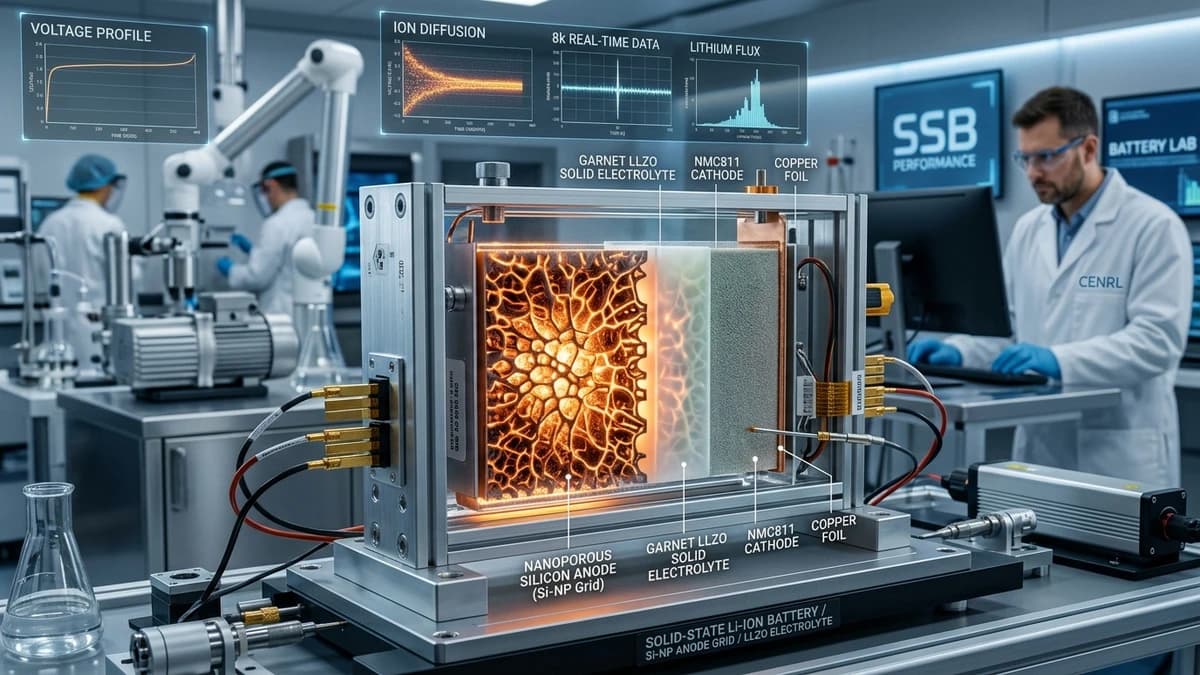
Materials and energy (2028-2035): Simulating new materials for batteries, superconductors, and solar panels. A breakthrough in solid-state batteries via quantum simulation could revolutionize electric cars and energy storage.
Finance (2026+): Portfolio optimization, fraud detection, and derivatives pricing. JPMorgan, Goldman Sachs, and BBVA are active investors in financial quantum computing.
IBM's Strategy: Superconducting Qubits at Scale
IBM has been a pioneer in making quantum computing accessible to the public through its IBM Quantum platform, which allows researchers and developers worldwide to access real quantum processors through the cloud. In 2026, IBM unveiled its latest-generation Heron processor, incorporating significant improvements in error reduction and qubit connectivity. IBM's roadmap envisions reaching 100,000 qubits by 2033, a milestone that could transform entire industries.
IBM's philosophy centers on modularity: rather than building a single giant quantum processor, the company is developing smaller quantum modules that can be interconnected to form larger systems. This approach, similar to how classical data centers connect multiple servers, could be the key to scaling quantum computing practically and economically.
Google and Quantum Supremacy
Google made history in 2019 when its Sycamore processor performed a calculation in 200 seconds that would have taken the world's most powerful supercomputer approximately 10,000 years. This achievement, known as quantum supremacy, demonstrated for the first time that a quantum computer could outperform any classical computer on a specific task. In 2026, Google continues advancing with its Willow processor, which has demonstrated exponential improvements in quantum error correction.
Google's strategy differs from IBM's in its focus on quality over quantity of qubits. Rather than maximizing the number of qubits, Google concentrates on reducing the error rate of each individual qubit, arguing that a processor with fewer but more reliable qubits can be more useful than one with many error-prone qubits.
Microsoft and Topological Qubits
Microsoft has adopted a radically different approach from its competitors. Instead of using superconducting qubits, the company is developing topological qubits, a theoretical type of qubit that would be inherently more stable and error-resistant. Although this approach has taken longer to produce results, Microsoft announced significant advances in 2025 in creating topological states, bringing this technology closer to practical reality.
Impact on Industry and Society
The quantum race is not merely a technological competition between corporate giants; it has profound implications for national security, the global economy, and scientific advancement. The governments of the United States, China, the European Union, and Japan have collectively invested over 30 billion dollars in quantum research, recognizing that the country that masters this technology will have a significant strategic advantage.
Quantum Startups and New Competitors
Beyond the three tech giants, a vibrant ecosystem of quantum startups is emerging with innovative approaches. IonQ, which uses trapped ions instead of superconducting circuits, has demonstrated some of the most precise qubits on the market. Rigetti Computing offers hybrid quantum processors combining classical and quantum computation. PsiQuantum is developing a photonic approach using light particles as qubits, promising to operate at room temperature without cryogenic cooling.
In China, companies like Origin Quantum and SpinQ are advancing rapidly, backed by massive government investment. The Chinese government has built the National Laboratory for Quantum Information Sciences, a 10 billion dollar facility dedicated exclusively to quantum research.
Industrial Applications in 2026
Practical applications of quantum computing are beginning to materialize in key sectors. In pharmaceuticals, Pfizer and Roche use quantum simulations to model complex molecular interactions. In logistics, companies like DHL and FedEx experiment with quantum algorithms to optimize delivery routes. In the energy sector, quantum algorithms help optimize renewable energy distribution in complex power grids.
Ethical and Regulatory Challenges
Quantum computing raises significant ethical and regulatory challenges that society must address. The ability to break current encryption systems threatens digital privacy and global communications security. Governments are working on post-quantum cryptography standards, but the transition will be complex and costly.
The Global Quantum Ecosystem in 2026
The quantum computing landscape in 2026 has expanded far beyond the three major tech companies. Countries like Canada, Australia, Singapore, and South Korea have established world-class quantum research centers. The European Union launched its Quantum Flagship Initiative with a billion-euro budget. India announced its National Quantum Technology Mission with a 1.2 billion dollar investment. Quantum education is also experiencing an unprecedented boom, with universities like MIT, Stanford, and Oxford creating specialized programs. It is estimated that by 2030, the quantum industry will need over 500,000 specialized professionals.
Quantum Communication and the Quantum Internet
Parallel to quantum computing, quantum communication is advancing rapidly. China has already deployed the world's most extensive quantum communication network, connecting Beijing with Shanghai. The European Union is building its own quantum infrastructure through the EuroQCI project. The ultimate goal is to create a global quantum internet enabling absolutely secure communications. This technology uses quantum entanglement to detect any eavesdropping attempt, making intercepted messages immediately detectable.
Quantum Material Simulation
One of the most promising applications of quantum computing is the simulation of new materials. Researchers are using quantum processors to design room-temperature superconductors, more efficient batteries, and catalysts for carbon capture. These breakthroughs could revolutionize energy storage and climate change mitigation.
Quantum Computing and Climate Science
Quantum computing offers unprecedented potential for climate modeling and environmental science. Traditional supercomputers struggle to simulate the complex interactions between atmosphere, oceans, and land surfaces with sufficient resolution. Quantum processors could model these systems at the molecular level, providing more accurate climate predictions and helping design more effective strategies for carbon capture and renewable energy optimization.
Frequently Asked Questions
Will quantum computers replace normal computers?
No. Quantum computers are excellent for specific problems (optimization, simulation, cryptography), but classical computers will remain better for everyday tasks. The future is hybrid: classical computers will delegate specific subproblems to quantum processors.
When can I have a quantum computer at home?
Probably not in the coming decades. Superconducting qubits operate at 15 millikelvin (-273.135°C), requiring dilution refrigerators that cost millions. The access model will be cloud-based — as it already works today with IBM Quantum and Amazon Braket.
Will quantum computing break all cryptography?
Only asymmetric cryptography (RSA, ECC). Symmetric cryptography (AES-256) is relatively resistant — just double the key size. NIST's post-quantum standards are already being implemented.
Is China ahead in the quantum race?
China leads in QKD and quantum communication. The US leads in superconducting qubits and algorithms. Europe invests heavily in hardware. There's no clear winner — it's a multidimensional race.
Sources: IBM Quantum Roadmap (2024), Google AI "Below the threshold of quantum error correction with Willow" (Nature, 2025), Microsoft Research, NIST PQC Standards (2024). Updated January 2026.
Read also: