Warner-Paramount Merger Memes: The Internet Reacts to Hollywood's Biggest Deal
When Warner Bros Discovery and Paramount Skydance announced their $111 billion merger on April 23, 2026, the business world processed it as consolidation strategy. The internet processed it as the punchline it had been building toward for three years of streaming chaos.
A Brief History of Streaming Fragmentation (As Told by Memes)
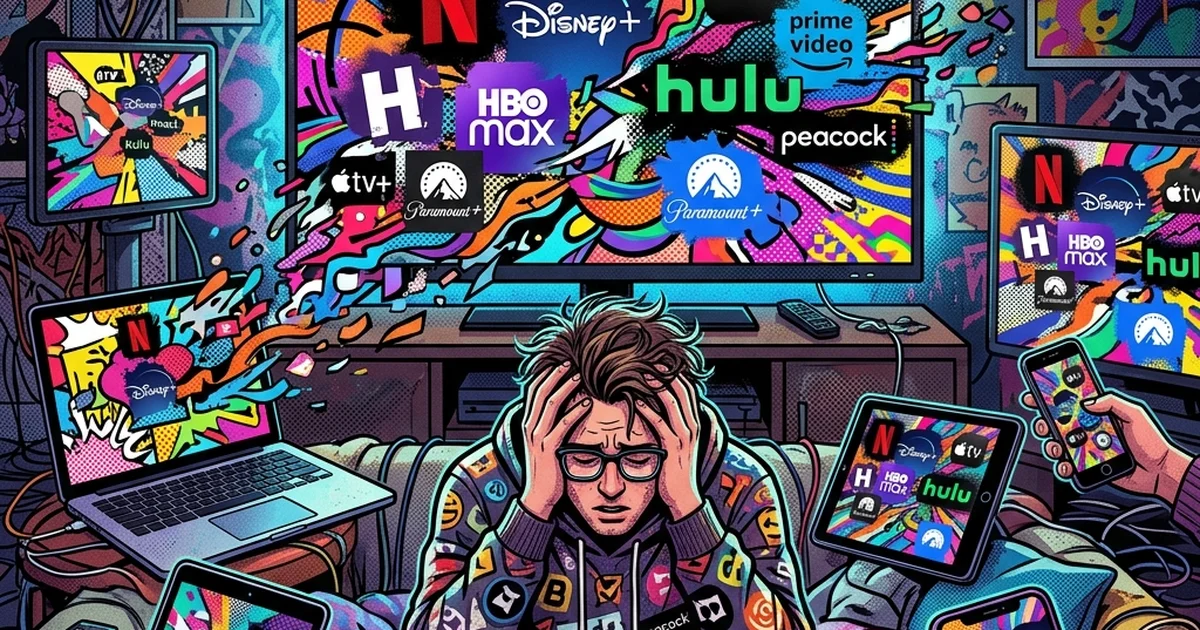
The streaming wars started with a simple premise: Netflix would replace cable. Then Disney launched Disney+. Then AT&T spun off HBO Max. Then Discovery merged with HBO Max. Then Paramount launched Paramount+. Then NBCUniversal launched Peacock. Then Apple launched Apple TV+. Then Amazon Prime Video became a serious player. Then ESPN+ launched. Then every major broadcaster had an app.
At some point, cord-cutters who switched to streaming to escape complexity found themselves managing six to eight subscriptions across multiple apps, each with different content, different quality, different prices — and none of them containing everything they wanted to watch.
The internet noticed. "We canceled cable to avoid paying $120/month for 300 channels we don't watch. We now pay $140/month for 8 streaming services and still can't find anything to watch."
The Warner-Paramount Merger Memes: A Curated Collection
On the scale of the combined IP library:
"The Warner-Paramount merger means Batman can finally fight SpongeBob in the next DC movie and nobody can stop them."
"The merged company controls: Batman, Superman, Harry Potter, Barbie, Mission Impossible, Star Trek, SpongeBob, Teenage Mutant Ninja Turtles, South Park, Game of Thrones, Yellowstone. What's left for everyone else? Minions."
"Imagine the crossover: the Fellowship of the Ring but they have to get to Paramount Mountain instead of Mordor."
On streaming consolidation:
"We started with one streaming service. Now we have 8. They're merging back into one. We've invented cable with extra steps."
"First they added HBO to Discovery. Then Paramount merged with Skydance. Now Warner merges with Paramount. At some point this is just television again. With worse customer service."
"The merger means one less password to share with my parents. That's the real win."
On the business logic:
"Warner: We're losing money. Paramount: We're also losing money. Warner + Paramount: Together, we can lose twice as much money, twice as efficiently."
"Combined company value: $111 billion. Netflix market cap: also $111 billion. Coincidence? No, it's just that Netflix is beating both of them combined."
"David Zaslav canceled nearly-complete movies to save money, then spent $111 billion on a merger. The math is unclear."
On content libraries:
"HBO Max has The Wire, The Sopranos, Game of Thrones. Paramount+ has Yellowstone, South Park. Together they'll create one app that recommends neither and serves you a True Crime docuseries instead."
"The algorithm will now be trained on both libraries simultaneously. Prepare to be recommended SpongeBob immediately after the series finale of Succession."
Why the Memes Capture Something Real
The humor isn't arbitrary. The memes identify genuine tensions in the streaming industry that business reporting often softens:
The re-bundling paradox: Consumers cut cable to escape bundles they didn't choose. Streaming gave them à la carte choice. Streaming consolidation is rebuilding the bundle — except now consumers have to actively choose each service rather than getting them all from a cable company. The end state may cost similar or more while delivering similar choice limitations.
The content quality concern: When studios are primarily incentivized to produce content that retains subscribers on their platform rather than content for its own sake, creative risk-taking declines. The memes about algorithm-driven recommendations reflect genuine anxiety about a future where HBO's prestige model gets diluted by the need to serve 200 million subscribers across taste profiles.
The market concentration reality: Fewer large studios mean fewer competing visions of what entertainment looks like. When two of the six major Hollywood studios merge, the diversity of creative perspectives, financial risk tolerance, and content bets narrows.
What Actually Matters for Subscribers
Behind the memes are real questions for the people who pay monthly fees:
Will prices go up? Almost certainly, eventually. Less competition means less pricing pressure.
Will content get better or worse? Unclear. Scale enables bigger productions; consolidation pressure may reduce creative diversity.
Will the apps merge? Probably, eventually. The timeline depends on regulatory conditions and integration complexity.
Is Batman vs. SpongeBob actually happening? This is the only question the internet genuinely wants answered. The merged IP library makes it technically possible. Whether any executive is brave enough to greenlight it is another matter.
The memes will fade. The merger will proceed. The monthly bill will, in all likelihood, go up. The question of whether it's worth it — that's for subscribers to decide, one cancellation at a time.
Sources
- Reuters — Warner Bros shareholders back merger with Paramount Skydance
- The Hollywood Reporter — Streaming Consolidation Analysis
The Deeper Truth the Memes Are Telling
The best memes don't just mock — they diagnose. The Warner-Paramount merger memes are doing something important: they're documenting public comprehension of an economic process that business journalism often renders opaque.
When someone tweets "We invented cable with extra steps," they're articulating a genuine consumer welfare critique that antitrust economists express in more technical language: the promised benefits of streaming competition (lower prices, more choice, better content) are being eroded by consolidation, and consumers who cut cable to escape a bundle are discovering they've rebuilt one.
When someone tweets "Batman vs SpongeBob and nobody asked for it," they're expressing legitimate anxiety about creative quality when IP optimization becomes the dominant logic — when the primary value of a production is as a vehicle for franchise characters rather than as a story worth telling.
The humor is real. The analysis embedded in the humor is also real. And the merger is real. April 23, 2026 may be the date future media historians mark as the moment streaming's golden age of competition gave way to the consolidation era — when the streaming wars ended not with a winner, but with a merger.
As for whether Batman vs SpongeBob actually happens: the combined IP library makes it legally possible. The merger makes it financially logical. The only remaining obstacle is whatever remains of Hollywood's sense of dignity.
Given the business pressures involved, that may not be much of an obstacle at all.
Final Impact Assessment
| Question | Most Likely Answer |
|---|---|
| Will prices go up? | Yes, within 2-3 years |
| Will apps merge? | Yes, eventually |
| Will content quality improve? | Uncertain |
| Will Batman fight SpongeBob? | Statistically possible |
| Will subscribers benefit? | Short-term bundle savings, long-term higher prices |
| Will jobs be lost? | Yes, 3,000-7,000 estimated |