
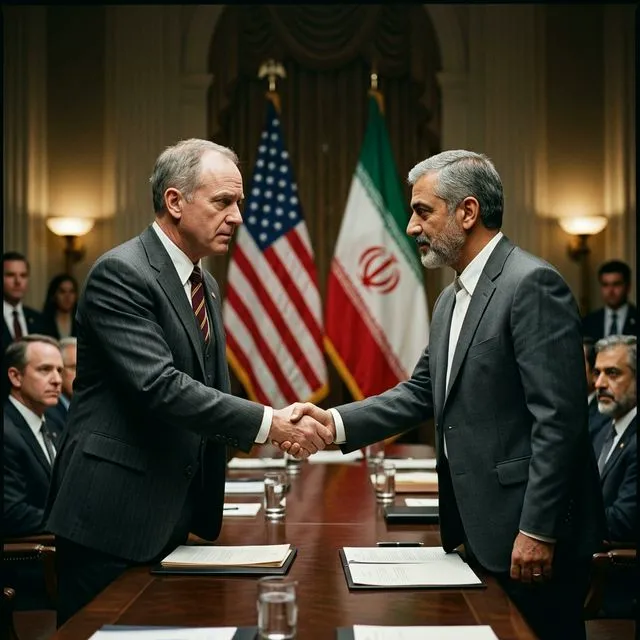
On March 22, 2026, the President of the United States made a decision that few international policy analysts would have dared to predict 48 hours earlier: the temporary suspension of military attacks against Iran's energy infrastructure. The order came after weeks of bombardments that had already partially destroyed three Iranian refineries and driven the price of oil above $115 per barrel on international markets.
The decision was not motivated by military weakness — the United States maintains uncontested air superiority in the region — but rather by an unexpected signal: a diplomatic message transmitted through secret channels in Oman, where Iranian intermediaries signaled willingness to discuss terms for a conditional ceasefire.
What Led to the Suspension of Attacks
The Military Escalation of March 2026
To understand the magnitude of this reversal, we need to go back to early March 2026. After the assassination of Iranian intelligence chief Esmail Khatib by Israeli forces — an event Iran classified as an "act of direct war" — Tehran retaliated with a series of actions that destabilized the entire region.
Between March 5 and 15, Iran executed three simultaneous strategic moves:
- Partial closure of the Strait of Hormuz, through which approximately 21% of the world's oil passes
- Ballistic missile attack on American bases in Iraq, injuring 47 military personnel
- Attack on Dubai's oil infrastructure, damaging the Jebel Ali terminal
The US responded with Operation Roaring Lion, an air campaign that mobilized more than 200 aircraft and 3 aircraft carriers in the Persian Gulf. In 12 days, the Air Force conducted 847 sorties over Iranian territory, focusing exclusively on military and energy infrastructure targets.
The Global Economic Cost
The military escalation had devastating economic consequences. Brent crude hit $118 per barrel on March 18 — the highest since 2008. Gasoline in the United States surpassed $6 per gallon in 14 states, sparking protests in cities like Houston, Los Angeles, and Chicago.
| Indicator | Before Crisis | Peak (03/18) | Change |
|---|---|---|---|
| Brent Crude | $82/barrel | $118/barrel | +43.9% |
| US Gasoline | $3.45/gallon | $6.12/gallon | +77.4% |
| Gold | $2,180/ounce | $2,890/ounce | +32.6% |
| Dow Jones | 42,500 pts | 37,200 pts | -12.5% |
These numbers aren't abstractions — they represent the direct impact on the lives of billions of people. In Europe, Germany declared an energy emergency. In Brazil, diesel prices rose 23% in just two weeks, impacting freight costs and food prices.
Behind the Scenes of Secret Diplomacy
The Oman Channel
The story behind the attack suspension begins in an unlikely place: Muscat, the capital of Oman. The sultanate, historically neutral in regional conflicts, had served as an intermediary in previous US-Iran negotiations — including the 2015 nuclear deal (JCPOA).
According to State Department sources quoted by Reuters, the Iranian message arrived in three parts over 72 hours:
- First message (03/19): Iran acknowledged "significant damage" to its refining capacity and signaled that attacks on American bases "could be reconsidered"
- Second message (03/20): Tehran proposed a "mutual military silence period" of 96 hours
- Third message (03/21): Iran's Foreign Minister detailed conditions for formal negotiations, including Chinese mediation
The Decision in the Situation Room
The meeting that decided the suspension took place in the White House Situation Room at 11:30 PM on March 21. According to New York Times reports, participants included the President, the Secretary of Defense, the CIA Director, the National Security Advisor, the Joint Chiefs of Staff, and the Secretary of State.
The meeting lasted 4 hours and 22 minutes. Two camps formed clearly: the "hawks," led by the Secretary of Defense, who argued that military pressure should continue until Iran's "total capitulation"; and the "pragmatists," headed by the Secretary of State, who saw the Iranian proposal as a strategic opportunity.
The argument that supposedly sealed the decision came from the CIA Director: "If we continue for another 72 hours, oil will hit $140. That means guaranteed global recession — and next year is an election year."
International Reactions
Allies and Critics
The decision provoked polarized reactions around the world:
In favor of the suspension:
- European Union: The Commission President called the decision "brave and necessary"
- China: Beijing formally offered itself as mediator, proposing Shanghai as the negotiation venue
- Brazil: The Foreign Ministry issued a note supporting "any initiative that reduces military escalation"
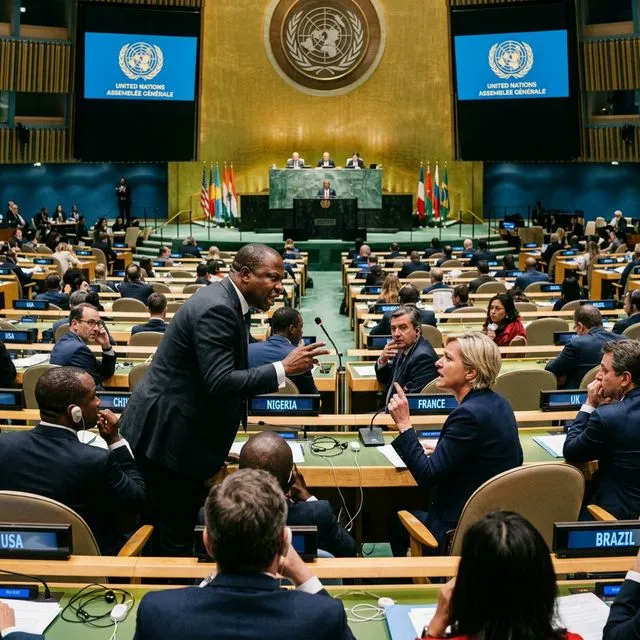
- UN: The Secretary-General convened an extraordinary Security Council session
Against the suspension:
- Israel: The Prime Minister classified the pause as a "gravely serious strategic error" and threatened to act "unilaterally"
- Saudi Arabia: Riyadh expressed "deep concern" about Iran using the ceasefire to rearm
- US Senate: A bipartisan group of 34 senators signed a letter demanding that the President "not retreat in the face of the Iranian threat"
The Role of Oil in the Decision
Iran's Economic Weapon
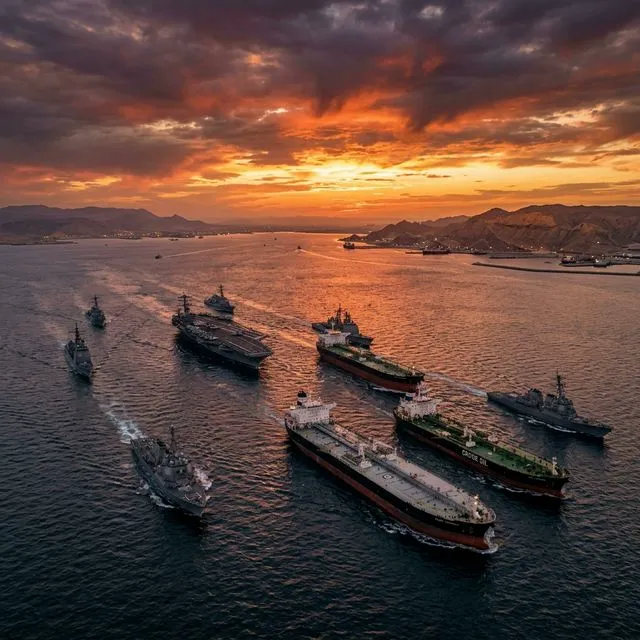
Iran controls one of the most powerful cards in global geopolitics: the Strait of Hormuz. Through this maritime corridor, only 33 km wide at its narrowest point, approximately 17 million barrels of oil pass daily — roughly 20% of global consumption.
Since the beginning of hostilities, Iran's Navy had partially mined the strait and positioned fast boats armed with anti-ship missiles at strategic points. Maritime insurance for ships crossing the strait increased 4,200% — from $35,000 to $1.5 million per crossing.
The International Energy Agency (IEA) had released 400 million barrels of strategic reserves, but Goldman Sachs analysts warned that this stock would last only 23 days if the strait remained partially closed.
Impact on Emerging Markets
The countries most affected by the crisis were not the belligerents, but emerging markets dependent on oil imports:
| Country | Import Dependency | Estimated GDP Impact |
|---|---|---|
| India | 85% of oil | -2.8% of GDP |
| Japan | 88% of oil | -2.1% of GDP |
| South Korea | 92% of oil | -2.5% of GDP |
| Brazil | 15% of oil | -0.9% of GDP |
| Turkey | 93% of oil | -3.4% of GDP |
What Could Happen Next
Scenarios for the Coming Weeks
Defense and international policy analysts project three possible scenarios:
Scenario 1: Successful diplomacy (25% probability)
Negotiations in Oman or Shanghai lead to a formal ceasefire agreement, with Iran accepting limitations on its nuclear program in exchange for partial sanctions relief. Oil retreats to $90-95/barrel.
Scenario 2: Resumption of hostilities (45% probability)
The 96-hour period expires without concrete progress. Israel conducts unilateral strikes against Iranian nuclear installations, forcing the US to resume the military campaign. Oil surpasses $130/barrel.
Scenario 3: Prolonged freeze (30% probability)
Neither side wants to be the first to resume hostilities. The situation transforms into a "frozen conflict" with permanent tension but no significant escalation. Oil stabilizes between $100-110/barrel.
The China Factor
China's interest in mediating the conflict is not altruistic. Beijing imports 70% of the oil it consumes from the Middle East — and the crisis has already caused a diesel shortage in 8 Chinese provinces. Moreover, China sees mediation as an opportunity to project diplomatic power and weaken American influence in the region.
The Chinese president has already formally invited US and Iranian representatives for "trilateral consultations" in Shanghai, proposing a five-point agenda:
- Immediate and permanent ceasefire
- Full reopening of the Strait of Hormuz
- Return to nuclear negotiation table
- Compensation for civilian damage
- Multilateral security mechanism for the Persian Gulf
The Human Dimension of the Crisis
Civilian Victims
While presidents and generals calculate strategic moves, civilians on both sides pay the highest price. The UN High Commissioner for Refugees (UNHCR) estimates the crisis has already caused:
- 2,340 civilian deaths in Iran (including 187 children)
- 47 American military wounded in base attacks
- 12 civilian deaths in Dubai during the Jebel Ali terminal attack
- 165,000 internally displaced persons in Iran, mainly in Khuzestan province
- 23,000 foreigners evacuated from the Persian Gulf
Hospitals in Ahvaz, Abadan, and Isfahan reported shortages of medications and medical equipment after supply routes were destroyed. The International Red Cross classified the humanitarian situation as "potentially catastrophic if combat resumes."
The Psychological Impact
Researchers from the University of Tehran documented a 340% increase in psychiatric emergency visits since the attacks began. In cities like Isfahan, where air raid sirens sounded 17 times in one week, the post-traumatic stress rate among children exceeded 45%.
In the United States, anxiety about a possible "Third World War" dominated social media. The term "World War 3" was searched on Google 47 million times between March 10 and 20 — surpassing the peak during the North Korea crisis in 2017.
Historical Context: When Military Pauses Changed the Course of History
History offers both optimistic and pessimistic precedents for military pauses like this one:
Positive precedents:
- Cuban Missile Crisis (1962): Kennedy and Khrushchev stepped back from nuclear confrontation after 13 days of tension, leading to the installation of the "hotline" between Moscow and Washington
- Yom Kippur War (1973): A UN-sponsored ceasefire ended the conflict and paved the way for the Camp David Accords
Negative precedents:
- Munich Conference (1938): The pause and agreements with Hitler only delayed World War II and gave time for German rearmament
- Korean Armistice (1953): The truce was never converted into a peace treaty — the Korean peninsula remains technically at war 73 years later
FAQ — Frequently Asked Questions
Why did the US suspend attacks on Iran?
The suspension occurred after Iran sent, through intermediaries in Oman, a proposal for "mutual military silence" of 96 hours and openness to formal negotiations. The economic cost of the crisis (oil at $118/barrel) also weighed on the decision.
Has the Strait of Hormuz been reopened?
Partially. Iran's Navy has removed some sea mines, but armed boats still patrol strategic points. Oil tanker traffic is operating at approximately 60% of normal capacity.
Can China really mediate the conflict?
China has influence with both sides — it's the largest buyer of Iranian oil and the largest trading partner of Gulf countries. However, its neutrality is questioned by Washington, which sees Beijing as a tacit ally of Tehran.
How long can the suspension last?
The original Iranian proposal was 96 hours (4 days). However, analysts believe that if there's diplomatic progress in the first 48 hours, the pause could be extended by weeks or months.
Sources and References
- Reuters. "Trump orders temporary halt to Iran strikes amid diplomatic progress." March 22, 2026.
- The New York Times. "Inside the Situation Room: How the Iran ceasefire decision was made." March 23, 2026.
- International Energy Agency (IEA). "Oil Market Report — Emergency Edition." March 2026.
- Goldman Sachs. "Crude Oil Outlook: Strait of Hormuz Disruption Scenarios." March 2026.
- UNHCR. "Iran Crisis: Humanitarian Impact Assessment." March 20, 2026.
- Al Jazeera. "Oman's secret role in US-Iran backchannel diplomacy." March 22, 2026.


