
Oil at $105: The Strait of Hormuz and the Biggest Energy Crisis of the Century
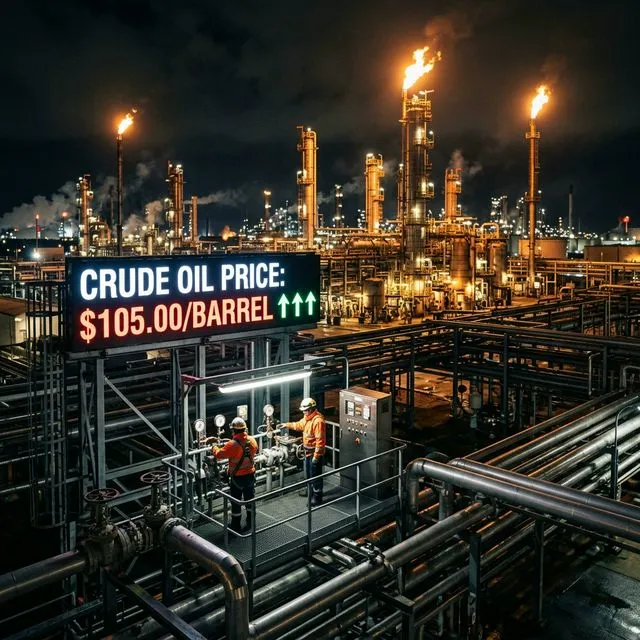
In the second week of March 2026, the price of Brent crude surpassed $105 per barrel — the highest level since 2022 — and analysts warn it could reach $120 or more if the situation in the Strait of Hormuz isn't resolved. The reason is what experts call "the largest energy disruption in history": the partial blockade of the Strait of Hormuz by Iran, in retaliation for US and Israeli military strikes against its territory. Through this strip of water just 33 km wide at its narrowest point, approximately 20% of all oil consumed daily worldwide passes. When this tap closes, everything changes: fuel prices, inflation, food costs, and the risk of a global recession.
To understand the gravity of what's happening, you need to grasp that oil isn't just an energy commodity — it's the lifeblood of the global economy. Every product you consume, from the food on your plate to the phone in your pocket, depends on oil at some stage of its production or transport. When the price per barrel rises 42% in two weeks (from $74 to $105), the cascading effect hits literally every sector of the global economy, in ways many people can't even imagine.
The Strait of Hormuz: Why It Matters
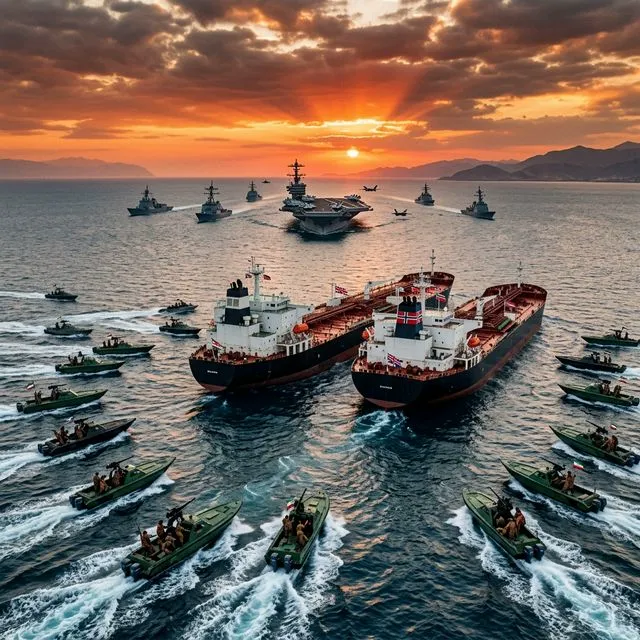
The Most Important Chokepoint on the Planet
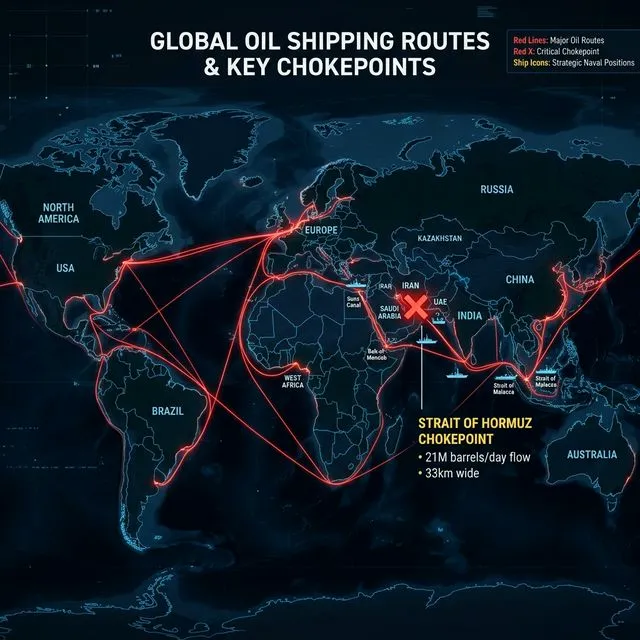
The Strait of Hormuz separates Iran from Oman and the United Arab Emirates, connecting the Persian Gulf to the Indian Ocean. It is, by a wide margin, the most strategically important maritime passage in the world for the energy market. Called a "chokepoint" by military strategists, the Strait is one of the few natural passages that, if blocked, can collapse entire portions of the global economy in a matter of days.
| Fact | Value |
|---|---|
| Minimum width | 33 km |
| Minimum channel depth | 60 meters |
| Oil transiting/day | ~21 million barrels (20-25% of global consumption) |
| LNG transiting/day | ~25% of global liquefied gas trade |
| Ships/day | ~70-80 tankers and cargo ships |
| Most dependent countries | China (40% of imports), India (65%), Japan (80%), South Korea (75%) |
To put this in perspective: if you drive a car, cook with gas, or buy any product transported by truck or ship, you're affected by the Strait of Hormuz — directly or indirectly. And it's not just Middle Eastern and Asian countries that depend on this passage. Europe imports approximately 20% of its oil and a significant share of its liquefied natural gas (LNG) through this route. Even the United States, despite being a major oil producer, sees the impact on global energy prices reflected directly at its gas pumps and in industrial costs.
A Geography That Defies Logistics
The actual navigable channel of the Strait of Hormuz is even narrower than the total 33 km suggests. Oil tankers use two traffic lanes just 3.2 km wide each, separated by a 3.2 km buffer zone. This means the effective passage for a supertanker loaded with 2 million barrels of crude oil is the width of a two-lane highway — on an oceanic scale. Any obstacle in this corridor — whether a naval mine, a drone bomb, or even the threat of one — is enough to paralyze traffic.
The relatively shallow depth (60 meters at the deepest point of the channel) also limits maneuverability options for large VLCC (Very Large Crude Carriers) tankers, which can have a draft of up to 22 meters when fully loaded. This makes the passage vulnerable to area-denial tactics that would be ineffective in open ocean.
The Blockade: What's Happening
Geopolitical Context
The current Strait of Hormuz crisis is a direct consequence of the military escalation between the United States, Israel, and Iran that intensified in late February 2026. After months of rising tensions involving Iran's nuclear program and proxy attacks via Iranian-aligned groups (Hezbollah, Houthis, Iraqi militias), the US and Israel launched coordinated strikes against Iranian military installations on February 28.
Iran, unable to compete in terms of conventional air or naval power against the US, turned to its most powerful strategic weapon: control of the Strait of Hormuz. This strategy is known in military circles as "A2/AD" (Anti-Access/Area Denial) — using relatively cheap asymmetric means to deny access to a strategic area to a much more powerful adversary.
Iran's Retaliation Strategy
Following the American-Israeli strikes, Iran implemented a carefully calibrated asymmetric retaliation strategy to maximize global economic impact while minimizing the risk of a direct military response:
- Aggressive naval patrols: IRGC (Islamic Revolutionary Guard Corps) fast boats intercepting and intimidating tankers at the Strait's entrances and exits, forcing unauthorized inspections and diverting ships to Iranian ports
- Naval mines: There are reports of magnetic mines placed in shipping lanes, though not officially confirmed. The mere rumor of mines is enough for maritime insurers to classify the region as a war zone
- Naval drones and anti-ship missiles: Drone bombs and anti-ship cruise missiles aimed at vessels that disobey Iranian "inspections." Iran possesses an estimated arsenal of 3,000+ anti-ship missiles and hundreds of maritime attack drones
- Public threats: Iran's supreme leader declared that "no barrel of oil will pass through the Strait as long as Iranian oil cannot be exported" — a position that ties any de-escalation to sanctions relief
The practical result is devastating: maritime insurers like Lloyd's of London have raised risk ratings for the Gulf to maximum level (declared war zone), and insurance premiums for ships crossing the Strait have gone from $50,000 to over $2 million per crossing. Several shipping companies have simply stopped sending vessels through the region. Traffic through the Strait has dropped an estimated 60-70% from normal levels.
Price Impact: The Brent Roller Coaster
The Alarming Trajectory
The speed of the oil price increase is as alarming as the price itself. In just 16 days, Brent rose 42%:
| Date | Brent Price (barrel) | Catalytic Event |
|---|---|---|
| Feb 27, 2026 | $74 | Pre-conflict — market relatively stable |
| Mar 01, 2026 | $85 | First day of strikes on Iran (+15%) |
| Mar 05, 2026 | $92 | Iran threatens to close Hormuz |
| Mar 10, 2026 | $98 | First tanker seized by IRGC |
| Mar 15, 2026 | $105 | Hormuz traffic drops 60% |
| Forecast (if prolonged) | $120-150 | Goldman Sachs/JP Morgan analysts |
For context: the last time oil was above $100 was September 2022, in the aftermath of Russia's invasion of Ukraine. Before that, it was 2014. We're in territory that historically precedes global recessions.
What $105 Means for You
At the Brazilian gas pump, every $10 increase in oil barrel price translates to approximately R$0.15 to R$0.25 per liter of gasoline, depending on Petrobras pricing policy and exchange rates. With Brent rising from $74 to $105 (a $31 increase), the potential impact is R$0.50 to R$0.80 per liter — if Petrobras passes on the full increase. This would raise the price of regular gasoline from R$5.80 to R$6.30-6.60 at the pump.
But oil affects much more than gasoline:
- Food: Natural gas-derived fertilizers (urea, ammonium nitrate) become drastically more expensive. Diesel used in tractors and trucks rises. Result: basic food basket could increase 8-15% within 90 days
- Air transport: Aviation fuel (kerosene/JET-A1) represents 30-40% of an airline's operating costs. With kerosene rising proportionally to oil, domestic tickets could increase $20-40 and international tickets $100-300
- Industry: Plastics, petrochemicals, medicines, cosmetics, paints, asphalt — everything depending on petroleum derivatives becomes more expensive. A simple smartphone's production chain uses petroleum derivatives in over 40 components
- Electricity: In Brazil, when hydroelectric reservoir levels are low, natural gas and diesel-powered thermal plants are activated — increasing energy costs
- General inflation: Oil is the "invisible tax" of the economy. When it rises, virtually everything rises with it, pushing inflation indices and forcing central banks to maintain (or even raise) interest rates
The Domino Effect on the Global Economy
IMF economists estimate that every sustained $10 increase in oil prices reduces global growth by 0.15-0.25 percentage points. With a $31 increase, the potential impact is a 0.5-0.8 point reduction in world GDP — bringing projected growth from 3.2% to 2.4-2.7%, dangerously close to the stagnation threshold for emerging economies.
For oil-importing countries like India, Turkey, and several African nations, the situation is even more grave. These countries may face balance-of-payments crises, sharp currency devaluations, and in extreme cases, inability to import enough fuel to keep their economies running.
Why There's No Quick Alternative
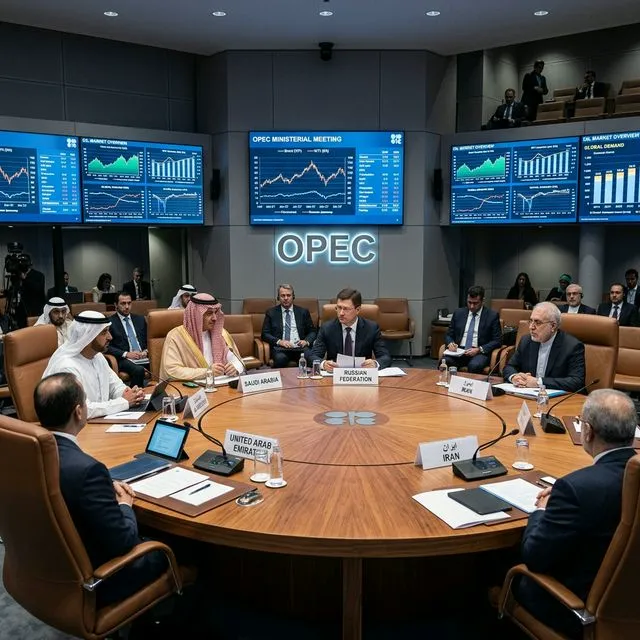
The Alternative Route Paradox
Theoretically, pipelines exist that could bypass the Strait of Hormuz and carry oil from the Persian Gulf directly to ports on the Red Sea or Indian Ocean:
- East-West Pipeline (Saudi Arabia): Originally with capacity of 5 million barrels/day, but currently operates at just 2-3 million after years of insufficient maintenance investment
- Abu Dhabi Crude Oil Pipeline (UAE): Capacity of 1.5 million barrels/day, connecting Abu Dhabi to Fujairah port on the Indian Ocean — the only Emirati export route that bypasses the Strait
- Iraq-Turkey Pipeline (Ceyhan): Theoretical capacity limited to 1.6 million barrels/day, frequently sabotaged by regional conflicts and political disputes between Baghdad and the Kurdish regional government
The fundamental problem: Even operating at absolute maximum capacity, these alternatives cover only 6-7 million barrels/day of the 21 million that normally transit through Hormuz. There's a "gap" of 14-15 million barrels per day that simply has no alternative route. No pipeline, railroad, or tanker truck can replace 14 million barrels of oil per day.
Strategic Reserves: A Temporary Solution
The strategic petroleum reserves (SPR) of International Energy Agency (IEA) member countries total approximately 1.2 billion barrels. The US SPR, the world's largest, contains about 400 million barrels. If released at maximum rate (4.4 million barrels/day for the US SPR), these reserves would last 60-90 days — assuming they don't fall below levels considered safe for national security.
In other words: strategic reserves are a palliative, not a solution. They can cushion the initial shock and buy time for diplomatic negotiations, but they don't resolve a crisis that extends beyond 3 months. And history shows that Persian Gulf crises rarely resolve in weeks.
Lessons from History: Previous Oil Crises
1973: The OPEC Embargo
The first oil crisis, in October 1973, occurred when Arab OPEC nations embargoed exports to the US and Europe in retaliation for Western support of Israel in the Yom Kippur War. Oil prices quadrupled within months, causing global recession, miles-long gas station lines, and a fundamental restructuring of Western energy policies.
1979: The Iranian Revolution
The Islamic Revolution in Iran in 1979 removed 5 million barrels/day from the market practically overnight. Oil prices more than doubled, fueling the stagflation (economic stagnation + high inflation) that marked the early 1980s and contributed to President Jimmy Carter's electoral defeat.
1990: The Invasion of Kuwait
When Saddam Hussein invaded Kuwait in August 1990, oil prices rose from $17 to $41 within weeks. The swift military response by the US-led coalition (Gulf War) limited the crisis duration, but the economic impact contributed to the 1990-91 US recession.
The current 2026 crisis has elements of all three previous crises, but with an aggravating factor: the global economy is significantly more interconnected than in any of them, making the domino effect potentially more devastating.
Scenarios: What Could Happen
Optimistic Scenario: De-escalation in Weeks (Probability: 25%)
Iran and the US, mediated by China and Oman, negotiate an informal ceasefire. Hormuz traffic gradually resumes over 2-3 weeks. Brent retreats to $85-90. Economic impact: temporary and absorbable. Financial markets recover quickly. Petrobras doesn't need to adjust fuel prices.
Moderate Scenario: Partial Blockade for Months (Probability: 45%)
The Strait remains with 40-60% reduced traffic for 2-3 months while negotiations drag on. Brent stabilizes between $100-115. Global inflation rises 1-2 percentage points. Central banks (including Brazil's Central Bank) pause or reverse interest rate cutting cycles. Global economic growth decelerates from 3.2% to 2.1% (adjusted IMF forecast). Petrobras implements moderate adjustments, and Brazilian gasoline rises R$0.30-0.50 per liter.
Pessimistic Scenario: Prolonged Total Closure (Probability: 30%)
The Strait is effectively closed for months after a serious naval incident (a tanker sunk or a naval mine detonated). Brent surpasses $150. Global recession is almost inevitable. Asia — China, India, Japan, South Korea — enters a severe energy crisis, with fuel rationing and blackouts. Comparisons with the 1973 oil crisis become reality. Brazil is relatively protected by its domestic production (pre-salt), but doesn't escape the effects of global recession on exports and investments.
Brazil in the Crisis: Protected but Not Immune
The Pre-Salt Advantage
Brazil currently produces about 3.5 million barrels of oil per day — thanks to pre-salt, which transformed the country into the world's 7th largest producer. This means that, unlike countries like Japan or India, Brazil doesn't depend on imports for its domestic demand (approximately 2.5 million barrels/day).
In fact, Brazil is a net oil exporter, meaning that, in theory, higher prices benefit Petrobras and government revenues. But this "good news" comes with crucial asterisks:
- Petrobras imports specific refined products (like diesel and aviation gasoline) that become more expensive with global oil prices
- Imported inflation via fertilizers and industrial products hits Brazilian cost of living head-on
- A global recession reduces demand for Brazilian commodities (soybeans, iron ore, meat), affecting exports and employment
- The dollar tends to strengthen during energy crises, making everything imported more expensive
Frequently Asked Questions (FAQ)
Can Brazil run out of gasoline?
Unlikely. Brazil produces more oil than it consumes and has domestic refineries. However, distribution of some specific refined products (like S-10 diesel) may be temporarily affected, and prices will certainly rise. The real risk for Brazilians isn't shortages, but cascading price increases — gasoline, food, electricity.
How does the oil price affect my investments?
Oil company stocks (Petrobras, PetroRio) tend to rise with barrel prices. Airlines (Gol, Azul) and logistics companies fall. The dollar generally strengthens, pressuring stocks of companies with foreign-currency debt. In fixed income, the prospect of higher rates for longer may benefit floating-rate bonds and hurt fixed-rate ones.
How long can this crisis last?
Historically, Persian Gulf crises last from weeks to months. The 1991 Gulf War normalized prices in ~6 months. The 1979 Iranian crisis took over two years to fully resolve. This crisis's duration fundamentally depends on whether the US and Iran find a diplomatic path — and on how willing China is to pressure Iran (Beijing is the largest importer of Iranian oil).
Can electric cars solve the crisis?
Not in the short term. Electric vehicles represent less than 3% of the global fleet. Even if all worldwide EV production tripled tomorrow, it would take decades to replace the 1.4 billion combustion vehicles in operation. In the long term, however, transport electrification is exactly the solution to reduce the global economy's vulnerability to chokepoints like Hormuz.
Will Petrobras raise gasoline prices?
It depends on the current pricing policy. Petrobras has adopted a "smoothed import parity price" policy — meaning it doesn't fully pass on short-term variations but adjusts when the difference becomes unsustainable. With Brent sustained above $100 for over two weeks, pressure for adjustment becomes very strong.
Conclusion: The Price of War That Everyone Pays
The Strait of Hormuz is the Achilles' heel of the global economy — and the US-Iran conflict in 2026 is testing exactly this point of vulnerability. The stark reality is that, in 2026, global civilization still dangerously depends on fossil fuels that need to pass through geographic bottlenecks vulnerable to political conflicts.
Even if you don't follow geopolitics, the effects will reach your wallet: at the gas pump, at the supermarket, on your electricity bill, and in your airline ticket. Oil at $105 isn't just a number on a Bloomberg screen — it's a war tax that the entire world pays, whether they want to or not.
The lesson this crisis should teach the world — but probably won't — is that the energy transition isn't just an environmental issue. It's a matter of national security and economic resilience. As long as 20% of the world's oil needs to pass through a 33 km strait controlled by a country in conflict, the global economy will be one crisis away from chaos.


