Cuiabá Gold Mine in Sabará: Technology at 1,600 Meters Depth
On the night of June 28, 2026, the computers at the Cuiabá Mine registered a silent microseismic anomaly in the bedrock of Sabará. At 1,600 meters below the urban ground, ultra-sensitive geophones captured the subtle release of energy long before any vibration reached the surface. This event activated automated protocols and demonstrated the technological complexity required to operate Brazil's largest active underground gold deposit.

What Happened
The Cuiabá Mine consolidated itself in 2026 as one of the innovation hubs of global mining due to its advanced geomechanical monitoring. AngloGold Ashanti operates a network of digital microseismic sensors to map the pressures of the rock mass in real time. This continuous network analyzes rock deformation and predicts tremors generated by blasting or geological stress relief.
The monitoring uses geophones installed in the deepest levels, between the elevations of 1,100 and 1,600 meters deep. These sensors send data via fiber optics to software that creates three-dimensional heat maps of stress zones. The system allows planning excavations safely and conducting preventive evacuations in areas prone to rockbursts.
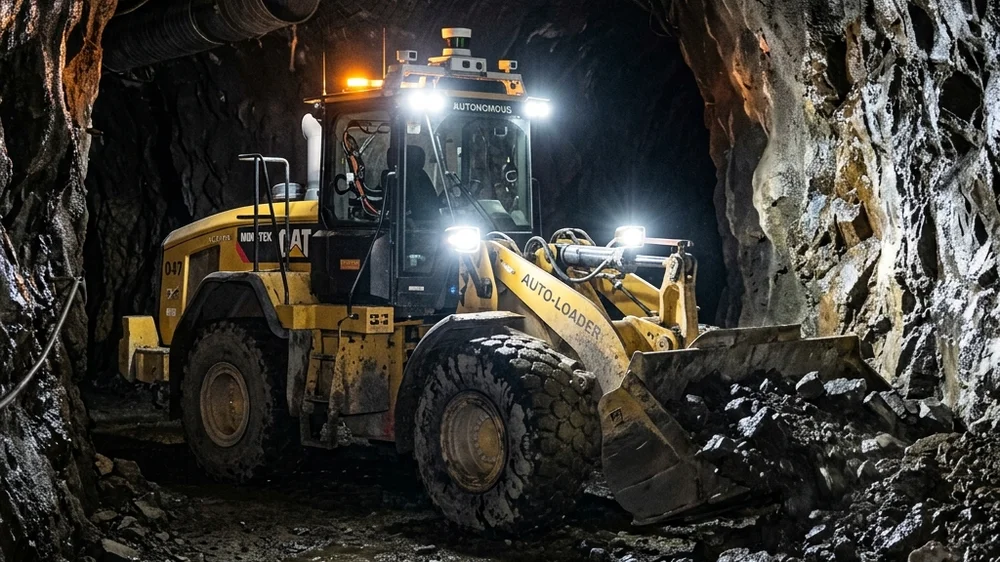
Additionally, heavy loaders and electric drill rigs are controlled remotely from the surface using joysticks and digital screens. Technicians also use dynamic 3D laser scanners to detect millimeter-level displacements in the roof of the tunnels. This technological set removes operators from the most hazardous fronts and mitigates collapse accidents.
Context and History
Mineral exploration in Sabará dates back to the beginning of the 18th century, when the ancient Vila Real do Sabarabuçu stood out in the colonial gold cycle. However, mechanized underground mining on an industrial scale at the Cuiabá complex only began in the 1980s. Since then, the mine has deepened vertically, following high-grade ore veins that plunge into the Quadrilátero Ferrífero.
This continuous descent required innovative structural shoring methods and shotcrete to contain extreme geological pressures. Furthermore, the depth imposed the challenge of cooling due to the geothermal gradient that heats the rock to over 45 degrees Celsius. The ventilation design became essential to make human labor viable in the depths of the mine.
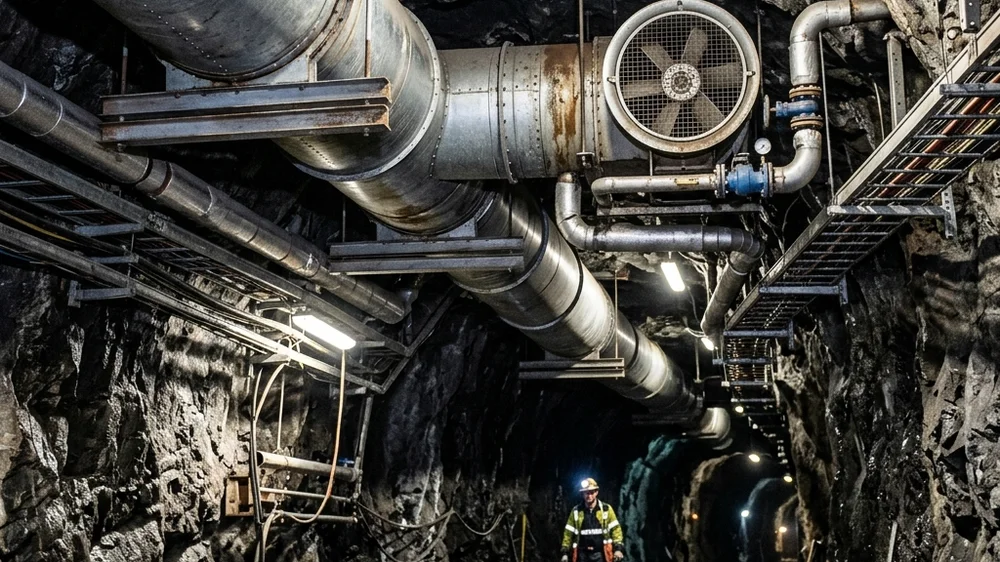
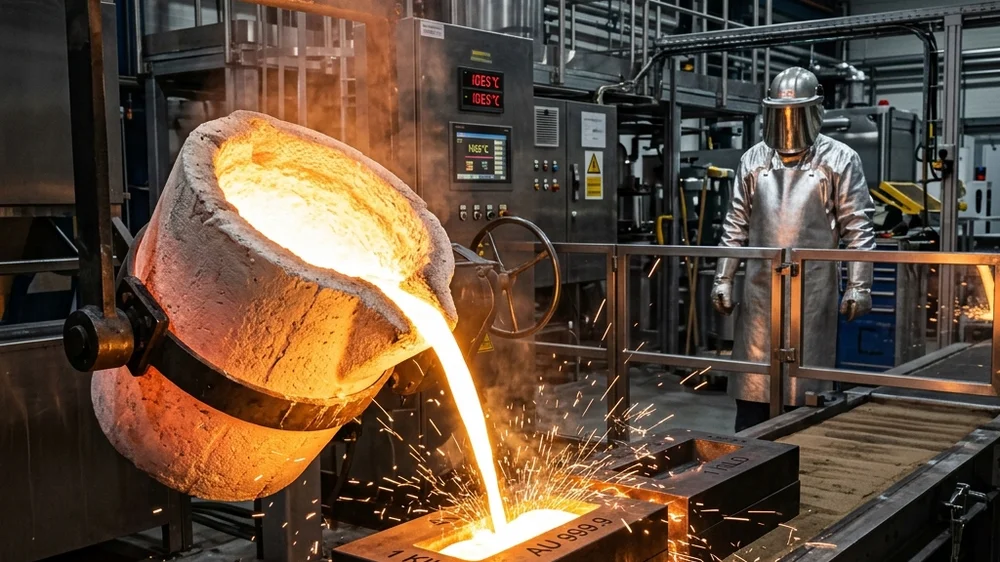
To cool the galleries, surface plants produce chilled water that is pumped to underground heat exchangers. This system lowers the temperature of the air blown by industrial fans to a comfortable 28 degrees Celsius. The extracted ore is sent to the historic Queiroz metallurgical plant in Nova Lima, where final processing occurs.
Impact on the Population
The operation of the mine generates fundamental tax impacts for Sabará and neighboring municipalities, funding public services with CFEM resources. On the other hand, the proximity of the underground mine to urban neighborhoods causes recurring complaints of tremors felt on the surface. Transparent dialogue with real-time seismographic data is essential to prevent rumors and reassure the population.
Environmental concern regarding tailings and water contamination led the company to eliminate traditional dams with fluid water accumulation. The Cuiabá complex implemented dry stacking technology for tailings, drastically reducing the risk of mud breaches. This technical change protects the Rio das Velhas basin and ensures the geological stability of the region.
| Operational Aspect | Traditional Practices (20th Century) | Technological Standard (In 2026) | Practical Impact on the Population |
|---|---|---|---|
| Seismic Monitoring | Nonexistent or analog post-event | Network of geophones and artificial intelligence | Rapid alerts and geological predictability |
| Tailings Disposal | Earth dams with fluid mud | Dry stacking (filtered tailings) | Elimination of disaster risk from liquefaction |
| Frontline Operation | Continuous direct human presence | Autonomous electric equipment | Drastic reduction in workplace accidents |
| Water Management | Intake and discharge without recirculation | Internal recirculation and effluent treatment | Preservation of the Rio das Velhas and watersheds |
The table clearly demonstrates the evolution in environmental governance and safety processes adopted at the Cuiabá Mine complex. The adoption of new technologies not only maximized industrial efficiency but also erected critical barriers to protect the integrity of local residents. Harmonic coexistence between modern mining and urban space requires continuous investment in transparency and precision engineering.
What Those Involved Say
Engineers from AngloGold Ashanti assure that the detected seismic events are of tiny magnitude and are below structural damage limits. However, local residents' associations state that deep blasting causes cracks in historic properties and request independent inspections. Seismologists explain that mining activities activate dormant geological faults, requiring academic cooperation and continuous technical monitoring.
Inspectors from the National Mining Agency declare that periodic inspections attest to the compliance of the galleries and tailings stacking. State environmental agencies also monitor industrial effluents to prevent damage to the rivers that cross Greater Belo Horizonte. Transparency in the disclosure of geomechanical data remains the point most demanded by civil society.
Next Steps
For the coming years, the complex plans to fully electrify the underground drilling and ore transport fleet. Replacing diesel fuel with lithium batteries will eliminate fumes in the galleries and save exhaust energy. This transition will consolidate the Cuiabá Mine as a model of sustainable, low-emission underground mining.
Also in the testing phase is the application of artificial neural networks to predict rockfalls using predictive geophones. In addition, interactive digital channels will make automatic alerts and blasting schedules available directly on residents' cell phones. These social actions seek to harmonize large-scale industrial activity with the urban ecosystem of Sabará.
Closing
Historical Comparison: The Legacy of Gold in Brazil
The high technology of Cuiabá contrasts brutally with the inhumane exploitation that characterized the colonial gold cycle. In the 18th century, the mines of Sabará operated in a primitive manner in open-pit workings or unprotected tunnels. This wealth was based entirely on the martyrdom of enslaved Africans, under violent working conditions and without any safety.
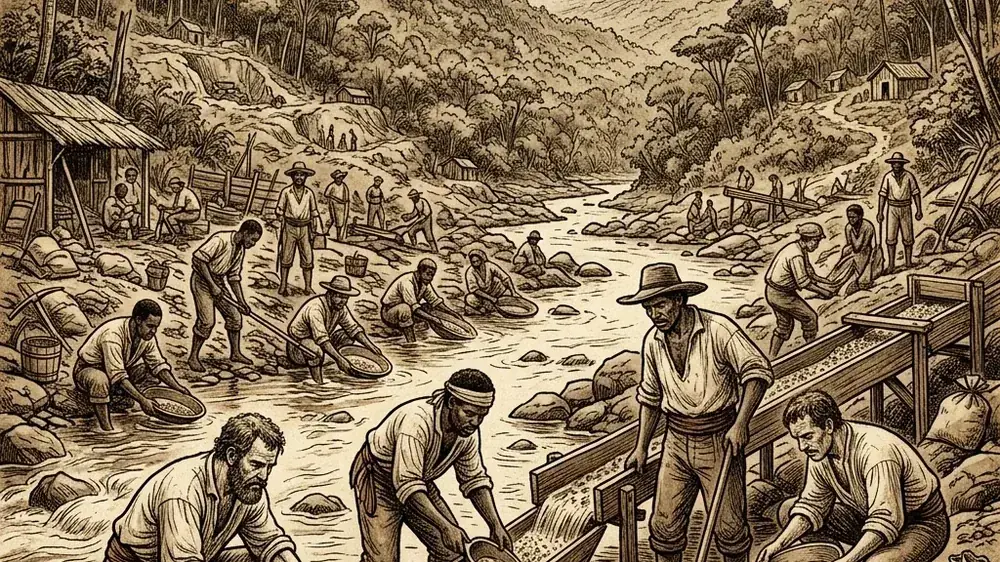
The cost of human life was overwhelming, with an average survival expectancy of only 7 to 12 years in the mines. Enslaved people suffered from lung infections resulting from quartz inhalation and continuous contact with unhealthy water. To understand the depth of this exploitative regime and its historical social wounds, it is timely to examine how slavery worked in Brazil.
The environmental impact of colonial exploration also permanently disfigured the physical geography and hydrography of the Quadrilátero Ferrífero. Entire hillsides were torn down by water jets to extract alluvial gold, causing the siltation of the Rio das Velhas. Additionally, forests were devastated for shoring rudimentary tunnels, while mercury contamination polluted rivers and ecosystems.
Currently, automation and modern environmental management seek to break with this historical legacy of human and ecological destruction. Remote technologies prevent serious accidents, while water treatment systems prevent the pollution of basin streams. These innovations prove that technologies that seemed impossible in the colony today shape a technically responsible mining committed to safety.
In conclusion, the path of gold in Sabará evolved from colonial slave exploitation to modern computerized technological refining. The Cuiabá Mine reflects this transition by prioritizing digital seismographs and remote robotics to safeguard human lives in the deep subsurface. However, attentive listening to the neighborhood and rigorous monitoring remain imperative to ensure future urban coexistence.
Sources and References
- National Mining Agency (ANM) - Production and Dam Safety Reports
- Seismological Center of the University of Brasília (UnB) - Seismic Monitoring in Brazil
- AngloGold Ashanti Brazil - Sustainability and Management Report for Cuiabá
- Brazilian Institute of Geography and Statistics (IBGE) - History of the Municipality of Sabará, MG