
Israel Eliminates Iran's Intelligence Chief: What This Means for the World
On March 18, 2026, Israel's Defense Minister confirmed what the world already suspected: Esmail Khatib, Iran's Intelligence Minister, had been "eliminated." Hours earlier, Israel had already claimed the killing of Ali Larijani, considered the regime's top security adviser. Iranian President Masoud Pezeshkian called the attack a "cowardly assassination" and promised "proportional retaliation" — a promise that materialized in missiles hitting central Israel, killing two people near Tel Aviv.
With over 1,400 dead in Iran (including civilians and military), 13 American soldiers killed, and hundreds of casualties in Lebanon, Syria, and the UAE, the March 2026 conflict is already the deadliest in the region since the 1991 Gulf War. And the elimination of Iran's intelligence chief may be the tipping point that determines whether the world moves toward de-escalation or the abyss.
Who Was Esmail Khatib?
The Man Behind the Shadow
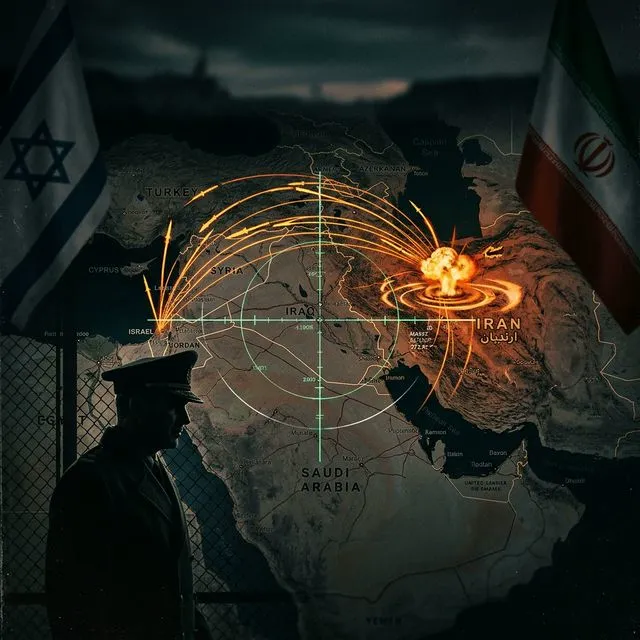
Esmail Khatib was not a household name outside intelligence circles. And that's exactly how he preferred it. Appointed Iran's Intelligence Minister in August 2021 by then-President Ebrahim Raisi, Khatib was considered one of the most powerful — and most feared — men in the Iranian regime.
Profile:
- Official role: Minister of Intelligence and Security (VEVAK/MOIS)
- Age at death: 63
- Background: Iran-Iraq War veteran (1980-1988), rose through the Revolutionary Guard (IRGC) via intelligence operations in Lebanon and Iraq
- Known responsibilities: Oversight of foreign espionage, domestic counterintelligence, coordination with Hezbollah and Shia militias in the region
- Sanctions: Under US, EU, and UK sanctions for human rights violations and terrorism support
What VEVAK Does
Iran's Ministry of Intelligence and Security (VEVAK) is often compared to the former Soviet KGB or the American CIA, but with a crucial difference: VEVAK operates both externally (espionage, assassinations, covert operations) and internally (repression of dissidents, citizen surveillance, media control).
Under Khatib, VEVAK was responsible for:
- Repression of the Mahsa Amini protests (2022-2023): Thousands arrested, hundreds killed, use of facial recognition technology to identify protesters
- Foreign operations: Assassination attempts on Iranian dissidents in Europe and the US
- Hezbollah coordination: Flow of weapons, training, and intelligence to the group in Lebanon
- Cyber warfare: Attacks on Israeli, US, and Gulf state infrastructure
- Informant network: One of the largest espionage networks in the Middle East, with confirmed presence in 40+ countries
How It Happened: The Operation
What We Know
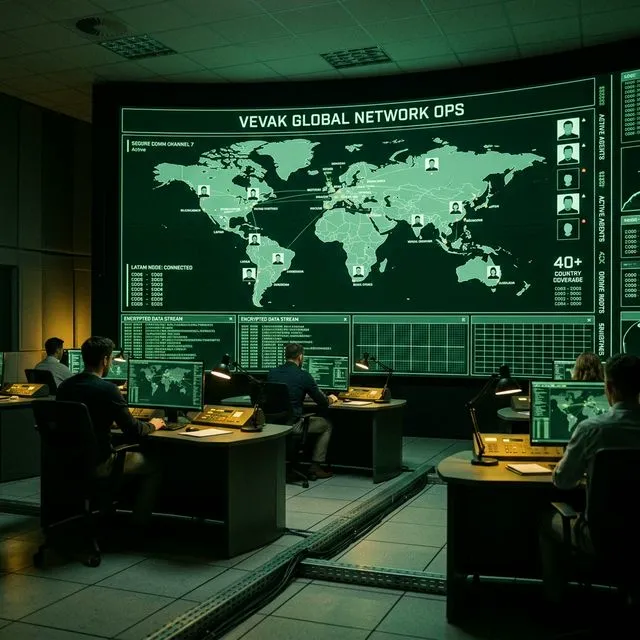
Israel didn't release operational details, but intelligence analyses and regional sources reconstruct a probable timeline:
Phase 1: Intelligence (weeks/months before)
- Mossad and Shin Bet monitored movements of senior Iranian officials since the conflict began in February
- Infiltrated informants within the regime (possibly inside VEVAK itself) provided data on Khatib's location and routine
- Satellites and reconnaissance drones mapped the target area
Phase 2: Decision (hours before)
- Israel's war cabinet authorized the operation
- Presumed coordination with the US (intelligence sharing via Five Eyes/SIGINT)
- Assessment of "collateral damage" risk — something Israel historically minimizes in such operations
Phase 3: Execution (March 18)
- Targeted strike — likely precision-guided missiles or a smart bomb delivered by an F-35I Adir fighter jet
- Ali Larijani was hit in a separate operation, possibly on the same day
- Confirmation via signals intelligence (SIGINT) and satellite
The Precedent: Israel and "Targeted Killings"
Israel has a long history of targeted eliminations of enemy leaders:
| Year | Target | Method | Impact |
|---|---|---|---|
| 2004 | Ahmed Yassin (Hamas) | Helicopter missile | Hamas radicalization |
| 2008 | Imad Mughniyeh (Hezbollah) | Car bomb in Damascus | Temporary disorganization |
| 2010 | Mahmoud Al-Mabhouh (Hamas) | Hotel assassination (Dubai) | Diplomatic crisis |
| 2020 | Qasem Soleimani (IRGC) | US drone (joint operation) | Escalation in Iraq |
| 2024 | Ismail Haniyeh (Hamas) | Explosive in Tehran | Regional shock |
| 2024 | Hassan Nasrallah (Hezbollah) | Bombardment in Beirut | Hezbollah disorganization |
| 2026 | Esmail Khatib (VEVAK) | Targeted strike | Developing |
The Retaliation: Missiles on Tel Aviv
What Happened
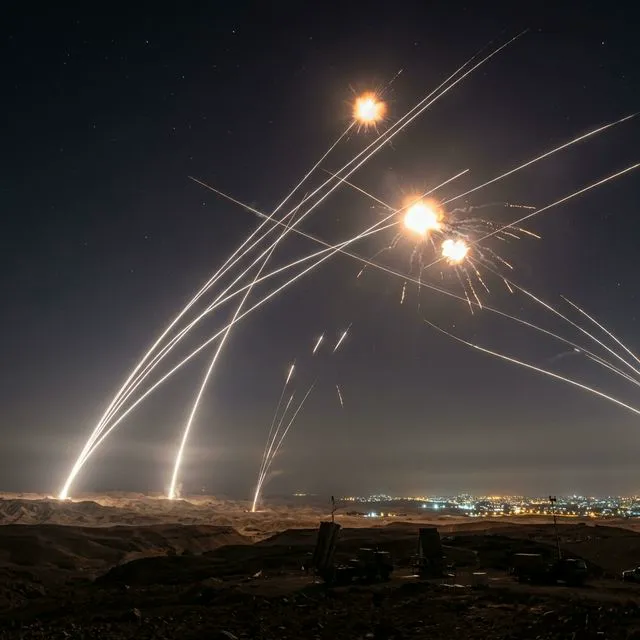
Hours after Khatib's death was confirmed, Iran launched a salvo of ballistic missiles at Israel:
- Type: Medium-range ballistic missiles (possibly Emad and Ghadr-110)
- Declared target: "Israeli military command centers"
- Actual result: Impacts near Tel Aviv, 2 Israeli civilians killed
- Interceptions: Iron Dome and Arrow 3 intercepted most missiles, but some got through
This was the fourth direct attack by Iran on Israeli territory since the conflict began in February, and the closest to central Tel Aviv.
Israel's Response
Israel promised that "every Iranian missile will be answered with ten" — a phrase attributed to the Defense Minister echoing the "disproportionate response" doctrine Israel has applied in previous conflicts.
The Human Cost: The Numbers of Tragedy
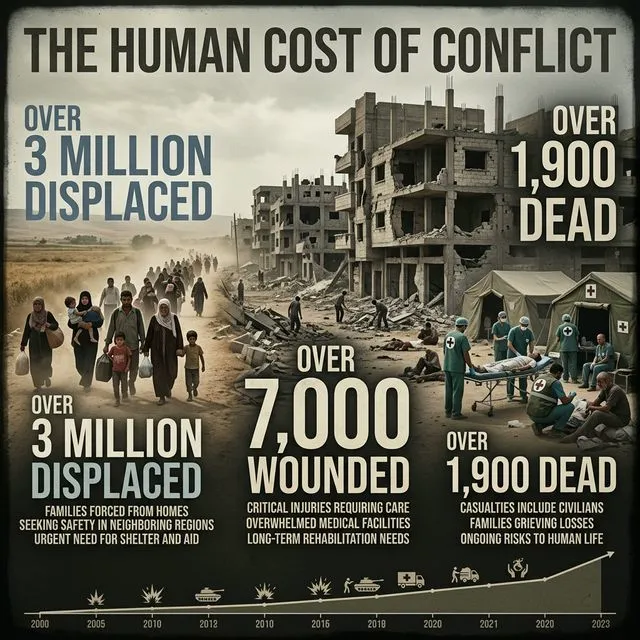
Dead and Wounded (as of March 18, 2026)
| Country/Region | Dead | Wounded | Displaced |
|---|---|---|---|
| 🇮🇷 Iran | 1,400+ | 5,000+ | ~2 million |
| 🇮🇱 Israel | 12-15 | ~200 | ~100,000 |
| 🇺🇸 USA (military) | 13 | ~50 | N/A |
| 🇱🇧 Lebanon | ~300 | ~1,500 | ~800,000 |
| 🇦🇪 UAE | ~50 | ~200 | N/A |
| 🇸🇾 Syria | ~100 | Unknown | N/A |
Estimated total: 1,900+ dead, 7,000+ wounded, 3+ million displaced
Destroyed Infrastructure
- Iran: Nuclear facilities partially destroyed, military bases, oil refineries on Kharg Island (responsible for 90% of Iranian exports)
- Israel: Minor damage to residential areas, Ben Gurion airport temporarily closed
- Lebanon: Entire neighborhoods in Beirut destroyed (again), hospitals hit
- UAE: QatarEnergy facilities in Ras Laffan hit by Shahed drones
Geopolitical Implications: What Comes Next
1. Internal Crisis in Iran
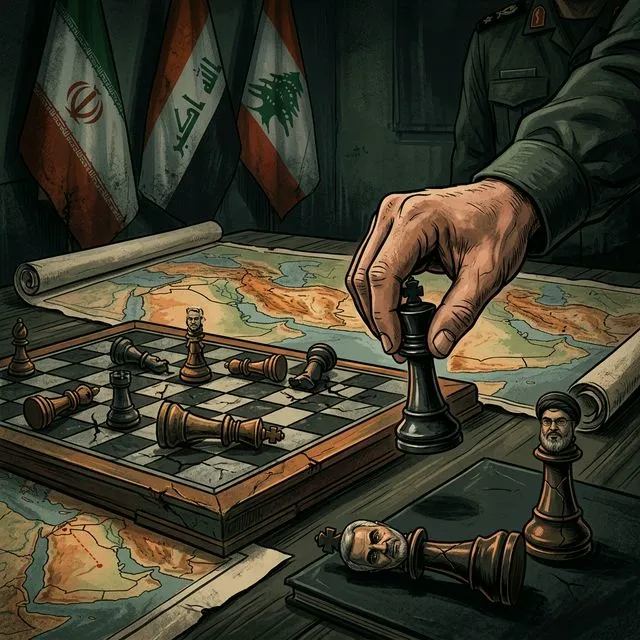
The deaths of Khatib and Larijani create a dangerous vacuum in Iranian leadership:
- Who takes over VEVAK? Possible replacements are considered less competent and less connected
- Armed forces morale: The perception that the regime can't protect its own leaders shakes internal confidence
- Popular pressure: Anti-war protests have been reported in Tehran and Isfahan — something unthinkable months ago
2. Escalation or De-escalation?
Two scenarios are equally likely:
Scenario A (Escalation):
- Iran intensifies attacks via proxies (Hezbollah, militias in Iraq)
- Iran's nuclear program abandons any pretense of peaceful use
- China and Russia increase military support for Iran
- Conflict spreads across the entire Gulf
Scenario B (Forced De-escalation):
- Weakened Iranian regime accepts mediation (likely via China or Turkey)
- US pressures Israel to accept cease-fire
- Conditional reconstruction with nuclear inspections
- Tension remains, but fighting stops
3. The Role of the US
The US attacked Iranian positions on the Strait of Hormuz coast on March 17, citing risk of anti-ship missiles against international shipping. The American embassy in Rome issued a global alert asking US citizens to exercise "extreme caution" — something that hadn't happened since 9/11.
4. Impact on Brazil
Brazil, as a significant oil importer, feels the direct impact:
- Gasoline: Forecast increase of 15-20% in coming weeks
- Inflation: Pressure on food and transportation costs
- Diplomacy: Brazil maintains "active neutrality," calling for cease-fire without explicitly condemning any party
- Citizens abroad: About 3,000 Brazilians in the conflict region, with repatriation flights organized by the Brazilian Air Force
Who Was Ali Larijani?
The Silent Strategist
Ali Larijani, the second target eliminated by Israel, was a very different figure from Khatib — and in many ways, even more important to the Iranian regime's functioning.
Profile:
- Role: Special adviser to Supreme Leader Khamenei on national security affairs
- Background: Former Parliament Speaker (2008-2020), former Secretary of the Supreme National Security Council, former chief nuclear negotiator
- Family: Brother of Sadeq Larijani (former head of the Judiciary) — the Larijanis are one of Iran's most powerful families
- Importance: Considered the "bridge" between the moderate and radical wings of the regime — his death removes the main internal communication channel
The elimination of Larijani alongside Khatib suggests an intelligence operation of unprecedented scale. Hitting two high-level targets within the same period implies:
- Deep penetration of Iranian security — someone very close to the top is providing information
- Operational capability to execute multiple simultaneous operations in hostile territory
- Strategic decision to "decapitate" the leadership rather than destroy infrastructure
The Impact on the Chain of Command
With Khatib and Larijani eliminated, Iran faces an unprecedented modern problem: the intelligence and national security chain of command is severely compromised. Possible consequences:
- Institutional paranoia: Who betrayed? Who is the informant? Distrust can paralyze operations
- Internal purges: Historically, authoritarian regimes react to security failures with purges — further weakening the apparatus
- Lack of coordination: Without the "pivot" Larijani represented, rival factions within the regime may clash
- Supreme Leader's vulnerability: If Israel can hit the intelligence minister and security adviser, the inevitable question is: is Khamenei next?
International Reactions
Israel's Allies
- USA: White House issued a statement declaring "Israel has the right to defend itself against existential threats" — without confirming or denying participation in the operation
- UK: Cautious stance — "we call for restraint from all parties" while maintaining intelligence cooperation with Israel
- Germany: Chancellor expressed "concern about escalation" but reaffirmed commitment to Israel's security
Iran's Allies
- China: Called emergency session at the UN Security Council (vetoed by the US). Declared that "extrajudicial killings violate international law"
- Russia: Putin called the attack an "act of state terrorism" and offered military assistance to Iran — though analysts question Russia's ability to deliver, given its exhaustion in Ukraine
- Turkey: Erdogan condemned the attack and offered mediation — an ambiguous position as a NATO member with ties to Iran
- Iraq/Syria: Shia militias promised retaliation against American interests in the region — with at least 3 attacks on US bases in Iraq in the following 24 hours
International Organizations
- UN: Secretary-General called for "immediate and unconditional cease-fire" — without enforcement mechanism
- Red Cross/ICRC: Warned of humanitarian crisis on multiple fronts — access to wounded hindered by fighting intensity
- Amnesty International: Classified the elimination as a "potential violation of international humanitarian law" and called for an independent investigation
Analysis: Does the Decapitation Doctrine Work?
Historical Cases
The strategy of eliminating enemy leaders — called "decapitation" in military strategy — has a mixed track record:
| Case | Immediate Result | Long-term Result |
|---|---|---|
| Yamamoto (Japan, 1943) | Demoralized the Imperial Navy | Japan continued fighting for 2 years |
| Osama Bin Laden (2011) | Al-Qaeda weakened | ISIS emerged as replacement |
| Soleimani (2020) | Iran retaliated moderately | IRGC maintained operations |
| Nasrallah (2024) | Hezbollah temporarily disorganized | Structure reorganized in months |
| Khatib (2026) | Missile retaliation | Uncertain |
Academic studies' conclusion (RAND Corporation, Brookings Institution) is that decapitation rarely resolves conflicts — and frequently worsens them. Hierarchical organizations (like VEVAK) have succession mechanisms. Network organizations (like Hezbollah) are even more resilient.
The exception: When decapitation is combined with sustained military, economic, and diplomatic pressure, it can force negotiations. That's what the US and Israel appear to be betting on.
Frequently Asked Questions (FAQ)
Can Khatib's death end the war?
Unlikely in the short term. Leader eliminations historically generate retaliation before generating disorganization. But in the medium term, if the Iranian regime feels its leaders are vulnerable, it may accept negotiations.
What exactly is VEVAK?
It's Iran's Ministry of Intelligence and Security — equivalent to a fusion of CIA + FBI + NSA. Responsible for espionage, counterintelligence, covert operations, and internal repression.
Can Israel be prosecuted for targeted killings?
Legally, targeted killings in the context of armed conflict occupy a gray area of International Humanitarian Law. Israel argues they are legitimate military operations against enemy combatants. Human rights organizations disagree, especially when there are civilian casualties.
How does this affect oil?
Directly. The Strait of Hormuz is virtually blocked, oil reached $109/barrel, and the IEA released 400 million barrels of emergency reserves. Expectation is that prices will remain above $100 as long as the conflict lasts.
What is Brazil's position?
Brazil maintains diplomatic neutrality, calling for cease-fire and diplomatic solutions without explicitly sanctioning any party — similar to the position adopted during Russia's invasion of Ukraine in 2022.
Conclusion: The World Holds Its Breath
The elimination of Esmail Khatib and Ali Larijani is the largest "targeted killing" operation against Iranian leadership in history. It surpasses even the elimination of Qasem Soleimani in 2020 in terms of institutional impact — Soleimani was charismatic and public, but Khatib controlled the intelligence apparatus that is, literally, the regime's eyes and ears.
What comes next? Nobody knows for certain. But one thing is clear: March 2026 has entered history as the month when the Middle East — and the world — came closer to the edge than at any point since the Cuban Missile Crisis of 1962.
The world holds its breath. And prays that someone — human or machine — finds the "off" button before it's too late.
Sources and References
- The Guardian — Israel Claims to Kill Iran's Intelligence Chief (2026)
- The Hindu — Iran Intelligence Minister Khatib Killed
- Atlantic Council — Strait of Hormuz Crisis Analysis
- Reuters — Iran Retaliatory Missile Strike on Tel Aviv
- BBC — Civilian Casualties in Iran Conflict
- International Crisis Group — Middle East Escalation Report


