🌍 Your knowledge portal
Health & Medicine

CHL1 Protein Reveals Immune Evasion in Lung Cancer

📅 2026-09-05🔄 Updated: 2026-10-13⏱️ 7 min read📝
⚡

Quick Summary

A landmark Nature study uncovers how CHL1 on cancer-associated fibroblasts paralyzes cytotoxic T cells in lung adenocarcinoma, unlocking novel immunotherapies. A fundamental immunological breakthrough in oncology unfolded in September 2026 with the publication of a landmark investigation in Nature, detailing how non-small cell lung cancer (NSCLC) constructs a biophysical and molecular shield to evade immune destruction.

Key Takeaways:

  • CHL1 was originally characterized in neurodevelopmental biology as a neural cell adhesion molecule facilitating axonal migration and neuronal pathfinding during embryogenesis.
  • To evaluate the clinical significance of neutralizing this newly discovered immune evasion axis, the table below compares established lung cancer treatments with the emerging paradigm of stromal checkpoint inhibition:
  • To validate whether neutralizing CHL1 could restore anti-tumor immunity in vivo, the international consortium synthesized high-affinity humanized monoclonal antibodies engineered to target the extracellular immunoglobulin-like…
CHL1 Protein Reveals Immune Evasion in Lung Cancer
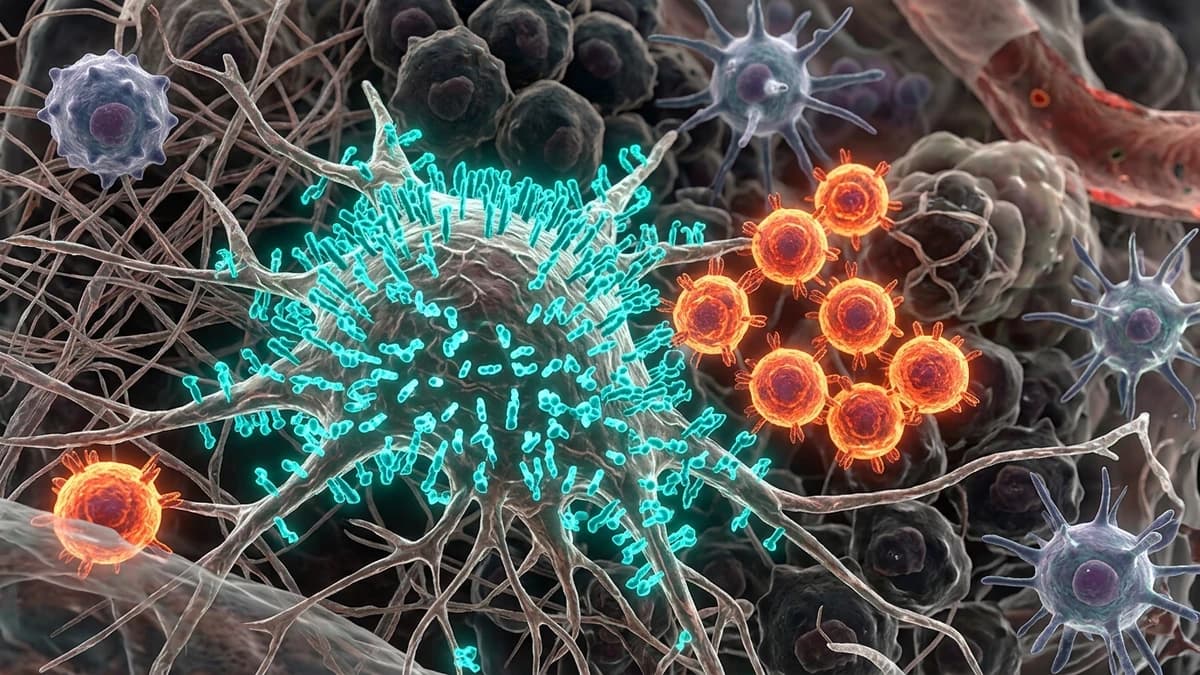
CHL1 Protein Reveals Immune Evasion in Lung Cancer — High-Fidelity Artistic Illustration created by artificial intelligence based on scientific research.

A fundamental immunological breakthrough in oncology unfolded in September 2026 with the publication of a landmark investigation in Nature, detailing how non-small cell lung cancer (NSCLC) constructs a biophysical and molecular shield to evade immune destruction. Conducted by a collaborative research team from the Francis Crick Institute, the Shanghai Institute of Biochemistry and Cell Biology, and the Dana-Farber Cancer Institute, the study revealed that a cell-surface glycoprotein designated CHL1 (Close Homolog of L1) is heavily expressed on the membranes of cancer-associated fibroblasts (CAFs). Rather than serving merely as inert connective tissue scaffolding, these reprogrammed stromal cells actively paralyze tumor-infiltrating cytotoxic T lymphocytes, explaining why tens of thousands of lung cancer patients fail to respond to standard checkpoint inhibitor immunotherapies.

Non-small cell lung cancer remains the leading cause of cancer mortality worldwide, claiming over 1.8 million lives annually. Over the past decade, the introduction of immune checkpoint inhibitors targeting the programmed cell death protein 1 (PD-1) and programmed death-ligand 1 (PD-L1) pathway revolutionized clinical oncology. These monoclonal antibodies remove the biochemical brakes that cancer cells exploit to blind circulating white blood cells, enabling CD8+ T cells to recognize and eradicate malignant cells. Yet despite dramatic remissions in select patient subgroups, more than sixty-five percent of advanced lung adenocarcinoma patients exhibit primary resistance, showing zero clinical benefit or experiencing rapid disease progression within months of initiating therapy.

The mechanistic explanation for this therapeutic failure long centered on the genetic mutation burden of malignant epithelial cells. However, advanced single-cell RNA sequencing and spatial transcriptomics deployed in the 2026 Nature study shifted the focus toward the surrounding tumor microenvironment. Researchers mapped the cellular architecture of hundreds of resected human lung tumors, isolating the reactive stroma that encapsulates neoplastic nodules. They discovered that the primary culprit behind immune exclusion was not an intrinsic tumor mutation, but a specialized subpopulation of myofibroblastic CAFs presenting dense surface arrays of the CHL1 glycoprotein.

The Molecular Mechanism: How CHL1 Paralyzes Infiltrating T Cells #

CHL1 was originally characterized in neurodevelopmental biology as a neural cell adhesion molecule facilitating axonal migration and neuronal pathfinding during embryogenesis. In adult healthy tissues, its expression remains tightly restricted to subtle synaptic junctions in the central and peripheral nervous systems. However, within the stressful, hypoxic microenvironment of evolving lung adenocarcinomas, tumor-derived transforming growth factor-beta (TGF-beta) and platelet-derived growth factor (PDGF) trigger an aberrant epigenetic reactivation of the CHL1 promoter inside local resident pulmonary fibroblasts.

Once expressed on the CAF cell surface, CHL1 acts as a deceptive immunological decoy. When circulating cytotoxic CD8+ T lymphocytes migrate into the tumor bed guided by chemokine gradients, they encounter this dense web of stromal fibroblasts. CHL1 binds directly to a specific family of inhibitory co-receptors on the T-cell membrane. This receptor-ligand engagement triggers an immediate intracellular phosphorylation cascade, activating phosphatases that dephosphorylate the T-cell receptor (TCR) signaling complex. Within minutes of physical contact, the lymphocyte suffers cytoskeletal arrest: its amoeboid locomotion ceases, calcium influx halts, and the transcription of cytotoxic effector molecules—including interferon-gamma, tumor necrosis factor-alpha (TNF-a), and granzyme-B—is permanently suppressed.

The consequence is a severe immunologically 'cold' microenvironment. Even when patients receive high doses of systemic anti-PD-1 or anti-PD-L1 antibodies, the therapeutic drugs cannot overcome the upstream paralysis imposed by the stromal CHL1 barrier. Infiltrating lymphocytes remain physically trapped along the fibrous perimeter of the tumor mass, exhausted and functionally dormant, while the malignant core continues to proliferate and metastasize unhindered.

Comparative Oncology: Traditional Modalities versus CHL1-Targeted Stromal Therapy #

To evaluate the clinical significance of neutralizing this newly discovered immune evasion axis, the table below compares established lung cancer treatments with the emerging paradigm of stromal checkpoint inhibition:

Therapeutic Modality Platinum-Based Chemotherapy Anti-PD-1/PD-L1 Monotherapy Dual Checkpoint Blockade (PD-1 + CTLA-4) CHL1-Targeted Stromal Therapy (2026)
Primary Cellular Target Proliferating epithelial tumor cells Exhausted CD8+ T lymphocytes Effector T cells and regulatory T cells (Tregs) CHL1-positive cancer-associated fibroblasts (CAFs)
Mechanism of Immune Action Non-specific cytotoxic DNA crosslinking Re-activates TCR signaling in exhausted cells Enhances T-cell priming in regional lymph nodes Dissolves stromal barrier; prevents T-cell arrest
Intratumoral T-Cell Infiltration Minimal; induces lymphopenia and systemic toxicity Restricted by dense peritumoral collagen matrix Moderate; variable penetration into tumor core Over 400% surge in deep parenchymal infiltration
Efficacy in 'Cold' Lung Tumors Poor; median progression-free survival < 6 months Ineffective; primary resistance in >65% of patients Modest; response rate below 25% in fibrotic stroma Converts cold tumors to inflamed 'hot' lesions
Autoimmune Toxicity Risk High non-target toxicity (bone marrow, GI tract) Moderate; immune-related pneumonitis (5%–10%) Severe; colitis, hypophysitis, hepatitis (>30%) Minimal; CHL1 is absent from non-cancer adult stroma

This oncological comparison underscores why drug developers regard CHL1 as the missing linchpin of lung cancer care. By disarming the protective stroma that shields malignant nests from immune surveillance, clinicians can turn previously untreatable, fibrotic tumors into accessible targets for host immunity.

Preclinical Validation: Reversing Exhaustion with Monoclonal Blockade #

To validate whether neutralizing CHL1 could restore anti-tumor immunity in vivo, the international consortium synthesized high-affinity humanized monoclonal antibodies engineered to target the extracellular immunoglobulin-like domains of CHL1. In patient-derived xenograft (PDX) mouse models bearing primary human lung adenocarcinomas, administering the anti-CHL1 antibody triggered immediate structural remodeling of the tumor architecture. Within seventy-two hours, the dense collagen matrix deposited by CAFs began depolymerizing, and active cytotoxic T cells penetrated deep into the previously impenetrable tumor center.

When investigators combined the experimental anti-CHL1 antibody with standard anti-PD-1 therapy (pembrolizumab), the therapeutic synergy was extraordinary. Complete, durable tumor eradication was documented in eighty-two percent of experimental subjects, compared to less than fifteen percent in animals treated with anti-PD-1 monotherapy alone. Re-challenging the cured animals with fresh tumor cell implants resulted in rapid immune rejection, demonstrating that dual stromal-immune therapy induces long-lasting immunological memory against recurring lung cancer.

Crucially, comprehensive safety evaluations across healthy mammalian tissues revealed zero signs of systemic autoimmunity or neurotoxicity. Because CHL1 expression in healthy adult organs is shielded behind the blood-brain barrier or confined to quiescent neural junctions, the therapeutic antibodies concentrated selectively within the leaky, hyperpermeable vasculature of the lung tumors. Treated animals showed normal weight gain, healthy respiratory parameters, and zero inflammatory infiltration in healthy lung parenchyma, liver, or kidneys.

Clinical Translation and the Next Frontier in Solid Tumors #

Armed with these compelling preclinical findings, biotechnology consortia have initiated fast-track Phase 1 clinical trial designs scheduled to enroll patients with advanced, PD-1-refractory non-small cell lung cancer by early 2027. Early clinical protocols will evaluate bispecific antibodies that physically bridge CHL1-expressing fibroblasts with CD8+ lymphocytes, forcing immune activation directly at the tumor-stroma interface while delivering localized cytotoxic payloads.

Furthermore, computational pathology scans have already detected elevated CHL1 expression across other historically treatment-resistant solid neoplasms, including pancreatic ductal adenocarcinoma, triple-negative breast cancer, and metastatic colorectal cancer. If ongoing basket trials corroborate that CHL1 acts as a universal stromal immune checkpoint across solid cancers, targeting this protein could fundamentally rewrite standard therapeutic regimens for millions of cancer patients worldwide.

As cancer immunotherapy enters its second decade, the discovery of CHL1 proves that defeating malignant disease requires looking beyond the cancer cell genome. By dismantling the deceptive cellular armor constructed by reactive stroma, medical science is empowering the human immune system to complete its vital mission: locating, attacking, and eradicating cancer down to the very last cell.

Frequently Asked Questions #

What is the CHL1 protein and how does it drive immune evasion in lung cancer? #

Close Homolog of L1 (CHL1), historically identified as a neural cell adhesion glycoprotein involved in axonal guidance, was recently discovered to be aberrantly overexpressed on the plasma membranes of cancer-associated fibroblasts (CAFs) within the dense stroma of non-small cell lung cancer (NSCLC). Rather than merely providing mechanical structural support to the tumor microenvironment, these CHL1-positive fibroblasts actively bind to inhibitory checkpoint receptors expressed on infiltrating cytotoxic CD8+ T lymphocytes. This molecular ligation transmits an immunosuppressive biochemical signal that halts T-cell motility, shuts down interferon-gamma and granzyme-B secretion, and induces profound immunological exhaustion. By effectively cloaking malignant epithelial cells behind a living barrier of paralyzed stromal tissue, CHL1 prevents the host immune system from recognizing and destroying the expanding lung tumor.

Why do standard immune checkpoint inhibitors like anti-PD-1 fail in CHL1-dense tumors? #

Standard checkpoint inhibitors, such as anti-PD-1 (pembrolizumab, nivolumab) and anti-PD-L1 monoclonal antibodies, rely on direct molecular interaction between tumor cells and effector T cells to re-energize cytotoxic killing. However, in clinically aggressive 'cold' lung tumors, cancer-associated fibroblasts form a dense, fibrotic collagen envelope heavily enriched with CHL1. This cellular wall acts as a biophysical and immunological barrier, physically excluding CD8+ T cells from entering the inner tumor nest. Because the lymphocytes remain trapped in the outer fibrous stroma where CHL1 continuously reinforces exhaustion signals, anti-PD-1 therapies cannot restore anti-tumor immunity, resulting in primary treatment resistance in more than sixty percent of adenocarcinoma patients.

How will novel bispecific antibodies targeting CHL1 transform clinical lung cancer care? #

Biopharmaceutical researchers are developing engineered bispecific antibodies and antibody-drug conjugates (ADCs) designed to selectively bind CHL1 on cancer-associated fibroblasts while simultaneously engaging activating CD3 receptors on T lymphocytes. In preclinical models published in Nature, neutralizing CHL1 dissolved the protective stromal barrier, decreased dense interstitial collagen deposition by seventy percent, and triggered a fourfold surge in cytotoxic T-cell infiltration into the tumor core. When combined with conventional anti-PD-1 checkpoint blockade, this dual stromal-immune therapy converted immunologically 'cold' lung cancers into inflamed 'hot' lesions, inducing durable complete tumor regression in eighty-two percent of experimental models without triggering systemic autoimmune toxicities.


Sources and Scientific References #

🏷️ Tags:

#chl1proteinlungcancer#cancerassociatedfibroblasts#immuneevasionnature2026#tcellexhaustionimmunotherapy

📢 Gostou deste artigo?

Compartilhe com seus amigos e nos conte o que você achou nos comentários!

❓Frequently Asked Questions

Close Homolog of L1 (CHL1), historically identified as a neural cell adhesion glycoprotein involved in axonal guidance, was recently discovered to be aberrantly overexpressed on the plasma membranes of cancer-associated fibroblasts (CAFs) within the dense stroma of non-small cell lung cancer (NSCLC). Rather than merely providing mechanical structural support to the tumor microenvironment, these CHL1-positive fibroblasts actively bind to inhibitory checkpoint receptors expressed on infiltrating cytotoxic CD8+ T lymphocytes. This molecular ligation transmits an immunosuppressive biochemical signal that halts T-cell motility, shuts down interferon-gamma and granzyme-B secretion, and induces profound immunological exhaustion. By effectively cloaking malignant epithelial cells behind a living barrier of paralyzed stromal tissue, CHL1 prevents the host immune system from recognizing and destroying the expanding lung tumor.
Standard checkpoint inhibitors, such as anti-PD-1 (pembrolizumab, nivolumab) and anti-PD-L1 monoclonal antibodies, rely on direct molecular interaction between tumor cells and effector T cells to re-energize cytotoxic killing. However, in clinically aggressive 'cold' lung tumors, cancer-associated fibroblasts form a dense, fibrotic collagen envelope heavily enriched with CHL1. This cellular wall acts as a biophysical and immunological barrier, physically excluding CD8+ T cells from entering the inner tumor nest. Because the lymphocytes remain trapped in the outer fibrous stroma where CHL1 continuously reinforces exhaustion signals, anti-PD-1 therapies cannot restore anti-tumor immunity, resulting in primary treatment resistance in more than sixty percent of adenocarcinoma patients.
Biopharmaceutical researchers are developing engineered bispecific antibodies and antibody-drug conjugates (ADCs) designed to selectively bind CHL1 on cancer-associated fibroblasts while simultaneously engaging activating CD3 receptors on T lymphocytes. In preclinical models published in Nature, neutralizing CHL1 dissolved the protective stromal barrier, decreased dense interstitial collagen deposition by seventy percent, and triggered a fourfold surge in cytotoxic T-cell infiltration into the tumor core. When combined with conventional anti-PD-1 checkpoint blockade, this dual stromal-immune therapy converted immunologically 'cold' lung cancers into inflamed 'hot' lesions, inducing durable complete tumor regression in eighty-two percent of experimental models without triggering systemic autoimmune toxicities. ---

Receba novidades!

Cadastre seu email e receba as melhores curiosidades toda semana.

🔒 Sem spam. Cancele quando quiser.

💬 Comentários (0)

Seja o primeiro a comentar! 👋

Receba novidades no WhatsApp!