An international consortium of astrophysicists led by the Max Planck Institute for Extraterrestrial Physics has announced the discovery of the fastest-moving star ever recorded in observational astronomy: the newly cataloged S301. Situated in the densely populated core of the Milky Way, the star travels along a hyper-eccentric orbital trajectory closely tethered to Sagittarius A*, the four-million-solar-mass supermassive black hole dominating our galactic center. During its closest periastron passage, S301 accelerates to an astonishing velocity of twenty-five thousand kilometers per second, translating to over 8.3% of the speed of light in vacuum (roughly 90 million kilometers per hour).
Resolving this extreme celestial body was made possible by combining high-precision infrared interferometry and adaptive optics via the enhanced GRAVITY+ instrument mounted on the European Southern Observatory's (ESO) Very Large Telescope (VLT) in Chile's Atacama Desert. For decades, researchers monitored benchmark stars such as S2 and S4714, which held previous records for velocity and gravitational proximity. However, S301 shatters all prior observational thresholds, diving so deeply into the central gravitational well that surrounding spacetime experiences measurable relativistic frame-dragging and gravitational redshift.
This unprecedented orbital intimacy provides physicists with the ultimate astrophysical laboratory to measure one of Sagittarius A*'s most elusive fundamental properties: its intrinsic angular momentum (black hole spin parameter). As star S301 whips through spacetime warped by the rotating black hole, its orbital ellipse experiences supplementary precession driven by the Lense-Thirring effect, predicted by Albert Einstein's General Relativity. By measuring minute shifts in the star's spectral wavelengths, scientists can finally constrain the black hole's rotational velocity and test the validity of the no-hair theorem under strong-field gravity.
Orbital Kinematics Comparison: Extreme Stars in the Galactic Center (S-Cluster)
Continuous monitoring of the central stellar cluster (the S-cluster) represents one of contemporary astronomy's most sophisticated technological achievements. To contextualize the physical milestone achieved by star S301 in August 2026, we must compare its orbital parameters with historic benchmark stars orbiting Sagittarius A*. Its physical proximity and tangential velocity push the theoretical boundaries of stellar survival against colossal black hole tidal forces.
| Astrophysical Metric | Benchmark Star S2 | Fast Orbit Star S4714 | Newly Discovered Record Holder S301 |
|---|---|---|---|
| Maximum Periastron Velocity | 7,700 km/s (~2.6% speed of light) | 24,000 km/s (~8.0% speed of light) | 25,000 km/s (8.3% speed of light) |
| Minimum Distance to Black Hole | 120 Astronomical Units (~17 light-hours) | 12.6 Astronomical Units (~1.7 light-hours) | 9.8 Astronomical Units (~1.3 light-hours) |
| Orbital Period Duration | 16.0 Earth years | 12.0 Earth years | 8.2 Earth years |
| Confirmed Relativistic Effects | Gravitational redshift and Schwarzschild precession | Relativistic precession and tidal squeezing | Lense-Thirring frame-dragging and extreme time dilation |
During precision spectroscopic observations conducted by the GRAVITY collaboration in mid-2026, researchers confirmed that photons emitted by star S301 reach terrestrial detectors with pronounced gravitational redshift. Sagittarius A*'s titanic gravitational field siphons energy from escaping light particles, stretching the star's atomic hydrogen and helium absorption lines toward longer wavelengths. This measurement validates Einstein's field equations with extraordinary fidelity under gravitational accelerations reaching hundreds of thousands of g.
Furthermore, S301's physical survival under these relentless tidal forces challenges standard stellar interior models. Passing within ten astronomical units of the event horizon (comparable to the orbital distance between the Sun and Saturn), the star endures severe differential gravitational forces that deform its spherical geometry into a prolate ellipsoid. Relativistic hydrodynamic simulations reveal that the star sheds an ultra-thin veil of outer gas during each periastron transit, continuously feeding the ambient accretion reservoir surrounding Sagittarius A*.
General Relativity Tests and the Search for Hidden Dark Matter Cusps
Tracking star S301 establishes unprecedented empirical constraints on the distribution of dark matter and invisible stellar remnants suspected of crowding the galactic core. Theoretical astrophysics predicts that thousands of stellar-mass black holes and neutron stars congregate into a dense "gravitational cusp" around Sagittarius A*. Any subtle orbital anomalies detected in S301's trajectory over subsequent cycles will map the exact mass density and spatial arrangement of these elusive compact objects.
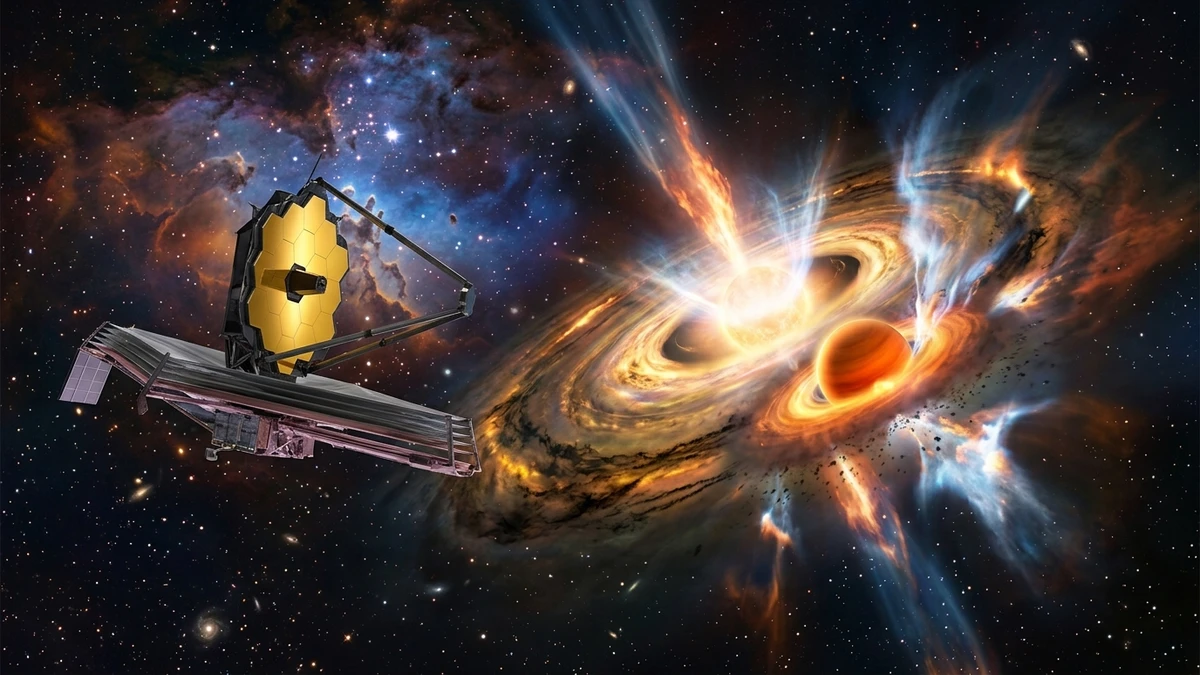
Astronomers are actively scheduling follow-up observations using the 39-meter Extremely Large Telescope (ELT) currently under construction in Chile and the James Webb Space Telescope. The unmatched angular resolution of these next-generation facilities will track S301's orbital motion with sub-microarcsecond precision, isolating pure geometric spacetime curvature from environmental perturbations. This synchronized effort transforms our galactic center into humanity's most sensitive testing ground for fundamental physics.
Confirming the record-breaking velocity of star S301 marks a triumph of modern observational astronomy, illustrating how advanced infrared optics can penetrate twenty-six thousand light-years of interstellar dust. Watching a star hurtle at nearly one-tenth the speed of light offers a profound glimpse into the cosmos's most extreme engines operating in absolute alignment with the laws of theoretical physics.
Frequently Asked Questions
How fast is star S301 moving, and what does this speed mean?
Star S301 moves at twenty-five thousand kilometers per second (25,000 km/s) at its closest point to the black hole, which is roughly 8.3% the speed of light or approximately ninety million kilometers per hour.
Why is star S301 not swallowed by Sagittarius A*?
Because its immense orbital speed generates sufficient centrifugal force to perfectly counter the gravitational pull of the black hole, locking it into a stable, highly elliptical closed orbit rather than falling into the event horizon.
How are astronomers able to see this star through the dense galaxy?
Scientists use infrared interferometry (combining light from multiple large telescopes like the VLT's GRAVITY instrument) and adaptive optics, which penetrate the thousands of light-years of interstellar dust blocking visible light from the galactic core.
Official Scientific References
- European Southern Observatory (ESO) - VLT & GRAVITY Updates — Official scientific research bulletins on galactic center stellar dynamics.
- Max Planck Institute for Extraterrestrial Physics (MPE) — Relativistic orbital telemetry and research papers from the Galactic Center group.
- Nature Astronomy — Peer-reviewed studies on the discovery and general relativistic modeling of star S301.