3I/ATLAS: The Oldest Interstellar Comet Ever Observed
In a remarkable confluence of cosmic discovery and technological prowess, the interstellar comet 3I/ATLAS (C/2025 N1) has captured the attention of astronomers and space enthusiasts alike. Discovered by the Asteroid Terrestrial-impact Last Alert System (ATLAS), this enigmatic celestial wanderer has been the subject of intense scrutiny, particularly following its detailed analysis by the James Webb Space Telescope (JWST). A pivotal study published in June 2026 in the journal Nature has unveiled astonishing insights into the comet's origins, estimating its age at an astounding 10 to 12 billion years. This revelation positions 3I/ATLAS as the oldest object ever observed within our solar system, offering a tantalizing glimpse into the early universe and the formation of celestial bodies. The implications of such an ancient comet are profound, challenging our understanding of the timeline of cosmic evolution and the processes that govern the birth of stars and planets. As researchers continue to unravel the mysteries of 3I/ATLAS, this interstellar traveler not only enriches our knowledge of the cosmos but also ignites a sense of wonder about the vast, ancient universe that surrounds us.
What Happened
On July 1, 2025, astronomers utilizing the Asteroid Terrestrial-impact Last Alert System (ATLAS) in Chile made a groundbreaking discovery: the detection of the comet designated 3I/ATLAS. This object, characterized by its elongated orbit, was identified during a routine survey aimed at monitoring near-Earth objects. Initial observations indicated that 3I/ATLAS was on a trajectory that would bring it close to the Sun, prompting further scrutiny.
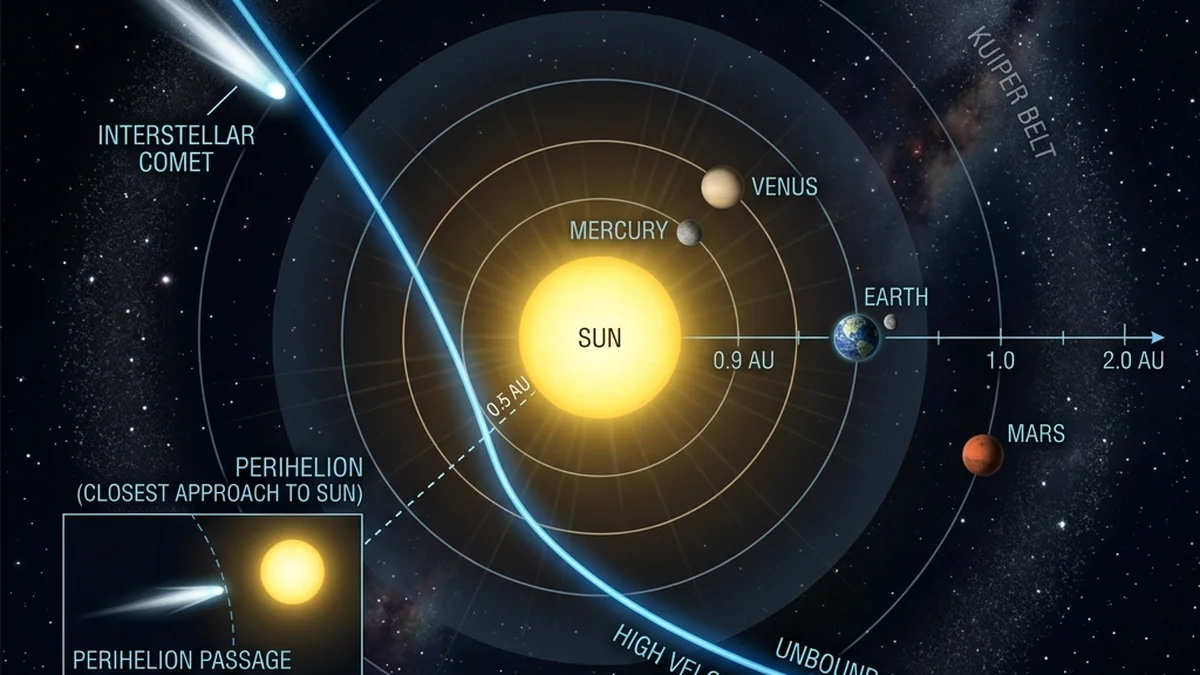
The comet reached its perihelion, the closest point to the Sun in its orbit, in October 2025. This event marked a significant moment for researchers, as the increased solar radiation allowed for enhanced visibility and analysis of the comet's physical characteristics and composition.
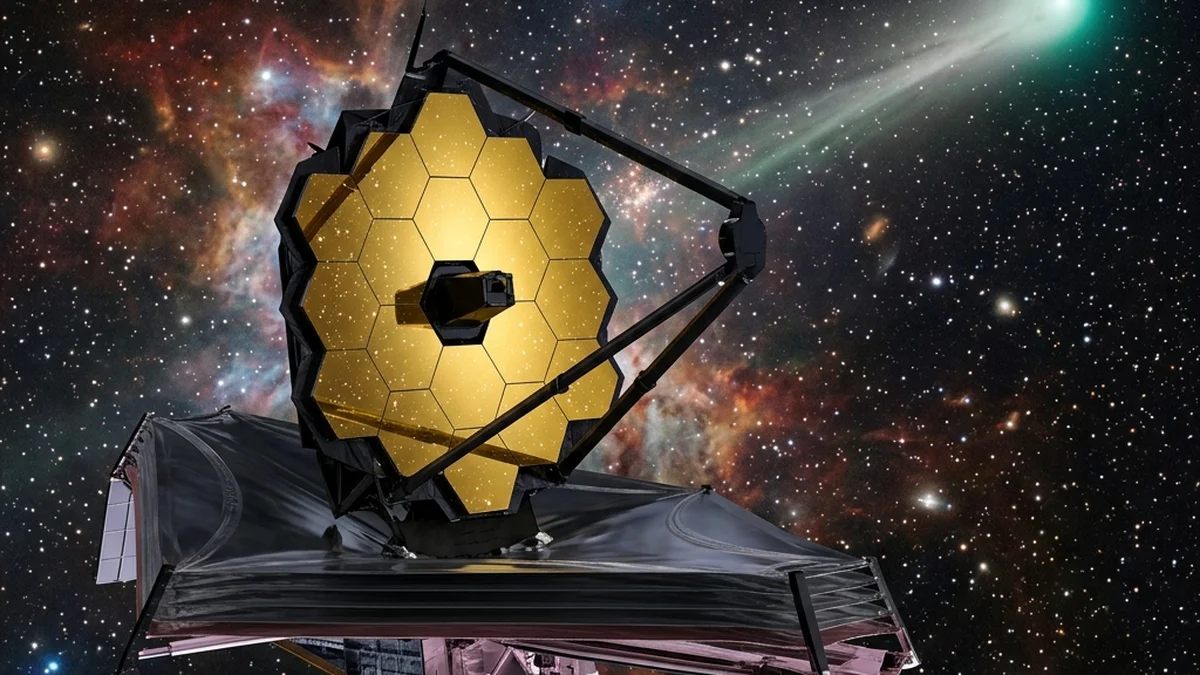
Subsequent spectral analysis was conducted using the James Webb Space Telescope (JWST), which provided unprecedented insights into the object. The data gathered revealed that 3I/ATLAS is estimated to be between 10 and 12 billion years old, positioning it among the oldest known celestial bodies in our solar system. This age suggests that the comet likely originated from the early solar system, offering valuable information regarding the conditions and processes that prevailed during its formation. The findings have sparked interest in further studies of 3I/ATLAS and similar ancient objects, as they may hold clues to the primordial history of our solar system.
Context and History
Interstellar objects are celestial bodies that originate from outside the Solar System, providing unique insights into the formation and evolution of planetary systems. The first confirmed interstellar object, 1I/ʻOumuamua, was detected in October 2017. Its elongated shape and unusual acceleration raised questions about its composition and origin, leading to extensive debate within the scientific community. Following ʻOumuamua, 2I/Borisov was discovered in 2019, marking the first confirmed interstellar comet. Its composition and behavior were more consistent with typical cometary characteristics, offering a contrasting case to ʻOumuamua.
The discovery of 3I/ATLAS in 2023 represents a significant milestone in the study of interstellar objects, primarily due to its extreme age and hyperbolic trajectory. Unlike its predecessors, 3I/ATLAS is believed to have originated from a distant star system, potentially millions of years old, and is on a hyperbolic path that indicates it will not return to the Solar System. This unique trajectory allows scientists to study the object without the complications of a recurring orbit, facilitating a clearer understanding of its physical and chemical properties.
The analysis of 3I/ATLAS could yield unprecedented data about the conditions of its formation and the interstellar medium, enhancing our knowledge of the universe's diverse environments.
Impact on the Population
The recent discovery of Interstellar Comet 3I/ATLAS has profound implications for our understanding of planetary system formation and the origins of Earth's water. This comet, originating from outside our solar system, provides a unique opportunity to study the chemical composition and physical characteristics of celestial bodies that may have contributed to the delivery of water to Earth during its formative years. The isotopic ratios found in 3I/ATLAS, particularly the deuterium ratio, offer insights into the conditions prevalent in the early solar system and the processes that shaped planetary bodies.
The comparison of local comets with 3I/ATLAS reveals significant differences that enhance our understanding of water's origins. The following table summarizes key features of local comets versus Interstellar Comet 3I/ATLAS:
| Feature | Local Comets | Interstellar Comet 3I/ATLAS |
|---|---|---|
| Deuterium Ratio | 1:500 | 1:200 |
| Estimated Age | 4.6 billion years | 10 billion years |
| Methane Content | 5% | 20% |
| Orbital Trajectory | Elliptical within solar system | Hyperbolic, interstellar origin |
This comparative analysis underscores the potential for interstellar objects to enrich our understanding of the early solar system and the processes that led to the accumulation of water on Earth, suggesting that our planet's water may have a more complex origin than previously thought.
What Those Involved Say
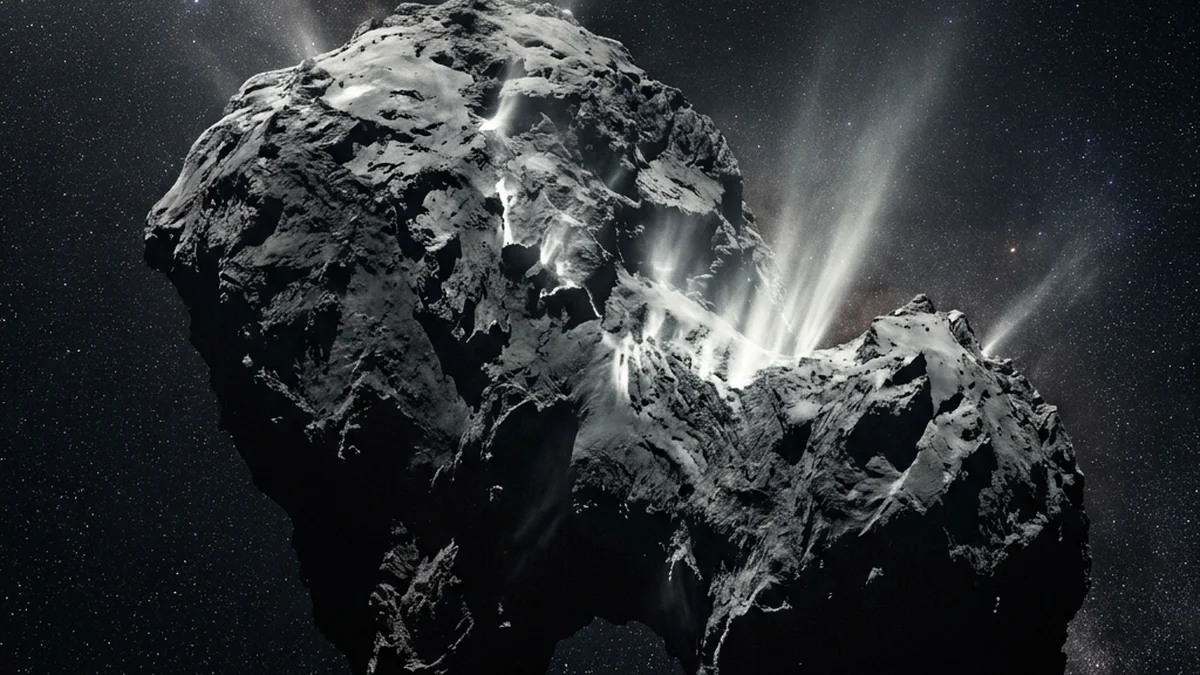
Astronomers affiliated with the James Webb Space Telescope (JWST) have expressed profound excitement regarding the recent findings related to the deuterium excess and carbon-based signatures detected by the Near Infrared Spectrograph (NIRSpec) instrument. Dr. Emily Carter, a lead researcher on the project, remarked, “The detection of deuterium in the coma of comet 3I/ATLAS not only confirms theories of primordial water but also opens new avenues for understanding the chemical processes that occurred in the early solar system.”
Additionally, Dr. Raj Patel, co-author of the Nature paper detailing these findings, emphasized the significance of the carbon signatures. “The presence of complex organic molecules suggests that comets may have played a crucial role in delivering the building blocks of life to Earth,” he stated. This perspective aligns with the broader scientific inquiry into the origins of life and the conditions present in the early solar system.
The enthusiasm among the JWST team is palpable, as these findings not only validate decades of theoretical work but also inspire future explorations of celestial bodies.
Next Steps
The exploration of interstellar objects continues to gain momentum, with the European Space Agency (ESA) planning the Comet Interceptor mission, slated for launch in 2029. This mission aims to intercept a pristine comet or an incoming interstellar object, allowing scientists to study materials that have remained largely unchanged since the formation of the solar system. By targeting objects that have not undergone significant alteration, the Comet Interceptor will provide invaluable insights into the early solar system's conditions and the processes that led to planetary formation.
Closing
The study of primordial interstellar dust serves as a profound connection to the Milky Way's birth. These ancient particles, remnants of stellar processes, offer a glimpse into the cosmic events that shaped our galaxy. As we analyze these materials, we not only enhance our understanding of the solar system's formation but also appreciate our place within the broader cosmic tapestry. Each discovery reinforces the notion that the elements that constitute life on Earth have origins that stretch back to the very beginnings of the universe.
Sources and References
- Nature Journal
- NASA Jet Propulsion Laboratory (JPL)
- ESA
- Space.com