US-Iran Muscat Agreement: Formal Ceasefire in the Strait of Hormuz Changes the Global Game
On May 17, 2026, American and Iranian diplomats signed in Muscat, Oman what analysts call the most important geopolitical agreement since the end of the Cold War. The formal ceasefire in the Strait of Hormuz — brokered by China and Oman — ends weeks of military tension that brought the world to the brink of a catastrophic regional war.
The price of oil dropped $14 in hours. Stock markets rose globally. And for the first time in weeks, tankers sailed through the Strait of Hormuz without a military escort.
What Happened
The signing ceremony took place at Al Alam Palace in Muscat, the ceremonial residence of the Sultan of Oman. The signatories: the US Secretary of State and the Iranian Foreign Minister. As witnesses: the Chinese foreign minister and the prime minister of Oman.
The main terms of the agreement:
- Permanent ceasefire in the Strait of Hormuz and the Persian Gulf
- Multinational patrolling force — China, India, Japan and Gulf countries
- Gradual lifting of sanctions against Iran in 12 months
- Expanded nuclear monitoring by IAEA — inspectors at all Iranian facilities
- Iranian commitment not to enrich uranium above 20%
- Gradual withdrawal of American forces from the Gulf — from 2 to 1 aircraft carrier group## Context and History
The agreement is the culmination of weeks of intense diplomacy that began with the pause in Operation Project Freedom on May 5 and gained momentum with the Trump-Xi summit in Beijing on May 13.
| Date | Event | Result |
|---|---|---|
| 5 May | Trump pauses Project Freedom | Initial de-escalation |
| 11 May | Trump rejects Iranian proposal | Crisis deepens |
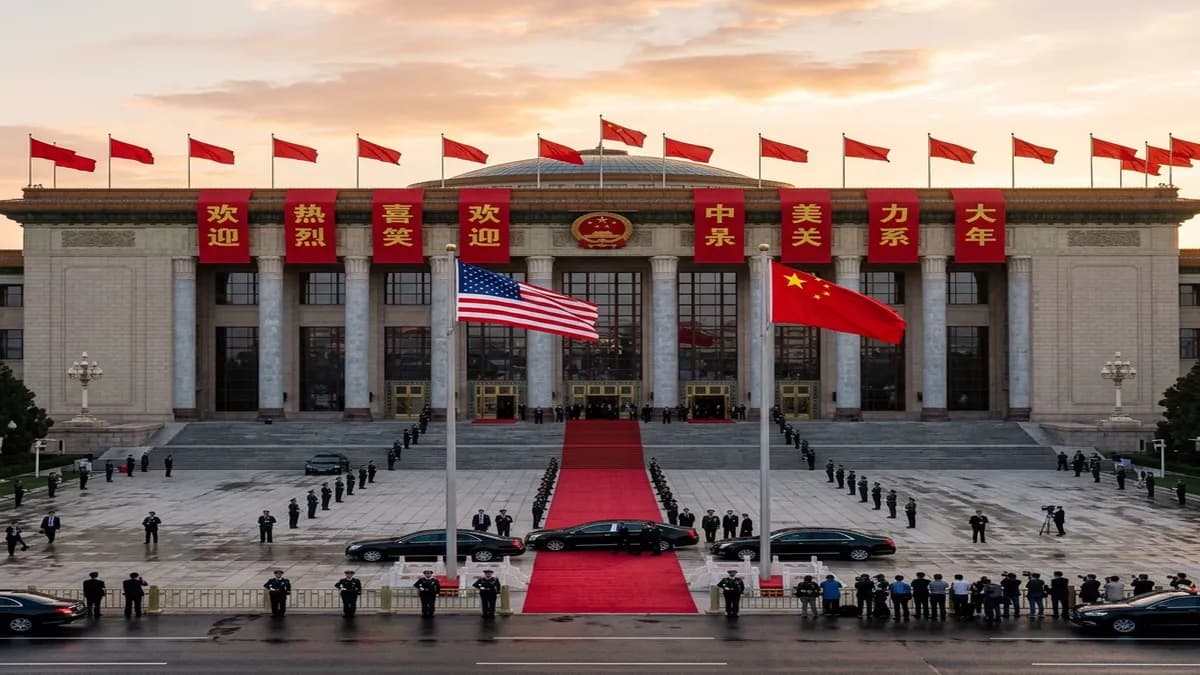
| 13 May | Trump-Xi Summit in Beijing | China presents framework |
| 15 May | Secret negotiations in Muscat | Agreement took shape |
| May 17 | Signing of agreement | Formal ceasefire |
Impact on the Population
| Appearance | Before (conflict) | After (agreement) | Impact |
|---|---|---|---|
| Brent Oil | $96-103/barrel | $82/barrel (down 14.5%) | Cheaper gasoline and energy |
| Navigation in Hormuz | Partially blocked | Free with multinational patrol | Standardized supply chains |
| Global economy | Risk of recession | Macroeconomic relief | Markets rise 3-5% |
| Military tension | Two aircraft carriers in the Gulf | An aircraft carrier (defensive) | Gradual de-escalation |
| Iran | Under full sanctions | Gradual suspension in 12 months | Possible economic opening |
What Those Involved Say
Trump: "This is the greatest deal in history. No one thought it would be possible. But we did it. Peace through strength."
Iran (President Pezeshkian): "Iran chose diplomacy. This agreement protects our sovereignty, our rights and our future."
China (Xi Jinping): "China has proven that international cooperation can resolve the most difficult conflicts. This is the way."
Global markets: Dow Jones rose 800 points. European and Asian stock markets followed with gains of 2-5%.
Next Steps
- 30 days: IAEA begins expanded inspectors in Iran
- 60 days: first phase of suspension of sanctions
- 90 days: multinational force takes over patrolling Hormuz
- 12 months: evaluation of the agreement — extension or review
Closing
The Muscat agreement is not perfect. It does not resolve all differences between the US and Iran — issues such as Iranian support for Hezbollah, the US military presence in the Gulf and Iran's ballistic missile program remain open. But it is the first viable framework for coexistence between the two nations in 45 years — since the 1979 Iranian revolution.
For the world, the impact is immediate: cheaper oil, relieved markets and the prospect that 2026 will not end in regional war. For the diplomats who negotiated in Muscat, this is a moment of caution: agreements are signed with pens, but maintained with political will. And political will, between the US and Iran, has always been the scarcest raw material.
Sources and References
- Reuters — US and Iran sign formal ceasefire in Muscat, oil prices plunge (May 17, 2026)
- BBC News — Historic Hormuz deal: What the US-Iran agreement means (17 May 2026)
- Financial Times — Markets emerge as US-Iran deal ends Strait of Hormuz crisis (17 May 2026)
- Al Jazeera — Muscat Agreement: China-brokered deal reshapes Middle East power dynamics (May 17, 2026)